
Science of Spin in Pickleball: How to Build, Read, & Control Spin
The Art and Science of Spin in Pickleball
Most players meet spin the hard way. They hit what feels like a decent ball, then watch it float long, dive into the net, or kick sideways after the bounce like it has a grudge. Sometimes it is even meaner than that. You catch one ball a little late, your paddle face wanders, and what should have been a routine shot turns into one of those ugly “what was that?” swings that leaves you staring at the paddle like it betrayed you.
On the other side, you face a ball that looks harmless until it drops at your shoes or jumps off the court and jams your contact. That is where the science of spin in pickleball stops being a neat concept and starts becoming a real problem you have to solve.
Why Spin Changes Everything
Pickleball is still wonderfully accessible, but once rallies speed up, power and placement alone stop carrying the whole load. Spin adds a layer of complexity and creativity, turning ordinary shots into amazing plays when you know how to apply it and turning your own contact into a mess when you do not. We are going deep into spin here for a practical reason: you need to understand what the ball is doing, why your own attempts sometimes go crooked, what to fix first, and how to practice until the motion survives real rallies instead of only showing up during your prettiest warm-up rep.
This is a player-development problem before it is anything else. If your paddle face is wandering, your spacing is late, or your swing path changes every time you get rushed, the ball will tell on you immediately. The good news is that spin is learnable. You can build it on purpose, recognize it earlier, clean up the ugly misses, and handle it without panic when somebody tries to use it against you. That is the promise here: not just understanding the idea of spin, but learning how to recognize it, correct it, repeat it, and trust it when the rally stops being polite.
Understanding the Science of Spin in Pickleball
Ever wondered why some shots seem to defy physics, curving unexpectedly or bouncing unpredictably? That is spin at work, but it is not magic in the mystical sense. It is contact quality. When the paddle contacts the ball, friction generates rotational energy, causing the ball to spin. That rotation changes what the ball does in the air and what it does after the bounce. A clean topspin ball dips. A slice can hang, skid, or stay awkwardly low. A sidespin ball can bend and then take a weird shoulder-high jump or skid away from your strike zone.
The important part for development is this: spin is not something you add at the last second with a cute wrist flick. Spin is the result of how your paddle face, swing path, spacing, and timing all work together at contact. If those pieces are messy, the spin will be messy too. If those pieces are clean, the ball starts behaving like you meant it to. That is the whole deal. Better spin is usually not about trying harder. It is about making contact more organized.
The Contact Chain
Think of those four pieces like a chain. The paddle face tells the ball what angle it is leaving on. The swing path tells the ball what rotational shape you are trying to create. Spacing gives you room to brush the right part of the ball instead of reaching at it. Timing decides whether contact happens in a strong window or in some rushed, improvised emergency.
When one link breaks, spin usually gets blamed even though the real culprit was the contact that produced it. A bad paddle face can make the ball float or knife. A broken swing path can make the spin look forced instead of natural. Bad spacing turns brush contact into a reach. Late timing turns an honest swing into emergency improvisation. That is why spin work is really contact work wearing a more dramatic outfit.
1. Topspin
Imagine hitting a shot that dips suddenly over the net and then shoots forward after bouncing. That is the beauty of topspin. It gives you margin over the net without asking you to baby the swing, and it can make an ordinary drive feel heavier to the person trying to block it.
- Mechanics: Produced by brushing the paddle upward on the back of the ball, giving it a forward rotation. The paddle path works low to high, but the contact still needs to be out in front enough that you are brushing with intent instead of lifting late.
- Effects: Causes the ball to arc over the net and dive downward, then kick forward after the bounce. To the opponent, it often feels like the ball arrives faster than expected, especially if they let it drop too low.
- Advantages: Forces opponents into quick reactions, often resulting in errors or weak returns. It is especially useful when you want to swing confidently without sending the ball sailing.
- Use Cases: Ideal for aggressive drives, passing shots, and deep returns that keep opponents on their heels.
Common Topspin Mistakes
The common beginner mistake with topspin is not a lack of effort. It is the wrong kind of effort. Players hear “brush up” and then either chop too steeply from underneath the ball or try to manufacture spin with a frantic wrist snap. That usually produces one of two ugly results: a ball that pops up with no real weight on it, or a net ball that dies because the player got too vertical and forgot to move through contact.
The first correction is simple and not glamorous: keep the paddle face slightly closed, get the ball in front, and feel like you are brushing through and up, not just up. A good self-check is the flight. Real topspin still carries through the court with purpose. Fake topspin often looks like effort without authority.
How to Check Whether Your Topspin Is Real
If you want a clean checkpoint, watch what happens after the bounce. Good topspin usually lands with shape and then drives forward. Bad topspin often lands soft, sits up, or dies into the net because the swing path was all lift and no forward honesty. Another self-check is your finish. If your chest, balance, and paddle finish all look rushed and scrambled, the contact probably was too. Topspin should feel assertive, not desperate.
A practical way to train that feeling is to give yourself a simple feed and refuse to chase speed. Start with a medium-height ball you can catch out in front. Keep the face slightly closed, move through and up, and see whether the ball still travels with shape instead of floating like a polite little balloon. If the ball arcs nicely but never pushes forward after the bounce, you probably brushed up without moving through. If it drives hard but flies long, the face may have opened or the brush may have disappeared. That is why topspin development is so useful: it teaches you to connect feel, flight, and bounce into one honest report.
If you want one more honest test, do not judge topspin by whether one ball dipped. Judge it by whether you could repeat the same contact three or four times without chasing a miracle. When the path is clean, the face is quiet, and the spacing is honest, topspin starts feeling less like a trick and more like a reliable adult skill. That is when you know you are building something instead of just flirting with it.
2. Backspin
Ever faced a shot that seems to hang in the air and then dies on the bounce? That is the tricky backspin, or slice, in action. It does not always look violent, but it can wreck an opponent’s timing because the ball refuses to sit up the way they expect.
- Mechanics: Achieved by brushing downward on the back of the ball, creating reverse rotation. The paddle face is more open, and the swing path moves high to low with control instead of a reckless carve.
- Effects: Makes the ball travel in a more floating pattern and behave awkwardly after the bounce. Depending on pace and contact quality, it may stay lower, skid, or sit in a way that interrupts the opponent’s usual rhythm.
- Advantages: Excellent for defensive play, buying time to reposition or disrupting the opponent’s timing when they want a clean, comfortable strike.
- Use Cases: Commonly used in dinks, drop shots, and defensive lobs.
Why Slice Floats or Sits Up
The mistake players make with slice is overcooking the cut. They get seduced by the feeling of carving under the ball and forget that the shot still has to travel with enough support to clear the net and land safely. When that happens, the ball either floats without purpose or becomes a soft, attackable sitter. Good backspin is not just cutting under. It is controlling the face, supporting the ball, and understanding that the slice is there to disturb timing, change height, or buy yourself a little breathing room.
If your slice keeps sitting up, that is usually not because slice failed you. It is because the face got sloppy, the support disappeared, or the cut got theatrical.
What a Good Slice Should Feel Like
A useful feel cue is to think about guiding the ball with a firm but quiet face instead of trying to shave the cover off it. You are brushing down the back, yes, but you are also escorting the ball forward enough that it still has shape and purpose. If the ball floats high and friendly, look first at how open the face got and whether your arm raced downward faster than the rest of your body could support. Slice works best when it looks calm, even while it makes the receiver uncomfortable.
Contact window matters here too. Slice usually works best when the ball lives in a window where you can stay low, keep the face quiet, and move down the back of it without leaning away like the ball offended you personally. If the ball gets too far out of that window, players often overcompensate with extra carve. That is when the swing gets dramatic and the ball gets generous. A mature slice feels like you stayed connected to the shot. A panicked slice feels like you swiped at the idea of the shot and hoped the spin would finish the job.
A helpful practice check is to hit three or four controlled slice balls in a row and watch whether the trajectory stays calm and the bounce stays annoying without becoming a gift. If every attempt looks different, do not blame the spin. Blame the organization. Slice rewards quiet control and punishes drama.
3. Sidespin
Sidespin can be your secret weapon to send the ball veering unexpectedly, leaving your opponent scrambling. It is also the spin players misuse most when they get bored and start trying to be clever before they are reliable.
- Mechanics: Created by brushing the paddle across the side of the ball, causing lateral rotation. The paddle path works more across than up or down, and the contact needs to stay stable so the shot still has direction, not just movement.
- Effects: The ball curves sideways in flight and may take an unexpected bounce, often pulling the receiver off the intended line of contact.
- Advantages: Pulls opponents out of position and adds an element of surprise, especially when used on purpose and not as a desperate swipe.
- Use Cases: Effective in serves, angled volleys, and when aiming to exploit gaps on the court.
Earn The Spin
The coaching warning here is blunt: sidespin is fun, but it becomes junk fast if your spacing is poor or your contact drifts too far beside your body. When that happens, you are not manipulating the ball. You are just slapping around it and hoping the bounce does you a favor. Use sidespin when you can still stay balanced, recover your feet, and send the ball to a clear target. If the shot makes you admire your own cleverness more than it makes the opponent uncomfortable, you probably forced it. The readiness test is simple: if you cannot send a clean ball to that target first, you have not earned the extra curve yet.
That last point matters more than players want it to. Sidespin is usually the spin that tempts people into skipping steps. Earn it by proving you can hit the same target clean with a simpler contact. Then add the smallest possible lateral brush without losing balance, height control, or recovery. If your sidespin finish leaves you late getting back into the rally, the shot may have been cute, but it was not mature.
Build It Before You Dress It Up
A good progression is boring on purpose. First send a clean ball to the target with no extra side movement. Then add the smallest possible lateral brush and see whether the target and recovery still survive. Then use it in a live rally only when you can stay balanced enough to recover your feet. That order matters. If the curve gets bigger while the contact gets less honest, the shot is not developing. It is just getting louder.
A simple way to train that is to pick one sideline lane and one recovery rule. If the ball curves but your feet do not get back under you, the rep does not count. If the ball bends but misses the lane by a mile, the rep does not count. Sidespin needs accountability or it turns into performance art.
Mastering Spin Shots in Pickleball
Now that we have unpacked the types of spin, it is time to build them into your game. Mastery comes from a blend of technique, practice, and a touch of creativity, but there is still an order to it. Do not start by chasing highlight-reel movement on the ball. Start with the boring stuff that wins: grip, paddle face, contact point, swing path, and repetition. That is how you move from “sometimes I get spin” to “I can trust this in a rally.” Build the chain in order. First make the contact clean. Then make the shape repeatable. Then ask it to survive movement, pressure, and real points.
If you skip that order, spin gets flaky fast. You may hit one serve that bends beautifully and then spend the next ten swings trying to recreate a mystery. Development works better when you know what stage you are in.
- Stage one is recognition: what shape am I trying to make?
- Stage two is diagnosis: what miss keeps showing up?
- Stage three is correction: what is the first thing I need to change?
- Stage four is repetition: can I repeat it enough times that it starts looking boring?
- Stage five is pressure: can I still do it when my feet, timing, and nerves are being tested? That is the real ladder.
Each stage should feel a little more demanding than the one before it. Recognition means you can name the shape and see what you are trying to produce. Diagnosis means you can tell whether the miss came from face, path, spacing, or timing instead of just calling it off. Correction means choosing one fix instead of six panicked thoughts at once. Repetition means stacking enough honest reps that the motion stops feeling lucky. Pressure means the contact still shows up when you have to move, react, and make a decision under stress. That progression keeps spin from becoming a bag of random tricks.
Where Spin Fits in Real Shots
Understanding spin mechanics is the first step.
Next, learn how spin actually shows up in serves, returns, thirds, and dinks in our guide to Spin in Pickleball.
Climbing The Ladder
Here is what that ladder looks like in real life. Recognition is when you can say, “I want this drive to dip and kick.” Diagnosis is when you stop saying “I just missed it” and can admit, “The face opened and the ball got behind me.” Correction is choosing one fix, like getting the ball farther in front, instead of holding a committee meeting in your brain mid-rally. Repetition is when you can hit enough clean balls in a row that the shape starts looking boring. Pressure is when that same contact still survives after a quick move, a rushed feed, or a point that actually matters. That is how a skill graduates from theory to ownership.
1. Finding the Right Grip
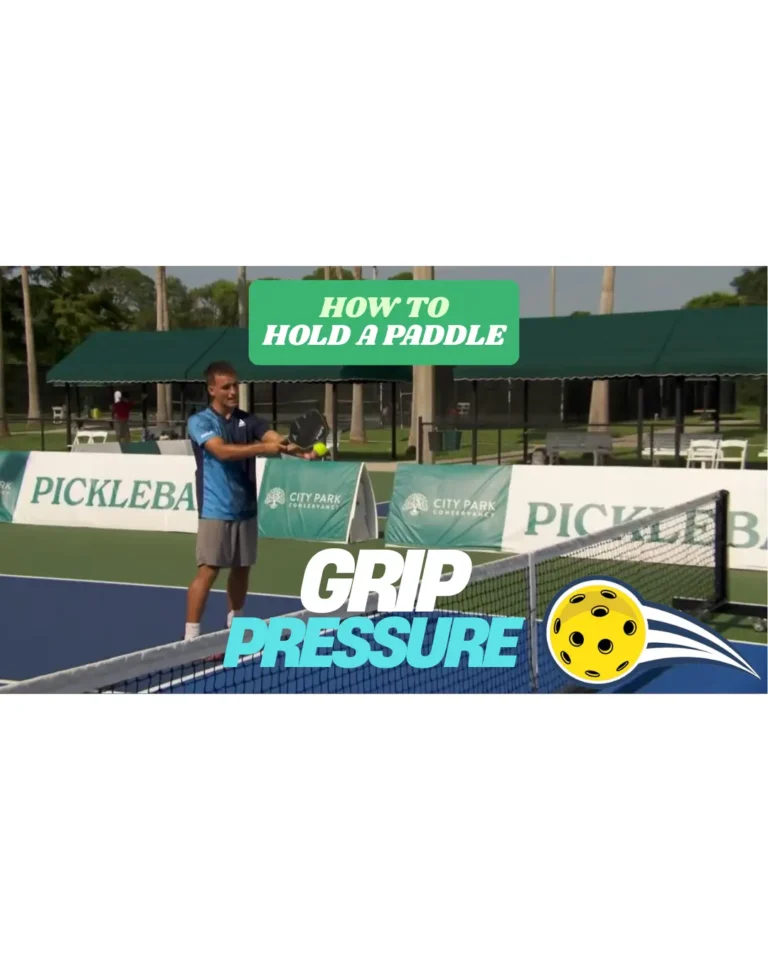
Gripping the paddle correctly is the foundation of executing spin shots effectively. If your hand position keeps changing every time you try to hit topspin, slice, or sidespin, your timing gets scrambled before the swing even starts.
- Recommendation: Adopt the continental grip, also known as the hammer grip.
- Why: This grip offers versatility, allowing cleaner transitions between different spin shots without major hand adjustments. It helps you keep the same relationship to the paddle face instead of rebuilding the swing every ball.
- How to Practice: Hold your paddle as if you are shaking hands with it. Ensure the V shape between your thumb and index finger aligns with the paddle handle.
A good self-check is this: if your forehand spin feels possible but every backhand slice, reset, or block starts feeling trapped and awkward, your grip may be drifting too far into a forehand-biased position. Another giveaway is tension. If you are strangling the handle, the paddle stops feeling like a tool and starts feeling like a crowbar. Spin likes control, not panic. Firm enough to stabilize the face. Relaxed enough to let the paddle move. Grip drift changes the face before the swing even begins, which means contact starts losing honesty before you have even tried to brush the ball.
Grip Drift Changes Everything
One more check: notice whether your grip quietly changes during transitions. A lot of players set the paddle well during setup, then twist it in the hand as the ball approaches because they are trying to force a specific shot shape. That drift can make a backhand slice feel late, a topspin drive feel trapped, and a defensive block feel like the paddle suddenly forgot its job. Keep the hand relationship calm enough that the face arrives with some predictability.
If you want a sharper symptom map, pay attention to what kind of misery keeps showing up. A trapped backhand slice often feels like the face never arrives open enough to guide the ball cleanly. A reset can feel jumpy because tension turns the handle into a lever instead of a steering wheel. A topspin drive can feel boxed in because the hand has already locked the face into a bad relationship with the ball. Those symptoms are useful. They tell you the grip problem started before the swing, which is why trying harder inside the swing rarely solves it.
2. Perfecting Paddle Angle and Contact Point
The angle of your paddle and where you contact the ball significantly influence the type and effectiveness of the spin. This is where a lot of players lose the plot. They know the name of the spin they want, but they do not match the paddle face and contact point to that job.
- Topspin: Tilt the paddle forward with a slightly closed face and brush upward from beneath the ball’s midline. Contact works best when the ball is still out in front rather than drifting back into your hip.
- Backspin: Tilt the paddle backward with a more open face and brush down the back of the ball. You still need support through the shot so the ball does not die weakly off the face.
- Sidespin: Keep the paddle more perpendicular and swipe across the side, adjusting for left or right spin while still sending the ball to a real target.
If the paddle face is wrong, the miss usually tells on you. Too open on a topspin drive and the ball floats. Too closed on a slice and you knife it into the tape. And too far beside the body on sidespin and you get weird contact with no control. The correction is not to swing harder. It is to fix your spacing and get the ball where your paddle can actually brush it cleanly. Spin gets built at contact, and contact gets cleaned up with feet and distance. If you keep reaching for the ball from bad spacing, you are asking the paddle face to solve a footwork problem it never agreed to fix.
Face Angle Means Nothing Without Spacing
A simple contact map helps. Topspin usually wants the ball slightly in front where you can move through and up. Slice usually wants the ball in a window where you can stay low, support it, and still move cleanly down the back without leaning away from contact. Sidespin needs enough room that the ball is not crowding your torso or dragging you off your intended line. Different spin shapes ask for different face angles, but they all ask for honest spacing.
That is why the correction order matters so much. First fix the feet. Then let the face do its job. Players love trying to repair contact with more hand action because it feels immediate, but better spacing solves problems the paddle face alone cannot touch. When you arrive at the right distance, the face stops improvising and starts informing. That is a much healthier relationship.
If you want a cleaner practice audit, freeze the moment just before contact and ask a rude little question: is the ball in a place where the face can actually do the job I want? If the answer is no, quit asking the wrist to perform a rescue mission. Move the feet, reclaim the spacing, and let the face arrive honestly.
3. Mastering Swing Path and Follow-Through
The path your paddle takes and how you follow through can make or break your spin shot. This is not a decoration after contact. The swing path is the recipe, and the follow-through tells you whether the recipe was stable or rushed.
- Topspin: Employ a low-to-high swing path, ensuring you brush up the ball’s surface while still moving through it with intention.
- Backspin: Use a high-to-low swing path for a slicing motion that imparts reverse spin without turning the whole shot into a desperate chop.
- Sidespin: Swing laterally across your body, maintaining a smooth and controlled follow-through so the ball curves with purpose instead of chaos.
Practice Tip: Incorporate slow-motion swings during practice to focus on technique without the pressure of a game setting. Give yourself short sets of five to eight slow reps per spin shape before you add a live ball. That is enough to feel whether the path is clean without wandering into mindless shadow-swing territory.
This slow work matters more than most players think. It lets you feel whether your motion is smooth or jerky, whether your wrist is stable or doing too much, and whether your finish stays balanced or spins you out of position. A lot of ugly spin comes from players trying to manufacture the whole shot with a late wrist fling. That might create movement once in a while, but it is not a repeatable adult relationship with the ball. Clean spin comes from a stable face, a clear path, and a finish you could hold for a beat without falling apart. If you cannot hold the finish, there is a decent chance the swing owned you instead of the other way around.
Let the Finish Tell the Truth
One of the best audits you can run is embarrassingly simple: hit the ball, then freeze the finish for a beat. Can you stay balanced? Does the paddle finish match the spin you tried to create? Does your body look organized or like it just argued with the shot? That tiny pause gives you more information than ten rushed reps where you only remember whether the ball went in or out.
That freeze matters in live training too. If you cannot hold the finish on a controlled feed, you probably do not own the pattern yet under pace. The ball may still go in. That does not mean the mechanics were honest. A stable finish tells the truth about the path that created it.
4. Building Consistency Through Drills
Consistency is key in mastering spin. Regular drills can help embed these techniques into muscle memory, but only if the drills are specific enough to teach you something. Randomly ripping ten fancy balls and calling it “working on spin” is how players stay stuck for months.
- Repetition: Repeat specific spin shots until they become second nature. Pick one spin and one target before you start instead of mixing everything together.
- Feedback: Observe the ball’s behavior to adjust your technique accordingly. Does it dip? Float? Skid? Jump? The bounce is giving you a report card.
- Drill Example: Practice topspin drives against a wall, focusing on maintaining a consistent arc and spin. Start with controlled contact before you add speed.
A Better Drill Progression
Here is a better progression. Start with 15 to 20 controlled wall reps where your only goal is a repeatable contact sound and a repeatable ball shape. Then move to another set where you keep the same motion but aim for a slightly lower, heavier arc. If you have a partner, ask for a simple feed that lands in the same window over and over so you can repeat the same topspin or slice response. Only after that should you add movement, point-play pressure, or disguise.
Build the strike first. Then ask it to survive real pickleball. Do not advance just because one rep looked pretty. Advance when the contact starts looking boring in the best possible way.
Rules That Keep You Honest
You can also give each spin its own constraint. For topspin, keep the target deep and the finish stable. For slice, aim for a lower, more annoying bounce without letting the ball float into a gift. And for sidespin, use a clear lane target and refuse to count any rep where the contact drifts beside your body and turns into a slap. The drill is only helping if it exposes the truth about your contact instead of letting you collect random lucky balls.
If you want an even cleaner pass-or-fail test, make yourself earn progression with standards instead of vibes. For example, do not move from wall work to partner feeds until you can produce at least 12 clean contacts out of 15 with the same general ball shape. Do not add movement until the same target is still there under a little pace. Do not add point pressure until the spin survives one simple move into contact. That kind of structure saves you from confusing one pretty rep with a real pattern.
Partner Feed Pattern
A solid partner-feed variation is to keep the ball in one predictable window for eight to ten balls before changing anything. One player feeds. One player works the same spin shape to the same target. No improvising. No cleverness. After that, shift the feed slightly wider or slightly shorter and see whether the same mechanics survive. That is how you test whether the stroke is growing up or just behaving when life is easy.
On my ongoing journey to mastering topspin, I found an incredible training tool that fine tunes the proper motions needed to brush the ball. Check out my experience with it here.
Countering Spin Shots in Pickleball
Just as crucial as deploying spin is knowing how to defend against it. This is still a development skill, not just a strategy problem. The players who handle spin well are usually the ones who read the ball early, move their feet before they are rushed, and present a calmer paddle face at contact. They are not guessing. They are organizing the mess before it reaches them. Reading spin is really a spacing-and-timing skill in disguise.
The sequence matters here too. Recognize the shape. Move to the right window. Present a stable face. Then choose the simplest clean shot that keeps you in the rally. Most spin-defense breakdowns happen because players try to solve the last step first. They think about the shot they want before they have earned the contact they need. Read, move, present, simplify. That little sequence will bail you out of a lot of ugly situations.
1. Recognizing the Spin
The first step in countering spin is identifying it before it reaches you. If you wait until after the bounce to make sense of the ball, you are already late.
- Observation: Watch your opponent’s paddle angle and swing path. A low-to-high brush often hints at topspin. A carve down the back suggests slice. A swipe across the side usually means the ball is about to move laterally.
- Body Language: Subtle cues can indicate the type of spin being applied. Open shoulders, the height of the contact, and whether the player is moving up, down, or across the back of the ball all tell a story before the ball gets to you.
- Practice: During warm-ups, pay attention to your opponent’s shots to gauge their spin tendencies. That scouting work saves you from acting surprised later.
Learn to Read Spin Earlier
A useful habit is to stop staring only at the ball and start reading the delivery. That does not mean ignoring the ball. It means using the hitter’s motion to predict what the ball is about to do. You want recognition to happen before the bounce, not after the bounce has already pushed you into a bad contact zone. Read the face first, then the path, then the contact height, and let the bounce confirm what you already suspected.
For example, a low-to-high brush with a slightly closed face often tells you the ball may dip and then kick forward. A calm-looking carve with a more open face may mean the bounce stays lower than your instincts expect. A cross-body swipe can warn you the ball is likely to move off its original line. You are not trying to be psychic. You are just gathering clues early enough that your feet still have time to help.
It helps to split those clues into two buckets. Early clues come from the hitter: face angle, path, rhythm, contact height. Confirmation clues come from the ball: arc, pace, bend, and bounce. The better you get at reading the early bucket, the less often the confirmation bucket has to rescue you. That is how spin stops feeling surprising and starts feeling readable.
A useful live-rally check is to call the spin silently to yourself before the ball bounces. Topspin. Slice. Side. Then see whether the bounce confirms it. That tiny naming habit sharpens recognition faster than passively hoping your hands will sort it out later.
2. Adjusting Position and Timing
Your positioning can neutralize the effects of spin significantly. Bad reads turn into late feet, and late feet turn into miserable contact. This section is where spin defense becomes mechanical instead of emotional.
- Topspin: Step forward to take the ball early before it dips too low. If you back up and let it fall, the ball can kick up into your body or force a rushed, lifting contact.
- Backspin: Allow the ball to come to you, preparing for a lower or slower response that may need lift. Do not overcharge a slice ball and then discover you arrived before the bounce had told the truth.
- Sidespin: Position yourself to account for the ball’s lateral movement. Give yourself a little room for the curve instead of setting up on the original line and acting offended when the ball does not stay there.
Footwork Before the Ball Owns You
The big idea is contact window. Spin changes where the clean strike lives. Good footwork is what lets you find that window instead of swiping at the ball from wherever your panic delivered you. Small adjustment steps, knees bent, paddle prepared early. Nothing sexy. Everything useful.
- Against topspin, earlier is often cleaner.
- Against slice, patient and low is often cleaner.
- Against sidespin, honest spacing beats stubbornness every time.
If you need a simple progression, start by naming the spin you think is coming, then force yourself to make one clean adjustment before the bounce. Maybe that means one step forward for topspin, a calmer wait-and-lift for slice, or half a step wider for sidespin. Your goal is not dramatic movement. Your goal is arriving where the strike can still happen with some dignity. Small feet fixes beat big panic swings every day of the week.
You can drill this in a simple way. Have a partner mix three predictable feeds: one dipping ball, one slower slice ball, and one ball with lateral curve. Call the spin early, make one adjustment before the bounce, and judge the rep by whether you found a clean contact window, not whether you hit a highlight reel shot. That kind of practice teaches your feet to solve the right problem before your hands start inventing new ones.
To make the drill sharper, keep score only on the movement, not the shot result. One point if you read it early and arrive in the right window. Zero if you guessed late and had to improvise. That scoring system teaches your feet to value organization before heroics.
3. Neutralizing Spin with Spin
Sometimes, fighting fire with fire, or spin with spin, is the best answer.
- Like-for-Like Spin: Apply the same spin to counteract the incoming spin when you have time and balance. Matching or slightly redirecting the incoming rotation can calm the bounce and give you a cleaner shot.
- Soft Hands: Loosen your grip to absorb the spin’s energy, giving you more control. A death-grip usually makes a spinning ball feel even jumpier.
- Shot Selection: Opt for high-percentage shots over risky ones when dealing with heavy spin. Sometimes the smartest answer is not the fanciest one. It is the one that buys you a stable next ball.
The guardrail here matters. Just because you can answer spin with spin does not mean you always should. If you are late, stretched, or off balance, simplify the contact and prioritize control. Matching spin works best when your body is organized enough to present a calm face and clean path. Otherwise, you are just adding another variable to a problem that was already rude enough. A soft, controlled reset or a simple lifted response is often the grown-up answer when the flashy counterspin shot is sitting there trying to talk you into something unwise.
Read Early, Move Clean, Then Decide
One practical filter helps: if you can see the ball early, move cleanly, and arrive balanced, you may have enough organization to redirect or match the spin. If any of those are missing, absorb first and get the rally back under control. There is nothing noble about escalating chaos when the ball already has enough personality.
That filter is worth remembering in plain language. Early read plus clean movement plus balanced arrival means you may match or redirect. Miss one of those three and the answer is usually absorb, lift, or reset. That is not passive. That is disciplined. Plenty of players lose the rally because they choose the exciting answer before they own the contact.
I have written more about handling spin in specific situations, like the topspin dink. You might find it helpful to read about it here.
4. Leveraging Equipment to Your Advantage
Your paddle matters, but not nearly as much as players like to pretend when their feet stop moving. Equipment can support spin. It cannot rescue lazy spacing or a sloppy swing.
- Paddle Selection: Paddles with textured surfaces can enhance your ability to generate and counter spin, but texture only helps if your contact is clean enough to use it.
- Footwork: Stay light on your feet to adjust quickly to unexpected spins. Good movement still beats spin-friendly gear when the ball takes a strange bounce.
Think of the paddle as a helper, not a magician. The ball does not care what marketing promised you if your contact point is late and your body is leaning. Clean feet, clean spacing, clean face. Then whatever texture or surface advantage you have can actually show up. Good texture on a bad swing is still a bad swing.
If gear helps you, great. Use the help. Just keep the pecking order honest. First win the spacing. Then win the face. Then let the paddle amplify what you already built. Players get into trouble when they try to shop their way around a contact problem that really belongs to their movement and mechanics.
If you want a practical rule, test the swing before you praise the paddle. If the same stroke falls apart the moment your feet get lazy, the real issue is still mechanical. Equipment can reward clean work. It cannot replace it.
If you are interested in improving your backhand slice return, which is a fantastic way to counter certain spins, check out my detailed backhand slice return guide.
Spin in Action: Elevating Your Pickleball Game
Embracing the science of spin transforms not just how you play but also how you think about the game. Spin adds layers of timing pressure and problem solving, but it only becomes useful when you can make the ball behave on purpose. I remember the first time I successfully executed a topspin lob during a friendly match. The look of surprise on my opponent’s face was priceless, and it shifted the momentum in my team’s favor. What made that moment fun was not the trick of it. It was the feeling that the contact was intentional, repeatable, and earned. The face was organized, the ball was out in front, and the swing did what I had asked it to do instead of improvising on my behalf.
By integrating spin into your skill set, you not only diversify your shot selection but also keep opponents guessing. Whether you are putting a new twist on your serves, shaping a dipping drive, or using a slice to make a ball uncomfortable, the real payoff is control. You stop hoping the ball cooperates and start giving it better instructions.
When Spin Stops Feeling Like Luck
That is the part players underestimate. The best feeling is not just seeing the ball bend. It is knowing why it bent, what made it hold up, and how to build it again the next time the rally asks for it. That is when spin stops feeling like luck and starts feeling like ownership.
That ownership is transferable too. Once you know how to organize the contact for one spin shape, you start seeing the same logic everywhere else in your game. Better spacing helps your resets. Cleaner face control helps your blocks. Better timing helps you stop improvising under pressure. Spin becomes less of an isolated party trick and more of a force multiplier for honest mechanics.
Frequently Asked Questions about the science of spin:
Use wall rebound drills to focus on one spin shape at a time. Pay close attention to the ball’s arc and how it reacts off the wall. Using training aids like a spin-indicator ball can provide immediate feedback on your contact quality and brush path.
Yes. A paddle’s surface texture (grit), core material, and weight significantly influence spin potential. While a rougher surface increases friction and grip, remember that the paddle only amplifies the quality of your existing mechanics.
The best way to return heavy spin is to read the opponent’s swing path early and adjust your paddle angle to compensate. Use a softer grip to absorb the energy and prioritize a high-percentage, simplified contact over a high-power return.
Yes, but in moderation. Beginners should introduce spin early to build “feel” and ball control, but they must prioritize a clean, honest contact point first. Master one reliable topspin brush pattern before moving to more complex sidespin or deceptive shots.
Embrace the Spin and Transform Your Game
Ready to take your pickleball prowess to the next level? Understanding and mastering the science of spin in pickleball is not about showing off. It is about building a more reliable relationship with the ball. When you can read spin early, create it with intention, and practice it until the motion holds up under pressure, the game starts to slow down. You get cleaner contact, better ball behavior, and fewer of those ugly “what was that?” swings that leave you staring at your paddle like it betrayed you.
So grab your paddle, hit the court, and start experimenting with spin the smart way. Work on one shape at a time. Watch the bounce. Trust the boring reps. The payoff is not just a fancier shot library. It is more control, more confidence, and a game that feels a whole lot less accidental. That is when spin stops being a party trick and starts becoming part of your actual skill set.
If you want a simple final reminder, use this one: organize the contact, then earn the movement. Read the ball earlier. Fix the feet sooner. Let the face arrive honestly. That is how spin becomes dependable instead of dramatic.
And if you are still in that stage where spin feels moody, good. That means you are close enough to the truth to start cleaning it up. Keep the work honest. Build one shape at a time. Let the ball teach you what your contact is really doing. Spin gets a lot more fun once it stops being guesswork and starts becoming something you can call on without flinching.
Feel free to share your own experiences with spin in pickleball in the comments below.