Best Control Pickleball Paddles for Doubles: 8 Picks for 2026
The Vatic Pro Prism Flash 16mm is the best control pickleball paddle for most touch-first doubles players. It gives pop-up-prone dinks, high drops, and late resets more margin without making the paddle feel useless when the point speeds up. If your bigger problem is the face twisting on blocks under pace, start with the Volair Mach 2 Forza 16mm Widebody. If you want a softer widebody with quick hands, strong lateral stability, and restrained pop, the 11SIX24 Pegasus Jelly Bean 2 earned the third spot.
Control is what keeps your “safe ball” from turning into their green light.
What “control” means here: not simply a soft face. In doubles, control is predictable launch, a usable reset window, stable off-center contact, and enough block depth to keep a defensive ball neutral. The goal is fewer pop-ups, lower drops, deeper blocks, and fewer emergency resets that sit up to be finished.
Updated September 13, 2026: Added the 11SIX24 Pegasus Jelly Bean 2 after approximately 26 hours of testing, replaced the original Hurache-X Jelly Bean with the Hurache-X Jelly Bean 2, and added the Spartus Spitfire as an aggressive-control alternative. I am still judging these for doubles control: late contact, jammed blocks, off-center hits, and absorbing pace, not which face feels softest during warmup.
Disclosure: Some product links may earn PickleTip a commission without increasing your price. That does not change the control criteria or the order of the recommendations.
If control is only one part of a broader paddle decision, start with how to choose a pickleball paddle. If you want the strongest current recommendations regardless of control bias, use the best pickleball paddles guide.
Choose the Control Problem You Need to Fix
| What Keeps Happening | Start Here | Why |
|---|---|---|
| Your “safe” dink or drop keeps sitting up | Vatic Pro Prism Flash 16mm | Calmer launch gives light and late contact less surprise lift |
| Blocks float when pace catches you off-center | Volair Mach 2 Forza 16mm Widebody | Widebody stability helps the face stay square and sends more blocks deeper |
| You want a soft widebody with quick hands and a large bailout zone | 11SIX24 Pegasus Jelly Bean 2 | Low pop, strong lateral stability, and a generous hitting area make drops, blocks, and resets easier to trust |
| You want control but still need a low, aimable counter | Honolulu J2NF 16mm | Crisp-control keeps touch predictable without turning every fast next ball into a bunt |
| Body speedups make you tighten up and slap the block | Pickleball Apes Harmony V Widebody 16.5mm | Damped contact can make reaction blocks feel quieter and easier to keep compact |
| You want widebody control with more life in counters | Six Zero Coral 16mm Widebody | Controlled touch with a quicker next ball when compact mechanics stay intact |
| Your contact gets messy and the face twists | Chorus Shapeshifter SX 16mm | Stability on imperfect contact helps reduce twist-floaters |
| You want elongated reach for resets without a hot face | 11SIX24 Hurache-X Jelly Bean 2 | Soft foam control, reach, and pace absorption help transition defense without making full swings feel useless |
If you are newer: do not automatically buy the softest paddle here. Start with the miss you see most often. Prism Flash gives light touch more margin; Mach 2 Forza and Pegasus Jelly Bean 2 give off-center contact more help.
Want more full-swing power without a jumpy short game? The Spartus Spitfire is the aggressive-control alternative. It is not one of the eight purest control picks.
Jump to the Part You Need
- What control means in real doubles points
- The five control checks used for every pick
- Touch-first vs. counter-control
- Eight ranked control paddles
- Aggressive-control alternative under $100
- Control-paddle buying mistakes
- Control paddle FAQ
What Makes a Pickleball Paddle a Control Paddle?
Control is the ability to absorb pace and place the ball on purpose, especially when you’re late. In match terms: your drops stay low, your dinks don’t climb above tape height, your resets land playable instead of sitting up, and your blocks land deep when your opponent is speeding up. It’s not about being “soft.” It’s about being predictable under pressure, so your defense doesn’t turn into gifts.
Here’s the practical test: when you’re jammed at the hip or reaching in transition, does your paddle help you send a ball that clears lower and lands past the NVZ line, or does it donate a short-middle floater that ends the point immediately?
Coach Sid’s control rule: A control paddle is not the one that feels softest. It is the one that makes your bad contact less attackable.
The 5 control checks (used for every pick)
- Reset window: How much chaos you can absorb without gifting a pop-up. A wider window means late contact leaves flatter and lands playable more often.
- Dink/drop forgiveness: How often “soft intent” stays low when contact is imperfect. This is the difference between “safe” and “speed-up bait.”
- Block depth control under pace: Can you block deep without floating it mid-court or dying it short? Deep blocks force a harder next attack. Short blocks invite a bigger one.
- Launch predictability: Does your face angle stay honest, or do you get surprise trampoline on light contact? Honest launch is how you stop accidental lift.
- Face stability on off-center contact: When you miss the sweet spot by an inch, does the face twist and turn a block into a hanger? Stability is what keeps ugly contact from becoming a gift ball.
Soft does not automatically mean controlled. A paddle can feel plush and still twist on off-center blocks. If your floaters come from face instability, going softer may not fix the point. Stability and honest launch usually matter more than pure mush.
Touch-first vs counter-control (pick the right kind of “soft”)
Not all “control” plays the same. Here’s the split that matters in doubles:
- Touch-first control paddle: Built to keep dinks and drops quiet. You’ll feel less surprise lift, so your “safe dink” stays below tape height and your “safe drop” dies more often instead of sitting up.
- Counter-control paddle: Built to stay steady under pace so blocks and resets don’t hang. You get enough support on fast balls to block deeper and enough response to send a useful counter instead of just bunting everything back.
Most control paddles fall into two feels: plush control vs. crisp control. Plush buys you more absorption and a calmer exit on late contact. Crisp-control keeps the paddle alive for counters and redirects, but it asks more of your face angle. Neither is automatically better. Pick the one that fixes the ball you keep donating.
Best Control Pickleball Paddles for Doubles
How I’m judging these: I care about light-touch launch, late resets, blocks under pace, off-center contact, compact counters, and what happens to the next ball after the rally speeds up. That matches the court-first, pressure-based PickleTip paddle testing method: make the ugly contact happen often enough to see the paddle’s miss profile instead of judging it by its prettiest warmup swing. Some of these paddles also went through PickleTip’s 2025 awards rotation, where finalists logged at least 12 total on-court hours across drills and match play. Not every paddle below came through that exact awards pool, so I am not pretending every pick has identical test volume. A manufacturer calling a paddle “control” does not count as court evidence.
Testing confidence: I have more court time with some paddles than others. Where I have measured data, ball-machine work, or extended testing, I say so. A paddle does not get extra certainty just because I like the conclusion.
Tournament approval note: Approval systems are not interchangeable. Check the event you plan to play before buying. I verified the Jelly Bean 2 approval status on September 13, 2026 using the UPA-A certified paddle list and USA Pickleball’s approved-equipment database, but certification can change.
- How this list is ordered: Control outcomes first: fewer pop-ups, lower drops, deeper blocks, and late-contact resets that stay playable. If you came here for raw power, you’re in the wrong lane, and that’s on purpose.
- How to use it: Pick your top donation first (a pop-up dink, high drop, hanging block, or balloon reset) then choose the paddle that reduces that miss. Control is not one flavor.
1. Vatic Pro Prism Flash 16mm — Best Overall Control Paddle

Why it ranks here
The Prism Flash is still my touch-first baseline because its best trait is boring in the best way: light contact does not get much surprise help. Dinks are less likely to creep into speedup height, thirds are easier to take pace off, and late resets have more room to land playable instead of ballooning.
Control Profile
Reset window: wide
Launch: calm (low surprise lift)
Block depth: easy
Touch feel: plush
Stability on mishits: moderate
Where the Prism Flash buys you margin
In my earlier Prism Flash review, I called out long dink exchanges, third-shot drops, and control as core strengths. I also noted a slightly inconsistent sweet spot. That tradeoff still explains this ranking: I trust the Prism more for calming light and late touch than for being the most stable paddle here when contact drifts toward the edge.
Prism Flash vs. Mach 2 Forza: Choose the Prism if your miss starts with launch, dinks and drops climbing when you meant to play soft. Choose the Mach 2 Forza if your miss starts with twist, off-center blocks hanging when pace catches you first.
Prism Flash vs. Pegasus Jelly Bean 2: Choose the Prism if the calmest possible launch on light touch is the priority. Choose the Pegasus if you want a quicker widebody with stronger lateral stability and a larger bailout zone on off-center contact.
- Buy if: your soft-game miss is extra lift, or you live in transition and want more room on late resets.
- Skip if: your bigger problem is maximum widebody stability on off-center blocks, or sweet-spot consistency bothers you more than launch does.
Check current availability for the Prism Flash 16mm
Coach Sid note: When you’re down 9–3 and your hands get tight, plush control helps keep your “just survive” reset from ballooning into the finish lane. It won’t fix panic, but it stops the paddle from adding lift to panic.
2. Volair Mach 2 Forza 16mm Widebody — Best for Block Stability

Why it ranks here
The Mach 2 Forza is the forgiveness-under-fire pick. When pace hits you first and contact slides toward the edge, the widebody shape gives you more help keeping the face square. That is the difference between a block that travels deep and one that floats center-cut at chest height.
Control Profile
Reset window: wide
Launch: quick response (angle discipline matters)
Block depth: easy
Touch feel: plush with more response than Prism Flash
Stability on mishits: steady
Prism Flash vs. Mach 2 Forza
These are the two easiest paddles on the list to separate. The Prism Flash is safer when the ball climbs off light touch. The Mach 2 Forza is safer when the paddle face moves on ugly contact. If your blocks hang because you are late, handcuffed, or catching the ball toward the edge, I would rather give you the extra stability than chase an even softer feel.
- Buy if: blocks, digs, and transition resets fall apart when contact moves off-center.
- Skip if: the calmest possible dink launch matters more to you than widebody stability.
See the Mach 2 Forza 16mm Widebody details
Coach Sid note: When you’re stuck in transition eating fast rolls at your right hip, I care less about whether the paddle feels “soft” and more about whether the face stays square. That is where the Mach 2 Forza earns its spot.
3. 11SIX24 Pegasus Jelly Bean 2 — Best Control Widebody for Stability and Resets
Why it ranks here
The Pegasus Jelly Bean 2 earned this spot by solving two problems at once: the face stays steady, and the ball does not jump off it. It gets behind fast balls quickly, stays composed when contact moves away from center, and takes enough energy out of the ball that drops and resets do not require constant fear of surprise rebound.
Control Profile
Reset window: wide
Launch: calm and linear
Block depth: easy to manage with a quiet face or small push
Touch feel: soft, dense, and damped
Stability on mishits: very steady for quick-hand play
What 26 hours of testing showed
In my Pegasus Jelly Bean 2 review, third-shot drops gave me a large margin for error and transition resets may have been even better. The paddle absorbed incoming pace without forcing me to fight the core, while the wide face kept many off-center contacts playable. My compiled sample measured approximately 7.16 twist weight, the highest of the four Jelly Bean 2 shapes, while retaining the lowest measured swing weight in that family.
Pegasus Jelly Bean 2 vs. Mach 2 Forza
Both belong near the top when stability matters, but their responses are different. The Mach 2 Forza gives the block more immediate support and remains the safer established pick when keeping defensive blocks deep is the entire problem. The Pegasus JB2 is softer, less reactive, and more linear. Choose it when you want widebody stability but also want to take pace away on drops, dinks, and transition resets.
- Buy if: you want widebody stability, quick hands, low reactive pop, and enough forgiveness to keep imperfect resets and blocks playable.
- Skip if: you depend on the paddle to create explosive counters, need elongated reach, or require USA Pickleball approval. As verified September 13, 2026, the Pegasus JB2 appears on the UPA-A certified paddle list but not in USA Pickleball’s approved-equipment database.
Check Pegasus Jelly Bean 2 availability and use code PICKLETIP for $10 off
4. Honolulu J2NF 16mm — Best Counter-Control Paddle

Why it ranks here
The J2NF is for the point where surviving once is not enough. You reset the first speedup, they come again, and now you need a second shot that stays low without making the paddle feel dead. It gives up some of the Prism Flash’s pure touch bias in exchange for a more useful counter when the hands battle starts.
Control Profile
Reset window: medium to wide
Launch: calm
Block depth: best with compact prep
Touch feel: plush-crisp balance
Stability on mishits: steady
What my J2NF testing added
In my J2NF testing, I used a ball machine for repeated resets and drops across the lineup. The J2NF kept giving me more consistent depth and fewer mishits, which is exactly the kind of thing a control ranking should reward. AJ later described it another way that stuck with me: it lets you be brave twice in the same rally, take the counter, then still have enough composure to reset the next ball.
J2NF vs. Six Zero Coral
The Coral runs a little hotter and crisper. The J2NF keeps a slight edge in peak forgiveness. If you want the safer bailout paddle when timing slips, take the J2NF. If you want a little more life in the next shot without leaving the control lane, the Coral starts making more sense.
- Buy if: you want resets and counters to coexist, and your game needs forgiveness without a dead response.
- Skip if: you want the most muted touch-only feel (Prism Flash) or the biggest widebody stability margin (Mach 2 Forza).
Check current availability for the Honolulu J2NF 16mm
Coach Sid note: Late in game three, when everyone is tired and speedups start coming earlier, I want a paddle that can calm the reset without neutering the counter. That is the J2NF lane: control with teeth, if your angles stay honest.
5. Pickleball Apes Harmony V Widebody 16.5mm — Best Damped Control Feel
Why it ranks here
Choose the Harmony V if you prefer a quieter, more damped response when body speedups start rushing your hands. Damped feedback cannot fix mechanics by itself. What I actually care about is whether that quieter contact helps you stay compact instead of flinching into an open-face slap.
Control Profile
Reset window: medium to wide
Launch: calm
Block depth: easy when the platform stays compact
Touch feel: damped and plush
Stability on mishits: steady
Harmony V vs. Hurache-X Jelly Bean 2
Both live on the softer side of this list, but they solve the problem differently. The Harmony V is the damped widebody option when harsh feedback makes you tighten up. The Hurache-X JB2 adds elongated reach, pocketing, spin, and pace absorption. If widebody feel is what settles your hands, Harmony V makes sense. If your whole game is about absorbing heat in transition and dragging the point back to neutral, Hurache-X JB2 is the cleaner defensive fit.
- Buy if: you prefer muted contact, widebody stability, and a quieter reaction-block feel.
- Skip if: you want the calmest pure dink launch (Prism Flash) or a crisper counter response (J2NF or Coral).
See the Harmony V widebody details
Coach Sid note: If damped feedback is one of the things that helps your hands stay quiet when somebody rips a ball at your chest, this is the lane I would test. The paddle cannot stop the flinch for you, but it does not have to make the flinch louder.
6. Six Zero Coral 16mm Widebody — Best Widebody Counter-Control
Why it ranks here
The Coral is the middle-lane pick for players who want widebody forgiveness without turning every fast next ball into a bunt. It is more alive than the softest control paddles, but it still gives you enough dwell and predictability to play touch-first doubles without feeling like every slightly open face is a coin flip.
Control Profile
Reset window: medium
Launch: quick response (rewards soft hands)
Block depth: works best with compact mechanics
Touch feel: crisp-control
Stability on mishits: steady
Coral vs. J2NF
My Coral review put the distinction pretty plainly: the Coral runs a touch hotter with a slightly crisper feel, while the J2NF keeps a slim edge in peak forgiveness. I also found the Coral much more dwell-heavy and connected than true power paddles. This is the one for the player who wants a low, aimable next shot and is willing to give up a little bailout margin to get it.
I wrote that the Coral is “the Six Zero paddle that most people can live with, not just flirt with for a month.” That is still the reason it belongs here. It does not win by being the softest or the hottest. It wins by staying useful across dinks, thirds, blocks, counters, and normal messy league-night points.
- Buy if: you want widebody forgiveness with enough response to counter, redirect, and finish a sitter.
- Skip if: your top priority is maximum reset margin on ugly contact or the calmest possible launch on slow dink exchanges.
Check Coral widebody availability
Coach Sid note: Coral makes the most sense when you are tired of choosing between “nice soft paddle” and “something I can actually counter with.” Compact platform in, compact platform out. There is enough leash here to play controlled without making the paddle boring in the wrong way.
7. Chorus Shapeshifter SX 16mm — Best Quick-Handling Paddle for Off-Center Blocks
Why it ranks here
The Shapeshifter SX is the specialist pick for the one-inch miss. When contact gets ugly, its value is not some magical ability to turn a bad swing into a winner. It is keeping more of those off-center blocks from twisting into short-middle floaters while still feeling quick enough to reload in a hands battle.
Control Profile
Reset window: medium to wide
Launch: calm-to-neutral
Block depth: easier to keep deep under pace
Touch feel: crisp-control
Stability on mishits: steady
Shapeshifter SX vs. Mach 2 Forza
Both help when your block falls apart off-center, but the Forza gives you the larger bailout zone. The SX makes more sense if you want that mishit control in a quicker, more precision-first package. If your priority is pure bailout forgiveness, I still start with Forza.
- Buy if: your contact drifts off-center and you want stability without a slow, oversized feel.
- Skip if: you want maximum widebody forgiveness or a deeply plush dink-first response.
See Shapeshifter SX 16mm availability
Coach Sid note: The SX is not here because ugly contact suddenly becomes pretty. It is here because an ugly block that stays low enough to earn one more shot is a lot more useful than an ugly block that floats into somebody’s forehand.
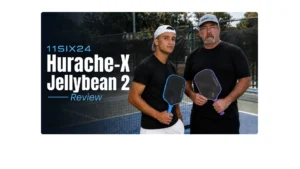
8. 11SIX24 Hurache-X Jelly Bean 2 — Best Elongated Defensive-Control Paddle
Why it ranks here
The Hurache-X Jelly Bean 2 is the elongated defense-first pick for players who spend a lot of points absorbing pace, surviving body speedups, and trying to get the rally back to neutral. Its soft foam response removes energy from fast balls, while the elongated shape supplies reach and enough leverage that full swings do not feel as limited as they can with some low-pop control paddles.
Control Profile
Reset window: wide
Launch: calm and restrained
Block depth: easy when absorbing pace; offensive counters need more intent
Touch feel: soft, dense, and muted
Stability on mishits: better on court than its lower twist-weight number suggests
Why this replaces the original Jelly Bean pick
The original Hurache-X Jelly Bean earned its place by staying plush and composed when the point became violent. My Hurache-X Jelly Bean 2 testing showed that the new foam platform keeps that defensive identity while adding better spin, more dwell, and more accessible player-generated offense. Of the four Jelly Bean 2 shapes I tested, the Hurache-X felt the most complete.
Hurache-X Jelly Bean 2 vs. Pegasus Jelly Bean 2
Pick the Hurache-X JB2 if you want elongated reach, natural topspin drops, and enough leverage to create useful drive power while keeping resets soft. Pick the Pegasus JB2 if your first priority is quick hands, stronger lateral stability, and a larger widebody bailout zone. The Hurache-X is the more complete elongated option; the Pegasus is the safer off-center control option.
- Buy if: you want elongated reach, plush pace absorption, excellent spin, natural drops, and enough player-generated offense to keep a control paddle from feeling apologetic.
- Skip if: you want the quickest reactive counter, the biggest widebody forgiveness margin, or USA Pickleball approval. As verified September 13, 2026, Hurache-X JB2 appears on the UPA-A certified paddle list but not in USA Pickleball’s approved-equipment database.
Check Hurache-X Jelly Bean 2 availability and use code PICKLETIP for $10 off
Also Consider: Spartus Spitfire for Aggressive Control Under $100

The Spartus Spitfire is not one of the eight purest control picks because full swings still reveal a legitimate power paddle. It belongs here for the player who wants more offense without accepting the abrupt kitchen pop that makes many power paddles difficult to calm down.
Aggressive-Control Profile
Reset window: medium to wide after adjustment
Launch: predictable on shortened strokes
Block depth: controllable without excessive face rebound
Touch feel: soft and connected with deeper, hollow feedback
Stability on mishits: forgiving through the center for an elongated shape
After approximately 18 hours with the Spartus Spitfire, longer swings produced real power while dinks, blocks, and resets stayed calmer than I expected. Drops were easy to shape, transition resets did not unexpectedly jump off the face, and the aggressive surface gave both hard and soft shots excellent spin.
- Buy if: you generate a full swing, want elite spin and useful power, and still prefer moderate, predictable pop during the short game.
- Skip if: you want a truly plush low-powered paddle, maximum automatic counter pop, or the lateral forgiveness of a hybrid or widebody.
Check the current Spartus Spitfire price
Control Paddle Mistakes That Create Pop-Ups and Floaters
- Too dead → your “answer ball” floats and you defend twice: You start winning dink rallies… then lose every hand battle because your next ball arrives mid-court at waist height. They take it out of the air and speed up again (now you’re defending two attacks in one point). Fix cue: choose a control paddle that still lets you send a low, aimable counter (crisp-control), not a paddle that turns every next shot into a bunt.
- Too whippy → blocks hang when contact gets messy: The paddle feels “fast,” but under pace your face angle wobbles and your blocks park mid-court instead of driving deep. Fix cue: prioritize stability and a platform that doesn’t twist when you’re jammed.
- Too pop-forward → soft game gets jumpy: You try to dink and the ball jumps off like you’re playing a different sport. Pop-ups become your default miss. Fix cue: look for low-lift launch so your dink stays below tape without you steering it.
- Too lively under pressure → reset window shrinks: Late contact becomes a liability. Your safe reset turns into a sitter that gets finished. Fix cue: prioritize reset window if you live in transition, because late contact isn’t a mistake, it’s Tuesday.
- Buying “soft” but ignoring stability: If real games pull your contact off-center, stability matters as much as softness. A calm face that twists is still a pop-up machine. Fix cue: if your blocks float, widen the sweet spot and reduce twist before you chase “softer.”
More PickleTip Paddle Guides
- How to Choose a Pickleball Paddle — start here when control is only one part of what you need.
- Best Pickleball Paddles — overall recommendations when you do not want a control-only shortlist.
- How PickleTip Tests Pickleball Paddles — the pressure-based court framework behind resets, blocks, counters, mishits, and match-play observations.
- 2025 PickleTip Paddle Awards — longer rotation testing and head-to-head category decisions that informed several picks here.
- Best Beginner Pickleball Paddles — forgiveness and handling choices for newer players.
- Best Budget Pickleball Paddles — when staying under $100 matters as much as how the paddle plays.
- Best Foam-Core Pickleball Paddles — compare modern foam builds by feel and play style.
- Best Spin Pickleball Paddles — spin-first recommendations when surface bite matters more than a control bias.
- Vatic Pro Prism Flash review — more on the touch, sweet spot, value, and long-term performance.
- Honolulu J2NF review — ball-machine resets, drops, lineup comparisons, and longer testing context.
- Six Zero Coral review — deeper notes on forgiveness, dwell, counters, shape choice, and the J2NF comparison.
- 11SIX24 Pegasus Jelly Bean 2 review — 26-hour test covering its widebody stability, soft linear response, resets, spin, and player-generated power.
- 11SIX24 Hurache-X Jelly Bean 2 review — why this elongated shape became my favorite of the four JB2 paddles.
- Spartus Spitfire review — 18-hour test of its full-swing power, elite spin, moderate pop, softer foam feel, and value.
Control Pickleball Paddle FAQ
The Vatic Pro Prism Flash 16mm is my best control paddle for most touch-first doubles players because its calm launch and wide reset margin help reduce pop-up dinks, high drops, and ballooning resets. If off-center blocks twisting and floating under pace are the bigger problem, start with the Volair Mach 2 Forza 16mm Widebody.
A control paddle helps you absorb pace and keep the ball where you intended, especially on dinks, drops, resets, and blocks. In match terms, it gives you launch that doesn’t add surprise lift, a wider late-contact margin, and fewer pop-ups when you’re reacting under pressure.
Start with your miss. Pop-ups on dinks usually mean you need calmer launch with less surprise lift. Blocks that hang usually means you need more stability under pace. Drops landing high often means you need better pace absorption and height control. Then choose the paddle that matches those outcomes, not the one with the loudest marketing.
Often, but thickness by itself does not make a paddle controlled. Many 16mm builds give you more dwell and a calmer response than thinner versions, but construction, launch, and off-center stability still decide what happens in real points. Choose 16mm for the feel and margin it gives your game, not because the number guarantees control.
Widebodies can help control when your misses happen off-center because the broader shape often gives you more stability and sweet-spot margin. That can turn a twisting block into a deeper one or keep a late reset playable. But shape alone does not guarantee control; launch and construction still matter.
Choose a paddle with launch that doesn’t add surprise lift so the ball doesn’t jump off on light contact. Then keep your dink swing compact and your paddle face quiet through contact. In this group, the Prism Flash is the most muted launch lane, while the J2NF is a predictable, forgiving option that stays more alive for counters.
Coach Sid’s control rule: If your safe ball keeps becoming their green light, fix the launch or stability problem that is creating the sitter. Do not buy “soft” as a personality trait.