
How to Defend a Smash in Pickleball: The DIGS System
Pop up a ball and face an overhead? Coach Sid’s DIGS system helps you create space, choose between a block and a bounce, return with margin, and recover together.
Defense wins more points than most players realize. This section focuses on blocking, resets, countering hard hitters, defending lobs, and surviving pressure situations.
Use these strategies to stay in points longer, neutralize aggressive opponents, and turn defense into offense.

Pop up a ball and face an overhead? Coach Sid’s DIGS system helps you create space, choose between a block and a bounce, return with margin, and recover together.

Learn how to pressure a stacked pickleball team by reading who must move, using depth and width, attacking temporary gaps and returning to percentage play once the stack is complete.
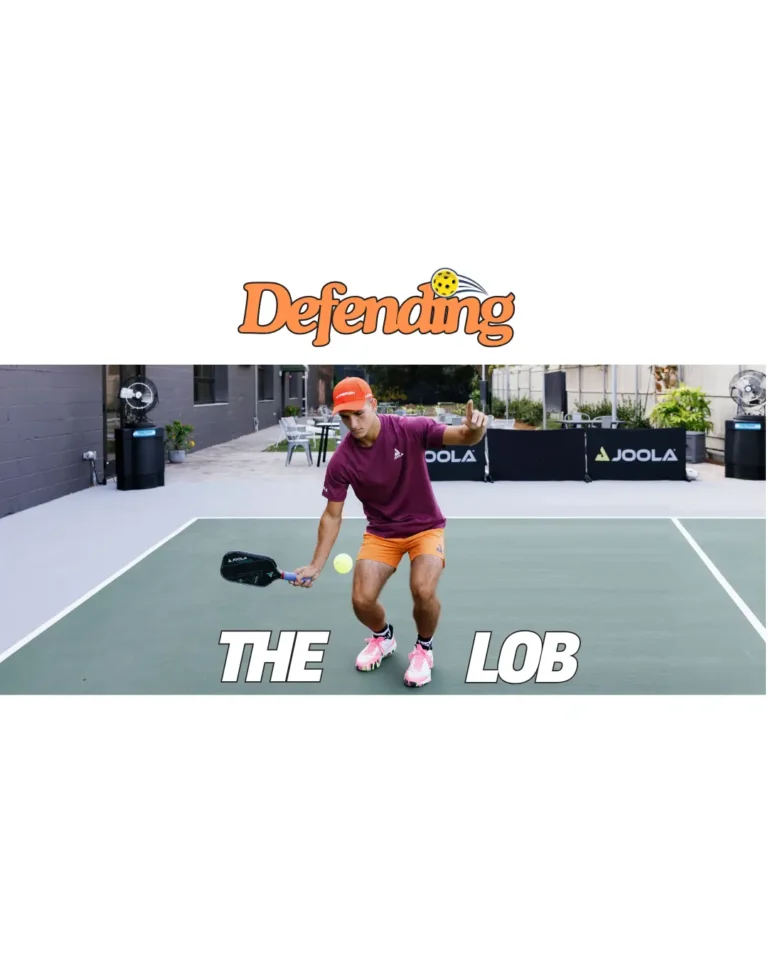
A lob sent Coach Sid and his partner scrambling during a DUPR match. Learn the TRACK system he teaches to call the ball, choose the overhead or bounce, move safely, and recover together.

Learn how to beat bangers in pickleball by finding the pattern that feeds their power, improving the first attack, and choosing when to block, reset or counter.
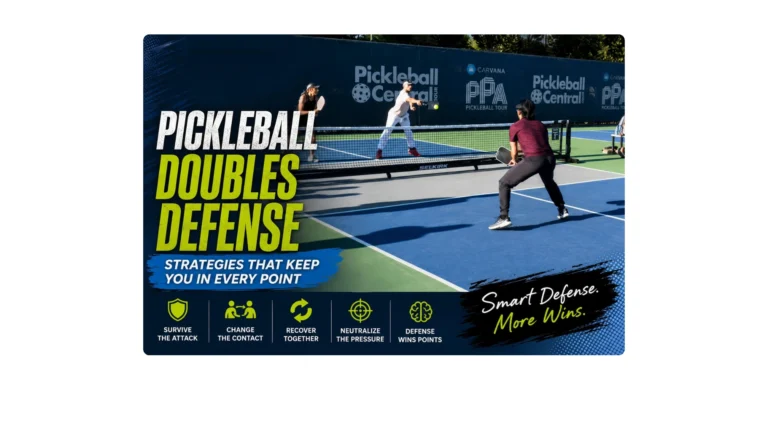
Strong doubles defense is not just getting one more ball back. Use the GUARD system to protect the middle, choose the right response, and recover with your partner.

Learn how to recognize defensive pressure, choose between a block, reset or counter, and recover before your opponents can attack again.
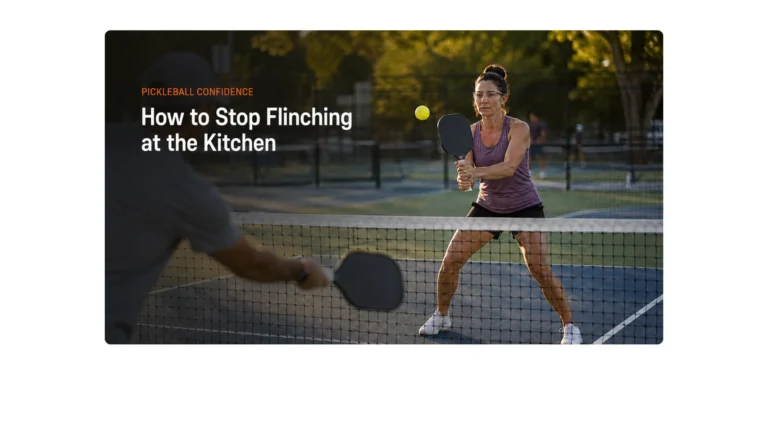
Fear at the kitchen is often fear of the ball arriving before you know what to do. Use the FACE plan to protect your body, choose between blocking, dodging and retreating, and build confidence through controlled practice.