
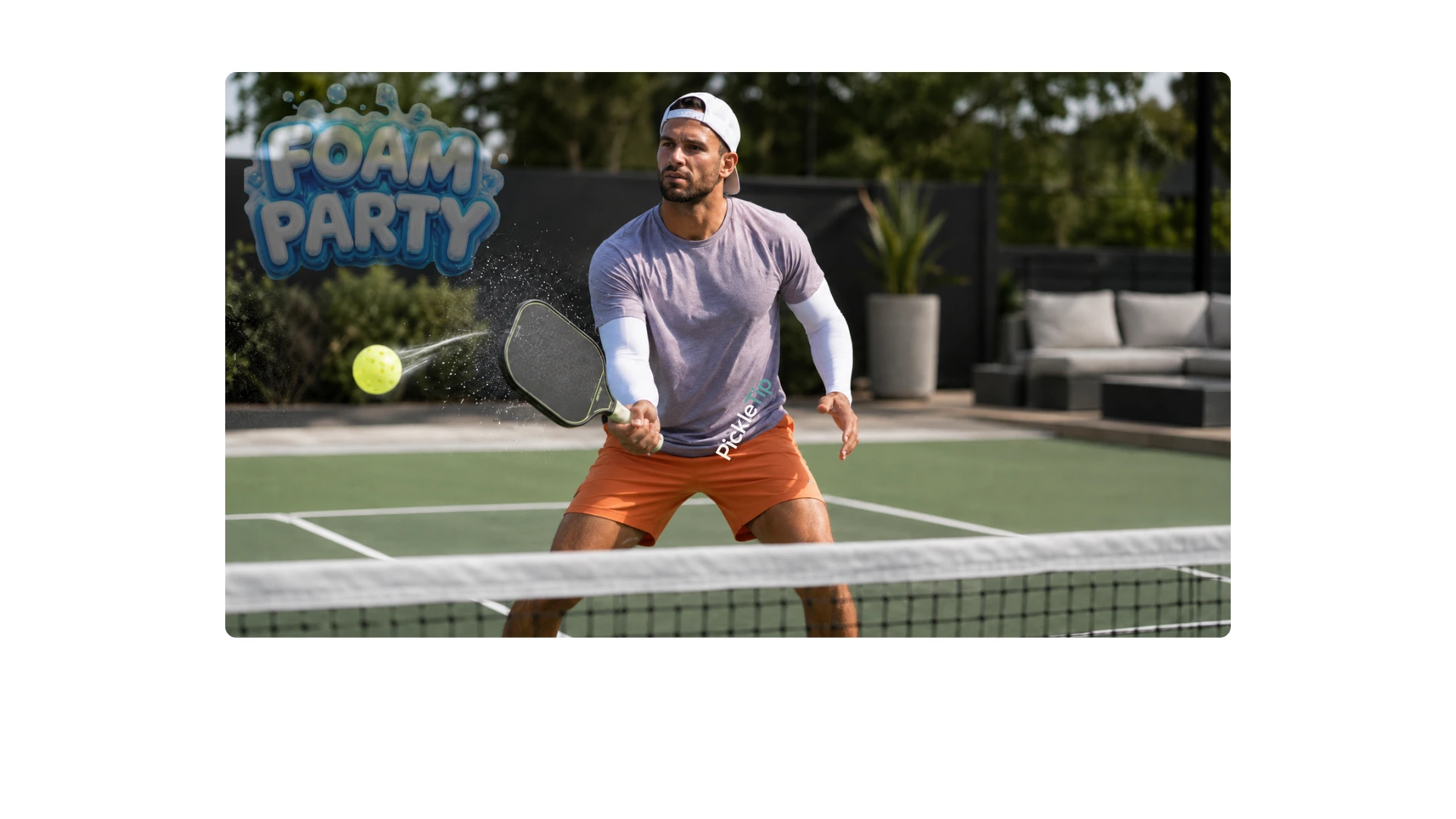
Best Foam Core Pickleball Paddles: 8 Tested Picks for 2026
Some paddles feel exciting for five minutes and exhausting for five games. That is the trap with foam-core hype. The best foam core pickleball paddle can make rushed resets calmer, counters steadier, and off-center contact less expensive. For most all-court players, my safest starting point is the Ronbus Quanta, but a player whose resets float needs a different answer than one whose paddle feels late during hand battles.
Coach Sid’s quick answer: Start with the Ronbus Quanta if you want the safest choice for a player who does a little of everything. Choose the Honolulu J2NF when resets, blocks, and off-center stability are the expensive mistakes. Choose the Honolulu J2FC+ or Selkirk LABS Project 008 Maxima when touch and controlled depth matter more than pop. Choose the Honolulu J2CR or 11SIX24 Vapor Power 2 when hand speed and a more direct next ball matter more. Choose the Vatic V-Sol Power when you want the lower-cost full-foam option.
Foam should be the reason you are here. If you simply want the best paddle regardless of construction, use the overall paddle rankings. If you are still diagnosing what your current paddle is doing wrong, start with How to Choose a Pickleball Paddle. If you already know you want to try foam, the useful question is which foam paddle actually fits your game.
Updated August 16, 2026: This guide covers paddles that use foam as a major part of the hitting-area core, including full-foam, notched-foam, and floating-foam designs. A traditional honeycomb paddle with only perimeter foam is not treated as the same construction. Prices, specifications, warranties, and approval status can change.
Coach’s rule: Do not buy the hottest foam paddle. Buy the one that fixes your most expensive mistake.
This list changes when a paddle proves itself over repeated play, not simply when a new model launches. I would rather be late to hype than early to a bad recommendation.
Best Foam Core Pickleball Paddles at a Glance
| Buying Need | Best Pick | Main Reason | Main Tradeoff |
|---|---|---|---|
| Best overall | Ronbus Quanta | Balanced stability, control, spin, and manageable all-court use. | Not the most specialized choice for ultra-plush control or maximum attack. |
| Best for fast hands | Honolulu J2CR | Quick hybrid handling with useful pop and a more direct next ball. | Needs cleaner face control than the plush options. |
| Most forgiving | Honolulu J2NF | Calm resets, stable defensive contact, and a broad usable face. | Less immediately explosive than attack-first foam paddles. |
| Best plush control | Honolulu J2FC+ | Quiet feel and controlled depth through the soft game. | May feel too calm for players wanting a firmer next shot. |
| Best touch-first build | Selkirk LABS Project 008 Maxima | Soft-game readability, comfort, and predictable depth and pace. | Not the best fit for players prioritizing explosive offense. |
| Best controlled power | Spartus P1 Hybrid | Forward-driving power, lower-launch pressure, and strong stability. | Rewards committed contact rather than supplying effortless offense. |
| Best lower-cost full foam | Vatic V-Sol Power | A lower-cost way to get the stability and rebound of a full EPP core. | Less refined than the premium touch-first options. |
| Best aggressive hybrid | 11SIX24 Vapor Power 2 | Fast shape, strong bite, and controllable offensive upside. | More reactive when blocks and resets open under pressure. |
Use this table to narrow the field, not to outsource the decision. A paddle can look perfect on paper and still be wrong for your hand speed, timing, preferred feedback, or most common miss.
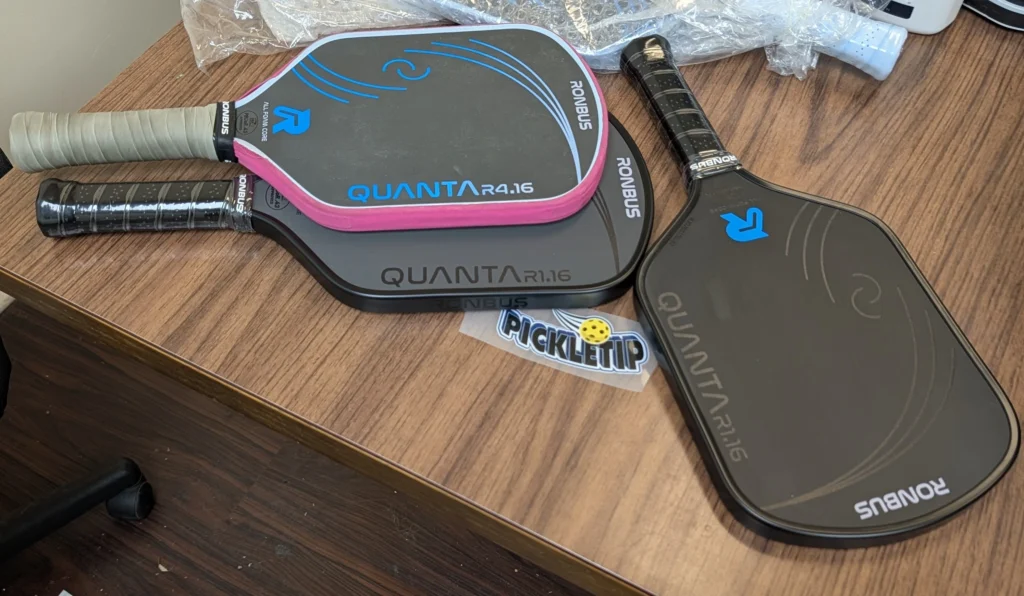
Customization note: The Quanta paddles pictured above were customized. The ranking reflects the Quanta setup I tested, but added weight can change hand speed, stability, and feel. Use the full review to understand the setup before copying a modification.
How the Top Foam Paddles Actually Differ
| Paddle | Core Style | Hand Speed | Impact Feel | Strongest Use | Evidence Depth |
|---|---|---|---|---|---|
| Ronbus Quanta | EPP foam core with elastomer support | High | Connected and adaptable | All-court stability | Full PickleTip review |
| Honolulu J2CR | All-foam floating-core design | Very High | Direct and responsive | Fast counters and reloads | Full PickleTip review |
| Honolulu J2NF | Notched multi-density foam | Moderate-High | Plush and calm | Resets and defensive stability | Full PickleTip review |
| Honolulu J2FC+ | Floating/pivoting all-foam design | Moderate | Quiet and control-first | Controlled depth | Tested; no full review |
| Selkirk LABS Project 008 Maxima | High-density PureFoam build | Moderate | Plush and control-first | Touch and soft-game readability | Tested; no full review |
| Spartus P1 Hybrid | Foam-core hybrid construction | Moderate | Linear, planted, directionally stable | Forward-driving controlled power | Full PickleTip review |
| Vatic V-Sol Power | Full EPP foam with indented structure | High | Plush with later power delivery | Lower-cost full-foam offense | Full PickleTip review |
| 11SIX24 Vapor Power 2 | Full-foam floating-core design | Very High | Fast and aggressive | Early counters and pressure | Full PickleTip review |
Why no generic “score out of 10” columns? Two paddles can earn the same control score and solve completely different problems. I would rather tell you which one I trust on a late reset, an open block, or a fast counter.
Specification and approval note: Verify the exact model, shape, and current stamp before tournament play. Check the official USA Pickleball approved paddle list and the official UPA-A paddle list, then confirm which standard your event uses. For the approval and legality process itself, use Pickleball Paddle Rules, Testing, Approval & Legality.
Best Foam Paddle by Mistake Pattern
| If Your Problem Is… | Start Here | Why |
|---|---|---|
| Resets floating under pressure | Honolulu J2NF or J2FC+ | You need calmer depth control, not more pop. |
| Late hands in kitchen exchanges | Honolulu J2CR | You need foam stability without making the paddle feel slow. |
| Off-center blocks twisting the face | Ronbus Quanta or J2NF | You need more help in the miss zone. |
| Drives and counters sailing high | Spartus P1 Hybrid | You need forward pressure without a jumpy launch. |
| Wanting early offense and fast reloads | 11SIX24 Vapor Power 2 | You want the aggressive end of foam, not the calmest end. |
| Curiosity without premium pricing | Vatic V-Sol Power | You can test the category before overcommitting. |
How I Tested These Foam Paddles
These rankings combine available paddle measurements, repeated play sessions, full PickleTip reviews, and live-point behavior. I care most about what happens after the clean demo hits are over: rushed counters, off-center blocks, transition resets, dink exchanges, compact speedups, and whether the paddle still feels trustworthy after several games instead of five warmup swings.
Testing depth is not identical for every model. Some paddles here have been through extended review play; others have only been through several comparison sessions. I flag that difference instead of pretending those are the same level of evidence. Models with a full standalone PickleTip review are linked in the recommendations. The Honolulu J2FC+ and Selkirk LABS Project 008 Maxima are tested recommendations without equally deep standalone reviews, so I am less certain about their smaller tradeoffs than I am with the fully reviewed models.
- Control and predictability: drops, blocks, resets, counters, and depth management.
- Miss-zone stability: how the face behaves when contact drifts away from center.
- Hand speed: whether the total paddle demand becomes a liability during fast kitchen exchanges.
- Power and pop: serve pace, drive penetration, compact counters, and how the ball rebounds.
- Spin access: how reliably the face and core combination shape the ball on full and compact swings.
- Feel: dwell, vibration damping, feedback, and comfort over repeated play.
- Player fit: whether the paddle solves a recognizable problem without creating a worse one.
- Value and assurance: price, warranty, evidence depth, approval needs, and confidence in the buying decision.
I do not rank foam paddles by sound, launch hype, or how impressive the first five center hits feel. A paddle moves up when it keeps solving real problems under pressure: fewer panic pop-ups, steadier counters, cleaner reset depth, and less punishment when contact drifts away from center.
The Foam Fit Test: A foam paddle earns its place when the construction changes the miss that costs you points. If the same late block still twists, the same reset still floats, or the paddle now arrives late to fix a problem you did not have, the foam label did not solve anything.
Honest limitation: Foam construction is changing quickly. I have more confidence in the court differences described here than in broad claims that one core type will automatically last longer than another.
What Counts as a Foam Core Pickleball Paddle?
A foam core pickleball paddle uses structural foam through most or all of the hitting-area core instead of relying only on a polypropylene honeycomb grid. That includes full-foam builds, notched-foam cores, and floating foam cores designed to move or compress inside a supporting structure.
This guide does not treat every paddle containing foam as a foam-core paddle. Many thermoformed honeycomb paddles use foam around the perimeter. That edge foam can improve stability and sweet-spot feel, but the primary striking-area core is still honeycomb.
Category rule: Foam must be a major part of the hitting-area core (not merely an edge treatment) for a paddle to belong in the primary rankings.
Foam Terms That Matter to the Buying Decision
| Term | What It Tells You | What It Does Not Tell You |
|---|---|---|
| Full foam / all foam | Foam spans most or all of the hitting-area core. | Whether the paddle will be soft, fast, powerful, forgiving, or durable. |
| Floating foam core | The foam center is designed to move or compress within support around it. | Whether launch will be calm or aggressive. |
| Notched foam | The foam is shaped to tune flex, compression, weight distribution, or rebound. | That every notched design will play alike. |
| EPP / EVA | The family of foam used in part of the structure. | How the finished paddle will feel without density, face, shape, and support context. |
| Perimeter foam | Foam is added around a honeycomb core or near the edge. | That the striking-area core is actually full foam. |
Buying translation: foam describes part of the construction, not the finished behavior. Density, face construction, support structure, shape, total weight, swing demand, and twist stability still decide whether the paddle feels calm, quick, powerful, or forgiving.
Need the engineering explanation rather than the buying decision? Read Why Foam Core Paddles Feel Different Under Pressure for the deeper discussion of rebound, damping, swing weight, twist weight, launch stability, and what different foam structures are doing under impact.
The Real Problem Foam Can Solve
For years, players quietly compensated for edge drop-offs, hot spots, dead zones, and strange rebounds. Most did not call it a paddle problem. They assumed every ugly contact was technique.
The biggest real-world difference is not the perfect center hit. It is what happens in the miss zone. Better foam builds can keep late blocks, stretched resets, and counters caught near the edge more playable.
The Miss-Zone Test: Center hits tell me what a paddle can do. Late blocks, stretched resets, and counters caught near the edge tell me whether I can trust it.
The Foam Paddles I Would Recommend in 2026
1. Ronbus Quanta — Best Overall Foam-Core Paddle
Best fit: the player who wants the most balanced entry into foam without starting from an extreme.
The Quanta earns the top position because it is the least extreme paddle in the group. During chaotic open-play exchanges, it kept rushed counters more stable than many hollow-feeling builds while remaining useful on drops, drives, dinks, rolls, and ordinary all-court doubles.
Where it helped: off-center blocks and rushed counters became less punishing without forcing the soft, muted feel of a reset-only paddle.
What I do not love: the Quanta is not the softest reset paddle or the quickest attacking paddle here. The J2NF gives you more reset-first help, while the J2CR and Vapor Power 2 feel quicker and more attack-minded. The Quanta wins by creating fewer compromises, not by dominating every category.
Read next: Ronbus Quanta review
2. Honolulu J2CR — Best Foam Paddle for Fast Hands
Best fit: players who want quick hybrid handling, useful pop, and a more direct next ball than the muted control-first builds.
The J2CR keeps all-foam construction from feeling sleepy. It gets through compact counters and reloads quickly, and the ball leaves the face more directly than it does with the plusher Honolulu options.
What I noticed: this is the Honolulu foam option I would start with when hand speed is still part of your game. The face gives you less room for error than the J2NF when a block opens or a reset arrives late.
Skip it when: your main problem is calming down floating resets or making defensive contact less reactive.
Read next: Honolulu J2CR review
3. Honolulu J2NF — Most Forgiving Foam Paddle
Best fit: players who care more about calm resets, stable defensive contact, and a larger usable face than raw flash.
The J2NF is the clearest forgiveness-first answer in this group. Reset consistency improved most when contact became rushed and ugly. That is the reason to buy it, not because the first five warmup swings feel dramatic.
Where it separated itself: transition resets that were caught late or away from center stayed more manageable. I would point a player here when their hand battles are acceptable but their transition game keeps floating, dying, or twisting under pressure.
The cost of that help: it is less immediately explosive than the J2CR or Vapor Power 2.
Read next: Honolulu J2NF review
4. Honolulu J2FC+ — Best Plush-Control Foam Paddle
Best fit: players who want a quiet, forgiving paddle that helps manage depth through drops, resets, and controlled counters.
The J2FC+ leans farther into calmness than the J2CR. In my Honolulu testing, the surprise was that the full-foam FC+ was not the power paddle I expected it to be. It leaned more toward control, and that calmer response made the most sense on tight exchanges where placement mattered more than winning the speed contest.
What I know so far: I have played it enough to trust the control-first side of the recommendation, but I have not put it through the same depth of review as the J2NF or J2CR. The strongest reason to choose it is controlled depth and a steadier response in tight exchanges, not a louder speedup or a punchier first impression.
Pass when: you want the face to answer firmly and quickly on every compact attack.
5. Selkirk LABS Project 008 Maxima — Best Touch-First Full-Foam Paddle
Best fit: players who want touch, comfort, and predictable depth and pace instead of a fast, attack-first next shot.
The 008 Maxima belongs because the ball feels readable during dinks, resets, and blocks, shots where a jumpy next ball creates more trouble than extra pace solves. In my earlier Honolulu comparison, the Selkirk 008 line felt more control-oriented, plush, and soft than the J2NF family, while the Honolulu paddles brought noticeably more power and stock spin. That is the lane I would keep the Maxima in here.
One caveat: I have spent enough time with the Maxima to know where it belongs in this group, but it has not had the same extended PickleTip review treatment as the paddles linked above. I trust where the Maxima belongs here. I am less certain about the little differences that only show up after living with a paddle for a long time.
Not ideal for: players whose first buying goal is explosive putaway power.
6. Spartus P1 Hybrid — Best Controlled-Power Foam Paddle
Best fit: players who want the ball to drive forward with strong stability instead of jumping upward from a springy face.
The P1 Hybrid hits a heavy ball, but “controlled power” is not the same as free offense. The output behaves more like a volume knob than a light switch: drives get heavier as you accelerate without the sudden rebound spike that can make an 80-percent swing jump long.
What I noticed: on off-center contact, mishits tended to lose pace before they lost direction. That is why the paddle feels so composed on emergency blocks and crowded hands exchanges. The cost shows up later: the same mass that keeps the face square can tax hand speed when your forearm gets tired.
Read next: Spartus P1 Hybrid review
7. Vatic V-Sol Power — Best Lower-Cost Full-Foam Option
Best fit: players who want a lower-cost full-EPP option and would rather have calmer blocks, deeper resets, and linear drive power than instant pop from a short swing.
The V-Sol Power is the calmer half of Vatic’s two-feel V-Sol family. In my testing, it absorbed pace better on high-pressure blocks and rewarded a fuller swing with a heavier, straighter drive. The useful part is not that it feels plush. It is that the power arrives later and more linearly instead of jumping off the face on every compact touch.
Where it makes sense: the V-Sol Power gives you the calm-block, deep-reset side of modern foam without making price the whole reason to buy it.
The compromise: that calmer response can tempt you to get passive. When my prep got lazy, the Power was more likely to leave the next ball short or in the net than to bail me out with free pop.
Read next: Vatic V-Sol Power review
8. 11SIX24 Vapor Power 2 — Best Aggressive Floating-Foam Hybrid
Best fit: players who want fast hands, real bite, and a more aggressive hybrid profile from a floating foam build.
The Vapor Power 2 is the pick when you want foam to feel quick and dangerous rather than plush and patient. The hybrid shape gets through counters and reloads quickly, and the paddle rewards a player who wants to pressure the ball early.
J2CR or Vapor Power 2? Start with the J2CR when you want fast hands with the more balanced all-court answer. Choose the Vapor Power 2 when you want the more aggressive option and are willing to accept a more reactive block and reset game.
The warning: leave a block slightly open and the extra speed shows up immediately. That makes it the aggressive alternative, not the safest first foam paddle.
Read next: 11SIX24 Vapor Power 2 review
Foam Core vs. Honeycomb Pickleball Paddles
| Question | Foam-Core Tendency | Honeycomb Tendency |
|---|---|---|
| What happens near the edge? | Better builds often keep more of the face playable. | Performance may fall away more sharply outside center, depending on the build. |
| How does impact feel? | Often quieter, more damped, or more settled. | Often crisper, louder, or more familiar. |
| Does it automatically have more power? | No. Foam can be calm or aggressive. | No. Honeycomb can also range from control-first to very hot. |
| Can it feel slow? | Yes, if total paddle demand is high. | Yes, depending on shape and weight distribution. |
| Which is better? | Better when its specific behavior fixes your miss. | Better when its feedback, speed, or familiarity fits your game. |
Some players will still prefer the crisp feedback, quick handling, or familiar ball response of a good honeycomb paddle. Construction can explain some of what you feel; it still cannot tell you whether you will like the paddle.
What Foam Does (and Does Not) Fix
| Foam May Help With | Foam Will Not Automatically Fix |
|---|---|
| Harsh vibration and hollow feedback | Poor footwork or late preparation |
| Face twist on off-center blocks | An open paddle face |
| Unpredictable rebound in the miss zone | Bad shot selection |
| Calmer depth on resets and blocks | A grip that tightens under pressure |
| A broader usable contact area | A paddle that is too demanding for your hand speed |
If you still do not know whether the real problem is technique, timing, or equipment fit, do not expect a core material to diagnose it for you. Use the broader paddle-selection framework before making construction the answer.
Coach’s note: if the paddle feels muted in session one, do not panic. Muted is not always weak. Sometimes the face is simply giving you fewer surprises and your hands have not learned to trust that yet.
Who Should Avoid a Foam Paddle for Now?
- Players who rely on trampoline-like power and do not want a calmer ball response.
- Players who need ultra-light swing demand above everything else.
- Players who strongly prefer crisp vibration feedback and audible pop.
- Players whose current problem is clearly preparation, face angle, grip pressure, or shot selection rather than equipment.
- Players unwilling to verify the exact model’s current tournament approval.
Where to Go If Foam Isn’t the Only Question
- Need the deeper technology explanation? Read Why Foam Core Paddles Feel Different Under Pressure.
- Still deciding whether foam is the right category? Start with the broader pickleball paddle buyer’s guide.
- Want the broad market view? Compare the best pickleball paddles.
- Shopping for a newer player? See the best beginner pickleball paddles.
- Is price the hard constraint? Compare the best budget pickleball paddles.
- Is control the primary problem? Use the best control pickleball paddles guide.
- Is spin the primary problem? See the best pickleball paddles for spin.
- Coming from tennis? Use the tennis-transition paddle guide.
- Already leaning Honolulu? Compare the Honolulu J2NF and Honolulu J2CR reviews.
Foam Paddle Questions Players Keep Asking
The Ronbus Quanta is the safest all-court starting point in this guide. The Honolulu J2NF is the stronger reset-first choice, while the Honolulu J2CR and 11SIX24 Vapor Power 2 make more sense for faster, more aggressive players.
No. A full-foam paddle uses foam through most or all of the hitting-area core. A perimeter-foam paddle may still use a traditional honeycomb core with foam added mainly around the edge.
That is often their biggest appeal. Better foam builds can widen the usable contact area and make late or off-center contact less punishing, but shape, weight distribution, and support structure still matter.
Not automatically. Some foam paddles are calm and reset-first. Others are fast and aggressive. Core material alone does not tell you how much power or launch the paddle will have.
There is not enough reason to treat foam as an automatic durability guarantee. Long-term performance still depends on the exact construction, face layup, manufacturing quality, use, and model history.
Many are, but approval can change and different events may use different standards. Verify the exact model on the current USA Pickleball and UPA-A approved paddle lists before tournament play.
They can be. A forgiving face and calmer off-center contact may help a newer player, but the paddle still needs a manageable swing demand. A stable foam paddle is not beginner-friendly if it feels late in hand or supplies more rebound than the player can control.
Foam-core paddles can be better for players who need more stability, vibration damping, a broader usable contact area, or a calmer response when contact gets rushed. They are not automatically better for players who prioritize very low swing demand, crisp feedback, or a familiar honeycomb response.
The Ronbus Quanta is PickleTip’s safest balanced all-court choice. The Honolulu J2NF is the better forgiveness-first option, the Honolulu J2CR is the quicker fast-hands option, and the Selkirk LABS Project 008 Maxima is the touch-first full-foam choice.
Which Foam Paddle Should You Actually Buy?
If you want the safest all-court answer, start with the Ronbus Quanta. If transition resets and defensive stability are the problem, start with the Honolulu J2NF. If you want faster hands and a firmer next shot, compare the Honolulu J2CR with the 11SIX24 Vapor Power 2. If you want the lower-cost full-foam option, start with the Vatic V-Sol Power.
Coach Sid’s bottom line: Foam is not the recommendation. The response is. Buy the foam paddle that makes your bad contact cheaper without creating a new problem on the shots you already own.
Already bought one and want to understand what you are feeling under pressure? Use the five-minute fit check in Why Foam Core Paddles Feel Different Under Pressure.




Hola, volia saber el seu preu.
The prices are listed for each paddle.