
15 Best Pickleball Paddles of 2026: Tested and Ranked
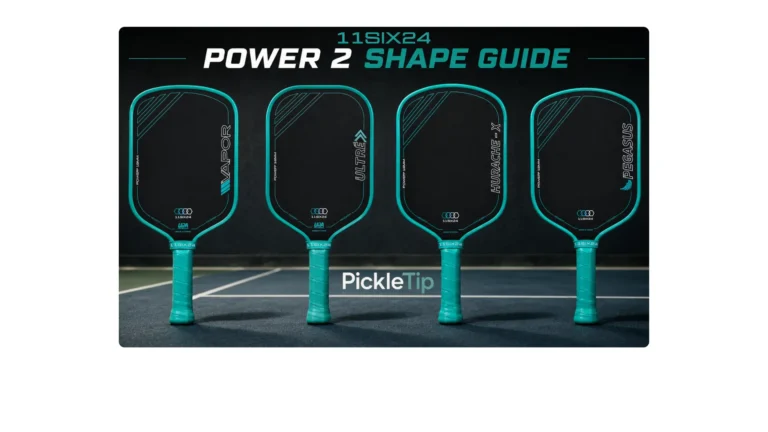
The best pickleball paddle for most intermediate-to-advanced doubles players right now is the 11SIX24 Ultre Power 2 16mm. It combines connected power, fast counters, reliable resets, useful spin and a flat-top contact window that feels natural when exchanges speed up. It is not the most forgiving paddle at the extreme edges, which is why the complete ranking matters.
Last updated September 14, 2026: I have played with every ranked paddle for at least 12 hours, including competitive doubles and drilling. This is not a list of the hardest-hitting, softest, spinniest, cheapest or most tournament-friendly paddles. It ranks the paddles I trust across an entire doubles point: offense, control, stability, forgiveness, hand speed, resets and the cost of each paddle’s main tradeoff.
Already know that one trait matters more than the complete package? Skip this general ranking and use the dedicated guides for spin, control, paddles under $100, foam-core paddles, beginner paddles or paddles for tennis players. Those pages answer narrower questions in more depth.
Jump to: all 15 rankings • how paddles are ranked • full recommendations • specialist guides • why good paddles are missing • FAQ
The 15 Best Pickleball Paddles at a Glance
| Rank | Paddle | Why It Ranks | Main Tradeoff |
|---|---|---|---|
| 1 | 11SIX24 Ultre Power 2 16mm | Connected offense, fast counters, trustworthy resets and a useful high-contact window | Extreme edge and top-corner misses receive less help |
| 2 | RPM Q2 16mm Elongated | Reach, leverage and heavy connected pace for aggressive doubles | Blocks and counters demand launch discipline |
| 3 | Bread & Butter Loco | Immediate finishing speed with enough touch to play a complete point | Firm response and a high-center hot area punish loose contact |
| 4 | CRBN TruFoam Barrage | Foam power, dwell and the ability to shift from attack to defense | Rushed hands can make its lively response expensive |
| 5 | Engage X2 | Placement, depth and controlled offense that reward committed swings | Head-forward feel exposes late hands and edge contact |
| 6 | Holbrook Fuze | Balanced performance when a point moves between patience, defense and attack | Does not dominate either performance extreme |
| 7 | 11SIX24 Hurache-X Jelly Bean 2 | Soft foam control, excellent spin, dependable resets and useful elongated leverage | Short-stroke offense requires more player acceleration |
| 8 | Honolulu J2CR 16mm, Original Surface | Quick stability and forgiveness that keep rushed contact playable | More pop-forward than a muted control build |
| 9 | Six Zero Black Opal | Explosive foam offense that remains usable in advanced doubles | Resets and touch exchanges require active management |
| 10 | Spartus Spitfire | Real full-swing pace, exceptional bite and a calmer response on defensive contact | Forward balance and moderate counter pop will not fit everyone |
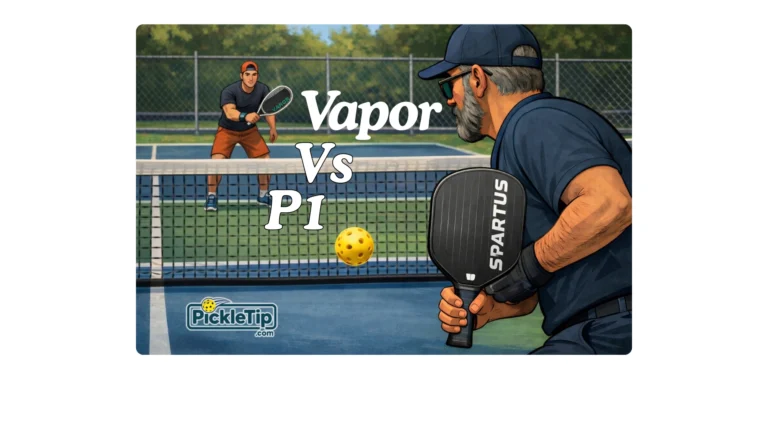
| 11 | Spartus P1 Hybrid 16mm | Stable blocks, dependable counters and a surface that has earned longer-term trust | Not especially soft, light or quick through the hand |
| 12 | Engage Axiom | Gen3 offense, very high spin, quick pop and manageable swing demands | Its crisp power can be more than control-oriented players want |
| 13 | 11SIX24 Pegasus Jelly Bean 2 | Widebody stability, quick positioning, forgiving resets and player-generated offense | Restrained rebound offers little automatic finishing speed |
| 14 | 11SIX24 Vapor Power 2 16mm | Fast hybrid timing, connected pop and strong performance during hands battles | The Ultre shape creates a more useful contact window for more players |
| 15 | Luzz Pro 4 Inferno 16mm | Forgiving power and useful depth when contact is late or slightly off-center | Head-forward feel and loud response reduce its universal appeal |
A lower-ranked paddle can still be the better purchase when its strength solves your recurring problem and its weakness stays outside your normal miss.
What “best overall” means here: A paddle does not need to win every category. It needs to help across the largest share of a competitive doubles point without making you pay too dearly for its weakness.
Who should skip the Ultre Power 2: Players who need maximum edge forgiveness, a very muted response or elongated reach may find a better fit lower in this ranking. Number one means my strongest complete recommendation, not the right answer for every swing.
How a Paddle Earns an Overall Ranking
Popularity does not earn a position, and one impressive measurement does not make a complete paddle. These rankings emphasize doubles, where the same paddle may need to drive, block, reset, counter and slow the ball down within one point.
- Meaningful court exposure: No paddle earns a ranking from one good session. Every paddle in the top 15 has received at least 12 hours of play, including competitive doubles and drilling. When longer-term use changes my confidence, I say so.
- Stability and forgiveness: I look at off-center blocks, rushed counters, edge contact and whether imperfect contact remains playable.
- Hand-speed behavior: Kitchen exchanges reveal whether a paddle reloads naturally or begins feeling slow when several balls arrive quickly.
- Reset trust: A useful paddle must absorb and redirect pace without turning ordinary defensive contact into repeated pop-ups.
- Usable offense: Pace, depth, rolls and finishing speed matter only when I can still aim them under real pressure.
- Shape and swing fit: Reach, face geometry, handle room, balance and rotational demands all affect how much of the paddle is usable during a point.
- Tradeoff cost: Every paddle has a weakness. The strongest overall paddles make that weakness appear less often or cost fewer points when it does.
What does not decide the order: A paddle does not move up because it is cheaper, newer, more popular, USAP approved or UPA-A approved. Price and approval matter to the buyer, so I disclose them where useful. They do not tell me how well the paddle performs.
For the complete review process, testing sources and evidence rules, see how PickleTip tests pickleball paddles. If you are still deciding what characteristics fit your game, start with how to choose a pickleball paddle; this page assumes you are ready to compare the strongest complete options.
The 15 Best Pickleball Paddles of 2026, Ranked
Every paddle below earned its place. Each also has a weakness that can make a lower-ranked option better for the right player.
#1 – 11SIX24 Ultre Power 2 16mm
How it plays: The flat top gives me more usable face above center, where many counters, rolls and rushed blocks actually land. It gives me offense without making every reset feel like damage control. After nearly three months with the production paddle, I had not seen visible deterioration in its HexGrit surface or felt a meaningful loss of bite.
Why it ranks first: Other paddles hit harder, protect more edge contact or feel softer. The Ultre earns the top spot because I do not have to babysit it when a point changes speed. It is the paddle I stopped thinking about fastest.
- Strongest fit: Intermediate-to-advanced doubles players who counter, roll, reset and frequently contact the ball high on the face.
- Main tradeoff: Extreme edge and top-corner mishits do not receive the largest bailout zone in this ranking.
Read the full PickleTip review or compare the Power 2 shapes.
#2 – RPM Q2 16mm Elongated
How it plays: The elongated Q2 gives aggressive players reach, leverage and a heavier ball than the Ultre. The pace still feels connected to the hand instead of appearing as an unpredictable trampoline response.
Why it ranks here: The Q2 creates more offensive pressure than the Ultre. The difference shows up when that pressure comes back and my stroke has to shrink into a block or hurried counter. The Q2 asks for better launch control in those moments, which keeps it second overall.
- Strongest fit: Aggressive players who use committed drives, counters, reach and leverage to control points.
- Main tradeoff: Launch discipline matters when the stroke becomes short or reactive.
Want a ranking built specifically around maximum pace rather than the whole game? Use the power paddle guide. This position reflects the Q2’s complete performance.
#3 – Bread & Butter Loco
How it plays: The Loco supplies immediate pop and finishing speed while preserving enough pocketing and direction to play more than one kind of point. It feels firm and rewards centered, intentional contact.
Why it ranks here: The Loco gives me putaway speed without making the next counter feel like a coin flip. Its price is attractive, but that is not why it sits third; the paddle would remain here if every model on this page cost the same.
- Strongest fit: Players who want counters and putaways to create pressure without abandoning a functional soft game.
- Main tradeoff: The firm feel and high-center hot area can punish floaty hands and inconsistent contact.
#4 – CRBN TruFoam Barrage
How it plays: The Barrage has a crisp foam response with enough dwell to shape aggressive shots. I can use that liveliness to attack and still trust the face when the next ball forces me to defend.
Why it ranks here: Its pace, counters and ball connection all belong in an advanced all-court game. The difference from the Black Opal shows up immediately after the attack: I trust the Barrage more when the next ball has to be blocked or softened.
- Strongest fit: Advanced players who want a foam response that can attack, redirect and shape the next ball.
- Main tradeoff: Rushed resets still require active hands; the paddle will not automatically calm poor contact.
For a construction-led comparison rather than an overall ranking, see the foam-core paddle guide.
#5 – Engage X2
How it plays: The X2 creates pressure through placement, depth and committed swings more than reaction-speed fireworks. The initial response can feel quiet, then the ball lands deep and close to the intended line.
Why it ranks here: Prepared counters, drives, drops and directional attacks remain dependable. The cost appears when contact becomes late: the head-forward feel exposes hurried hands and edge-heavy resets.
- Strongest fit: Players who create offense with location, depth and full swings.
- Main tradeoff: Last-second kitchen exchanges demand more preparation than the faster paddles above it.
Read the full PickleTip review. For a ranking centered specifically on touch, resets and blocks, use the control paddle guide.
#6 – Holbrook Fuze
How it plays: The Fuze can attack one ball, absorb pace on the next and then soften the exchange without making any of those jobs feel borrowed. Its identity is balance rather than one exaggerated trait.
Why it ranks here: It is one of the easiest paddles on this page to recommend when a player’s game changes from point to point. The paddles above it give me a clearer advantage in their best moments. The Fuze gives me fewer moments when I wish I were holding something else.
- Strongest fit: Intermediate-to-advanced players who need one paddle for patient points, counters and finishing opportunities.
- Main tradeoff: Players chasing an extreme response may find it too balanced.
#7 – 11SIX24 Hurache-X Jelly Bean 2
How it plays: The elongated Hurache-X gives the softer Jelly Bean 2 platform reach and leverage without making the paddle cumbersome. Drops feel natural, resets are a major strength, spin is excellent and full swings produce enough authority to play a complete offensive point.
Why it ranks here: This was my favorite of the four Jelly Bean 2 shapes and the version where the platform’s weakness bothered me least. It gives up the automatic short-stroke speed of Power 2, but its control, spin, defense and full-swing offense earned a place above several established paddles.
- Strongest fit: Players who want elongated reach and soft foam control but still intend to attack with full swings.
- Main tradeoff: Punch counters and abbreviated speedups require more acceleration from the player.
Read the full PickleTip review or compare all four Jelly Bean 2 shapes.
#8 – Honolulu J2CR 16mm, Original Surface
How it plays: The quick, stable J2 shape gives rushed blocks and compact counters a better chance to remain useful. More imperfect contact survives, while the face still provides enough pop to attack.
Why it ranks here: The J2CR gives late blocks, cramped counters and slightly off-center contact a better chance to stay in the point. It falls below the Hurache-X because its pop-forward response is less comfortable for players who want the paddle to absorb more pace.
- Strongest fit: Players whose late blocks, rushed defense and compact counters are costing too many points.
- Main tradeoff: The ball leaves faster than it does from a muted control paddle.
Read the full PickleTip review or compare the original and Blue Grit versions.
#9 – Six Zero Black Opal
How it plays: The Black Opal rewards players who can stay on offense. It jumps off the face quickly enough to finish counters without turning every fast exchange into pure chaos.
Why it ranks here: The Black Opal helps me start and finish a firefight. The separation from the Barrage appears when the attack comes back: I have to manage the Black Opal more carefully when the next ball needs to be blocked, reset or softened.
- Strongest fit: Advanced players who want a lively offensive response and can manage the next defensive ball.
- Main tradeoff: The soft game becomes less forgiving when preparation or contact slips.
#10 – Spartus Spitfire
How it plays: The Spitfire produces legitimate pace on full swings while keeping blocks, resets and dinks calmer than many foam power paddles. Its surface created obvious bite on drives, serves, slices, rolls and softer kitchen shots throughout approximately 18 hours of play.
Why it ranks here: I liked the paddle before considering its price. Real offense, predictable short-stroke response and a forgiving central hitting area make it more than an inexpensive specialist. It stops at ten because its forward balance and moderate reactive pop create a more specific fit than the paddles above it.
- Strongest fit: Players who create pace with a full swing but do not want defensive contact launching unpredictably.
- Main tradeoff: Head-sensitive players may notice the forward balance, while counter-first players may want more automatic pop.
Read the full PickleTip review. Its price is covered more fully in the under-$100 paddle guide; this ranking is based on performance.
#11 – Spartus P1 Hybrid 16mm
How it plays: The P1 presents a steadier face than many livelier options. Blocks and counters avoid twitchy launch, and its surface has given me more confidence beyond the fresh-wrapper sessions.
Why it ranks here: The P1 kept earning my trust after the new-paddle excitement wore off. The newer paddles above it give me more hand speed, softness or easier offense, but the P1 continues doing the important things without changing personalities.
- Strongest fit: Players who value stable blocks, dependable counters and a composed response under pace.
- Main tradeoff: It is not a soft, whippy or especially fast-feeling hybrid.
#12 – Engage Axiom
How it plays: The Axiom is a legitimate Gen3 power paddle with very high spin, quick pop, crisp feedback and manageable swing demands. The offense is immediate.
Why it ranks here: It performs its intended job very well, even though it supplies more power than I normally choose for my own game. The firm, lively response makes it less broadly comfortable than the higher-ranked paddles, and longer real-world surface history still has to accumulate.
- Strongest fit: Players who want crisp Gen3 offense, fast pop and heavy spin rather than a soft foam sensation.
- Main tradeoff: Control-oriented hands may spend too much of the point managing its available speed.
#13 – 11SIX24 Pegasus Jelly Bean 2
How it plays: After roughly 26 hours, the Pegasus became a widebody I could pick up and simply play. It combines quick handling, strong lateral stability, excellent spin, forgiving resets and enough earned power when I provide the swing.
Why it ranks here: The paddle’s control and stability make it unusually versatile for a restrained widebody. It ranks below the Hurache-X because the elongated shape gave me easier access to useful offense and became the Jelly Bean 2 I trusted across more situations.
- Strongest fit: Players who want a broad, stable face and the freedom to swing without managing a hot rebound.
- Main tradeoff: The paddle supplies limited automatic pace on abbreviated counters and speedups.
#14 – 11SIX24 Vapor Power 2 16mm
How it plays: The Vapor Power 2 remains a fast, familiar hybrid with connected pop, useful spin and excellent timing in clean hands exchanges. It can attack without feeling disconnected from the hand.
Why it ranks here: Falling outside the former top ten did not make it a worse paddle. The Ultre gives the same Power 2 response more useful face above center, which is where I catch too many rushed counters and blocks to ignore the difference.
- Strongest fit: Hybrid-shape players who prioritize fast counters and familiar timing.
- Main tradeoff: It offers less useful face above center than the higher-ranked Ultre.
#15 – Luzz Pro 4 Inferno 16mm
How it plays: The Inferno adds pace, depth and a large usable central hitting area without turning every defensive block into a launch gamble. Slightly late or off-center contact often remains productive.
Why it ranks here: The Inferno still gives late and slightly off-center contact useful depth, but it does not separate itself as clearly as the paddles above it. Some feel calmer, some move faster in clean hands exchanges and some create more extreme offense.
- Strongest fit: Players who want more depth and finishing speed without maximum free-power chaos.
- Main tradeoff: The loud response and somewhat head-forward feel become noticeable during frantic exchanges.
When This Overall Ranking Is Not the Right List
This page ranks the whole doubles point. If one requirement outweighs everything else, use the guide built around that need:
- Maximum pace is the priority: Compare launch, pop, full-swing speed and control cost in the power paddle guide.
- Touch and defensive predictability come first: Compare drops, resets, blocks and response under pace in the best control pickleball paddles guide.
- Ball shape and surface bite drive the decision: Use the repeatable testing and spin-led rankings in the best spin pickleball paddles guide.
- You have a firm spending ceiling: The best paddles under $100 guide compares performance inside that limit.
- You specifically want foam construction: Compare foam behavior, dwell, rebound and player fit in the best foam-core paddle guide.
- You are buying a first paddle: The beginner paddle guide prioritizes learning, forgiveness and manageable response.
- You are bringing tennis mechanics to pickleball: The tennis-player paddle guide goes deeper on handle room, reach and transition fit.
Why these rankings can differ: A paddle can rank lower here and first in a more specific guide without creating a contradiction. This page weighs the entire game; a focused guide intentionally gives one need more weight.
Why Some Good Paddles Are Not in the Top 15
Expanding from ten to 15 gives more proven paddles room, but the list still needs an edge. A paddle stays out when another model covers the same job more completely, its main compromise costs too much in ordinary doubles, or the testing record is not mature enough for a confident overall position.
- Ronbus Tenon R1.16: Excellent spin and slightly more pop when I accelerate, but I still prefer the worn Quanta’s dwell and ball connection. NanoBond’s long-term advantage remains open.
- 11SIX24 Vapor Jelly Bean 2: A predictable hybrid with soft control and serious spin, but the Hurache-X gave me a more complete version of the JB2 platform.
- 11SIX24 Ultre Jelly Bean 2: Planted, soft and spin-heavy, but its substantial swing does not return the reactive offensive payoff I get from Ultre Power 2.
- Honolulu J6CR: Still respected, but the J2CR protects late contact and rushed defense more consistently in this overall ranking.
- Ronbus Quanta R4: Still a good paddle, but it no longer creates enough separation from the top 15.
- Six Zero Coral: Still useful, but the Black Opal gives advanced players a stronger overall combination of foam offense and defensive playability.
- Selkirk Boomstik: Still powerful, but newer complete options now ask less from most amateur doubles players.
Still Owing Me More Court Time
- Friday Aura Pro: Not ranked until its strengths and recurring compromise are both clear.
- Gherkin Draco: Still in testing; early appeal is not enough for an overall position.
- Gearbox GX2 Power Series: Still in testing; popularity and first impressions do not displace a proven recommendation.
Looking for a Paddle That Is Not Here?
The PickleTip Paddle Library contains the individual reviews, direct comparisons, specifications and narrower player fits that do not belong inside this ranking.
Best Pickleball Paddles: Frequently Asked Questions
Before tournament play: Approval status can change and does not determine this ranking. Verify the exact model against the equipment rules used by your event. For the approval process and the changing relationship between governing bodies, see Pickleball Paddle Rules, Testing, Approval & Legality.
The 11SIX24 Ultre Power 2 16mm is PickleTip’s current number-one overall paddle because it combines connected offense, fast counters, reliable resets, useful spin and a flat-top contact window that works naturally in quick doubles exchanges. It is not the strongest choice for every specific need.
Every ranked paddle receives at least 12 hours of play, including competitive doubles and drilling. PickleTip then weighs usable offense, control, stability, forgiveness, hand speed, reset trust, shape fit and the cost of the paddle’s main tradeoff. Price, popularity and approval status do not determine the order.
No. Approval status is disclosed because it may affect tournament eligibility, but it is not a performance score and does not move a paddle up or down this list. Players should verify the exact requirements used by their event.
Popularity does not replace testing or complete player fit. A paddle may be absent because another model performs the same job more completely, its recurring compromise costs too much in ordinary doubles, or it still needs more court time.
These rankings prioritize doubles, especially counters, blocks, resets, hand speed, stability and the ability to change jobs during a point. Singles players may reasonably rank reach, serve pace and groundstroke leverage more heavily.
This overall ranking weighs the complete performance package. A focused guide gives more weight to one requirement, such as control, power, spin, price, foam construction or beginner fit, so its order can differ without contradicting this list.
The ranking is reviewed when sufficient new court testing changes a recommendation, longer-term play changes confidence in a paddle, or a new model proves that it belongs above an existing choice. A launch by itself does not trigger a ranking.
The Number-One Paddle Still Has to Fit Your Misses
The 11SIX24 Ultre Power 2 is my number-one overall choice today because I trust it across more parts of a doubles point. The RPM Q2 offers more offensive leverage, the Engage X2 rewards placement and depth, the Hurache-X Jelly Bean 2 gives up reactive pop for softer control, and the J2CR protects more rushed contact. The order only helps if you also understand when your game should ignore it.
Coach Sid note: Do not buy the paddle with the loudest reputation or the highest isolated number. Buy the complete paddle whose tradeoff you can live with when the score is tight and the contact is ugly.