

Yesterday Didn’t Define Their Limits. It Revealed the Next Level.
I have replayed yesterday’s Moneyball tournament in my head more times than I probably should admit.
Not just as a coach studying patterns, spacing, body language, and shot selection. As a father watching his son compete. As someone who has seen enough pickleball to know that the scoreboard rarely tells the whole story. And as someone who understands how one difficult matchup can make even strong players question what they already proved all day.
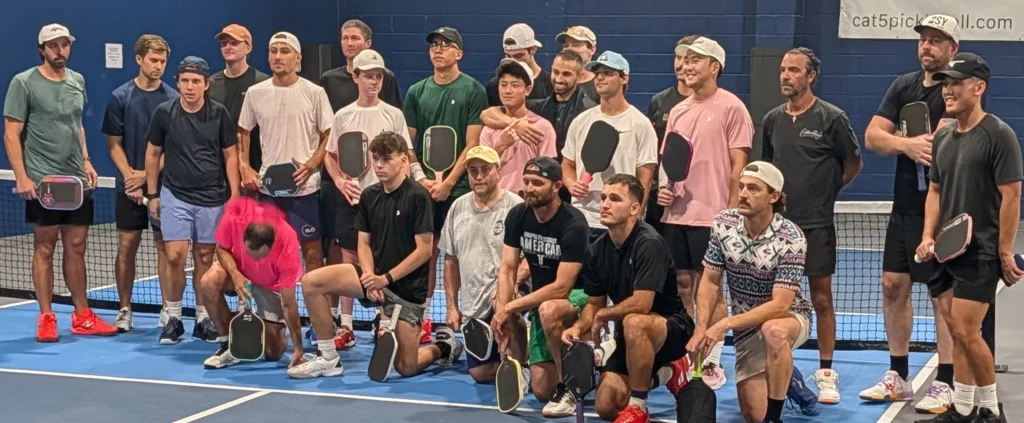
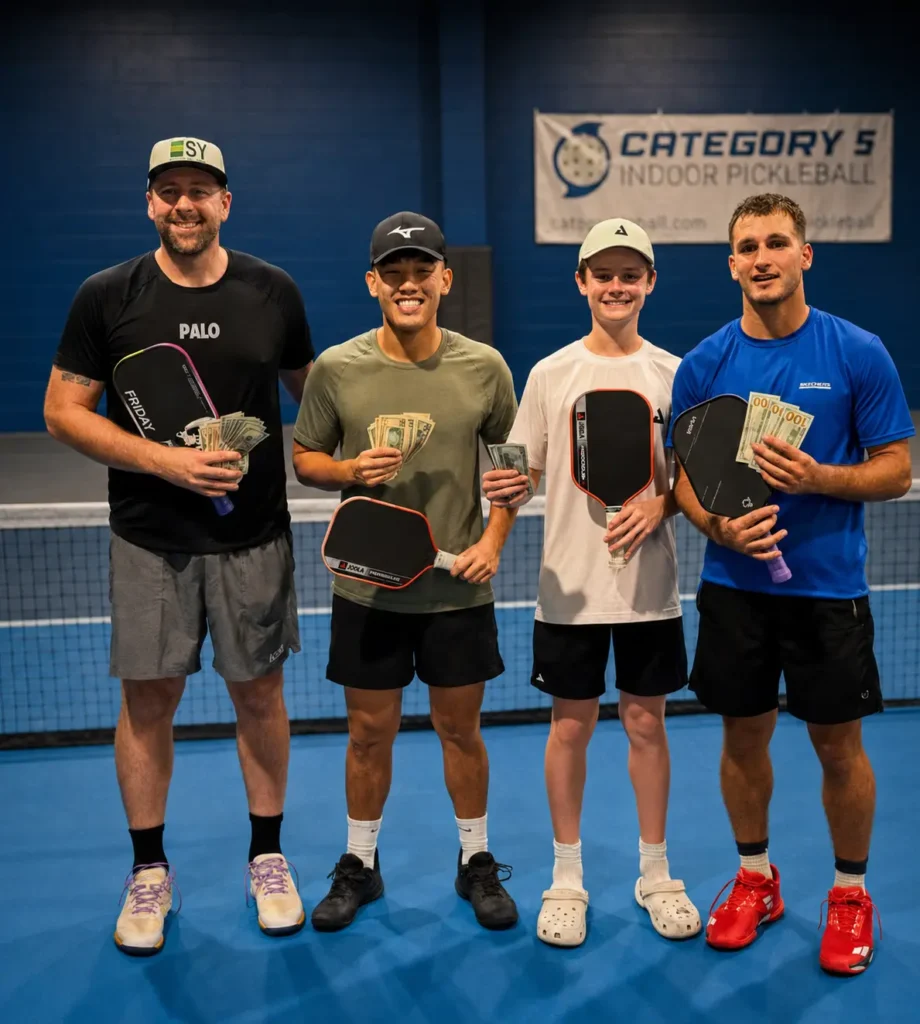
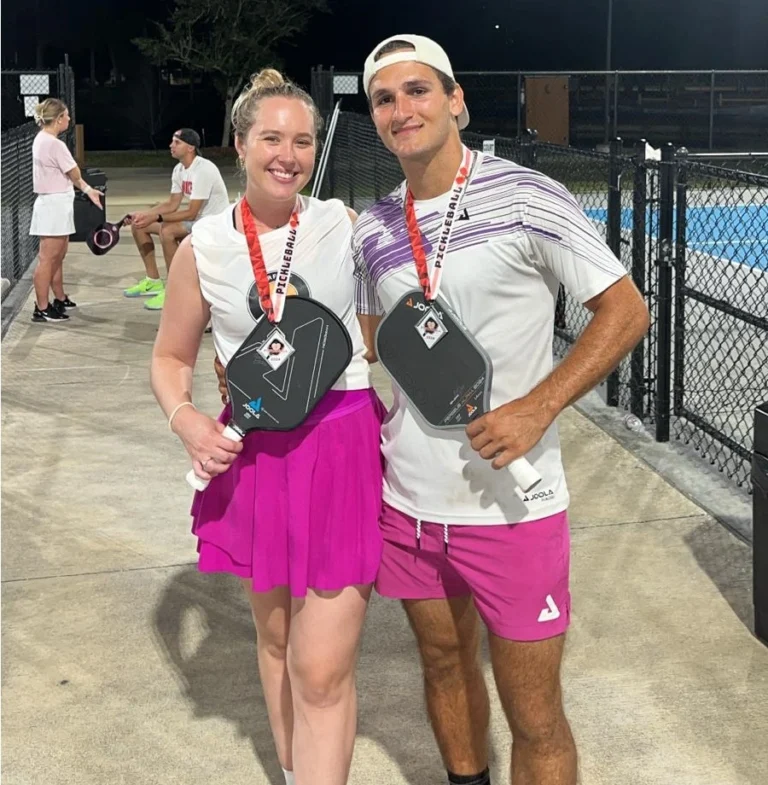
AJ and Austin played excellent pickleball. They beat every team they faced except one. They made the finals. They battled. They showed chemistry, toughness, and enough high-level tools to prove they belonged on that court.
But there was one team that changed the emotional temperature of the match before the first rally ever really settled in.
That team was rated 5.7 and 5.3 on DUPR. AJ and Austin were 4.9 and 4.7. On paper, that gap matters. In the mind, it can feel even bigger. And watching it live, I could see something shift. The paddle grip looked tighter. The feet looked a little less free. The confidence that had carried them through the rest of the tournament seemed to get quieter.
This article is not written to criticize them.
It is written because I am proud of them.
It is written because every serious player eventually walks into a match where the opponent feels bigger than the ball. And if you want to keep climbing, you have to learn how to survive that moment without shrinking.
After reviewing the videos, thinking through the match, and sitting with it both as a coach and as a father, I believe this tournament gave AJ, Austin, and every player chasing the next level something more valuable than a clean trophy run.
It gave them information.
Coach Sid Takeaway: A difficult matchup does not define your ceiling. It shows you what the next level demands.
The Most Important Thing First: They Battled
Before discussing positioning, hesitation, or strategy, this deserves to be said clearly:
AJ and Austin played very well.
They moved well together throughout the day. They competed aggressively. They trusted each other. They earned their way into the finals and handled pressure against every other team in the field.
That matters because growth in competitive pickleball is rarely linear. Sometimes you dominate a level. Sometimes a stronger team reveals the next layer you still need to develop.
The second type of experience can become incredibly valuable if players are honest enough to study it without allowing it to damage their confidence.
And that is exactly why this tournament became such a useful teaching moment.
Sometimes the Match Starts Before the First Rally
Watching the matches live, something immediately felt different against the stronger team.
AJ and Austin did not look scared.
But they did look tighter.
Their movement became slightly less free. Their posture looked more cautious. Their paddle grips appeared firmer, and their reactions felt more careful than instinctive. Meanwhile, the opposing team projected something every aspiring high-level player eventually encounters: calm certainty.
Not arrogance. Not flashy energy. Just the quiet confidence of players who trust their patterns and understand how to manage pressure.
That contrast mattered because high-level pickleball is not only about shot quality. It is about whether you can still play your game while facing players you internally believe may be better than you.
And honestly, the DUPR ratings probably mattered more psychologically than anyone wanted to admit.
The opposing team entered with 5.7 and 5.3 ratings. AJ and Austin were 4.9 and 4.7.
For recreational players, a half-point gap may not sound enormous. At the semi-pro and aspiring pro level, however, that difference can feel like a canyon emotionally. Not because the shots are impossibly better, but because the stronger team usually controls tempo, emotional pace, and decision pressure more consistently.
That is exactly what happened here.
AJ and Austin stopped playing only the ball, the geometry, and the patterns. They started feeling the weight of the reputation, the ratings, and the expectation.
That changes decision-making immediately.
You stop asking, “What’s the right shot here?” and quietly begin asking, “Can I really attack this guy?”
At higher levels, that fraction of hesitation matters.
Better Teams Don’t Always Beat You With Winners
One of the biggest lessons from the videos was this:
The stronger team did not overpower AJ and Austin with overwhelming offense.
Instead, they made them play smaller.
That is what advanced pressure often looks like. Better teams do not always beat you by hitting spectacular shots. Sometimes they beat you by subtly shrinking your confidence, your court presence, and your willingness to impose yourself.
Earlier in the tournament, AJ and Austin looked like hunters. They were initiating pressure, attacking confidently, moving assertively through the middle, and trusting their instincts.
Against the stronger team, they became slightly more reactive. Instead of hunting opportunities, they occasionally looked like they were waiting to see what would happen next.
That shift is incredibly common against respected opponents.
And it is also incredibly fixable.
Tightness Changes Mechanics
One detail stood out repeatedly on video:
The paddle grip appeared tighter during difficult moments.
That sounds minor until you understand how much tension affects high-level pickleball. A tighter grip reduces hand speed, wrist flexibility, disguise, countering ability, touch on resets, and reaction timing.
It also creates a vicious cycle:
tight grip → late contact → worse execution → lower confidence → tighter grip
Against most teams, AJ and Austin looked athletic and free. Their resets flowed naturally. Their counters looked instinctive. Their feet moved aggressively.
Against the tougher opponents, the contact points drifted slightly later, transition balls became less comfortable, and there were more moments where reaching replaced movement.
That is what pressure does.
Not because players lack ability.
Because emotional tightness changes physical execution.
And one subtle thing became very noticeable:
Confident players move their feet early. Nervous players reach late with the paddle.
That distinction showed up repeatedly during stressful rallies.
The Middle Became the Real Battlefield
The strongest tactical lesson from the match may have been what happened through the middle of the court.
The better team clearly understood something advanced doubles teams learn early:
The middle is not neutral territory.
Middle pressure visual: When a speed-up travels between two partners, the point is often won before the ball is hit back. The attacking team is not just aiming at space. They are aiming at hesitation.
It is where pressure wins points.
They repeatedly attacked through the center, forcing AJ and Austin into tiny moments of uncertainty:
- Who takes this ball?
- Forehand or backhand?
- Speed up or reset?
- Hold position or slide over?
At high levels, hesitation in the middle often looks like freezing for a split second on speed-ups. And those tiny freezes are enough to create attackable balls.
Imagine two defenders standing shoulder to shoulder while a speed-up travels directly between them. Neither player wants to overcommit and leave space exposed. That half-second of indecision is exactly what elite teams hunt for.
The stronger team created those moments repeatedly.
Meanwhile, AJ and Austin became slightly less decisive in middle ownership under pressure. Not dramatically. Just enough.
And at advanced levels, “just enough” can decide matches.
The best doubles teams do not simply hit better shots.
They create uncertainty.
The Transition Zone Told the Real Story
Another major difference appeared in transition play.
Earlier in the tournament, AJ and Austin moved forward together, stabilized quickly at the kitchen, and maintained shape well under pressure.
Against the stronger team, they became disconnected more often. One player occasionally moved ahead of the other, resets came from uncomfortable body positions, and transition balls were hit while drifting or reaching.
Why does this happen?
Usually because pressure creates urgency.
Sometimes one player subconsciously tries to save the rally or force momentum back with aggressive movement. Other times players panic slightly and rush forward before balance is truly established.
At advanced levels, that tiny disconnect becomes attackable immediately.
Meanwhile, the opposing team stayed remarkably patient. They did not force reckless attacks. They simply waited for imbalance to appear before applying pressure.
That is veteran doubles discipline.
And honestly, it may be one of the most underrated skills in high-level pickleball.
Calmness Is a Weapon
This may have been the most important emotional lesson from the entire match.
The stronger team never looked rushed.
Even during fast exchanges, they appeared balanced, composed, and emotionally steady. Their calmness slowly became pressure because calm teams tend to make nervous teams feel even more nervous.
And this is where many aspiring high-level players misunderstand what veteran discipline really is.
Often, it is not magic shot-making.
It is simply the ability to stay emotionally steady long enough for the other team to shrink first.
The opposing team looked comfortable extending rallies, defending difficult balls, and waiting patiently for hesitation to appear.
That composure slowly changed the emotional rhythm of the match.
The Encouraging Part Nobody Should Ignore
Here is the most important takeaway from the entire tournament:
AJ and Austin were not physically overwhelmed.
The rallies were competitive. The points were competitive. Many exchanges were completely winnable.
That matters tremendously because if players are truly outclassed, the rallies feel hopeless.
These did not.
The bigger difference was emotional freedom, composure, decisiveness, pressure tolerance, and confidence against perceived superiority.
Those things are trainable.
And once players recognize that, growth accelerates quickly.
Playing Careful vs Playing Clear
This may be the biggest lesson of all.
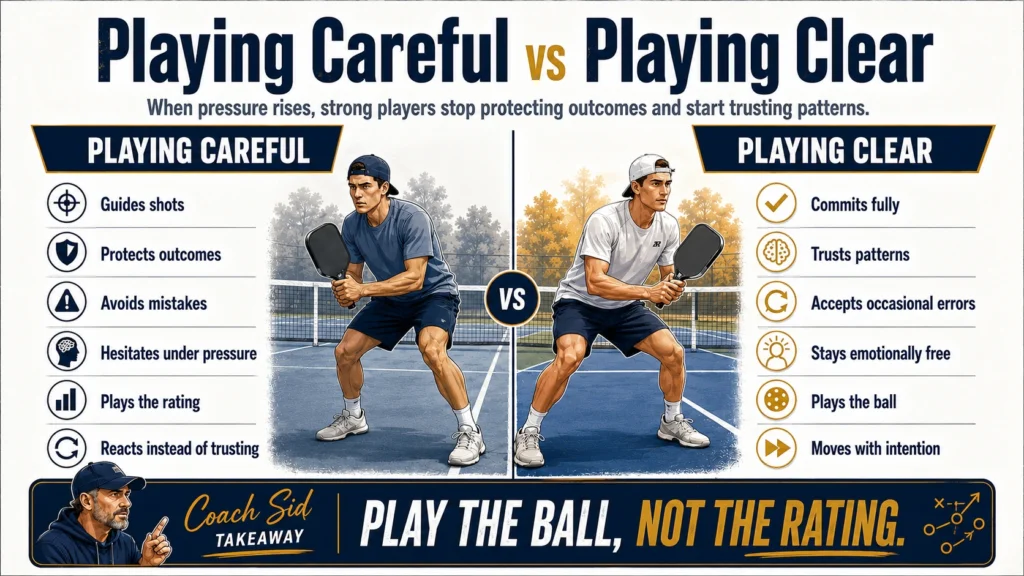
There is a massive difference between playing careful and playing clear.
Playing careful usually shows up when the opponent starts feeling bigger than the ball. You guide shots instead of committing to them. You protect the score instead of trusting the pattern. You hesitate just long enough for a normal ball to become a rushed ball.
Playing clear is not reckless. It is not swinging harder just to prove something. It is the ability to stay committed, balanced, and emotionally available when the moment gets heavier.
Against the stronger team, AJ and Austin became slightly more careful.
That is not weakness.
That is an extremely normal stage of competitive growth.
Almost every improving player experiences this when facing bigger ratings or stronger reputations for the first time.
The goal is not reckless aggression.
The goal is emotional neutrality.
What Players Need in Moments Like This
One interesting takeaway from reviewing the game footage:
Players usually do not need complicated tactical speeches during moments like this.
They need emotional clarity.
Sometimes one simple phrase helps more than ten technical adjustments:
- “Play the ball, not the rating.”
- “Make them earn it.”
- “Trust your patterns.”
- “Stay big.”
Because once players emotionally shrink against stronger opponents, overthinking usually makes the tension worse.
The best competitors eventually learn how to normalize these moments instead of emotionally inflating them.
That is part of climbing levels.
This Wasn’t Failure. It Was Feedback.
And feedback is valuable.
The stronger team exposed transition instability under pressure, middle hesitation, emotional tightness, spacing breakdowns, and caution created by respect.
That is not embarrassing.
The teams that improve fastest are rarely the ones who avoid difficult losses. They are the ones willing to study those losses honestly without allowing them to damage confidence.
Final Thought
Honestly, this is the kind of tournament loss that stings a little on the drive home. It sits with you. You replay points. You wonder what changed. You ask whether the other team was simply better, or whether your team gave away more of themselves than they realized.
But the more I watched it back, the more encouraged I became.
AJ and Austin did not leave this tournament wondering whether they belonged. They beat every other team in the field. They made the finals. They competed hard. And they got firsthand experience against a team that showed them what the next level of composure, pressure, and doubles structure really looks like.
As a coach, I see the areas that need work.
As a father, I see something even more important.
I see two players who were brave enough to step into a higher-pressure moment, honest enough to learn from it, and talented enough that this lesson should motivate them instead of discourage them.
They did not discover they were incapable of reaching that level.
They discovered what the next level demands.
And for improving players, that realization is often where real growth begins.



This is such a phenomenal article! And very well time for me personally to read. Thank you so much!! It’s precisely what I am currently experiencing in my game and I am so grateful for how well you articulated the psychological elements and their impacts on the physical form. So proud of your son and his partner and how lucky for them to have you guiding and coaching them. I’m also proud to report Matt Ngo is my coach and he is a standout competitor and human.