Selkirk Just Bought Bread & Butter… And Pickleball May Never Feel the Same Again
There are moments in sports where something shifts quietly behind the scenes… and then suddenly everybody realizes the game they fell in love with is entering a different era.
This feels like one of those moments.
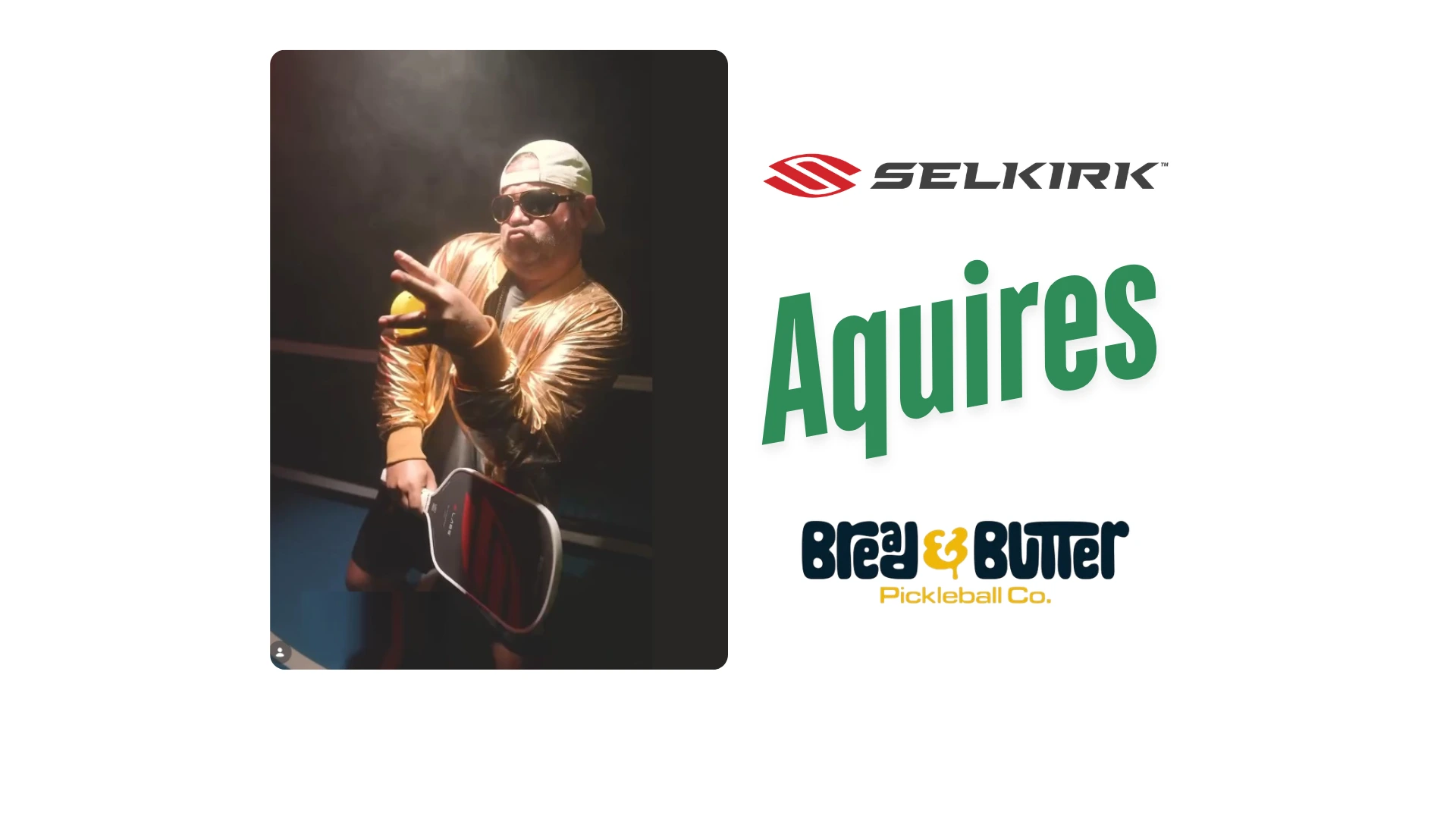
On May 12, 2026, Selkirk Sport announced it had acquired Bread & Butter Pickleball Company. If that sounds like just another paddle company buying another paddle company, I think you are missing the bigger story.
This is not just about one paddle. It is not just about one brand. It is about pickleball growing out of its garage-brand childhood and walking straight into the machinery of a larger global sports business.
Selkirk may have just helped Bread & Butter scale. Pickleball may have also lost a little innocence.
Updated May 27, 2026: Bread & Butter founder Doug Sapusek has now spoken more directly about the deal, including when it closed, why he sold, his continued role, warranty changes, pricing expectations, future grit plans, product expansion, and what happens next for ambassadors and customers.
This report is based on publicly available announcements, brand communication, and podcast-style comments from Bread & Butter leadership. Some operational details may still change as the acquisition settles into real life.
Readers following Pickleball Trends should care because this acquisition sits right at the messy intersection of brand soul, private capital, paddle technology, customer trust, and the future of independent pickleball companies.
Confirmed
- Selkirk acquired Bread & Butter: Selkirk Sport announced the acquisition on May 12, 2026.
- The deal closed before the public announcement: Doug Sapusek said the acquisition closed on May 7, 2026, before the May 12 public announcement.
- Bread & Butter keeps its identity: Doug said the purpose is for B&B to continue operating with the same DNA, voice, and personality, but with a stronger support system behind it.
- Doug Sapusek is staying on: Doug said he is staying with the brand and described his new role as president of the Bread & Butter division under Selkirk Sports.
- Aurora and Devin remain involved: Aurora described her role as marketing manager, while Devin described his role as operations manager.
- The Selkirk logo is not expected on B&B products: Doug said the Selkirk logo is not going on Bread & Butter products, outside of a possible future collaboration idea.
- Warranty coverage is improving: B&B paddles are moving from a 6-month warranty to a 1-year warranty, including paddles already sold and future paddle purchases.
- Pricing is not broadly being raised: Doug said paddle pricing is not being raised across the board, though future paddles using more expensive surface technology could cost more.
- New grit is coming: Doug said new grit is happening and should arrive relatively quickly, but he did not confirm whether it will be InfiniGrit or another surface technology.
- Inventory should improve: B&B discussed increased Loco production and better scale as one of the immediate benefits of joining Selkirk’s larger operation.
- Selkirk has outside growth capital: Selkirk previously accepted a $30 million growth equity investment from Bluestone Equity Partners.
- The Loco still matters: Bread & Butter’s Loco paddle helped push the brand from cult favorite into a larger industry conversation.
Not confirmed yet
- Purchase price: No public valuation has been disclosed. If someone claims they know the exact number, sprinkle caution seasoning on that gumbo.
- Exact manufacturing changes: B&B discussed increased production and stronger operational support, but no detailed factory-by-factory manufacturing shift has been publicly laid out.
- Whether the new grit will be InfiniGrit: Doug said new grit is coming, but did not confirm whether future B&B paddles will use Selkirk’s InfiniGrit or another surface technology.
- UPA paddle plans: Doug said a UPA-approved paddle is under discussion, but no exact model, launch date, or approval path has been confirmed.
- Long-term ambassador structure: B&B said the ambassador program is staying mostly the same for now, but the full long-term version of the program is still being worked through.
- Future product roadmap: New bags, apparel, lifestyle gear, shoes, hats, socks, paddles, and possible custom options were discussed as opportunities, but exact release details are still not locked in publicly.
Update, May 12: First post-deal ambassador details
Bread & Butter correspondence sent to ambassadors has confirmed the first tangible benefits and operational changes following the Selkirk acquisition:
- The Warranty Win: In a major move for consumer trust, all B&B paddles (including those already purchased and future purchases) now carry a 1-year warranty, doubling the previous 6-month coverage.
- System Migration: B&B is currently porting items over to a new stock-keeping system to align with Selkirk’s infrastructure.
- Separate Ambassador Programs: B&B ambassadors remain distinct from Selkirk ambassadors, and discount codes remain valid only on the B&B website.
- Support Transition: While a dedicated program contact is being developed, support is moving to a new unified system (Support@bnbpickleball.com).
That gives us the first real signal of what “separate brand, bigger infrastructure” looks like in practice: better warranty coverage and logistics scale, with some short-term transition friction.
Update, May 27: Doug explains the deal
Doug Sapusek has now given a more candid explanation of how the deal happened and why he chose to sell Bread & Butter to Selkirk. According to Doug, the acquisition closed on May 7, after conversations that started months earlier, went quiet around the holiday rush, then became more serious early in 2026.
The most important part for players is this: Doug did not describe the deal as a farewell. He said he is staying on, with his role shifting toward leading the Bread & Butter division while Selkirk helps carry more of the operational weight.
That matters because it changes the question from “Did Selkirk buy B&B?” to “Can Selkirk help B&B grow without sanding off the weirdness that made players care?”
- Why Doug sold: He said Bread & Butter had reached the point where the team needed more structure, manpower, and operational support to keep growing.
- Why Selkirk: Doug described Selkirk as the right team with the right organization, ethics, morals, and horsepower to help the brand scale.
- What changes: B&B gets more support behind operations, inventory, customer care, product expansion, and development.
- What should not change: Doug said the goal is for Bread & Butter to keep the same DNA, voice, recreational player focus, and goofy personality.
The real test is not whether Bread & Butter got bigger. The test is whether it can get bigger and still feel like Bread & Butter.
Entity notes
- Selkirk Sport is a major pickleball equipment company known for paddle development, pro sponsorships, and larger-scale infrastructure. Bread & Butter Pickleball Company is an independent paddle brand known for loud graphics, weird names, limited drops, and a community-first personality.
- Doug Sapusek is Bread & Butter’s founder and CEO, and one of the key people to watch as the brand enters this next phase.
- Bluestone Equity Partners is the investment firm behind Selkirk’s $30 million growth equity investment.
- The Barnes family built Selkirk into one of pickleball’s major engineering and manufacturing powerhouses. The Loco paddle is a high-visibility Bread & Butter launch that helped push the brand into bigger industry conversations.
Why are players paying attention?
Because this is not just a transaction. It may be a preview of how successful pickleball brands survive once the sport becomes too big for small-batch chaos.
The reason this matters now is simple: the old startup model works beautifully until demand outruns inventory, support, production, and capital. Then the cute garage-brand problem becomes a real business problem.
What Was Announced
Selkirk announced that it acquired Bread & Butter Pickleball Company. The public framing is not a brand burial. It is being presented as a partnership where Bread & Butter keeps its identity while gaining access to Selkirk’s operational scale.
That matters.
Bread & Butter founder and CEO Doug Sapusek described the promise behind the move as reaching more players without losing the fun that defines the brand. That is the whole story in one sentence.
More reach. Same fun.
That is the promise.
Now we find out if the promise survives the machine.
The announcement did not publicly confirm whether manufacturing, fulfillment, research, warranty systems, customer service, website operations, or distribution channels will be merged immediately. Those are the details that will separate a smart partnership from corporate bubble wrap.
How the deal came together
Doug’s later comments filled in more of the timeline. The deal was not a sudden overnight surprise behind the curtain. It started with conversations in late 2025, cooled during the Black Friday and Cyber Monday rush, then picked back up in early 2026.
- November 2025: Selkirk and Bread & Butter met in Dallas while B&B was on a road trip.
- December 2025: Conversation slowed while both companies were busy with the holiday selling season.
- January 2026: Talks reignited.
- February 2026: Discussions became more serious.
- March 2026: The companies signed a letter of intent.
- May 7, 2026: Doug said the deal closed.
- May 12, 2026: The acquisition was publicly announced.
That timeline matters because it shows this was not just a panic move or a casual partnership. Bread & Butter had reached the difficult middle stage: too real to stay tiny, but not yet built out like a major global equipment company.
This is really a leadership-handshake story
Doug Sapusek built Bread & Butter into a cult favorite by keeping the brand weird, relatable, and player-first. The Barnes family built Selkirk into one of pickleball’s major engineering and manufacturing powerhouses.
Now those two philosophies are touching the same wire.
That is what makes this acquisition so interesting. It is not just “big company buys smaller company.” It is a founder-led culture brand plugging into a larger infrastructure machine.
The big question for fans of the Loco is whether Doug Sapusek keeps the creative wheel, or whether the Selkirk machine eventually smooths out the edges that made Bread & Butter feel different in the first place.
The Money Behind The Move
This acquisition makes a lot more sense when you look at the money sitting behind Selkirk.
Selkirk previously accepted a $30 million growth equity investment from Bluestone Equity Partners. That is the financial catalyst in this story. It explains why this does not feel like a paddle company simply reinvesting paddle profits. It feels like institutional capital stepping into the kitchen, opening the spice cabinet, and deciding which ingredients can scale.
That does not make it evil.
It does make it different.
- Capital: Selkirk has more financial firepower to pursue growth, acquisitions, research, and distribution.
- Infrastructure: Money can support manufacturing, fulfillment, warranty systems, testing, and international reach.
- Market pressure: Smaller brands may now be measured against companies with deeper pockets and larger machines.
- Industry signal: Private equity interest tells the market that pickleball is no longer just a participation boom. It is becoming an asset class.
- Cultural risk: The more polished the machine gets, the easier it is to sand off the weird edges that made players care in the first place.
I do not think pickleball is losing its soul. But I do think it is losing its innocence.
That is the tension sitting underneath this whole story.
While Doug Sapusek leads the brand being acquired, the capital allowing Selkirk to make moves like this was strengthened by the $30 million Bluestone Equity Partners investment behind Selkirk’s growth strategy.
Why This Happened Now
Bread & Butter did not get acquired because it was irrelevant.
It got acquired because it became too relevant to ignore.
The Loco created demand. The brand created loyalty. The social voice created community. It was not just a paddle launch. It was a statement that personality could still cut through a crowded market.
For players who own one, the Loco is the concrete anchor in this story. It is the paddle that made a lot of people stop treating Bread & Butter like a cute side character and start treating it like a brand with real market pull.
But once demand outgrows supply, scarcity stops feeling cool and starts feeling like a problem.
- Manufacturing scale: More paddles in more hands, fewer “sold out again?” headaches.
- Distribution reach: A path beyond cult drops and direct-to-consumer buzz.
- Customer support: More infrastructure when warranty questions and order volume grow.
- Research investment: More testing, more durability work, and potentially faster product development.
- Brand expansion: A chance to grow without building every piece of the machine alone.
Inference: this deal likely gives Bread & Butter access to infrastructure that would have taken years to build independently.
At the same time, Selkirk gets something it cannot simply manufacture in a lab: a younger, louder, less polished brand that players actually feel connected to.
What This Means For Bread & Butter Customers
For players who already own a Bread & Butter paddle, especially a Loco, the first question is not “What does this mean for private equity?”
The first question is simpler:
What happens if my paddle breaks, my order gets delayed, or the next drop changes?
That is where the customer side of this story matters.
- Warranty: This is now a confirmed customer win. B&B told ambassadors that all B&B paddles now carry a 1-year warranty under Selkirk Sport, including paddles already purchased and future paddle purchases.
- Customer service: Better infrastructure could mean faster responses and cleaner systems, but B&B has warned ambassadors to expect possible delays during the transition.
- Shipping: Orders will now ship from Idaho, which may improve logistics for some customers and slow delivery for others depending on location.
- Pricing: No confirmed pricing changes have been announced. If future Bread & Butter models move up, down, or stay steady, that will say a lot about how Selkirk positions the brand.
- Inventory: If the partnership works as advertised, sold-out headaches may improve. That would be the most obvious short-term customer win.
- Website and fulfillment: The legacy clause is still open. It is not publicly clear whether Bread & Butter will keep its own website, fulfillment flow, and customer-facing systems long term or eventually plug deeper into Selkirk’s machine.
- The Loco question: Fans will want to know whether the Loco remains a true Bread & Butter product line or becomes the first visible test case for how much Selkirk influence shows up in future releases.
The first customer wins are already visible
The clearest immediate customer win is warranty coverage. Doug said Selkirk was willing to stand behind both future B&B paddles and paddles sold before the acquisition. That is not a small detail. That is the kind of thing customers actually feel when something goes wrong.
- Warranty: B&B paddles move from 6 months to 1 year.
- Past purchases: Doug said previously sold paddles are also being supported under the improved warranty approach.
- Pricing: Doug said current paddle pricing is not being broadly raised.
- Future tech pricing: Paddles using more expensive grit or upgraded materials could cost more, but that would be tied to actual technology changes, not just a new corporate parent.
- Inventory: B&B expects larger production support, especially around the Loco, which could reduce sold-out frustration.
That is the boring stuff that matters. Warranty. Inventory. Support. Pricing clarity. Not flashy. Not dramatic. But if Selkirk improves those without flattening the brand, players may feel the upside quickly.
That is why the next few months matter. The announcement tells us the deal happened. The customer experience will tell us what kind of deal it really is.
The End Of Garage Brand Pickleball?
For years, pickleball had this strange little magic to it.
A small company could show up with a wild paddle name, a cool logo, a few good players talking about it, and enough weird energy to build a cult following almost overnight.
Bread & Butter represented that perfectly.
It was not sterile. It was not overly polished. It felt human. Loud graphics. Oddball names. Scarcity drops. A little rebellious. A little reckless. A little “we don’t care what the big brands think.”
That is why this acquisition hits differently.
Pickleball is not becoming less fun overnight. But it is becoming more institutional. More capitalized. More structured. More watched by investors who do not think like fans. They think like builders of ecosystems.
That can be good for players.
It can also sand down the weird edges if nobody protects them.
What This Could Mean For Paddle Technology
This is where the story gets spicy, but we need to keep our feet on the court.
The acquisition announcement did not confirm specific technology integration plans. No public statement says future Bread & Butter paddles will use Selkirk materials, Selkirk surface systems, Selkirk manufacturing processes, or Selkirk’s InfiniGrit technology.
But the technology question is impossible to ignore.
Bread & Butter gained major attention during the rise of foam-forward paddle conversations. The Loco helped push that conversation louder. Whether you call it Gen 4, foam evolution, or the next messy chapter in paddle design, the direction is clear enough: brands are chasing better durability, larger sweet spots, more rebound consistency, and a feel that does not collapse after the honeymoon period.
That is not garage pickleball anymore.
That is lab-coat pickleball with a ball machine growling in the corner.
Selkirk brings deeper research infrastructure and known surface-durability ambition. Bread & Butter brings creativity, player culture, raw-carbon appeal, and a willingness to look nothing like the beige middle of the market.
If those strengths stay separate but supportive, this could get interesting fast.
New grit is now more than speculation
Before Doug spoke more directly, the grit conversation was mostly a watch point. Now it is stronger than that. Doug said new grit is happening and should happen relatively quickly, although he did not confirm whether the final answer will be Selkirk’s InfiniGrit or a different surface approach.
That puts the next B&B paddle launch under a microscope. If the brand keeps its feel but gains more durable surface performance, this could be the first visible proof that the acquisition gives players more than corporate paperwork and matching email signatures.
- Confirmed direction: New grit is coming.
- Not confirmed: Whether that grit will be InfiniGrit.
- Likely impact: Future paddle pricing could rise if the surface technology is significantly more expensive.
- Player question: Can B&B improve surface durability without losing the raw, lively feel players associate with the brand?
Technology Impact Bullets: What To Watch
- The Grit Test: Will future Bread & Butter releases show signs of Selkirk’s InfiniGrit or surface durability thinking, or stay completely separate?
- The Raw Carbon Test: Will Bread & Butter keep the raw-carbon feel and bite players associate with the brand, or move toward a more Selkirk-influenced finish?
- The Foam Test: Will Bread & Butter continue pushing foam-forward paddle development with more research support behind it?
- The Feel Test: Will future paddles still have that bold, slightly unhinged Bread & Butter personality in hand?
- The Consistency Test: Will larger production support improve quality control without flattening the product’s edge?
- The Identity Test: Will players feel like they are buying Bread & Butter, or Selkirk wearing a fake mustache and a Hawaiian shirt?
The Grit Wars Question
One of the recurring questions around many modern paddles is surface durability. Players want spin, but they also want that spin to last longer than a gas station boudin ball at lunchtime.
Speculation, clearly labeled: surface durability could become one of the most interesting areas to watch after this acquisition.
To be clear, Selkirk has not publicly confirmed that InfiniGrit or any other Selkirk surface technology will be used on future Bread & Butter models.
But if Selkirk eventually combines its manufacturing consistency and surface durability work with Bread & Butter’s younger branding appeal, raw-carbon credibility, and foam-forward identity, that could put pressure on a lot of paddle companies.
- Foam-core development: Could become a bigger battlefield if Bread & Butter gets more research support.
- Surface durability: A major watch point if Selkirk technology enters future models.
- Raw-carbon appeal: Bread & Butter fans will watch closely to see whether the brand keeps the bite and feel that made its paddles feel less corporate.
- Product feel: Players will notice quickly if the paddles start feeling more corporate than chaotic.
- Brand identity: The paddle can improve, but if the weirdness disappears, fans will smell it.
Why Player Reactions Are Split
Some players are excited because they see the upside immediately.
- Inventory: More availability and fewer limited-drop frustrations.
- Support: More structure behind warranties, returns, and customer service.
- Durability: Potential for stronger testing and better long-term consistency.
- Innovation: More resources behind future paddle development.
Others feel like something important just got handed a corporate name badge.
And honestly? I understand both sides.
A lot of players fell in love with pickleball because it did not feel corporate. It felt weird. Local. Independent. Like normal people could still shape the sport instead of just buying whatever the biggest brand told them to buy.
Acquisitions like this can make the sport stronger. They can also make it feel more distant.
That tension is real.
The Next 6 Months Will Tell The Real Story
Every acquisition says soothing things at first.
The culture will remain. The founders are staying involved. The brand will keep its voice. Nothing important will change.
Sometimes that is true.
Sometimes that is a corporate blanket pulled over a very different animal.
Bread & Butter fans are not going to judge this by the announcement. They are going to judge it by the next six months of behavior.
- Doug Sapusek’s presence: Does the brand still feel guided by the people who built it?
- The Sapusek family’s influence: Does the creative direction still feel personal, specific, and a little rebellious?
- Product names: Do they stay weird, playful, and unmistakably Bread & Butter?
- Marketing voice: Does it still sound human, or does it start smelling like committee copy?
- Launch behavior: Do future releases still take risks?
- Customer experience: Do support, inventory, warranty handling, and website clarity improve without confusing existing customers?
- On-court identity: Do future paddles feel like evolution, or like Selkirk wearing a fake mustache and a Hawaiian shirt?
Bread & Butter’s edge was never just performance. It was permission for pickleball gear to be less sterile.
That is the part Selkirk has to protect.
What This Could Mean For Other Paddle Brands
This acquisition may put the most pressure on mid-sized paddle companies and challenger brands.
Not the giants with deep pockets.
Not the tiny cult brands with low overhead and loyal followers.
The middle.
The brands big enough to need serious capital, but not big enough to dominate distribution.
- Large brands: Can buy scale, sponsor pros, fund labs, and absorb mistakes.
- Micro-brands: Can survive through niche loyalty, authenticity, and speed.
- Mid-sized brands: May get squeezed between capital and culture.
- Local challenger brands: May need to get sharper about identity, community, and product trust because they cannot win a spending contest.
Inference: more acquisitions or strategic partnerships would not be surprising if the equipment market keeps maturing.
That does not mean every independent brand is doomed. Some will stay strange enough, focused enough, or beloved enough that the machine cannot copy them.
But the old market is changing.
Once acquisitions start, “pretty good” gets dangerous. The market starts rewarding either scale or obsession.
What This Means For B&B Ambassadors
The ambassador program is one of the places where the transition will be felt quickly. B&B said the ambassador store has been down during the move, but the program itself is expected to stay mostly the same for now while the team works through the new system.
That is probably the right move. Ambassador programs are relationship machines, not just coupon code factories. If Selkirk can give B&B better structure without making the program feel cold, that could become another quiet win.
- Ambassador codes: The program is not being wiped out.
- Ambassador store: The store has been down during the transition, but B&B expects it to come back online.
- Future support: B&B hopes to dedicate more attention to the program instead of letting it sit neglected while the small team wears too many hats.
- Product access: New products are expected to flow into the ambassador program as future releases arrive.
The key word is “for now.” The structure may evolve, but the early message is that B&B does not want to burn down the community layer that helped build the brand.
What To Watch Next
The next meaningful updates will not come from announcement graphics or polished quotes.
They will come from behavior.
- Next product launch: Does it still feel like Bread & Butter, or like Selkirk wearing a fake mustache and a Hawaiian shirt?
- Doug Sapusek’s role: Does he remain visibly involved in the brand’s voice and direction?
- Inventory levels: Do sold-out headaches improve?
- Warranty handling: Do existing customers see better support or confusing transitions?
- Pricing: Do paddle prices stay consistent?
- Website and fulfillment: Does Bread & Butter keep its own customer-facing systems, or does the brand gradually plug deeper into Selkirk’s operational machine?
- Technology integration: Does Selkirk’s research infrastructure show up in future Bread & Butter models?
- Brand voice: Does the weirdness survive contact with the machine?
Those answers are not publicly confirmed yet.
But those answers will determine whether this becomes a model for smart pickleball growth or a warning sign for players who love the independent side of the sport.
Frequently Asked Questions
Yes. Selkirk Sport announced the acquisition of Bread & Butter Pickleball Company on May 12, 2026.
No. Financial terms were not publicly disclosed in the materials reviewed.
Selkirk’s $30 million growth equity investment from Bluestone Equity Partners gives the acquisition broader financial context. It suggests Selkirk is operating with institutional capital behind its growth strategy.
Doug Sapusek said he is staying on with Bread & Butter after the Selkirk acquisition and described his role as president of the Bread & Butter division under Selkirk Sports.
The Loco helped turn Bread & Butter into a louder industry presence. It gave players a concrete product example of the brand’s personality, demand, and market momentum.
Public messaging says Bread & Butter will keep its brand identity, product direction, and leadership involvement. Long-term operational details remain unclear.
That has not been publicly confirmed. This is one of the most important customer-facing details to watch because it affects orders, warranty claims, support, and brand independence.
No specific product changes have been publicly confirmed. Future launches will be the clearest test of how much independence remains.
That has not been confirmed. It is a reasonable industry watch point, especially around surface durability, manufacturing consistency, and future foam-forward designs.
No public information reviewed confirms that the Loco is going away. The Loco remains one of the key product lines fans will watch closely after the acquisition.
Coach Sid’s Bottom Line
Short version?
Selkirk buying Bread & Butter is probably good for scaling, product development, warranty infrastructure, inventory stability, and long-term support.
But it also represents something bigger:
pickleball entering its corporate era.
The next six months will determine whether Bread & Butter becomes:
- a protected creative brand with better support
- or another personality flattened by scale
The next paddle launch, the next warranty experience, and the next Loco-related announcement will tell us everything.
The Court-Side Verdict
Here is where I land.
I do not think this is automatically bad.
I also do not think players are wrong to be suspicious.
Both things can be true.
Bread & Butter had something rare: a brand people actually felt connected to. Selkirk has something rare too: the infrastructure to support a serious global equipment platform.
If those two strengths stay separate but supportive, this could be a monster move.
If one swallows the other, players will sniff it out faster than a bad line call at open play.
So no, I am not writing the obituary for independent pickleball culture.
But I am watching the next paddle launch like a hawk wearing safety goggles.
Because that is where we find out whether BNB still retains it’s butter…
or whether the bread became toast and filed into a corporate spreadsheet.
What Do YOU Think?
Did Selkirk just save Bread & Butter from scaling problems?
Or did pickleball just lose one of its last truly independent cult brands?
This debate is going to get loud.
And honestly?
That is probably exactly why this story matters right now.