
Kitchen Line Strategy: Toes On or The Gold-Winning Slide
Pickleball Kitchen Line Mastery: Strategy, Conditioning, and Essential Drills
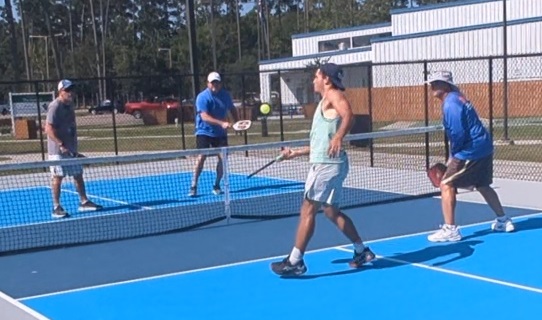
I saw the Kitchen Line Strategy debate play out yesterday at a moneyball tournament in Mandeville, LA. Twelve elite teams battled for a $2,000 prize, with player ratings spanning 4.2 to 5.7 DUPR. My son, AJ, a player who almost always anchors his toes right to the Non-Volley Zone (NVZ) line, was one of them.
As he faced opponents known for disguising their speed-ups, AJ did something critical: he adapted. In real-time, he made the subtle shift, moving his feet back six to twelve inches, creating a pocket of time and space to block, counter, and neutralize powerful attacks. He wasn’t abandoning his core technique; he was layering a Kitchen Line Strategy adjustment on top of it. He was choosing time over territory. This real-world example (the silent, high-stakes decision to move off the line) is what separates a good player from a great strategist.
The fastest kitchen players aren’t guessing, they’re reading the script early. Here’s the complete breakdown of common rally sequences and the best counters: how to recognize pickleball patterns.
Picture this: a drive screams at your shoulder. From the line, you’re jammed. From six inches back, your paddle has space to soften, block, and counter. Inches are the new miles in pickleball. The difference between being jammed and having room to counter lies entirely in your positioning. This resource is your deep dive into the ultimate pickleball Kitchen Line mastery, covering strategy, essential drills, and the critical toes-on versus toes-off debate. If you’ve ever wondered why is it called the kitchen in pickleball, we have a complete article for that too!
- Kitchen Line: The seven-foot boundary line parallel to the net that defines the Non-Volley Zone (NVZ), where players are restricted from volleying the ball.
- Non-Volley Zone (NVZ): The seven-foot area closest to the net where volleying the ball is prohibited under the official pickleball rules, enforcing strategic groundstrokes and dinks.
- Dink Shot: A soft, controlled shot executed from the Kitchen Line that clears the net and lands in the opponent’s NVZ, aiming to set up an offensive opportunity.
- Erne Shot: An advanced, aggressive shot where a player jumps or runs around the NVZ boundary to volley the ball legally, often surprising the opponent.
The NVZ Positioning Debate: Toes On or Half-Step Back?
The core pickleball kitchen line strategy involves dynamically adjusting your distance from the Non-Volley Zone line; staying welded to the line applies pressure, but stepping back slightly buys critical reaction time against advanced speed-ups.
Most players think one depth is “right.” They’re wrong. Pros don’t pick a spot and stay there; they slide based on ball speed, opponent, and point context. Toes on the line amplifies pressure and angles for clean finishes. A half-step back buys reaction time to counter pace. Your directive: read the ball, honor your role, let targeting patterns set depth – then reclaim the line the instant the rally goes neutral.
Strategic Benefits of Dominating the Kitchen Line
Securing the Kitchen Line is crucial for every player, offering significant advantages over opponents forced toward the baseline.
When a player controls the NVZ line, the result is the opponent’s time being reduced and their shot options being limited, which increases the likelihood of an unforced error. This strategic position allows players to hit down on the pickleball, reducing the angles available to opponents and making it harder for them to find gaps in the defense. This mental edge can be as significant as the physical advantage, often influencing the outcome of the game.
Think of depth as a lever. Slide forward and you steal fractions of seconds from your opponent’s reaction window. Slide back and you buy those fractions for yourself. Top players toggle between both in a single rally. Hug the line during stable dink exchanges, after a neutral reset, or when a floater invites you to pounce. Close space, shrink angles, raise pressure. Sit a touch back when the ball rides chest-high, when a banger across from you is itching to speed up, or when your counter needs a compact block-punch.
PickleTip Insight: The pressure is at the line; survival lives six inches behind it.
Is it always best to have your toes touching the kitchen line in pickleball?
No. A good pickleball kitchen line strategy involves moving dynamically – staying welded to the line to apply pressure, but stepping back slightly (6–12 inches) to optimize the block against hard drives.
Why You Must Avoid “No Man’s Land”
While the NVZ line offers a strategic edge, remaining at the baseline or in “No Man’s Land” (the area 3–5 feet behind the NVZ) poses severe challenges. Being caught in this mid-court area means you are vulnerable to precision shots and aggressive plays, often relegating you to a reactive mode. This position limits offensive opportunities and requires rapid movement to reach shots, increasing the likelihood of errors and missed opportunities. The majority of points in pickleball are clinched at the Non-Volley Zone line, so players should aim to establish their presence there post adhering to the sport’s foundational rules.
The Tactical Retreat: When to Step Back from the Line
The decision to step back (or “retreat”) from the kitchen line is a strategic move, not a sign of fear. It’s a calculated tactic used to optimize defense and set up the next attack. The primary reasons players consciously choose to move 6 to 12 inches off the NVZ line include:
- Threatened Attack/Pace: To buy essential time to react and stabilize the paddle when an opponent is winding up for a hard speed-up.
- Need for Reset: To reset a difficult incoming ball (especially those low or dipping drives) instead of forcing an aggressive, error-prone volley.
- Off-the-Bounce Attack: To create the necessary space for an off-the-bounce counterattack rather than volleying a shot that is too high.
Trade-Offs of the Retreat: While retreating increases reaction time, players – especially those who are less mobile – must accept that they temporarily sacrifice court coverage, making it harder to cut off acute angle shots across the NVZ. The moment the ball goes neutral, the line must be quickly reclaimed.
Essential Drills to Master Kitchen Line Play and Positioning
Mastering the tactical shots and positional awareness at the Kitchen Line comes only through dedicated drill work that builds muscle memory for both offense and defense.
Knowledge of strategy is useless unless the feet and hands move automatically under fire, a skill best acquired through consistent, targeted practice routines. Your ability to execute a Soft Volley or a Punch Volley is determined by the quality of your repetition. Dink Shot A soft, controlled shot that goes just over the net, landing in the opponent’s non-volley zone. It’s a foundational shot for kitchen line play, aiming to outmaneuver the opponent or set up an offensive opportunity.
- Drill: Dink Rally – Two players at opposite kitchen lines. Dink the ball back and forth, focusing on control, placement, and consistency. Always dink with a purpose.
Soft Volley A gentle volley used to redirect the ball when it’s hit at you in the air at the kitchen line. It’s less about power and more about placement.
- Drill: Soft Volley Exchange – Two players at their respective kitchen lines. Softly volley the ball back and forth, emphasizing control and touch. A slow-paced firefight.
Punch Volley A more assertive volley hit with some pace. This shot puts the opponent on the defensive or finish the point.
- Drill: Punch Volley Practice – One player feeds varying paced balls to the other at the kitchen line. The receiving player then tries to execute punch volleys with precision. For an advanced offensive move, learn the Backhand Flick: Your Kitchen Line Secret Weapon.
Erne Shot An aggressive shot where a player jumps or runs around the NVZ boundary to volley the ball legally, often surprising the opponent.
- Drill: Erne Practice – One player hits wide dinks or angled shots. The other player practices stepping out and executing the Erne Shot.
Building consistency in your short game requires continuous pressure.
PickleTip Insight: One hour of quality drilling is equivalent to three hours of game play.
These dedicated routines are far more effective for ingraining muscle memory than relying only on match scenarios. By regularly practicing these associated drills, players can significantly enhance their effectiveness and versatility at the Kitchen Line in pickleball. Remember that mastering the NVZ area is the key to unlocking consistent wins. Mastery of the kitchen line can dictate the flow of the game, giving players the upper hand in rallies and significantly increasing their chances of winning points and ultimately, the match.
Third Shot Drop: The Critical Transition to the Kitchen
Mastering the third shot drop is essential for any player seeking consistent kitchen line dominance, as it neutralizes the opponents’ advantage and allows safe transition forward.
A poor third shot drop immediately gives the net advantage back to the opponent, proving that transition strategy is foundational to NVZ play.
The third shot drop is crucial for transitioning from the baseline to the kitchen. Follow these steps to master it:
- Relax your grip Adopt a relaxed grip on the paddle for better ball feel and control.
- Brush up on the ball Contact the ball slightly below its center to achieve a soft, looping arc.
- Push the ball using your shoulder Use a gentle follow through, guiding the ball just over the net into the opponent’s kitchen.
- Advance your position Immediately move forward to the net once you’ve executed the drop.
- Cautiously approach the net Maintain awareness to quickly respond if your opponent attempts a fast return.
How can I execute an effective third shot drop?
Begin with a relaxed grip and smooth swing from your baseline. Aim to drop the ball just over the net, landing softly in the opponent’s non-volley zone. This allows you time to move forward and establish position at the kitchen line.
Dynamic Kitchen Line Strategy: Adjusting Depth by Opponent Archetype
Top players utilize scouting and opponent profiles to dynamically adjust their NVZ depth, starting farther back against high-power archetypes to optimize block quality before reclaiming the net.
Successful NVZ play mandates ditching dogmatic adherence to a single court position and adopting a flexible defense based on who is across the net. Scouting beats dogma. Set your default depth by who’s across from you. Then adjust mid-match. In the Mandeville tournament, AJ wasn’t retreating in fear; he was creating space to counter and buying just enough time to control the hands battle. Mastering this dynamic pickleball kitchen line strategy requires you to read your opponents and their tendencies.
Power Driver (Right-Shoulder Bully)
Default a half-step back on their diagonal. Expect shoulder-high flicks and speed-ups. Block compact to the middle, then reclaim the line after any neutral ball.
When facing a known banger archetype, adopting a 6-inch buffer off the Kitchen Line is required, which results in a lower percentage of hand jams and improves block-to-reset consistency. This buffer is critical because new paddles have widened the counter window, rewarding those who create space. For a deep-dive on the mechanics and drills to perfect this defensive skill, review our full guide on Pickleball Blocking: End Pop-Ups & Control the Kitchen.
Touch Artist (Slow Torture)
Start toes-on. Don’t concede real estate to a surgeon. Take balls early, lean forward on floaters, and attack their transitions when they try to re-speed.
PickleTip Insight: Intentional depth is a tactic; static depth is a tell.
If you are constantly sitting back, a Touch Artist will ruthlessly exploit the short dink angles you’ve given up. The core of NVZ play is pressure, and this archetype demands you apply it relentlessly.
Spinner / Shape-Maker
Use a micro-buffer on their spin side. Extra space stabilizes the paddle face before you redirect. If their spin sits up, step in and finish. There’s a tax to living back there, though – crafty opponents will yank angles you can’t reach. Strong two-hand players dance: back to counter, forward to finish. This is why you must understand the two-handed backhand factor and how it influences depth.
Exercises and Conditioning for Kitchen Line Defense Mastery
Mastering defense at the Kitchen Line requires targeted physical conditioning to enhance lateral range, quickness, and core stability, turning your body into a responsive defensive wall.
Relying solely on court drills ignores the critical need for off-court exercises that build the necessary agility and strength to command the NVZ. Defense and control mastery demands a focus on conditioning.
- Slider Squats – Enhancing Range: Build lower-body strength and improve horizontal reach, crucial for stretching out to catch sneaky drop shots. Slider Squats are a variation of traditional squats using sliders or similar equipment to increase the challenge. By performing Slider Squats, players can build lower-body strength and improve their horizontal reach, which is crucial for stretching out to catch sneaky drop shots.
- Single-Arm Deadlift – Increasing Strength and Stability: Strengthen and stabilize your body, using various muscles that are vital on the court. The Single-Arm Deadlift is a strength exercise that targets the muscles in the lower back, hamstrings, and core. This exercise is essential for pickleball players as it strengthens and stabilizes the body, using various muscles that are vital on the court for maintaining balance and power during play.
- Single-Arm Band Row – Boosting Shot Strength and Speed: Enhance muscle groups essential for powerful backhand and forehand shots. The Single-Arm Band Row is a resistance exercise that primarily targets the upper back muscles, including the latissimus dorsi, rhomboids, and trapezius. For pickleball players, this exercise is crucial for enhancing muscle groups essential for powerful backhand and forehand shots, contributing to both the strength and speed of their shots.
This off-court work directly impacts your ability to hold the NVZ line and maintain your stance against fast opponents.
PickleTip Insight: If your conditioning doesn’t support a wide, balanced stance for two hours, your strategy is useless by the third game.
This posture allows players to react swiftly to shots, whether they need to lunge for a low dink or stretch for a high volley, making it a fundamental aspect of high-level play.
Mindset, Modern Tech, and Pro Analysis
Modern paddle technology necessitates a flexible Kitchen Line strategy, while true mastery requires the discipline to distinguish intentional tactical buffering from simple fear.
Success at the NVZ is less about the paddle and more about the mental resolve to move dynamically without freezing under pressure. Hotter faces, firmer cores, and better edge-wraps amplified pace and stability in 2025. That change demanded a six-to-twelve-inch buffer to soften the initial blast, especially in mixed doubles.
PickleTip Insight: Great teams broadcast intent with their feet – then change it mid-rally.
Paddle Handling and Grip Control
Effective defense at the NVZ demands nuanced paddle handling and quick adjustments in grip pressure. Adjusting grip for each shot type optimizes paddle control. A relaxed grip suits soft dinks, allowing wrist flexibility to guide the ball gently over the net. For volleys and defense, a firmer grip is needed to provide stability and control against fast shots. Angling the paddle adds different spins and directions. Use flat angles for blocking and slight angles for redirecting shots.
If your grip pressure is too tight during a speed-up, the result will be a popped-up block due to the transfer of too much energy from the opponent’s shot. Mastering paddle angles enhances net play in pickleball, boosting front court prowess. To truly dominate the net, you must also master Quick Hands in Pickleball: Dominate the Kitchen Line.
Hard truth: many rec players live off the line due to fear, not tactics. A smart buffer is brief and purposeful. Fear looks like camping in the same spot while opponents dink short and own the angles. Self-audit at the net: after every point, ask, “Did I step back because the ball was hot…or because I was nervous?” If it’s nerves, script a cue: “Block, breathe, step in.” Note on Skill Levels: While the dynamic positioning strategy benefits all players, less experienced players should first master foundational skills (like solid blocking) before focusing on advanced techniques like the tactical retreat.
The Last Six Feet: Transition to NVZ
The Kitchen Line debate is the final chapter of the transition story. If your approach is sloppy, you’ll arrive late and choose depth out of panic. The transition journey should follow an approach script: Reset low in the transition zone, land a split step as the opponent hits, then slide to your planned base. Neutral ball: press the line. Hot ball: stop six inches back, block, then reclaim. Build this into serve-plus-one and return-plus-one patterns. For more, study the drive and follow and a disciplined return of serve. Your last six feet decide your first volley.
What is the significance of the two-handed backhand in modern kitchen line play?
The two-handed backhand nudges some players a touch back from the line to avoid jammed contact against body shots, providing a necessary buffer to achieve clean power on the counter.
Kitchen Line Strategy Checklists and Charts
Systematic tools provide clear frameworks for making instant NVZ positioning decisions based on rally context, opponent threat, and ball height.
Effective NVZ play relies on removing emotion and applying a data-driven approach to deciding the optimal distance from the net. For more angle control, study blocking under pressure and how early contact closes windows. In mixed doubles, roles often decide the default depth: the support role may sit a touch off the line to improve block quality and funnel tempo to the team’s aggressor.
NVZ Positioning Checklist
| Situation | Optimal Depth | Reason |
|---|---|---|
| Dink exchange stable | Toes on line | Cut angles, apply maximum pressure |
| Opponent winding speed-up | 6–12″ back | Buy reaction time for controlled block |
| Body chest-high ball | 6–18″ back | Space to block clean |
| Floaty dink or pop-up | On line | Attack early; reduce opponent time |
| Mixed role split | Aggressor line; Support back | Protect and counter |
Reaction-Time Mini-Chart
| Depth from NVZ | Perceived Time Gain* | Best Use |
|---|---|---|
| 0–3″ | Minimal | Finishers, floaters, soft dinks |
| 6–9″ | Moderate | Chest-high pace, bait-and-block |
| 12–18″ | High | Heavy targeting, emergency countering |
*Perceived time gain is qualitative. Test what your eyes and paddle say.
Case Studies: What the Pros Signal with Their Feet
In the past I’ve tracked pros, rewinding rallies, and scribbling notes: toes on the line versus a foot off. Fast forward to 2025, the debate is hotter than ever – thanks to evolving paddles and a Reddit dust-up that tossed names like Gabe Tardio and Jessie Irvine into the fire. This is the ultimate pickleball kitchen line strategy debate, and it’s time for a deep dive.
Study matches with Anna Leigh Waters and Leigh Waters commenting on micro-adjustments. Notice how ALW often sits a touch off against body-speed threats, then pounces on floaters. The stance isn’t timid; it’s bait.
Watch Ben Johns with different partners. With a partner who covers less middle, he presses the line to reduce chaos. With a hunter next to him, he may shade half a step to set counters, then take middle on his terms. The stance and movement should be fluid. This kind of analysis is the key to understanding advanced pickleball kitchen line strategy.
Consider pairings like Anna Bright or Tyra Black with imposing right-side men. When the male partner dictates tempo, the woman may start deeper, then launch forward after the first neutral reset. Timing is the tell.
Homework: pick any mixed final and track one player’s depth every five rallies. Mark “line,” “6″,” or “12″.” Correlate with rally outcome. You’ll start seeing the slide before it happens.
What is the best defense against power shots at the kitchen line?
The best defense is to use a block-and-redirect strategy: maintain balance, use a loose grip, and absorb the power by angling the paddle slightly.
Frequently Asked Questions
No. A good pickleball kitchen line strategy involves moving dynamically – forward when in control, back when absorbing pace.
The slide is the subtle, intentional movement backward (6–12 inches) to buy reaction time against pace, followed by immediate reclamation of the line after a neutral reset.
Players may retreat from the kitchen if they feel threatened by an opponent’s speed-up, need to defend a low or dipping shot, or are actively looking for an off-the-bounce counterattack.
While retreating buys time, the trade-off is that you temporarily give up court coverage, making it harder (especially those who are less mobile) to cut off sharp cross-court angles.
The best defense is to use a block-and-redirect strategy: maintain balance, use a loose grip, and absorb the power by angling the paddle slightly.
Use phone video, run the Line-Step Ladder drill, and log your block accuracy from different depths (0″, 6″, 12″). What if my partner hates stepping in? Define roles. Call “buffer” during firefights; default to “press together” on neutral balls.
To buy reaction time against heavy targeting in mixed. It’s tactical, not timid.
Only situationally. It helps against body shots; reclaim the line to stay dangerous.
The significance of the Kitchen Line cannot be overstated. It’s not just a line on the court; it’s a strategic position that can make or break your game. By mastering the nuances of the Kitchen Line, players can effectively control the pace, dictate the flow, and put their opponents on the defensive. Prioritizing the NVZ is akin to understanding the heart and soul of pickleball. It’s where crucial plays are made, and where champions are forged. So, as you continue your journey in this exhilarating sport, remember to give the Kitchen Line the attention it deserves. To truly excel and boost your winning odds in pickleball, embrace its strategic importance, and watch as your game reaches new heights.
Final Call to Action
Run the Line-Step Ladder Drill (start 6″ back, block a speed-up, immediately step onto the line) for five sessions and track your unforced error rate on the counter-attack. Train the slide until your feet move before your brain debates.
This dynamic adjustment – this mastery of the subtle shift – is exactly what we saw yesterday. Please join me in congratulating AJ and his partner Mark for their incredible performance at the Category 5 Moneyball Tournament in Mandeville, LA! They faced a highly competitive field of players and won every game and match, taking home the Gold. Their success is a perfect, real-world proof point: their decision to adjust their depth, especially when facing disguised speed-ups, demonstrates a level of strategic maturity that separates champions from contenders. Well done, gentlemen!
“The kitchen line is a battlefield. Master the slide, and you control the war.”
About the Author: Coach Sid is a gritty pickleball analyst, blending tactical coaching with quirky-professor breakdowns. He runs PickleTip, helping players navigate strategy, mindset, and gear with honest, hard-won insights.