
Backhand Flick Pickleball: How to Fix Misses and Build a Trustworthy Kitchen Attack
Ever feel stuck in those never-ending dink rallies at the kitchen, wishing you had that one shot to change the conversation? Maybe you finally see a ball you can attack, try to flick it, and dump it into the net. Or maybe you overhelp it, the paddle face opens, and the ball floats just high enough for your opponent to tattoo it at your feet. Maybe you have watched better players attack that same awkward backhand-side ball with sudden pace and thought, “How do they do that?!” Learning the pickleball backhand flick is not just about adding a flashy move. It is about turning one of the strangest in-between contacts at the kitchen into something you can actually trust.
The backhand flick is the abrupt compact speed-up you use when the ball sits up and the opening shows up fast. It is the shorter strike, the later whip, and the quicker reload. If the ball gives you more time and more room to shape it, you are probably looking at a backhand roll instead.
Unlock the Power of the Backhand Flick at the Kitchen Line
This shot only works when the ball really gives it to you. If the contact is too low, too jammed, too wide, or too rushed, do not force a flick out of a bad spot.
Once you understand what the miss looks like, why it happens, and what to change first, this shot starts making a lot more sense. Pull it off cleanly in a game and yes, it feels great. Just do not confuse that feeling with the point being over. A good flick usually starts the pressure. The next ball often decides the rally, and if that next exchange comes back faster than you can organize, the natural follow-up is the backhand counter.
Mini Recap: The backhand flick is a compact kitchen-line attack you use when the ball sits high enough and far enough in front for you to apply pressure without taking a big swing. The goal is not chaos. The goal is a clean, dipping ball that starts the next problem for your opponent.
The Perfect Flick
- Best height: Mid-thigh to shoulder
- Main goal: Create pressure, not winners
- Key mechanic: Compact upward brush
- Big mistake: Flicking from bad spacing
- Winning mindset: Flick → reload → finish
What You’ll Learn About the Backhand Flick
What Is the Backhand Flick in Pickleball?
The backhand flick is the quicker compact backhand speed-up you use when the ball sits high enough, far enough in front, and cleanly enough in your strike window to pressure the other side without taking a bigger swing. It is a short-window attack. The chance shows up fast, you own the contact out in front, and you fire a compact ball that gets on people before they can get comfortable.
It is also not just a wrist trick and it is not a panicked mini slap. A real flick still needs enough height, decent spacing, a stable paddle face, and a compact upward path through the ball. The difference between a real flick and a bad speed-up is simple: the good one looks short, sharp, and organized. The bad one looks rushed, crowded, and hopeful.
A lot of players think they are missing the flick when they are really attacking the wrong ball. Before you worry about spin or pace, ask a simpler question: can you contact it out in front without reaching, rescuing, or improvising nonsense from a bad position? If yes, the flick is live. If not, leave it alone.
Why This Shot Changes the Kitchen Game
The backhand flick matters because it lets you punish the right backhand-side ball without needing a huge swing or a dramatic windup. That changes the kitchen in three useful ways:
- It steals time: the motion is short, so the ball gets on people quickly before they can settle into a clean counter.
- It punishes the right floating ball: when a dink or soft transition ball rises into your strike window, the flick lets you attack it compactly instead of slapping at it late.
- It starts the next problem: a good flick often does not win the point outright. It gives your opponent an uglier contact and gives you a better chance on ball two.
That is the real value. The flick is not dangerous because it looks flashy. It is dangerous because it turns a weird in-between backhand ball into a pressure ball that gets on people fast and makes the next contact uglier. Once opponents know you can fire that compact attack without a giant motion, they stop feeding you the same lazy pattern.
This shot only earns its keep when the ball is attackable enough for you to stay compact, organized, and ready for what comes back.
How to Hit a Backhand Flick in Pickleball (Grip, Stance, and Swing)
The backhand flick usually breaks for one of two reasons: players choose a ball they cannot really own, or they try to create the whole shot with a rushed hand. The cleaner version feels different. It is compact, organized, and sudden. You are building a short strike you can trust when the right ball sits up and the chance shows up fast.
Think about the mechanics in four steps: set up for a quick strike, create a small working pocket, fire a short upward attack, then finish small and reload fast. That sequence keeps the shot honest. The flick is not a panic save and it is not a full swing pretending to be compact.
Perfect Your Grip for the Backhand Flick
A continental grip feels like the safest starting point for most players because it gives you versatility at the kitchen and does not force a huge last-second hand adjustment. Alternatively, an eastern grip with a slight paddle-face closure can help some players create topspin more naturally. Experiment to find the best way to hold a pickleball paddle and what feels most natural for you.
Think of grip here as a face-control decision more than a style decision. You are trying to give yourself a paddle face that stays stable in a tight space and still lets you brush with intent. If the grip makes you fight the face angle at the last second, the flick gets noisy before the ball even arrives.
Face Control Beats Panic Adjustments
Here is the useful checkpoint: if your paddle face feels too open at contact, the ball usually floats. If it feels too closed and you drive straight through instead of up and through, the ball tends to dive into the tape. So the first job of the grip is not style. It is giving you a paddle face you can control without last-second panic adjustments.
The other job of the grip is helping you stay quiet until it is time to go. A lot of misses start before contact because the hand gets noisy too early. The paddle wiggles, the wrist rolls, and the face changes before the ball ever arrives. Better flickers keep the setup calm, then let the wrist and forearm accelerate through contact. Quiet first. Whip second.
Self-check: Hit five relaxed flicks from a feed that sits around waist height. When the ball keeps sailing, your face is probably too open or you are contacting too far underneath without enough forward structure. When the ball dies low into the net, you are often too closed, too jammed, or too punchy. The pattern of the miss matters more than how hard the swing felt.
The Foundation: Athletic Stance and Ready Position
Adopt a wide, athletic stance with bent knees and feet about shoulder-width apart, staying square enough to the court that you can still react to the next ball. Keep your paddle tip down around the 6 o’clock position with your wrist slightly loaded inward. Think paddle tip down, elbow up enough to stay organized. A bent elbow keeps the paddle inside your body and gives you room to extend through contact instead of stabbing across yourself.
Square is not the same as dead, though. Freeze your feet straight ahead and keep your chest too tall, and you usually end up trying to create the whole shot with your hand. That is the trap. Squared feet make the flick feel like a wrist-only rescue instead of a connected attack.
A slightly organized base, with the outside foot helping you load and the hips ready to work, lets you use more of your body. Turning the feet slightly outward can help you use the legs, core, and obliques instead of asking the hand to invent the whole shot by itself. That is where the power gets less flimsy. Your arm is still the main actor, but the shot gets cleaner when the rest of your body is not asleep.
What should it feel like? Stable, low, and ready to move without feeling stuck. The best setups do not feel dramatic. They feel organized. You should feel like you can extend to the ball, brush through it, and still be ready for the next contact without needing a recovery miracle.
Why Spacing Breaks the Flick
Getting lower also gives you reach. Standing tall feels easier until the ball drops and you realize you have no room to get under it. A wider base and bent knees buy you a few extra inches. Hips back, chest forward, and a slight forward athletic posture can buy you even more usable reach. That matters at the kitchen. Sometimes the difference between a clean flick and a desperate stab is not hand speed. It is whether your posture gave you a playable contact in the first place.
This is where a lot of players lose the shot before they ever swing. They reach with the arm instead of moving the feet. Then the contact gets jammed close to the body, the paddle path gets cramped, and the flick turns into a jab. Late feet lead to late contact. Late contact leads to bad lift, weak topspin, and a ball that either sits up or never clears the net.
Good spacing on this shot does not mean standing far away and taking a giant swing. It means creating a small but usable pocket so the paddle can travel up and through the ball instead of sideways across your ribs. That is the pocket where the flick starts to feel clean instead of crowded.
Recognition: When You’re Too Close
Recognition pattern: If your elbow is pinned, your shoulders feel crowded, or your paddle has nowhere to travel but sideways, you are too close. Give yourself a little working room. This shot likes space. Not a giant backswing, just enough spacing that the paddle can extend up and through the ball cleanly.
There is also an anticipation piece here that most players miss. The best flicks are not always pure reactions. If you hit a solid dink and feel like the next ball might sit up, you can start organizing your body before that ball arrives. Not lunging. Not gambling. Just getting your posture offensive early enough that you are not late when the chance actually shows up.
That anticipation is one reason better players look calmer on the shot. They are not surprised by the opportunity. They are prepared for it early enough that the swing can stay short and sharp instead of turning into a reach-and-pray save.
The Swing Path: Short, Sudden, and Up Through the Ball
Start the flick by extending into the ball with enough structure that the contact does not collapse into a hand-only rescue. The elbow helps create the strike. The forearm and wrist help finish it. That order matters. If the hand tries to skip to the end before the structure exists, the shot gets flimsy fast.
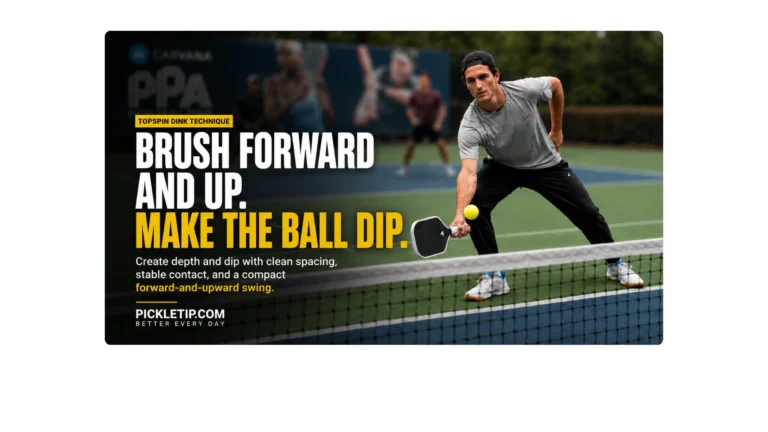
The path should feel short and sudden. You are not trying to build the longer shaped roll swing here. You are creating a compact strike that moves up through the ball quickly enough to pressure the other side without turning into a bigger looping topspin attack. Think compact pop with lift, not a fuller roll with extra drama.
One useful reminder: let the ball arrive into a prepared strike zone instead of chasing it with a desperate paddle. Cleaner flicks usually come from organized spacing and late acceleration, not from lunging the paddle out at the last second like you just remembered the shot existed.
As the arm extends, let the forearm and wrist help finish the motion late. That late burst is what gives the shot its snap. Quiet first. Whip second. The wrist matters here, but only after the body and spacing made the shot possible.
What should the good flick feel like? Fast. Sharp. Compact. The clean flick feels shorter than most players expect. If it starts feeling long, heavy, or overly decorative, you probably drifted into the wrong kind of swing.
Why You Must Get Under the Ball
There is a non-negotiable hiding inside that sentence: you have to get under the ball. If the ball is below net height and your paddle never gets underneath it, you do not really own the shot. You are just slapping at hope.
This is where the setup matters. Paddle tip down. Elbow organized. Knees bent enough to actually get below the contact. The flick works because you can hit up and still make the ball dip back down. No lift means no dip. No dip means the ball either dies in the net or floats into somebody else’s strike zone.
Players sometimes hear “get under the ball” and overdo the scoop. That is not the goal either. You are not trying to shovel the ball upward with an open face and no structure. You are trying to arrive below it, climb through it, and still move slightly forward so the shot has pressure, not just survival arc.
Wrist Timing: Late Beats Early
Wrist timing matters here too. Bad flicks often start with the wrist rolling early. The hand gets busy before the paddle has earned its path. Better flicks stay quiet for a split second longer, then accelerate through contact. That is why the shot feels quicker than it looks. It is not a long theatrical move. It is a short organized path followed by a late burst.
Think quiet wrist first, release second. The forearm can feel organized and stable, the wrist can feel loose, and the hand should stay quiet until the paddle earns its path to the ball. Then the acceleration happens late. That sequence matters: forearm organized, wrist loose, wrist quiet, then whip through contact.
Early roll usually produces one of two ugly outcomes. Either the face opens and the ball floats, or the hand races ahead of the body and the contact feels weak and flimsy. Late release feels different. It feels like the structure gets built first, then the speed shows up where it actually matters.
Common Miss Patterns from the Swing
The visible miss pattern tells you what probably broke.
- Too much forward punch with not enough upward brush usually sends the ball into the net.
- Too much scoop with an open face gives you that ugly floater that gets crushed.
- Too much elbow and not enough compact whip makes the shot feel heavy and slow.
The clean version feels fast, sharp, and shorter than most players expect.
Players also get fooled by pace here. They think a better flick means a harder flick. Not necessarily. A slower ball with more dip is often nastier than a flatter bullet that arrives at a comfortable height. This shot does not need pure speed. It needs to make the opponent contact the ball low, late, or jammed.
That is why diagnosis matters more than emotion. If the ball dies in the tape, ask whether you punched more than brushed, closed the face too early, or crowded the spacing. If the ball floats, ask whether you opened the face, scooped too much, or let the contact happen without enough forward structure. Good players improve faster because they read the miss instead of just reacting to the frustration.
Finish Small, Reload Fast, and Expect Ball Two
A lot of players misunderstand the backhand flick because they judge it like a clean winner shot. That is not usually the real job. The flick often works because it starts the pressure, forces a weaker reply, and sets up the next contact. That is why your finish matters so much. If the finish gets too big, your recovery gets too slow, and now the shot that was supposed to help you just made you late.
Keep the follow-through compact and in front. You do not need the arm flying behind you, and you do not need a dramatic finish that leaves the paddle wandering. A shorter finish keeps the motion honest and gets you back to ready faster for the ball that usually decides whether the flick actually paid off.
A useful target cue helps here too: the finish should still look connected to the line you attacked. That does not mean steering the ball with a frozen hand. It means the shot stays compact enough that your direction, recovery, and next move all still make sense together.
Why Reload Matters After the Flick
Reload is not cosmetic. It is survival. Players who flick and freeze get tagged in the shoulders, jammed in the chest, or beaten by the cleanup ball they should have owned.
- Flick and reload.
- Flick and slide if you need to.
- Flick and expect work.
The second ball is often where the point gets finished.
Selection reminder: A compact finish only helps if the contact actually belonged to the flick in the first place. Reload habits do not rescue a bad choice, but they do let you cash in the pressure when you attacked the right ball.
Pro Tip: Do not turn this into a gear solution. Different paddles may feel a little different through the flick, but the cleaner win almost always comes from spacing, contact point, compact acceleration, and getting your paddle back to work quickly.
Steering Clear of Common Pitfalls
Most backhand flick misses are not random. They leave clues. The goal here is not to memorize a bag of warnings. The goal is to understand what the miss is trying to tell you so you can fix the real problem instead of shadowboxing with the wrong one.
Read the Miss Before You Blame the Shot
- Over-reliance on Wrist: Players hear “flick” and immediately try to manufacture the whole shot with the hand. That usually creates early wrist action, flimsy contact, and inconsistent spin. Engage your arm structure first, then let the forearm and wrist finish the motion. If the ball feels weak and noisy off the face, you are probably using wrist too early instead of snapping through contact.
- Incorrect Paddle Face Angle: Keep it square enough at impact to control the launch while still brushing for topspin. Too open and the ball floats. Too closed and it buries into the net. A good self-check is whether your misses are consistently high or consistently low. The pattern usually tells you more than your memory does.
- Poor Footwork and Balance: Move your feet to get into position instead of overreaching. If your weight is falling away or you are leaning sideways, the shot gets flimsy fast. The backhand flick is compact, but it still needs stable legs underneath it. (Yes, high level players sometimes break that rule, but most of them have balance, timing, and hand speed that do not belong in an average rec game. For most players, forcing the flick from a bad base is not creativity. It is just low-percentage offense.)
- Finishing Too Big: Keep your finish compact to reload faster. A giant follow-through feels dramatic, but it usually means you chased power instead of whip. Shorter is cleaner here. You want enough finish to complete the topspin path, then get right back to ready.
- Forcing the Flick on the Wrong Ball: Not every backhand-side ball deserves this shot. If the contact is below knee height, too far outside your frame, or arriving while you are off-balance, the smarter play is often a dink or reset. Many “bad flicks” are really bad decisions wearing a mechanics costume.
- Trying to Win with Pace Instead of Dip: Players love to chase heat. The problem is that a fast ball at a comfortable height often gets countered better than a dipping ball that reaches the opponent around the knees or feet. Stop measuring the flick by raw speed alone. Judge it by how ugly the opponent’s contact becomes.
If you keep missing the same way, do not just hit more reps and hope the shot fixes itself. Diagnose the pattern. Net miss? Check face angle, spacing, and whether you punched more than lifted. Floater? Check whether the face opened or the contact got too passive. Jammed contact? Move your feet earlier and create room. And if the ball keeps asking for more shape and a fuller attack window than this compact strike can honestly give you, that may be a roll problem, not a flick problem. Good players get better faster because they stop calling every miss “just a bad swing.”
Drills That Actually Build a Reliable Flick
The goal of these drills is progression, not random reps. Start with feel, then build contact quality, then train recognition, then test whether the shot holds up when the ball speed and decision-making get less friendly. For beginners, this is usually the fastest way to make the backhand flick feel less rushed and more repeatable. The last stage is not just hitting a prettier flick. It is learning to flick, reload, and handle the next ball like the rally is still alive.
Do not grind this shot mindlessly for huge batches. Short, clean bursts usually teach it better than sloppy volume. Think a few quality balls, then reset, rather than trying to survive a marathon of ugly reps. When the wrist and timing get noisy, stop, reset, and come back fresh. Quality reps teach this shot. Exhausted flailing teaches panic.
1. The Poke Drill
Practice a simple “poke” against a wall with flat contact and minimal spin to get a feel for the motion. Stand close enough that you do not need a full swing and focus on keeping the motion compact and in front of you. This is not the glamorous drill. It is the honesty drill. It exposes whether your contact stays organized when there is no big swing to hide behind.
Rep structure: Do 3 rounds of 20 controlled contacts. Rest briefly between rounds.
Target: Clean contact in front of the body with no giant follow-through.
Success criteria: The ball leaves the face cleanly, your finish stays short, and your paddle returns to ready without drifting across your body.
Diagnostic cue: If the paddle drifts across your body or your wrist flops open, you are already making the motion too loose and too long.
Progression rule: Once you can keep the poke compact and repeatable, start adding a little more upward brush. Do not chase spin first. Earn the contact first.
Reload expectation: After every poke, bring the paddle right back to ready. This drill is not just about contact. It teaches you not to overfling the shot and get stuck admiring your own motion.
2. Toss and Flick Drill
Have a partner toss balls into your strike zone. Focus on your grip, setup, and brushing motion to dial in this shot. A good partner feed lands you the kind of ball you actually want to attack, not some wild emergency feed that turns the drill into survival mode. The whole point is to train a backhand flick, not your ability to improvise nonsense from a broken feed.
Rep structure: 15 feeds to the backhand side, then switch roles. Repeat for 3 rounds.
Target: Start with balls around waist height and aim for a controlled arc that clears the net comfortably before dipping down. Early in the learning process, a slight high miss is usually more useful than burying every rep in the tape, because you are still learning the upward shape of the shot.
Success criteria: You can contact the ball in front, create visible shape, and recover back to ready without feeling rushed or jammed.
Partner feed pattern: Feed slightly in front and to the backhand shoulder line so the hitter can extend rather than crowd.
Diagnostic cue: If the hitter keeps contacting too close to the body, stop the drill and reset the feet before the next toss. Jamming yourself is not “working hard.” It is just rehearsing the wrong movie.
Progression rule: Start predictable. Then vary the depth a little so the hitter has to adjust the feet without losing the compact swing shape.
Body cue: Get low enough to organize the hit, keep the wrist quiet in the setup, and then accelerate through contact. The point is not to swat at the ball from wherever you happen to be standing. The point is to arrive in a position where the flick can still look compact.
Reload expectation: Finish short and bring the paddle back up. You are training a pressure shot, not posing for the replay.
3. Dink and Flick Progression
Use this drill to blend flick recognition into live kitchen exchanges. Start with cooperative dinks, then agree that only balls that rise into your attack window can be flicked. Everything else stays a dink. That keeps the drill honest. If your softer backhand contact keeps breaking down, study our backhand dink guide. In this drill, the dink helps you recognize the right ball to attack.
Rep structure: Play 5 dink exchanges before either player is allowed to attack a ball that clearly sits between mid-thigh and shoulder height.
Target: Learn the decision point, not just the swing. The best flickers know when to leave the ball alone.
Success criteria: You can recognize the correct ball, flick without losing shape, and stay ready for the next live contact instead of assuming the first attack ends the point.
Constraint: No forced flicks below the net. If the ball is too low, you must reset or dink it back instead of pretending every bounce is attackable.
Diagnostic cue: If you are flicking from bad height and losing the point, the issue may not be your hand speed. It may be your judgment.
Concept bridge: Keep your main focus here on recognizing the right backhand ball, disguising the short-pop setup, and attacking it cleanly without overextending the motion.
Anticipation cue: After you hit a quality dink, let your posture get a little more offensive if you sense a weaker ball coming. Do not wait flat-footed, then reach at the last second. Good timing often starts before the flickable ball shows up.
Play-it-out progression: Once both players can recognize the right ball, play the point out live after the flick. The goal is to train what usually matters most anyway: the reload, the next contact, and the finish.
4. Low Feed Flick Drill
Work on lifting low balls over the net with topspin control. This drill teaches you the lower edge of the shot’s usable range and helps you learn the difference between a ball you can still pressure and a ball you need to reset. That distinction is huge. It keeps the drill from turning into a hero-ball contest and teaches you where the flick actually lives.
Rep structure: 10 low feeds in a row, then 10 medium feeds, then alternate low and medium for 10 more.
Target: Clear the net with shape while keeping the swing compact and balanced.
Success criteria: Your medium feeds stay offensive, your lower feeds stay controlled, and you can tell when the right answer is still a flick and when the safer answer is a reset.
Diagnostic cue: If every low ball turns into a pop-up, the face is likely too open or the hand is getting under the ball without enough forward structure. If every low ball dies in the net, you are probably trying to drive through a ball that needs more upward brush.
Progression rule: Once the feed becomes manageable, have your partner mix in one non-attackable ball every few reps. Your job is to recognize it and choose the safer shot instead of forcing hero ball.
Under-ball reminder: On these lower contacts, the paddle has to win the race underneath the ball. If you stay too level or slap too forward, you lose the shape that makes the shot safe enough to pressure with.
Pace reminder: Do not assume the answer is to swing harder. On these tougher contacts, less pace and better dip often create more trouble than a flatter, faster ball ever will.
Play-it-out option: Once the drill feels stable, play the next ball live after every successful flick. Train the cleanup, not just the first strike.
Strategic Insight: The flick is often a setup shot. Disguise your intentions, keep the motion compact, and get your paddle back to ready quickly. The best part of a good flick is often the weak ball it produces next, not the highlight clip you imagined before contact.
How to Use the Flick in Real Games
In real games, the backhand flick becomes dangerous when you stop treating it like a trick shot and start treating it like a decision. Yes, it is often useful for the left-side player in righty-righty doubles because that player sees a lot of backhand-side kitchen contact. Yes, it works best when you are actually up on the line. But the real separator is not court position alone. It is whether you can tell the difference between a ball you can own and a ball that is just bait.
When the Flick Has the Green Light
The easiest way to get better at this shot is not by flicking more balls. It is by flicking better balls. Ask three questions fast: Is it high enough? Is it far enough in front? Can I attack it without stretching, rescuing, or improvising? If the answer starts falling apart, the flick usually should too.
- Green light: the ball is high enough to pressure, the contact happens in front, you are balanced, and the ball is not dragging you outside your frame. That is when the flick starts to feel athletic instead of desperate.
- Yellow light: the ball might still be attackable, but only if your posture, spacing, and contact structure are already there. Better players can sometimes pressure this ball. Most players get in trouble here when they talk themselves into a flick their body never really owned.
- Red light: the ball is too low, too jammed, too wide, too rushed, or you are leaning and reaching just to touch it. That is usually not a flick problem. That is a decision problem. Dink it. Reset it. Stay alive for the next chance.
This is why selection matters so much on this shot. A lot of bad flicks are not bad swings. They are bad decisions wearing a mechanics costume.
Once you can identify the right ball, these are some of the most useful places to apply the flick in real play:
- Exploit weak backhands with quick flick attacks. This works best when the ball sits in your attack window and your contact can stay in front. If you are reaching or lifting from below net height, the target may be there but the green light is not.
- Disrupt rhythm during dink rallies with a well-timed flick. The key phrase is well-timed. The flick should come off a ball that rises enough for you to accelerate without losing shape.
- Capitalize on short soft balls with an aggressive flick. If the ball sits up into your shorter attack window, attack it compactly. If it stays low and skids, do not force the same answer anyway. This is one reason the flick matters so much against soft transition balls: it lets you pressure the ball before the opponent gets fully settled at the kitchen line.
- Create sharp cross-court angles using this shot. Just remember that angle does not rescue bad mechanics. Good angle comes after clean contact, not instead of it.
Where to Aim the Flick
A lot of players hear “attack” and immediately think “hit hard somewhere.” That is not enough. The flick gets nastier when you know what target you are trying to create, but the target still has to come after a contact you can actually own.
A good flick target plan is not just about where the ball lands. It is about what problem the ball creates. Start by making opponents respect the body jam or right hip. Once they begin sitting there, the seam starts opening. That is practical pressure, not cute theory.
Once they slide to protect the seam, the outside foot or crosscourt space becomes more available. In other words, the best flickers do not just pick targets. They sequence them. One location creates the next one. The setup stays compact, the finish changes late, and the defender starts reacting instead of reading.
- First target: the right hip or body jam. This is a mean place to live because the opponent has to decide quickly whether they can counter with the forehand, the backhand, or just survive the contact. It is a great first-choice target when the ball sits comfortably in front of you. Start here often. It makes the rest of your target tree more believable later.
- Second target: the middle seam. Good players slide to help, but that movement itself creates tension. When your flick can threaten the body and the seam from nearly the same prep, the other team starts guessing instead of reacting cleanly. That is part of what makes this shot so nasty. Two defenders are often trying to respect more live locations than they can comfortably cover from one compact setup.
- Third target: outside foot or knee-level discomfort. You do not always need to blow the ball past somebody. Often the better result is forcing them to make contact near the knees or feet. That is where dip matters more than bragging rights.
- Fourth target: shoulder line or crosscourt space. This is more advanced and usually belongs on a slightly higher ball. Crosscourt can be filthy, but it is not the everyday answer on every low backhand contact. Earn the simple body and middle targets first.
Geometry and Disguise Matter
Court geometry matters too. Some flicks near the sideline give you more angle and a little more room to shape the ball. Those balls can feel easier simply because your eyes see more available space. Middle flicks can ask for tighter control and sometimes a little less pace. That does not mean you avoid the middle. It means you respect how much margin each option gives you.
Disguise is what turns decent placement into real pressure. The strongest flickers keep the same general prep long enough that the defender cannot instantly tell whether the ball is going body, seam, line, or angle. That hesitation matters.
The best version usually looks like body or middle first, then changes late. When the setup looks the same and the finish changes late, the opponent starts guessing instead of reacting cleanly.
The Flick Wins on Ball Two
One of the biggest misunderstandings about the backhand flick is thinking it has to be a clean winner. At better levels, that is usually not the point. The flick often works because it steals time, forces an uncomfortable contact, and sets up the next shot. That means your job is not to admire it. Your job is to flick, reload, and expect a ball you can clean up. The shot is often the trigger, not the finish.
This is where the earlier reload lesson becomes tactical instead of just mechanical. A compact finish gets your paddle back to work faster. A disciplined target creates a weaker reply. Then your readiness cashes in what the flick just created. That is the chain. The first ball pressures. The second ball punishes.
If that next contact speeds up into your backhand side, see our backhand counter guide. The flick starts the problem. Your hands still have to finish the conversation.
The fastest way to improve your flick is not better mechanics. It is better selection.
Do Not Force the Highlight
This is where a lot of players get greedy. They land two good flicks, feel a little swagger, and suddenly every vaguely interesting backhand ball starts looking attackable. Resist that urge. Reliable offense comes from attacking clean contact, not from trying to prove you own a cool shot.
Another trap is thinking the best flick is the hardest flick. It usually is not. The nastier ball is often the one that gets on your opponent quickly, stays uncomfortable, and forces a weak reply. Pressure beats ego here.
If the ball is below net height, crowding your body, dragging you too wide, or showing up while you are leaning, the smarter play is usually a dink, reset, or a more patient backhand option. A disciplined player with a trustworthy flick is scarier than a reckless player with a flashy one.
That also means respecting balance. Better players can occasionally flick from uglier positions, but most players should build this shot from stable positions first. Expand the range later. Earn the nonsense after you own the fundamentals.
Most important of all, keep the right mindset. The flick is often the trigger, not the finish. Hit it, reload, and be ready for the cleanup ball. That is the real point of the shot.
Crosscourt Flicks Need Better Conditions
Crosscourt flicks look flashy, but they are not your everyday answer. They get safer on a slightly higher contact and often feel more natural when the ball is already traveling crosscourt. They also ask for more shape and more touch than most players think.
On very low contacts, trying to force a crosscourt flick can expose your partner if the ball floats or sits up. That is why most players should earn the simple body and seam targets first, then add the sharper angle once the contact height and control are truly there. Crosscourt is not forbidden. It just requires better conditions than players want to admit.
Frequently Asked Questions About the Backhand Flick
Got questions about the backhand flick? You’re not alone! Here are some common ones I hear from players learning this shot:
The best time to use the backhand flick is when the ball is high enough to attack, you can contact it in front, and you are balanced at the kitchen line. In most cases, that means a ball between about mid thigh and shoulder height. If the ball is too low, too jammed, or too wide, a dink or reset is usually the better choice.
The best grip for most backhand flicks is a continental grip because it offers the cleanest mix of control, versatility, and quick hand positioning. Some players also like a mild eastern backhand grip if it helps them close the paddle face slightly and create topspin more naturally. The right grip is the one that keeps the face stable without forcing last second adjustments.
To get power and spin on the backhand flick, build the shot with arm structure and extension through contact, then add a compact upward brush for topspin. The wrist helps finish the motion, but it should not create the whole shot by itself. More dip is usually more valuable than raw pace.
Common backhand flick mistakes include using too much wrist too early, opening the paddle face, crowding the contact point, swinging too big, forcing the shot on balls that are too low, and attacking while off balance. A compact finish in front helps you recover faster for the next ball. Most bad flicks are not just swing problems. They are often spacing or shot-selection problems too.
The best way to improve your backhand flick in pickleball is to start with simple compact-contact drills, then progress into live decision-based reps. Begin with wall work or easy partner feeds to groove spacing, brushing mechanics, and reload habits. Then move into dink exchanges where only clearly attackable balls can be flicked and the next ball stays live.
Still have questions about the backhand flick? Drop us a comment!
Backhand Flick Checklist:
- Contact in front
- Paddle starts below the ball
- Compact upward brush
- Late wrist acceleration
- Finish short and reload
✅ Ready to build out the rest of your backhand game? Visit our complete backhand guide.
Final Thoughts on Mastering Your Backhand Flick
The backhand flick gets attention because it looks slick when it lands clean. But the real value is not the highlight. The real value is that it lets you attack the right backhand-side ball quickly, compactly, and without giving the whole play away. That is why the shot matters. It turns a weird in-between contact into real pressure.
The players who trust this shot are usually not the ones forcing it on everything. They are the ones who read the ball early, respect the window, organize the spacing, strike it compactly, and reload like the point still needs work. They understand that the flick is often the trigger, not the finish.
So do not chase a prettier flick. Build a more trustworthy one. Get the contact out in front. Keep the swing short. Finish compact. Reload like the next ball belongs to you too, because it often does.
At that point, the backhand flick stops being some slick little surprise you hope shows up on a good day. It becomes a pressure tool opponents actually have to respect. Do not try to make it look dangerous. Make it trustworthy.
If you want to build out the rest of your backhand game, go to our complete backhand guide.