VYCE Honey Grip Review
Quick verdict: The VYCE Honey Grip is the tacky pickleball overgrip I would look at first if your paddle handle gets slick in sweat or humidity, but you still want a thin, connected handle feel instead of building the grip into a marshmallow log.
Key takeaways: The VYCE Honey Grip gives you tack through sweat, a thin 0.55 mm profile, and a more secure handle feel during blocks, counters, serves, and long humid games. It is not for players who prefer a dry cloth-style grip or a smooth release.
Quick Summary: Honey Grip is best for players who want their paddle to stay connected to the hand without squeezing harder. The main tradeoff is simple: more tack and color personality, with possible dyed grip transfer over time.
How we tested Honey Grip: I tested the grip in humid New Orleans conditions during kitchen exchanges, serves, drives, resets, blocks, dinks, and longer sessions where sweat usually exposes whether an overgrip still has useful tack. I also compared my experience with feedback from AJ and other players who burn through grips at different rates.
| Product | VYCE Honey Grip |
| Brand | VYCE Sports |
| Category | Tacky pickleball overgrip |
| Texture | Tacky surface |
| Package | Pack of 3 overgrips |
| Material | Polyurethane overgrip |
| Thickness | 0.55 mm |
| Size | 1050 mm x 26 mm x 0.55 mm |
| Includes | Finishing tape |
| Colors tested | Steel Blue and Royal Purple |
| Price noted | $7.99 |
| Best fit | Players who want a thin, tacky, connected handle feel |
| Main tradeoff | More tack and color choice, with possible dyed grip transfer over time |
| Where to buy | VYCE Sports through PickleTip |
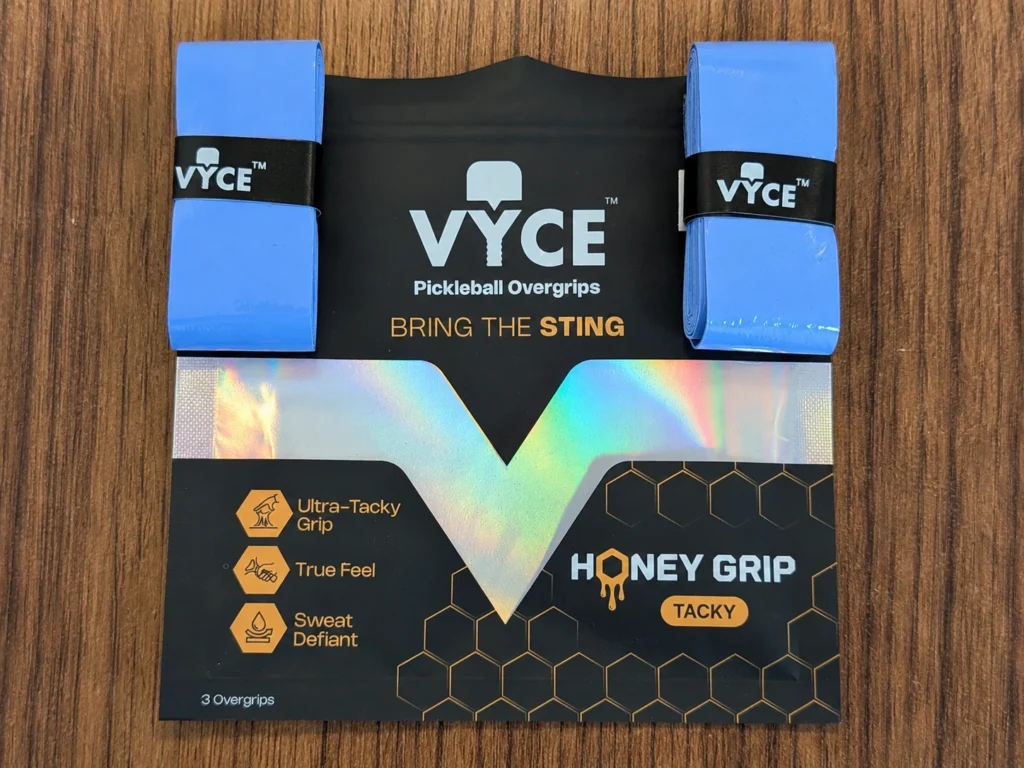
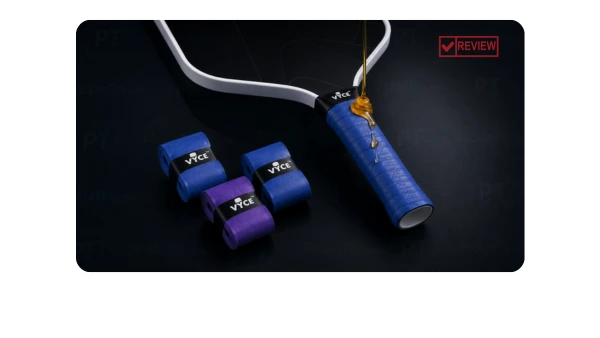
The two colors I tested were Steel Blue and Royal Purple. The broader Honey Grip lineup also includes Ruby Red, Neon Green or Volt Yellow, and Blush Pink.
The colors are fun, but the real question is simpler: does this thing keep the paddle from getting sneaky in your hand?
I judge overgrips the same way I judge most gear at the court. Does this thing help your hand stay calm when the point gets spicy, or does it create one more tiny annoyance that shows up at 9 to 9?
On a sweaty kitchen exchange, the Honey Grip gave me that locked-in handle feel players usually chase with tacky overgrips. My hand felt connected without having to choke the paddle, the face stayed easier to settle on blocks, and the ball was not jumping off a twisted handle like a squirrel startled by the porch light.
I would look at Honey Grip if you want more grab without turning the handle into a padded pool noodle. I would skip it if you like a dry, smooth release and hate that sticky-finger feeling.
Who This Helps
- Sweaty-hand players whose paddle handle gets slick during long games or humid sessions.
- Players who over squeeze because they do not trust the handle to stay put.
- Bevel-sensitive players who want more tack without turning the handle into a thick padded tube.
- Players replacing worn stock grips who want a fresh, tacky surface without rebuilding the whole handle.
Make the Fast Decision Before You Wrap It
Use it if
- Your paddle handle starts slipping once your hand gets damp.
- You want more grab without a bulky handle feel.
- You like feeling the bevels instead of fighting a rounded, over-padded grip.
- You want a thin overgrip that still feels secure during blocks, counters, and longer games.
Skip it if
- You dislike tacky grips.
- You want a dry cloth-style feel or a very smooth release.
- Your handle already feels too large.
- You do not want any risk of dyed grip transfer on the handle underneath.
Choose it this way
I tested Steel Blue and Royal Purple, and both looked sharp, but dyed grips may leave slight color on the paddle handle over time, especially in sweaty conditions. If keeping the handle underneath as clean as possible matters more than color matching, choose the lightest or non-dyed option available. Let your hand vote before your eyeballs start campaigning. The court does not care how pretty the wrap looks when the paddle starts slipping at 9 to 9.
What It Feels Like When Your Hand Gets Sweaty
Honey Grip is built for tack through sweat rather than a dry towel-like feel. When my hand got damp during play, the surface still had bite, the handle did not feel like it wanted to rotate in my palm, and I could keep a quieter paddle face on blocks and counters.
The feel is tacky, thin, and connected. It does not glide through your fingers like a dry overgrip. It feels more like the surface wants to stay with your hand, which is exactly what some players want when humidity, nerves, or a long rally starts making the handle slick.
The trap is squeezing because the grip feels so secure. A tacky grip can help you trust the paddle, but if you clamp down harder than you need to, touch shots can still get jumpy. Soft hands still have to be soft hands. Honey Grip just gives those hands a better chance to stay relaxed.
Why the tack matters: A tacky overgrip does not magically stop paddle twist. It gives your fingers more bite on the handle, especially when sweat starts turning the grip slick. When your hand trusts the handle, you do not have to squeeze the life out of the paddle just to keep the face quiet.
Will It Make the Handle Feel Bigger?
Any overgrip adds a little meat to the handle, but at 0.55 mm, Honey Grip stays on the slimmer side. It has some comfort to it, but do not expect a big pillow wrap. The better description is thin, tacky, and still close to the handle.
If your current handle already feels crowded, even a thin wrap can matter. During a two-handed backhand or quick grip change, pay attention to whether the handle feels more secure or just a little too full. If you like clear bevel feedback, wrap it cleanly and do not bury the handle under sloppy overlap.
Honey Grip works best as a feel change over the existing grip. If your stock grip feels slick or worn, it gives you a fresh tacky surface. If your base grip is already too soft, too round, or too large, an overgrip will not magically sharpen the bevels or shrink the handle.
What Honey Grip Will Not Fix
Honey Grip can help your hand stay more connected to the paddle, but it will not fix every handle problem. If your contact is late, your grip pressure is too tight, or your paddle face is unstable because of rushed mechanics, a tackier grip can only help so much.
Think of it as a traction upgrade, not a technique replacement. It can make the paddle feel more secure when sweat shows up, but you still have to keep your hand relaxed, your contact clean, and your paddle face quiet.
Find The Part That Matches Your Hand Problem
- What actually matters on court
- Installation notes
- Replacement and durability notes
- Compared with stock grips
- What works and what might bug you
- Player questions
- Final take
What Actually Matters On Court
Kitchen hands battles
On a fast counter exchange at the kitchen, Honey Grip feels secure in the fingers without forcing you to death-grip the paddle. That matters when the ball is coming in hot and your hand wants to panic. The grip helps the paddle sit still, but the catch is control. If the extra tack makes you clamp down, counters can still pop up. Security is good. A white-knuckle squeeze is still a tiny crime scene.
Serves and drives
On drives and firm serves, Honey Grip gives the hand more grab so the paddle feels less likely to rotate through contact. I liked that connected swing feel, especially when the handle would normally start getting a little slick. Just do not confuse tack with spacing. If your contact point is late or jammed, the grip is not going to rescue the whole operation like a superhero in court shoes.
Resets and blocks
Honey Grip is useful on resets and blocks because a stable handle helps you keep the face quiet. When a hard ball comes into the body, the grip feels attached to the hand, the paddle face is easier to hold steady, and the ball is less likely to jump because the handle shifted. The danger is letting all that grab wake your hand up when the shot needs quiet fingers.
Dinks and touch shots
On touch shots, Honey Grip helps most when it lets your hand stop fighting the handle. A soft crosscourt dink is already touchy enough without the paddle shifting at the last second. The tack gives your fingers a little more trust, but if you already get handsy, the extra grab can make you even busier. Soft shots still need soft intentions.
Sweat, humidity, and long games
Honey Grip makes sense when sweat is the thing slowly turning your handle into a questionable object. In humid Louisiana weather, it still had bite when the air felt heavy and my hand started getting slick. As play goes on, the surface gives enough grab to reduce grip-pressure panic late in games. Once the tack drops, edges lift, or the handle starts twisting again, the wrap has done its job.
Installation Notes
Honey Grip should be treated like a normal overgrip wrap unless you already have a specific wrapping style you trust. Start at the butt cap, keep the overlap consistent, use steady but not excessive tension, trim extra material if needed, and secure the top with the included finishing tape.
The grip is listed at 1050 mm and comes with finishing tape. In my wrap, there was extra material left over, so I was not doing that sad little panic stretch at the top of the handle. If you care about bevel feel, wrap it cleanly. A good grip can still feel clumsy if you install it like you are rushing to catch a parade float.
Honey Grip Field Notes: Replacement and Durability
Do not replace Honey Grip by calendar alone. Replace it by what your hand is telling you.
Durability was better than I expected. I normally change grips every 7 to 10 days, and Honey Grip made it about 2 weeks for me before I started thinking about replacing it. AJ plays almost every day and was on week 2 of the same grip. Another player reported 4 to 5 days of heavy play after usually regripping after 1 or 2 days, and another noted at least 10 hours of play with the grip still tacky and dry. Take those as real court notes, not a promise. Your sweat, grip pressure, storage, and weekly play volume will decide when the grip is cooked.
Replace it when the tack drops, the edges lift, the surface feels grimy enough to change hand feel, or the paddle starts twisting again. The hand will tell on it before the calendar does.
My takeaway: Honey Grip looks most appealing for players who burn through slick grips quickly and want tack that stays useful through longer sessions. I would still judge replacement by feel, not by a calendar promise.
Compared With Stock Grips
I would treat Honey Grip as a way to wake up a slick handle, not as a full grip rebuild. If your stock grip feels slick, Honey Grip adds tack. If your stock grip feels worn, it gives you a fresh surface. If your stock grip feels too small, it may add a little build, but the listed 0.55 mm profile keeps the feel thin compared with a heavily padded direction.
In match terms, the difference shows up when your hand starts sweating. A slick stock grip can make the paddle face change at contact. Honey Grip gives your fingers more hold, the paddle feels less likely to twist, and you can make a calmer swing or block.
If you are comparing Honey Grip to Wilson, Tourna, Six Zero, Cookie grips, Bodhi, Udrippin, or another wrap, ignore the label for a minute and start with the hand feel. Honey Grip is a tacky, thin overgrip. Choose it if you want more grab and a closer handle feel. Skip it if you want a dry, smooth, cloth-style feel or a thick cushion build.
What Works and What Might Bug You
What works
- Tacky feel gives the hand a more secure connection to the paddle.
- 0.55 mm thickness keeps the handle feel thin and connected.
- 1050 mm length gives plenty of wrap for pickleball handles.
- Finishing tape is included.
- My on court testing and player feedback point to better than expected durability.
- Color options give players more setup personality.
What might bug you
- Dyed versions may leave slight color on the paddle handle over time, especially with sweat.
- Even at 0.55 mm, it still adds material, so players who are very sensitive to handle size will notice the change.
- Players who prefer a dry, smooth release may not like the tacky surface.
- It is not meant to be the thick cushioned choice for players who want a padded build.
- There is no single replacement window that applies to every player.
Questions Players Keep Asking About VYCE Honey Grip
Yes. Honey Grip is a tacky overgrip that stays useful when sweat shows up, making it a strong fit for players whose paddle handle gets slick during play.
Yes, because any overgrip adds material. Honey Grip is listed at 0.55 mm thick, so it stays on the thin side while still changing the handle feel.
Yes. Honey Grip is an overgrip, so it is meant to go over the existing handle grip rather than replace the base grip.
There is no single replacement window for every player. Replace it when tack drops, edges lift, the surface feels worn, or the handle starts slipping or twisting again.
Honey Grip is a tacky overgrip. It is not the right choice if you want a dry cloth-style feel or a very smooth release.
It can help by giving your hand a more secure hold on the handle, especially when sweat is involved. It will not fix off-center contact, late preparation, or poor grip pressure by itself.
Yes. The tack-through-sweat feel makes Honey Grip a sensible choice for humid conditions. My testing was conducted during a very humid stretch of New Orleans weather.
Yes, the 1050 mm length gives generous wrapping material for most pickleball handles, including many extended handles. Whether it feels right for a two-handed backhand still depends on handle length, overlap, and your grip-size preference.
It can, but the answer depends on your handle length, wrap overlap, and how much added grip size you like under the second hand. The 1050 mm length gives you useful material to work with, but the feel still has to match your hand setup.
Final Take
The VYCE Honey Grip is worth buying if you want a thin, tacky overgrip that helps the paddle stay connected to your hand when sweat starts trying to turn your handle into a squirming fish.
Buy it if your stock grip feels slick, you like tack, and you want more security without a big padded feel. Skip it if you prefer a dry release, hate tack, or do not want any risk of color transfer from dyed grips. The main tradeoff is simple: you get more grab and more color personality, but you also get a grip that wants to stay with your fingers.
After installing it, pay attention to three things during your first session: whether the paddle twists less, whether your grip pressure relaxes, and whether the tack feels helpful or too grabby. That first sweaty game will tell you more than the package ever could.
Check the VYCE Honey Grip through PickleTip and choose the color you can live with both on the paddle and under the wrap. Start with the feel in your hand, not the color in your eyes. The court will tell you fast whether this honey belongs on your paddle.