Clear Skies Hospitality Acquires The Exchange: What It Means for New Orleans Pickleball
Clear Skies Hospitality has acquired The Exchange in New Orleans, and before the rumor machine starts banging paddles on the fence, local players deserve a clear look at what this probably means.
Update: After this article was first drafted, I had a phone conversation with Rich Green, co-founder of Clear Skies Hospitality and the new owner of The Exchange. Green told me the original article was spot on. That conversation did not change the basic direction of my take, but it did make the picture clearer. Green sounded genuinely excited about the opportunity to reinvigorate The Exchange, improve the player experience, and listen to the New Orleans pickleball community before forcing major changes.
I should say this up front:
I have my own history with The Exchange. Some of it was exciting. Some of it was complicated. My son AJ was part of the original coaching group, and I had a close look at the vision before the courts were even built. Like a lot of things in local pickleball, the story had good intentions, missed expectations, and more moving parts than anyone probably wanted.
But that is not what this article is about.
I am looking at this acquisition the way many New Orleans players are looking at it: as someone who cares about local pickleball and wants to know what happens next. Who is the new owner? What has he built before? Does Clear Skies Hospitality understand what makes The Exchange valuable? What might change? What probably will not change? Will the player experience get better? And the biggest question for many of us: does the new Exchange NOLA deserve a monthly membership fee?
Quick Read
Clear Skies Hospitality has acquired The Exchange Pickleball + Bar in New Orleans, and after speaking directly with new owner Rich Green, I am more optimistic than I was when the news first broke. The early direction appears to be: keep The Exchange identity, build on the existing local team, improve programming, add player-focused technology, and listen to local players before making major changes. That is encouraging, but the real test is still the same: better play, clearer communication, stronger programming, and a membership experience that feels worth the monthly fee.
The Short Version Before the Group Chat Explodes
Clear Skies Hospitality, the Chicago based parent company behind SPF, has acquired The Exchange Pickleball + Bar in New Orleans. The deal closed on May 22, marking Clear Skies Hospitality’s first expansion beyond Illinois. (Beat reporter Jeremy Weatherspoon informed me of the news.)
For local players, the short answer is this: the new owner is an operator with multiple pickleball hospitality facilities, not a random outside investor kicking the tires on court rentals. Clear Skies has already built SPF Lincoln Park, a large indoor pickleball, dining, and entertainment facility in Chicago, operates the 24/7 autonomous SPF All Day concept, and is continuing to expand its Chicago footprint.
From the outside, this does not look like a bulldozer deal. It looks more like Clear Skies wants the bones, the name, the local relationships, and the community energy to stay intact while they figure out where to add horsepower.
The Exchange is not just a building with courts. For a lot of New Orleans players, it has become part indoor backyard, part social club, part event venue, part rainy day pickleball shelter, and part “Where are we playing tonight?” answer.
What Local Players Need to Know First
- The Exchange has a new owner: Clear Skies Hospitality, the Chicago based company behind SPF.
- The Exchange name and local team are expected to remain in place during the transition.
- The early focus appears to be better programming, better technology, stronger events, and a better player experience.
- No immediate rebrand, staff replacement, fully autonomous model, or major pricing change has been publicly announced.
- The membership question still comes down to the same thing: whether the day-to-day player experience improves enough to justify the monthly fee.
What Actually Sold?
For players who are curious about the business side, the sale involved both the property and the operating business behind The Exchange.
Clear Skies Hospitality purchased the 26,000 square foot Rousseau Street venue that houses The Exchange for $5.2 million, according to courthouse records reported after the deal closed. The company also bought the business itself in a separate transaction.
That distinction matters. This was not just a lease assignment, a management agreement, or a new brand coming in to operate someone else’s courts. Clear Skies bought the real estate and the business. In practical terms, that gives the new ownership more control over the long-term future of the venue, the player experience, the programming, the hospitality side, and any facility improvements they decide to make.
At the same time, I would not read the sale as a distress signal. I have watched The Exchange from closer than most casual observers. I had a close look at the vision before the courts were even built. From that vantage point, The Exchange never looked like a failed idea. It looked like a strong local concept that had reached the difficult next stage: the point where community energy, a good location, and early momentum need to be matched with deeper programming, tighter systems, better technology, stronger event support, and more operating scale.
That is why this sale makes sense to me. The Exchange had already become a real New Orleans pickleball venue with a community around it. The question was not whether the idea had value. It clearly did. The question was whether it had the right engine behind it for the next chapter. After speaking with Rich Green, I am more inclined to see this as a scale-up opportunity than a rescue.
So yes, the numbers are interesting. But for players, the more important question is not just what Clear Skies paid. It is what Clear Skies does with the place now that it owns both the building and the business.
Why New Orleans Players Are Watching This Closely
Pickleball in New Orleans is growing fast, but indoor court space is still precious. When a local venue like The Exchange changes ownership, players naturally have questions.
That is especially true for players already trying to sort through the best pickleball courts in New Orleans. Outdoor courts, public courts, clubs, gyms, and private facilities all serve different needs. The Exchange matters because it fills a specific lane: dedicated indoor pickleball with food, drinks, events, and a social venue feel.
Will pricing change? Will leagues stay the same? Will the food and drinks still feel local? Will the atmosphere get better, worse, or weirdly corporate (like the Selkirk Bread & Butter deal)? Will New Orleans players still feel like this is their place?
Nobody is wrong for asking. A pickleball facility can be a warehouse with nets, a country club with invoices, or a social room that happens to have a scoreboard. The Exchange has always leaned into something different: a New Orleans version of a pickleball hangout, where the game sits next to food, drinks, music, private parties, and community.
So yes, the buyer matters. Not just the bank account. The taste level. The patience. The feel for the room.
Clear Skies Hospitality is not coming from outside the sport with a blank clipboard and a calculator. Its SPF concept in Chicago has already operated in the same general lane: urban pickleball, food, drinks, events, social play, and community programming. That does not guarantee a perfect transition, but it does suggest the new owner understands that indoor pickleball is about more than court utilization charts.
What The Exchange Already Means on Rousseau Street
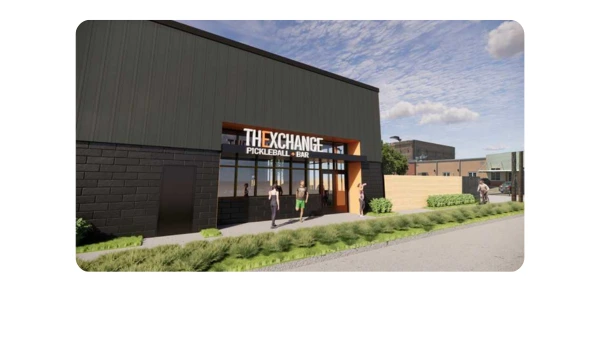
The Exchange opened in August 2023 at 2120 Rousseau Street in the Lower Garden District. The facility brought something New Orleans did not really have at that scale: dedicated indoor pickleball courts paired with outdoor play, food, drinks, private events, and a social venue feel.
It is not a tiny room with painted lines and a dream. The Exchange operates in a refurbished building with six indoor courts, one outdoor court, and a food and beverage program designed to make the place feel like more than a place to sweat through a few games and leave.
The original development was also a meaningful local investment. Founder Renée Melchiode purchased the former warehouse in 2021, redevelopment began in December 2022, and publicly reported new construction costs topped $3 million before additional costs such as development work, stormwater management, and rezoning.
In other words, this was never some temporary pickleball pop up. It was a major adaptive reuse project that put money, energy, and visibility into a New Orleans neighborhood while giving local players something the city badly needed: reliable indoor court access.
That foundation is part of what makes the acquisition interesting. Clear Skies is not starting from zero. It is stepping into a venue that already has location, community, event potential, food and beverage history, and a local identity that players recognize.
Food, Events, and the Stuff That Pays the Light Bill
The court count gets most of the attention, but The Exchange’s hospitality and event capability may be one of the bigger reasons the venue was attractive.
From the beginning, The Exchange leaned into more than open play and court rentals. The venue paired pickleball with food, drinks, private events, social gatherings, corporate outings, and group entertainment. That matters in New Orleans because food is not decoration here. It is infrastructure. A pickleball venue in this city cannot just toss a cooler in the corner, call it hospitality, and expect people to clap.
The food side has evolved since the venue opened. The original partnership with Messina’s Catering has changed, with The Bistro by Elliott’s New Orleans now tied to the food and catering side of The Exchange. But the broader point remains: The Exchange works best when pickleball sits inside a larger New Orleans hospitality experience.
SPF’s Chicago food program is useful context. At SPF Lincoln Park, the hospitality layer includes Honey Butter Beach Club, a restaurant concept from the team behind Honey Butter Fried Chicken. That suggests Clear Skies understands that food can be part of the destination, not just an afterthought next to the court schedule.
For New Orleans, that is a useful clue but not a commandment. The smart move is not to import a Chicago flavor. It is to strengthen what already works locally: The Bistro by Elliott’s New Orleans, private events, group menus, social nights, tournaments, corporate outings, and the food and drink rhythm that makes the venue feel like New Orleans.
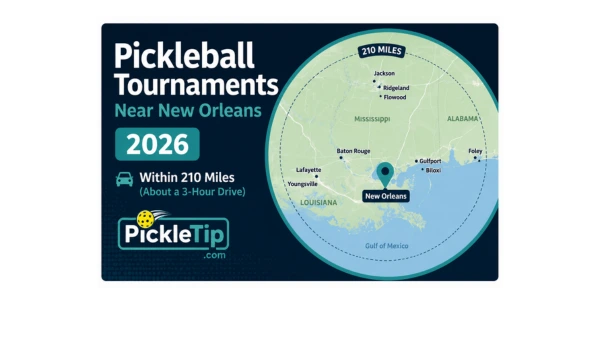
If Clear Skies expands tournaments, leagues, and event programming, The Exchange could become an even more important stop for players already looking for upcoming pickleball tournaments near New Orleans.
Add operating support without watering down the roux.
A Quick Word About the People Who Helped Shape the Place
The Exchange’s early credibility was shaped by local racquet sport people who already had roots in the New Orleans area.
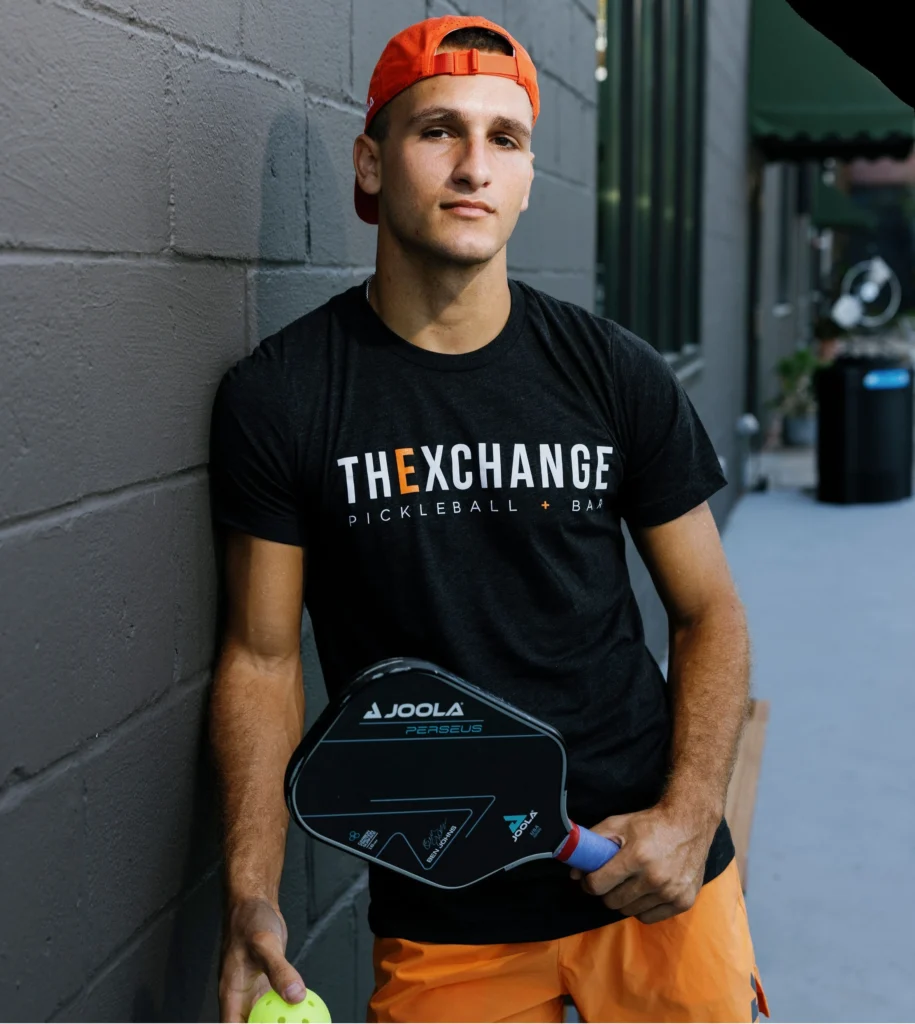
AJ Parfait was part of the original Exchange team, along with Scott Robinson, who served as Head of Pickleball Operations. Robinson, a longtime teaching professional and former Assistant Women’s Tennis Coach at Tulane, brought deep racquet sport experience to the original launch period.
Sasha Salk was hired later, after the venue had opened, shortly before Scott Robinson left The Exchange. Scott left first to teach at Elmwood Pickleball, and a few months later AJ Parfait followed him there. Although Scott has since passed away, he was an important part of establishing The Exchange NOLA in its earliest days and deserves to be remembered as part of that foundation.
From what is visible now, The Exchange’s current programming seems to lean on the active staff and instructors still connected to the venue, including Sasha Salk and Lee Eberly. That current team is the group local players will likely watch most closely during the transition.
Who Bought The Exchange?
The buyer is Clear Skies Hospitality, the Chicago based company behind SPF. SPF stands for Social Pickleball Fun, and yes, I have to respect the little wink in the name: SPF for indoor pickleball, because apparently even when you are out of the sun, somebody still wants to protect your fun. That tells you something about the operating philosophy. This is not just a “rent a court and go home” model. SPF has positioned itself around pickleball, food, drinks, events, training, and community.
Clear Skies co-founder Richard Green described The Exchange as feeling like a “cousin facility” the first time he walked in. That line does more work than most acquisition quotes. “Cousin facility” tells you this was not just about buying courts. It was about recognizing a familiar kind of room. SPF and The Exchange were built independently, in different cities, but around a similar idea: pickleball as a social gathering place.
Green has described the broader vision as creating “indoor backyards in cities,” or urban oases of pickleball where people can gather, play their favorite game, and feel at home.
That may be the cleanest way to understand the whole deal. If The Exchange is already New Orleans’ indoor backyard, Clear Skies is betting it can help that backyard grow without turning it into a generic sports box.
Green and Melchiode also share an interesting origin thread. Both have pointed to Courtside Kitchen in Fort Worth, Texas, as part of the inspiration for their own venues. They did not begin as partners, but they were apparently looking at the same type of future: pickleball venues that act like community hubs rather than plain court boxes.
The two eventually connected at the Pickleball Innovators Summit in October 2025. That timeline matters. This was not a quick handshake deal tossed together after a few phone calls. The public story suggests a relationship and shared vision began forming months before the acquisition closed.
What I Took From My Conversation With Rich Green
After this story started making the rounds, I had a phone conversation with Rich Green. The biggest thing I took from that call was not a specific gadget, court feature, or programming idea. It was his tone. Green sounded excited about The Exchange, but not in a “we are here to fix everything from Chicago” kind of way. He seemed genuinely interested in what The Exchange already means to New Orleans players and how Clear Skies can build on it.
Green also told me the original article was spot on. I do not take that as a victory lap. I take it as useful confirmation that the read many local players had was in the right lane: The Exchange should keep its identity, and Clear Skies appears to be looking for ways to improve the experience rather than erase what made the place matter.
That matters. A new owner can say all the right things in a press release and still miss the room. My impression from the call was that Green understands The Exchange is not just a set of courts on Rousseau Street. It is a local pickleball hangout with a community around it, and any improvements have to respect that.
The biggest takeaway from that call was simple: if Clear Skies listens first and improves second, this could be a very good thing for New Orleans pickleball. If they skip the listening part, they risk solving problems players do not have while missing the ones they do.
What SPF Has Already Proven in Chicago
Before anyone in New Orleans starts trusting the new owner, it is fair to ask what they have already built.
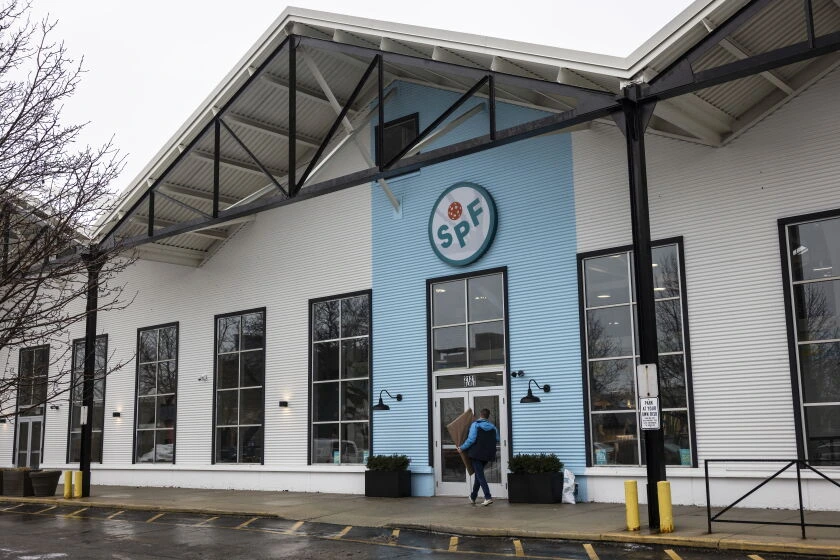
SPF Lincoln Park is Clear Skies Hospitality’s flagship Chicago location. Opened in January 2024, it is a 42,000 square foot facility in Chicago’s Lincoln Park neighborhood and has been described as the city’s largest indoor pickleball club. That scale gives a concrete picture of what Melchiode meant when she talked about an operator with multiple facilities, greater resources, and economies of scale.
SPF Lincoln Park is also more than a big court building. Public descriptions of the facility highlight dedicated indoor courts, food and beverage, leagues, social play, family programming, private events, and amenities designed to keep people around before and after they play.
Clear Skies also operates SPF All Day in Chicago’s Old Irving Park area, a different model that has been promoted as Chicago’s first 24/7 fully autonomous pickleball facility. That does not mean The Exchange is about to become automated, 24 hour, or staff light. But it does show that Clear Skies has experience with more than one operating model.
The company is also expected to continue growing in Chicago, with a third SPF location planned for the West Loop in November 2026. Combined with Clear Skies’ involvement in boutique neighborhood spaces like The Sport House in Hyde Park, this shows the company is not just jumping from one big flagship to another. It has experience managing a varied, multi facility neighborhood footprint.
That should catch the attention of New Orleans players because The Exchange was built in a similar spirit. The Exchange works because people can play, eat, drink, hang out, bring friends, book a party, join a clinic, and feel like the place has a personality. If Clear Skies understands that in Chicago, there is a better chance they understand it in New Orleans.
SPF and The Exchange: The Useful Comparison
SPF gives New Orleans players a clue about the new owner’s lane. Clear Skies has already worked with indoor pickleball, food and beverage, events, memberships, technology, and social programming. The Exchange brings a smaller but deeply local version of that same idea. The opportunity is not to copy Chicago. The opportunity is to use Clear Skies’ operating experience to strengthen what already works on Rousseau Street.
Coaching Could Be Where This Gets Interesting
SPF’s Chicago programming also includes the SPF Training Academy, anchored by elite coaches Martin Stanchev and Emir Hamzic. Green has already floated ideas like shared coaching staff and cross-club programming between Chicago and New Orleans, so the instruction side is worth watching.
That does not mean Chicago coaches are definitely taking over New Orleans programming. It does not mean The Exchange clinics will suddenly change overnight. But it does suggest that instruction, clinics, player development, and visiting coach events could become part of the future conversation.
For local players, that could be a good thing if handled correctly. New Orleans does not need a copy and paste coaching culture from Chicago. But it could benefit from expanded clinics, visiting pros, advanced training weekends, and stronger programming depth if those additions support the existing local scene instead of crowding it out.
Why Chicago and New Orleans Actually Make Sense Together
At first glance, Chicago and New Orleans may seem like an odd pickleball pairing. But the more you look at it, the more the connection makes sense.
Both cities are food cities. Both are music cities. Both are sports cities. Both have strong neighborhood identities. Both attract visitors who want something more memorable than another plain hotel ballroom or basic night out.
That overlap is probably part of the attraction. Clear Skies has already talked about cross club programming: summer trips to Chicago for New Orleans members, winter trips south for Chicago players, shared coaching staff, inter club competitions, trivia nights, and other programming that connects the two communities.
If they pull that off, the deal becomes more than a change of ownership. Most pickleball clubs only think locally. Clear Skies appears to be thinking in terms of connected city communities. If they get that right, The Exchange could become part of something larger without losing its local flavor.
The Jazz Fest Reference Was Not Random
One of the most revealing parts of Green’s personal statement was not about square footage, court revenue, or booking software. It was about George Wein, the late founder of the Newport Jazz Festival and the New Orleans Jazz & Heritage Festival.
Green pointed to Wein’s ability to build festivals with a shared thread of values while allowing each place to remain distinctly itself. Around here, that comparison lands differently. Jazz Fest works because it feels rooted here, not dropped into New Orleans from somewhere else. Green seems to be using that idea as the blueprint for SPF and The Exchange: shared values between cities, but each venue remaining “distinctly, beautifully its own.”
That tells me something. It suggests Clear Skies understands that the goal is not to make The Exchange feel more like Chicago. The goal is to connect two communities while letting New Orleans remain New Orleans.
What Local Players Really Want to Know
My best read right now: do not expect the walls to move overnight.
This does not appear to be a “new owner walks in Monday morning and changes everything” situation. The more realistic path is gradual improvement: programming, events, technology, food and beverage refinement, member experience, and better use of the venue’s social potential.
What Could Change Gradually
Players should watch for things like:
- More structured leagues and events
- Expanded clinic programming
- Visiting coaches or specialty training weekends
- Inter club competitions between New Orleans and Chicago
- Member travel weekends or destination pickleball events
- More private party and corporate event packages
- Food and beverage refinements tied to events and tournaments
- Possible membership benefits that connect SPF and The Exchange communities
- Instant replay technology on every court
- AI-assisted ball machine training
- More outdoor activities in the fall
- Better player matching for open play and competitive sessions
Some of those items have been discussed more specifically than others, so local players should treat the list as a mix of stated plans and reasonable possibilities. The main takeaway is simpler: Clear Skies appears focused on programming, technology, hospitality, and player experience rather than a quick rebrand.
What Has Not Been Announced
There has been no public announcement that The Exchange is changing its name, becoming SPF New Orleans, switching to a fully autonomous model, replacing the local team, or making immediate major pricing changes. Players should treat those as open questions unless The Exchange or Clear Skies announces them directly.
The Part They Better Not Mess Up
Here is where the rubber meets the kitchen line.
The Exchange should not become a Chicago concept with New Orleans wallpaper. That would miss the whole point of the acquisition.
The Exchange has value because it already feels like New Orleans. It has a local player base, local staff relationships, a local food and beverage identity, and a venue rhythm that fits the city. Clear Skies can bring structure, capital, operating systems, event experience, and cross market ideas. But the local soul has to stay local.
Green’s public and private comments suggest that Clear Skies understands this. He has talked about enhancing what already resonates locally rather than replacing it. That is exactly the right note to strike. Now the real test will be execution.
Green even signed off his personal statement with “Let’s Geaux and Protect Our Fun.” That phrase fits the SPF brand, but on Rousseau Street, protecting the fun means protecting the local flavor. Around here, people can tell pretty quickly when someone is trying on Louisiana like a borrowed accent. The fun cannot feel performed. It has to still feel like New Orleans.
New Orleans players can handle improvements. They can handle better systems, stronger programming, cleaner communication, bigger events, and more polished hospitality. What they will not want is a place that suddenly feels less like theirs.
Does The Exchange Deserve Your Monthly Membership Fee Now?
Strip away the press release, and this is the question sitting under the whole thing.
Not “Is this acquisition interesting?” It is. Not “Does Clear Skies have experience?” It does. The real player question is simpler: does the new version of The Exchange deserve a spot in your monthly pickleball budget?
My answer: not automatically, but it deserves a fresh look.
A new owner does not make a membership valuable by itself. A press release does not improve your league night. A bigger operating group does not automatically make open play better, clinics better, communication clearer, or court access easier. The membership fee still has to be earned the same way every pickleball membership is earned: through the actual player experience.
After talking with Green, I am more willing to give the new ownership a chance because the early emphasis seems to be on the right things: player experience, programming, technology, and listening before overhauling.
Coach Sid Note
One piece of advice I gave during my first tour of the venue, before the courts were even built, still feels relevant now: The Exchange has a location advantage most local facilities do not. It sits close enough to hotels and downtown activity to attract out-of-town players, convention visitors, and tourists who may want to play while they are in New Orleans. But without locker rooms and showers, many of those players finish their games, leave for their hotel, clean up, and then head somewhere else to eat. A better shower and changing setup could make it easier for visitors, and plenty of locals too, to stay after they play, order food, watch more pickleball, and treat The Exchange as the full stop instead of just the first stop.
The Membership Scoreboard
That means local players should judge the new Exchange by practical things:
- Are court times easier to get?
- Are leagues better organized?
- Are open plays consistently matched by level?
- Are clinics useful, or just calendar filler?
- Is communication clearer than before?
- Does the food and beverage program still feel local?
- Are there better amenities for players who want to stay after they play?
- Do members feel valued, or just billed?
- Does the place still feel like New Orleans?
That is the scoreboard.
Clear Skies at least brings experience that fits the shape of the problem. SPF Lincoln Park shows they understand large scale indoor pickleball mixed with hospitality. SPF All Day shows they understand flexible access models. The Sport House and planned West Loop expansion suggest they are building a real multi location network, not just buying one shiny asset. And Green’s public comments about indoor backyards, urban oases, and preserving local identity all point in the right direction.
But the final answer will not come from Chicago. It will come from Rousseau Street.
If The Exchange keeps its New Orleans personality, improves programming, tightens operations, adds better events, strengthens the member experience, and makes players feel like the place is easier and more enjoyable to use, then yes, the monthly membership may become easier to justify.
If nothing meaningful changes except the ownership paperwork, then players will judge it the same way they always have: by whether the value matches the bill.
So I am cautiously optimistic, but not handing out blank checks. The Exchange has not automatically earned every player’s monthly fee, but this acquisition gives it a better argument than it had before. Now Clear Skies has to prove it in the daily details.
Indoor Pickleball Is Growing Up
Zoom out a little and this deal starts looking less like a one-off sale and more like the next chapter for indoor pickleball.
For a long time, pickleball growth was mostly about finding somewhere, anywhere, to play. Find a court. Tape some lines. Get a group chat going. Fight over who brought the good balls.
Now the better operators are not just asking, “How many courts can we squeeze in?” They are asking, “Can people play, eat, drink, bring coworkers, book a party, join a league, and still want to come back next Thursday?” That means food, drinks, events, memberships, clinics, tournaments, leagues, parties, corporate outings, and community programming all wrapped around the courts.
That is the lane The Exchange has been trying to occupy. Places like this are not just courts. They become the spot between home and work where players gather, compete, laugh, learn, talk too much after games, and somehow end up with new friends.
Clear Skies buying The Exchange is a sign that operators are looking for established local brands with culture already built in. Anyone can buy nets. Culture is harder. Community is harder. A room full of players who already care about the place is the real asset.
Coach Sid’s Take: Keep the Soul, Add the Engine
I think this deal makes sense, but only if Clear Skies treats The Exchange like a New Orleans institution, not an outpost.
SPF has already shown it knows how to build urban pickleball around hospitality, events, food, and community. The Exchange has already shown New Orleans players want that same kind of experience when it feels authentic to this city.
If Clear Skies brings better systems, stronger programming, cross club events, more event horsepower, and smart operational support, local players may benefit. If they try to over standardize it, they risk flattening the very thing they bought.
So far, at least, the words are pointing in the right direction. Keep the local foundation. Build connections between New Orleans and Chicago. Make the experience better without replacing the personality.
And the George Wein comparison tells me Green at least understands the cultural assignment. New Orleans can smell fake local flavor from across the parish line. If The Exchange is going to grow, it has to grow the way the best New Orleans institutions grow: with more support, more reach, and more polish, but without losing the little human details that made people care in the first place.
Because in pickleball, culture shows up fast. You can feel it before warmups are over. You know when a place belongs to its players, and you know when it has been turned into a spreadsheet with a bar tab.
The Exchange already belongs to New Orleans. The best possible version of this acquisition keeps it that way, with a bigger engine behind it.
Sources for Publicly Reported Details
Some of this article is based on my direct conversation with Rich Green and my own experience around the local pickleball community. Publicly reported acquisition and venue details are also supported by the following sources: Clear Skies Hospitality acquisition announcement, reported property sale details, The Exchange opening and facility background, and SPF location and programming information.
Questions Local Players Are Asking
The Exchange was acquired by Clear Skies Hospitality, the Chicago based parent company behind SPF, a pickleball hospitality brand with multiple facilities in the Chicago area.
Clear Skies Hospitality purchased the 26,000 square foot Rousseau Street property that houses The Exchange for $5.2 million. The operating business was purchased in a separate transaction for an initially undisclosed price.
No immediate name change has been announced. The Exchange is expected to continue operating under The Exchange name during the transition.
The existing local team is expected to remain in place during the transition. The bigger question is how Clear Skies supports that team with better programming, systems, technology, and event resources.
No major pricing changes have been publicly announced. The safest expectation is that court booking structures, programming, and memberships remain stable in the near term unless The Exchange announces otherwise.
That is not the stated plan. The better read is that Clear Skies wants to keep The Exchange’s New Orleans identity while adding operational support from the SPF network.
Not automatically, but it deserves a fresh look. Membership value still has to be earned through better court access, stronger leagues, clearer communication, useful clinics, good events, and a player experience that feels worth the monthly cost.
That is one of the more interesting possibilities. Clear Skies has discussed ideas such as Chicago and New Orleans member trips, shared coaching staff, inter club competitions, trivia nights, and cross club programming.
There is no public indication that The Exchange is becoming an autonomous facility. SPF All Day simply shows that Clear Skies has experience with flexible access models in Chicago. Whether any of that makes sense for New Orleans remains to be seen.
The Exchange offers more than courts. It has indoor play, food and beverage, event capability, tourism potential, corporate outing appeal, and an established local pickleball community. That combination is much harder to build than a court layout.
Green’s reference to George Wein, Newport, and Jazz Fest suggests he sees the opportunity as shared values across different cities, not one city replacing another. For New Orleans players, that is an important cultural signal.
It means Clear Skies is not publicly describing SPF and The Exchange as court warehouses. Green’s language points toward city based pickleball spaces where people can play, gather, eat, socialize, and feel at home.