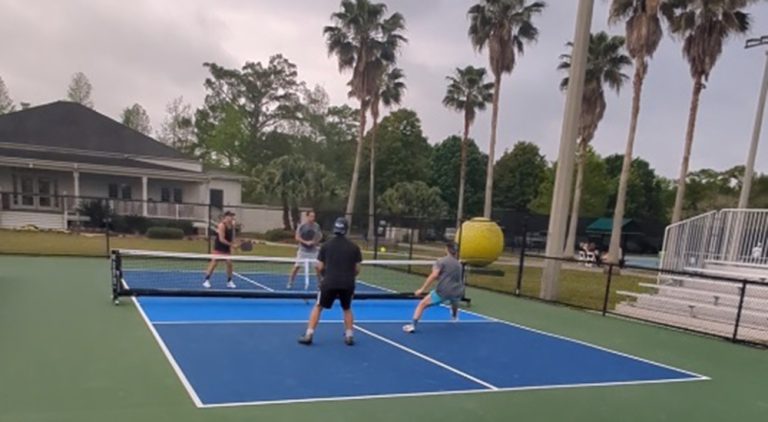
Pickleball for Beginners: The Complete Starter Guide (2026)
If you’re brand new to pickleball, welcome, you’re exactly where you should be. Learning how to play pickleball for beginners is about more than just hitting the ball; it’s about avoiding the first-session traps that keep most players from improving. Usually, these involve sprinting forward on the wrong ball, swinging while moving, and donating points on “pop-ups” (a ball left high enough for your opponent to hit down at you). This guide is built to stop those leaks first, because that’s how beginners start winning fast.
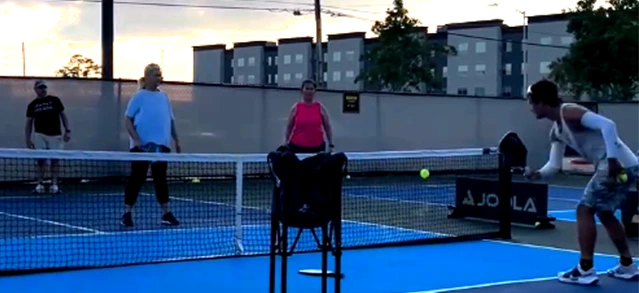
This is a Beginner Bootcamp: the minimum rules, the minimum movement, and the minimum shot choices that keep you in points long enough to improve. Most beginners don’t lose because they “need a new shot.” They lose because they attack from bad positions, hit while drifting, and aim too small too soon. Fix those habits and you’ll feel better immediately.
Who this guide helps: brand-new players learning the rules, movement, scoring, and core fundamentals needed to rally confidently and win early games.
Your Week 1 win condition: keep serve + return deep, reach the kitchen line under control, and stop donating pop-ups by staying balanced and relaxed.
Start Here, Then Go Deeper
This guide provides the playable essentials to get you on the court today. For full mechanics, legal nuances, and advanced drills, use the Deep Dive links in each section.
- What Is Pickleball?
- Pickleball Serving Rules
- Kitchen Rules
- Pickleball Scoring 101
- Returning a Serve
- Transition Zone Strategy
- Middle Shot Strategy
- Pickleball Attack Zones
- Don’t Rush to the Kitchen
Pickleball Beginner Checklist (Do This Today)
- Serve deep. Height + depth beats speed for beginners.
- Return deep. A deep return buys time to move up.
- Earn the kitchen. Move forward behind a ball that can’t be attacked at your feet (if they can hit down at your shoes, you moved too soon).
- Plant before contact. Stop → hit → then move.
- Use safe targets. Middle and crosscourt are your beginner best friends (crosscourt when you’re back; middle when you’re up).
- Attack only “green balls.” If it’s low or at your feet, reset instead of swinging bigger.
- Keep your grip relaxed. Tension creates pop-ups (a “pop-up” is just a ball you leave sitting high enough for your opponent to hit down at you).
- Win ugly first. Let opponents miss before you chase winners.
The Week 1 Rally Script (What To Do In Real Points)
If you’re unsure what to do mid-rally, do this. It’s not fancy, but it wins beginner points.
- Serve deep and high. Give yourself time; don’t chase aces yet.
- Split-step as they hit. Land balanced so you can move in any direction.
- Return deep (aim about 3 feet inside the baseline for margin).
- Move forward under control behind a ball they can’t attack at your feet (earn the kitchen).
- Block or dink middle/crosscourt. Use the big targets until the rally settles.
- Wait for a “Green Ball.” When it’s above net height and in front, attack at feet/middle, then get ready again.
Beginner Pickleball Tips (Quick Overview)
If you want a simple flow to follow in real points, use the Week 1 Rally Script above. Then use the links below when you want the deeper “why” behind each step.
- Serve diagonally and deep → Serve & Return Basics
- Return deep (aim ~3 feet inside the baseline) → Serve & Return Basics
- Stop before you swing (plant before contact) → Movement & Footwork
- Move up behind unattackable balls → Where You Should Stand
- Use safe targets (middle/crosscourt) → Targets, Angles, and the Middle
- Only attack balls above net height → Red/Yellow/Green Strategy
- Relax your grip to stop pop-ups → Common Beginner Mistakes
Beginner Bootcamp Map
- What Is Pickleball?
- Quick Start: First Session Setup
- Why Pickleball Is Beginner-Friendly
- 4 Beginner Fundamentals That Fix Everything
- Rules & Scoring (Quick Version)
- Serve & Return Basics
- Where You Should Stand (Positioning Basics)
- Movement & Footwork: Golden Rules
- Winning Strategy: Red / Yellow / Green Balls
- Targets, Angles, and the Middle
- Partner Communication
- Common Beginner Mistakes (and the Fix)
- Gear & Injury Prevention
- Two Drills That Improve You Fast
- Beginner FAQ
- Turn Strategy Into Action
What Is Pickleball?
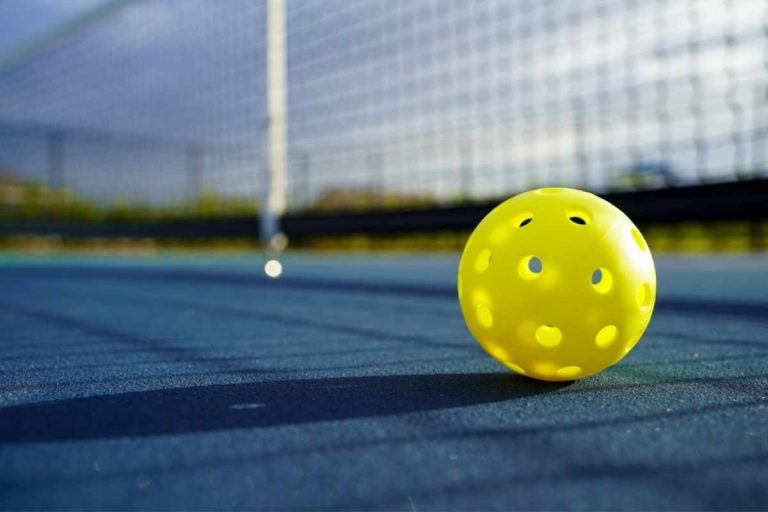
Pickleball is a paddle sport that blends elements of tennis, ping pong, and badminton. It’s played on a smaller court with a wiffle-style plastic ball and a solid paddle. Most games are doubles, and most points are won by positioning and decision-making, not raw athleticism.
The court is 20 feet wide and 44 feet long (same as doubles badminton). The kitchen (non-volley zone) is the 7-foot area on both sides of the net where you can’t hit a volley. Deep dive: What Is Pickleball?
Quick Start: First Session Setup
Bring a paddle, court shoes, and a good attitude. That’s it. If you’re brand new, your mission is simple: keep the ball in play, hit deep, and move up under control.
- Find a place to play: local rec centers, parks, or clubs (Places2Play is a quick search tool).
- Start with doubles: you’ll get more reps and longer rallies.
- Play to learn: don’t worry about “winning” your first day, worry about avoiding the same mistake twice.
Why Pickleball Is Beginner-Friendly
Pickleball has a low barrier to entry. You don’t need a huge serve or perfect footwork to rally. But you do need a few rules and habits that stop beginner leaks.
- Short court: less running, more positioning.
- Slower ball: easier tracking and better rally length early.
- Simple scoring: learn it once, then play anywhere.
- Fast learning curve: you can get “playable” in a session.
4 Beginner Fundamentals That Fix Everything
1) Depth Buys You Time
A deep serve and deep return shrink your opponent’s options and give you time to move up. If you’re missing deep, stop aiming at lines, aim inside them with margin.
2) Stop-to-Hit (Plant Before Contact)
The fastest way beginners donate points is by swinging while running. Your body can’t aim when it’s still moving. Stop → hit → then move again.
3) Relaxed Grip = Cleaner Contact
Most beginner pop-ups are tension problems, not talent problems. If you death-grip the paddle, your touch disappears and your face angle gets unstable. Think “firm handshake,” not “crush the handle.”
4) Attack Selection Beats Power
You don’t need to swing harder, you need to swing smarter. Only attack balls you can hit down (above net height and in front). Low balls should be reset, dinked, or blocked back deep.
Rules & Scoring (Quick Version)
- Double bounce rule: after the serve, the ball must bounce once on the return side and once on the serving side before volleys are allowed.
- Kitchen (NVZ): you can’t volley while touching the kitchen line or inside it (the line counts as kitchen). You can step in to play a ball that bounces.
- Serving basics: serves are hit underhand, diagonally, and must land beyond the kitchen (if your serve hits the kitchen line, it is a fault).
- Open Play etiquette: you must call the score clearly before you begin your service motion.
- Only the serving team scores. Games typically go to 11, win by 2.
Kitchen (NVZ) takeaway: the kitchen is the 7-foot zone where you can’t hit a volley while standing on or inside it (the line counts). The nuance that causes most arguments: after you volley, you can’t let your momentum carry you into the kitchen. Deep dive: Kitchen Rules
Scoring and serving order: most doubles games give each team two serves per turn (one per partner). Exception: the first team to serve in the game starts with one server only, then everything runs normally. Deep dive: Pickleball Scoring 101
If you want the full legality breakdown (foot faults, serve motion, what people argue about): Deep dive: Pickleball Serving Rules
Serve & Return Basics
Beginner serve strategy is not “hit harder.” It’s “hit deep and playable.” Depth buys time. Time buys positioning.
Serve (Beginner Goal)
- Hit diagonally into the correct service box.
- Go deep with margin; don’t chase lines.
- Use height to clear the net easily; pace comes later.
Return (Beginner Superpower)
- Return deep (aim about 3 feet inside the baseline).
- Plant before contact (don’t swing while drifting).
- Buy time so you can move forward safely.
Deep dive: Returning a Serve
Where You Should Stand (Positioning Basics)
Beginners lose points because they stand in the wrong place at the wrong time. The kitchen line is powerful, but you have to earn it.
- Serving team: serve, then stay back until you hit a ball they can’t attack at your feet.
- Returning team: return deep, then move up under control.
- At the kitchen: don’t attack low balls. Reset and wait for a green ball.
The easiest test: if they can contact the ball above net height and you’re still moving forward, you’re about to eat one at your shoes. Deep dive: Don’t rush to the Kitchen
Movement & Footwork: Golden Rules
You don’t need “fancy” footwork, you need repeatable habits that keep you balanced. The goal is simple: arrive early, stop, and hit clean.
- Split-step timing: do a small hop as your opponent hits, so you land ready.
- Stop-to-hit: plant before contact. Your aim gets better instantly.
- Small steps: big lunges create pop-ups.
- At the kitchen: shuffle side-to-side to stay square to the net; only use crossover steps for emergencies.
- Recover: after you hit, return to a neutral ready stance.
Deep dive: Transition Zone Strategy
Winning Strategy: Red / Yellow / Green Balls
This is the fastest way to stop beginner chaos. Most points are lost because players attack the wrong ball. Instead, label the ball and choose the matching shot.
| Ball Type | What It Looks Like | What You Do |
|---|---|---|
| Red (Reset) | Ball is low or at your feet. | Block/reset it back deep or into the kitchen. |
| Yellow (Build) | Ball is neutral (not attackable). | Hit a controlled ball that helps you move forward safely. |
| Green (Attack) | Ball is high and in front (you can hit down). | Attack through the middle or at feet, don’t chase sidelines. |
Two quick examples:
- Red: opponent drives at your shoes in transition → block it back deep/middle and keep moving.
- Green: you get a floaty ball above net height → attack at feet or middle, then hold the line.
If you want the full decision tree (shot selection by ball height, position, and opponent spacing): Deep dive: Pickleball Attack Zones
Targets, Angles, and the Middle (Beginner Aiming)
This is how beginners win without swinging harder: aim where the court gives you margin and where opponents get confused.
A dink is a soft shot that lands in your opponent’s kitchen to slow the rally down and prevent pop-ups. Deep dive: Dinking in Pickleball
Beginner Targeting Hierarchy
- Middle: hesitation and miscommunication create free points.
- Feet: low contact points create pop-ups and weak replies (aim at the player who’s moving, or the backhand-side foot).
- Crosscourt: more court and lower net equals safer consistency.
Target the reaching player: Aim for the opponent who is moving, stretching, or off-balance. At the beginner level, this is often the backhand-side hip, where footwork tends to break down first.
- Deep dive: Middle Shot Strategy
- Deep dive: Crosscourt Shots
- Deep dive: High Percentage Pickleball Shots
Bonus beginner superpower: learn to let “out” balls go. Deep dive: Out Balls in Pickleball
Partner Communication (Beginner Doubles)
Doubles breaks down fast without simple, early calls. Keep it boring and effective.
- Call “mine” early. Late calls are collisions.
- Call “yours” clearly. Give your partner permission to commit.
- Call “switch” only when you mean it. Don’t create chaos.
- Default rule: forehand takes middle (unless someone is clearly more forward or calls it first).
Common Beginner Mistakes (and the Fix)
- Mistake: sprinting to the kitchen behind a ball that can be attacked → Fix: move up behind unattackable balls only.
- Mistake: swinging while running → Fix: stop → hit → then move.
- Mistake: Pop-ups caused by tension or leaning over → Fix: Relax your hand and use your knees to get low instead of bending at the waist. (Deep Dive: The Perfect Pickleball Stance)
- Mistake: aiming at sidelines early → Fix: aim middle/crosscourt until you can rally calmly.
- Mistake: attacking low balls → Fix: reset and wait for a green ball (above net height).
Gear & Injury Prevention (Beginner Safe Setup)
- Court shoes: wear shoes made for courts (lateral support). Running shoes are a rolled ankle waiting to happen.
- Heel lock lacing: Use the ‘Heel Lock’ lacing pattern to keep your foot from sliding forward and hitting the front of the shoe.
- Grip tension: death-gripping the paddle is a common path to elbow irritation, relax your hand.
- Warm-up basics: quick calves/ankles/shoulders gets your body ready for stop-start points.
- Indoor vs outdoor balls: “indoor/outdoor” refers to the ball design and playing surface, not whether there’s a roof over the court.
- 2026 Gear Tip: In 2026, many high-performance paddles now feature Foam Core technology for added stability. For beginners, the priority remains a forgiving sweet spot and a grip size that prevents tension.
Deep dive: Pickleball Gear
Two Drills That Improve You Fast
You don’t need 50 drills. You need a couple that build control and calm.
- Deep Return Reps: hit 20 returns aiming deep (use the “3-feet-inside” training target). Miss early? Restart. Upgrade: alternate crosscourt and middle targets every 5 balls. Deep dive: Returning a Serve
- Kitchen Rally (Co-op): cooperative dinks to 25 before anyone speeds up (focus on relaxed grip and controlled contact). Upgrade: add a “no pop-ups” rule, if the ball rises above net height, reset the count. Deep dive: Dinking in Pickleball
Beginner FAQ
Yes. The court is small, the rules are learnable fast, and most people can rally in a single session. The fastest path is depth (serve/return) plus earning the kitchen line under control.
Start with deep serves, deep returns, and stop-to-hit footwork. Those basics win more beginner points than any fancy shot.
The kitchen is the 7-foot zone on both sides of the net. You can’t volley while touching it (the line counts), but you can step in to play a ball that bounces. After you volley, you also can’t let your momentum carry you into the kitchen. Deep dives: Kitchen Rules The NVZ
Most pop-ups come from tension and poor body position. Relax your grip, get low with your knees (not your waist), and aim bigger targets (middle/crosscourt) until your touch improves.
Win ugly first: keep serve and return deep, stop-to-hit, move up under control, and only attack “green balls” above net height. Let opponents miss before you chase winners.
Turn Strategy Into Action
If you want to level up without reinventing your whole game, pick one weakness and fix it with reps. Here are the next best deep dives based on what beginners struggle with most:
- Keep returns deep and calm: Returning a Serve
- Stop getting stuckin the mid-court: Transition Zone Strategy
- Stop arguing about the kitchen: Kitchen Rules
- Pick smarter shots: Pickleball Shot Selection
- Win more middle points: Middle Shot Strategy