KBS TruFoam Aurora Review
This KBS TruFoam Aurora Review is for the player staring at foam paddles and wondering, “Do I really need to spend premium money just to find out if I like this feel?” The Aurora makes a surprisingly good first impression for the price, but the little raccoon in the ball machine shows up when you miss the center of the face.
After a few sessions, my read is pretty clear: this is a soft-feeling, full-foam, 16 mm budget paddle that makes the most sense for beginner to early intermediate players who want comfort, dwell, and easier shape without paying premium-paddle money. The mistake would be buying it for sanctioned tournaments, or expecting it to protect messy contact like a higher-end control paddle.
| Category | Full foam core pickleball paddle |
| Best fit | Beginner to early intermediate players curious about foam feel |
| Skip if | You need approved tournament equipment, premium mishit forgiveness, or crisp paddle feedback |
| Verdict | A smart budget foam experiment for the right player, not a premium control paddle in disguise |
| Main tradeoff | Soft feel and dwell time, but less forgiveness away from center contact |
| Price seen | $69.99 factory direct at the time this review was updated |
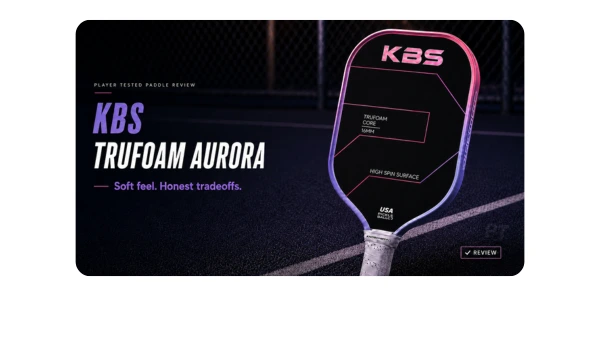
The version discussed here is the 16 mm KBS TruFoam Aurora with a full foam core, raw Mitsubishi T700 carbon fiber face, and elongated shape.
My verdict after the soft feel wore off
The KBS TruFoam Aurora is worth a serious look if you are newer to pickleball, want a softer paddle feel, and do not want to spend two hundred dollars just to experiment with foam construction. It gives you comfort, shape, and a calmer contact feel for the money.
It is not the paddle I would point toward a tournament player who needs approved equipment, or a higher-level player who expects premium stability on off-center counters, blocks, and resets. Soft is not the same thing as forgiving. That’s the part I’d want a buyer to understand before clicking order.
Best answer: The KBS TruFoam Aurora is best for beginner to early intermediate players who want a soft foam feel under $70, but it is not the right choice for sanctioned tournament play or players who need premium mishit forgiveness.
Who should look at this paddle, and who should keep walking
Buy this if
- You want to try a foam paddle without premium pricing.
- You like softer feel and muted vibration.
- You value spin, control, and comfort over raw explosiveness.
- You are beginner to early intermediate and still building cleaner contact.
- You mostly play rec games, club sessions, or casual competitive games where paddle approval is not an issue.
Skip this if
- You play sanctioned tournaments that require approved paddles.
- You expect top-tier forgiveness on mishits.
- You prefer crisp, loud, rigid paddle feedback.
- Your game depends on winning fast hand exchanges from imperfect contact.
The stuff I kept asking myself on court
- How does it actually play?
- What does the soft face do for shape?
- What happens when you miss the middle?
- Can you bring it to a tournament?
- Specs and listed details
- Where can you buy it with the PICKLETIP code?
Questions players ask before ordering one
Is the KBS TruFoam Aurora good for beginners?
Yes, especially for beginners who want a softer paddle that does not feel harsh at contact. It gives newer players a calmer feel on rolls, drops, and controlled drives without asking for premium-paddle money.
What is the main reason to buy it?
The main reason is value. You get a real taste of foam-paddle softness and dwell without paying premium pricing, which makes it a useful experiment for players still learning what feel they prefer.
What is the biggest reason to skip it?
Skip it if you need sanctioned tournament approval or premium forgiveness. The paddle feels good when you catch the ball clean, but off-center contact is where the budget reality starts knocking on the kitchen door.
Does the soft feel mean it is very forgiving?
No. Soft contact and forgiveness are related in feel, but they are not the same thing. The Aurora can feel plush and controlled near the center while still giving you less help when contact drifts away from the sweet spot.
What kind of player may fight this paddle?
A player who wants crisp feedback, explosive pop, or a paddle that protects every late counter may fight it. If you like a paddle that talks loud at contact, this one speaks more like it is in a library wearing court shoes.
Is this a tournament paddle?
Treat it as a recreational or casual-play paddle unless your event confirms otherwise. If your league, club, or tournament requires approved paddles, check before you show up with it.
What I noticed after a few sessions
KBS sent me this paddle, and after a few sessions the same thought kept popping into my head: this paddle is trying to make newer players comfortable without pretending to be a luxury paddle.
In slower exchanges and controlled points, contact felt soft, the ball stayed on the face a touch longer, and topspin shots left with easy shape. Then the misses told the truth. Catch one a little off center and the Aurora stops feeling premium in a hurry.
I don’t read that as a flaw. I read it as the paddle showing its price honestly. The KBS TruFoam Aurora is a very good budget foam paddle for players who want comfort, spin, and softer feel. It is not hiding in your bag pretending to be a $250 control paddle.
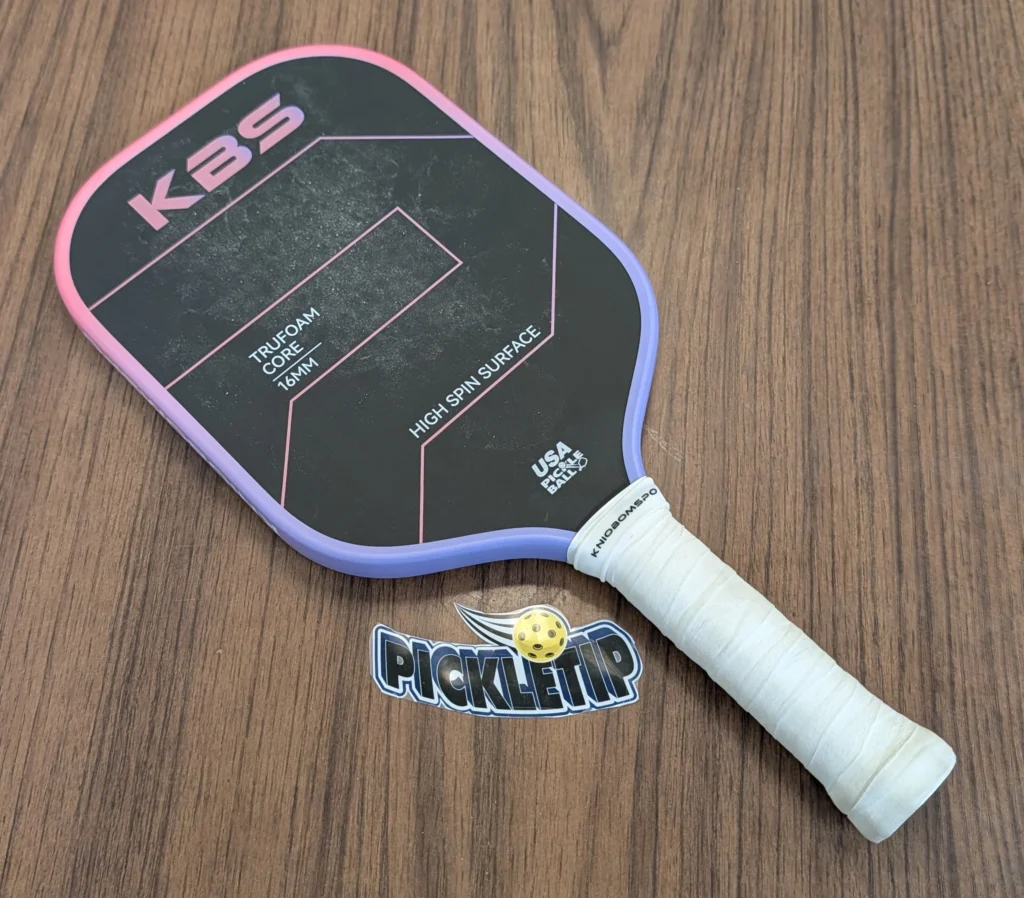
KBS TruFoam Aurora at a glance
| Question | What this paddle offers |
|---|---|
| What kind of paddle is it? | A 16 mm full-foam paddle with a soft, dampened feel |
| Who fits it best? | Beginner to early intermediate players who want comfort and shape |
| What does it do well? | Controlled rolls, softer drives, slower exchanges, and feel-based learning |
| Where does it show its price? | Off-center forgiveness and premium-level stability |
| Who should be careful? | Tournament players, hard counterers, and players who demand crisp feedback |
| Don’t miss this | Soft feel does not automatically mean premium forgiveness |
The longer handle is useful if you like a two hand backhand or just want a little extra room to work. The elongated shape also gives the paddle a familiar reach for players who like that stretched profile.
Where the Aurora earns its keep
The Aurora plays best when you want comfort and controlled feel more than maximum sharpness. During drives, rolls, and slower exchanges, it feels soft enough to give newer players confidence without making the ball feel wild off the face.
If you like paddles that bark back at you on contact, this is not that. In rally situations where you are trying to roll the ball, slow the game down, or guide a controlled drive, contact feels dampened and easier to manage than a rigid, loud paddle.
Here’s the part I wouldn’t ignore. When a point speeds up and contact gets messy, the paddle does not hide every mistake. Clean contact feels good. Sloppy contact gets graded like a math teacher with a red pen.
What the soft face does for shape
The softer contact feel can help players shape the ball because the hit feels less abrupt. On topspin shots, the ball seems to stay connected slightly longer, which can make controlled arc easier to repeat.
For the money, this is the part that surprised me most. The ball does not jump off the face like a stiff trampoline. It hangs around just long enough to let you feel the shot, then leaves with decent shape.
The tradeoff shows up if you love a crisp, snappy paddle. More dwell can also feel muted, and some players may read that as slightly dead. That is personal preference, not a defect.
What happens when you miss the middle
The Aurora is less forgiving away from center contact than premium paddles at higher price points. When contact drifts away from the middle, it feels less protected and less polished than higher-end control paddles.
None of that makes it a bad paddle. It just means you can feel where the missing hundred-plus dollars went. A premium paddle may give you more help on late blocks, stretched counters, and ugly little survival balls. The Aurora asks for cleaner contact.
If your game already depends on elite consistency from imperfect contact, you may outgrow this paddle quickly. If you are still building cleaner contact, it gives you plenty to work with without charging premium money for it.
Before you bring it to a tournament
The approval question matters only if sanctioned play matters to you. If you mostly play rec games, club sessions, or neighborhood competition, it may not affect your day-to-day experience.
The risk is buying it for the wrong setting. If your league, tournament, or club requires approved paddles, check before you show up with it in your bag. Nobody wants to be the person unpacking a paddle and a rules argument at the same time.
The Aurora’s fingerprint
The KBS TruFoam Aurora feels like a budget foam paddle that rewards clean, patient contact more than panic-button hand speed. It is soft enough to help a newer player feel the ball, but honest enough to remind you when your contact point wandered into the weeds.
Comfortable when you are organized. Less generous when the point gets weird. That’s the Aurora in one sentence.
Does this paddle need break-in time?
No clear break-in pattern stood out from my sessions. The paddle played well immediately and felt aligned with its soft, dampened personality from the start.
That is good news for the player buying this as a simple upgrade. You do not need to treat it like a science project before deciding whether you like the feel.
Should you modify or tune this paddle?
Most players buying the Aurora will probably get the cleanest read by playing it as-is first. The paddle’s main value is letting you experience soft foam feel without turning the setup into a garage-lab project.
If you are newer, resist the urge to blame every miss on setup. Hit a few sessions first. Let the paddle tell you whether the issue is the tool or the tiny gremlin living in your contact point.
Don’t bring $250 expectations to a $70 paddle
Bring value-focused expectations, not premium-paddle expectations. The Aurora makes the most sense for players who want to feel foam construction without paying premium-paddle money.
It is not the paddle I would judge against high-priced power monsters if your only goal is maximum put-away pace. The better question is simpler: how much foam-paddle feel can you get before the price gets silly? In that conversation, the Aurora makes sense.
KBS TruFoam Aurora specs and listed details
Here are the specs I would actually check before buying. As always with budget and factory-direct paddles, small production or listing differences can happen, so confirm the current product page before ordering.
| Spec | Listed or reported detail |
|---|---|
| Core | TrueFoam thermoformed EPP full foam core |
| Face | Raw Mitsubishi T700 carbon fiber |
| Thickness | 16 mm |
| Length | 16.4 inches |
| Width | 7.5 inches |
| Grip length | 5.5 to 5.7 inches reported |
| Grip circumference | 4.13 inches |
| Weight | 8 oz ± 0.5 oz |
| Approval status | Not treated here as approved for sanctioned play; confirm current status before events |
What works well, and where expectations matter
What works well
- Comfortable muted feel.
- Strong value for the price.
- Spin-friendly personality without much drama.
- Accessible entry into foam paddle feel.
- Helpful vibration control for players who dislike harsh contact.
Where expectations matter
- Less forgiving than premium paddles.
- Muted feel may seem soft or dead to some players.
- Not the right choice if your play requires approved equipment.
- Not built for players who want sharp, explosive feedback above all else.
Where to buy the KBS TruFoam Aurora
If this paddle sounds like your kind of weird, soft-feeling bargain experiment, you can check out the KBS TruFoam lineup here:
Use code PICKLETIP for 15% off.
At checkout, the Aurora dropped to about $59.50 total, which worked out to roughly $10.49 in savings at the time this review was updated.
Questions players keep asking
Yes. The softer feel and approachable price make it a strong entry point for newer players who want comfort, spin, and a calmer contact feel.
It has usable power for newer players, but its personality leans more toward controlled feel than explosive put-away pace.
Yes. The paddle has a muted, dampened feel compared with crisp, rigid paddles, which can help players who want more comfort at contact.
It is playable and comfortable when contact is clean, but premium paddles feel more forgiving on mishits. Soft feel does not automatically mean premium stability.
Do not assume that. If your league, club, or tournament requires approved paddles, confirm the current approval status before playing with it.
For the right player, yes. It is a smart budget foam experiment if you want softer feel and comfort without paying premium-paddle money.
Players who need approved equipment, premium-level mishit forgiveness, or a crisp paddle feel should probably look elsewhere.
You get soft feel, dwell time, and value, but you give up some forgiveness compared with higher-end paddles.
Keep exploring
If the Aurora sounds close but not quite perfect, keep sorting by how you actually play instead of chasing whatever paddle is making noise this week.
If you have played the KBS TruFoam Aurora, drop a comment with your level, play style, and whether the soft feel helped or hurt you once the hands battle got spicy.