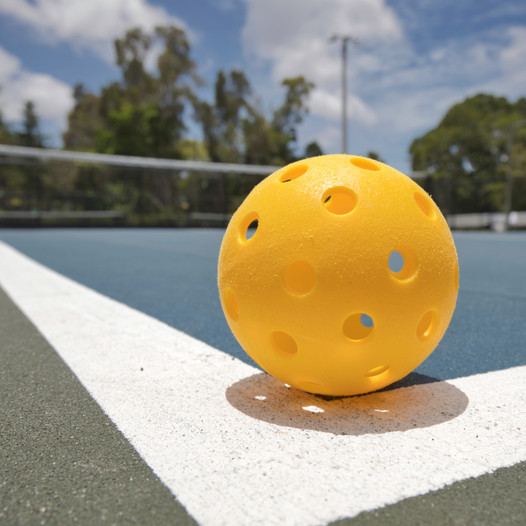
Why Is It Called the Kitchen in Pickleball? Origin + NVZ
The first time somebody barked, “Stay out of the kitchen!” I looked around like I’d missed a snack table. Turns out, that goofy nickname points to one of the most important areas on the court: the Non Volley Zone (NVZ). New to the game? here you go: Rules to Pickleball (scoring, faults, doubles flow, everything).
Quick takeaways
- “Kitchen” is the nickname for the Non Volley Zone (NVZ), the 7 foot zone on each side of the net.
- The strongest origin theory points to shuffleboard, where “the kitchen” is a penalty area.
- You can stand in the kitchen anytime, what you cannot do is volley while in (or touching) it.
- Momentum matters: if you volley outside the NVZ but your momentum carries you in, it is still a fault.
- The line is part of the kitchen for volley faults. If you are touching the line during a volley, that is “in.”
Kitchen Meaning, Origin, and Non-Volley Zone Rules
Below is a quick breakdown of where the term “kitchen” came from, what it actually means on the court, and how the non-volley zone rules work in real play. If you’ve ever wondered why this area exists, why it causes so many faults, or what players really mean when they talk about “the kitchen,” these sections walk through it step by step.
What is the kitchen in pickleball?
The kitchen (Non-Volley Zone) is the 7-foot area on each side of the net where you cannot volley. You’ll sometimes hear people say the kitchen is a “3D zone,” but that doesn’t mean you can’t reach or swing above it — it means momentum matters: if you volley and then touch the kitchen (or its line) because of your follow-through, the fault still counts.
The kitchen is the informal name for the Non Volley Zone (NVZ), the 7 foot area extending from the net on each side, across the full width of the court. It is the “no smash from the doorstep” zone that forces rallies to be earned with control instead of cheap put aways.
If you ever wondered why pickleball feels so different from tennis at the net, this is why. The kitchen is a built-in speed limit that turns “just swing harder” into “hit smarter.”
Why do they call it the kitchen?
There is no universally agreed “official” origin story for the nickname, but there are a few strong theories. The best ones have two things in common: they match how the word is used elsewhere and they match how players behave in the NVZ.
The short version
- Most likely: a borrowed nickname from shuffleboard, where “the kitchen” is a penalty zone.
- Also common: the idea that you have to play “soft” up there, more finesse, less ego.
- Why it stuck: it is memorable, it is funny, and it instantly tells new players, “Careful… trouble lives here.”
The shuffleboard “kitchen” connection
In shuffleboard, “the kitchen” refers to a specific area that can punish you (depending on the board layout and rule set). That maps cleanly onto pickleball: the NVZ is the space where players commit obvious, repeatable faults, especially early on.
That is why the shuffleboard theory has legs: it explains both the name and the behavior. You get aggressive at the net… you get sloppy with your feet… you donate a point.
The “Three Dads” theory (Pritchard, Bell, Brown)
Pickleball’s origin story is famously tied to the “three dads” credited with creating the game, Joel Pritchard, Bill Bell, and Barney McCallum (often grouped together in retellings, even when details get fuzzy over time). Because the sport started as a backyard invention with a playful vibe, a nickname like “kitchen” fits the culture.
One version of the story you will hear from players is that “kitchen” captured the idea of being gentle near the net (dinks, touch, patience) not swinging like you are trying to break a window. Whether that explanation came from early founders or later retellings, it matches how the NVZ functions: it rewards control, not chaos.
Why the NVZ exists (what it protects)
The kitchen is not there to be cute. It is there to keep the game from turning into “stand at the net and swat.” The NVZ forces a more balanced sport where:
- Hand battles are earned instead of automatic (no hovering over the net with constant volleys).
- Dinking and resets matter because you cannot simply lean forward and crush every ball out of the air.
- Rallies last longer, which is part of why pickleball is fun for so many levels of players.
And yes, this is also why “kitchen mastery” becomes a separator at higher levels. Everybody can swing. Not everybody can stay balanced.
Kitchen rules in plain English
1) You cannot volley while in the kitchen
A volley means hitting the ball out of the air before it bounces. If you volley while standing in the kitchen, or while touching the kitchen line, it is a fault.
2) The line counts as the kitchen
For volley faults, the kitchen line is “in.” If your foot is on the line during a volley, you are considered in the NVZ.
3) Momentum can still make it a fault
Even if you volley from outside the kitchen, if your momentum carries you into the kitchen after contact, it is still a fault. Think: “finish the play under control,” not “touch the line and pray.”
4) You can enter the kitchen anytime when the ball bounces
The kitchen is not lava. You can step into it, stand in it, and hit a ball that has bounced in it. You just cannot volley while you are in (or touching) it.
5) Serve note
Serves must land beyond the NVZ (a serve that lands in the kitchen is a fault). If you want a full breakdown of serve legality (including the stuff that gets argued about), see: Pickleball Serving Rules.
PickleTip court-side note
I once worked with a player (we’ll call him Joe) who kept losing points on kitchen faults, not because he was reckless, but because he was off-balance. We did a simple exercise: slow dinks, no power, just stability. One day it clicked, he stopped “falling into the kitchen” after contact, and suddenly his net game looked calm instead of frantic. The kitchen punishes lunging. It rewards control.
Common kitchen myths
- Myth: You cannot step into the kitchen.
Reality: You can step in anytime, just do not volley from there. - Myth: Only your feet matter.
Reality: If you are volleying and anything you are wearing/holding contacts the NVZ, it can be a fault. - Myth: If you volley outside the line, you are safe.
Reality: Momentum can still carry you into a fault. - Myth: The kitchen nickname is official.
Reality: “Kitchen” is informal; “Non Volley Zone (NVZ)” is the official term.
Kitchen FAQ
The most common theory is that it comes from shuffleboard, where “the kitchen” is a penalty area. In pickleball, the kitchen is where players get “penalized” with faults if they volley from inside the NVZ.
In many shuffleboard rule sets, “the kitchen” is a marked zone that can cost you points or create a penalty outcome. That “danger zone” concept is a big reason people believe pickleball borrowed the term for the NVZ.
“Kitchen” is a nickname for the Non Volley Zone. It likely stuck because it is memorable, and because the NVZ is the spot where players rack up faults if they get too aggressive at the net.
No. The official term is Non Volley Zone (NVZ). “Kitchen” is the informal nickname used by players in casual and competitive play.
It means the Non Volley Zone, the 7 foot area next to the net where you cannot volley. You can stand there, but you cannot hit the ball out of the air while you are in (or touching) that zone.
The kitchen is the 7 foot Non Volley Zone on each side of the net. You may enter it, but you cannot volley while you are in it or touching its line.
Yes. You can enter and stand in the kitchen whenever you want. The restriction is only on volleying, you cannot hit the ball out of the air while you are in (or touching) the kitchen.
During a volley, no. The kitchen line is part of the kitchen. If your foot is on the line when you volley, it is a fault. If the ball has bounced, you can be on the line or inside the NVZ to play it.
That is still a fault. Momentum counts. Even if you volley from outside the NVZ, you must maintain control without stepping (or falling) into the kitchen after contact.
It is 7 feet deep from the net and runs the full width of the court on each side.
The kitchen line is 7 feet from the net (measured from the net toward the baseline) on each side.
Some players use “kitchen butt” as slang for the awkward, accidental step or bump into the NVZ area—usually when someone volleys and their momentum carries them forward. It is not an official term, but it shows up as court-talk because kitchen faults are so common.
Yes. The ball can bounce in the kitchen like any other part of the court during a rally. The restriction is on volleying from inside the NVZ, not on the ball landing there.
Yes, if the ball has bounced. You can step into the kitchen to play a bounced ball. You just cannot hit a volley while you are in (or touching) the kitchen.
For serves, the serve must land beyond the NVZ. If the serve lands on the kitchen line or inside the kitchen, it is a fault. For deeper serve legality details, see Pickleball Serving Rules.
Want the full rules guide in one place? Rules to Pickleball.