Modern Drop Shot in Faster Pickleball (Stop Speed-Ups)
I can always tell when a group graduates into modern pace. The warmup dinks look normal, then the first real rally happens and somebody gets jammed in the chest, pops one up, and stares at their paddle like it betrayed them. Last week a guy muttered, “My hands feel like they’re late for work,” and that was the most honest scouting report I’ve heard all month.
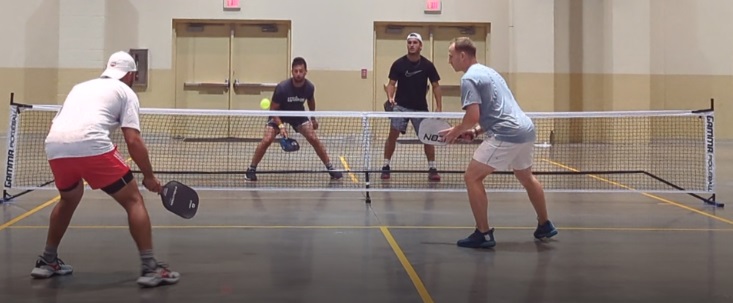
Picture this: you hit what used to be a safe third shot, it arcs nicely, and you start gliding toward the kitchen line like you are on rails. Then the ball lands, sits up half an inch too high, and comes back at you like a line drive, right at your dominant shoulder or hip pocket. You are still moving forward, your paddle is still rising, and now you are blocking a cannonball with a frying pan.
Pro Tip: Win modern pace by making your drop unattackable: quiet bounce, opponent contacts below net height, and you arrive balanced for the next ball.
Who this helps: players who keep getting speeded up in the transition zone, pop up “safe” drops, or feel late even with quick hands. If your problem is panic-footwork more than paddle-skill, you’re in the right place.
- Faster Pickleball: counter-heavy tempo where pop, spin, and quick counters punish extra height and late decisions.
- Modern Drop Shot: a drop built for compressed reaction time, shaped to land low, resist roll volleys, and let you advance under control.
- Drip Shot: a drive-drop hybrid that looks like a drive, then uses topspin to dip sharply into the kitchen and stay low off the bounce.
- Off Pace Drive: a restrained drive (about half power) aimed low to feet/hip pocket to steal time without spraying errors.
- Paddle Technology: modern faces add pop and bite, which means a drop that sits up gets punished sooner. Technique still wins, tech just shrinks the margin.
What Is Faster Pickleball and Why Does It Feel So Hard to Handle?
Because the game punishes height faster than it rewards hustle. In hot-hands pace, one extra inch of bounce turns into a roll volley at your chest while you’re still stepping forward. It feels “fast” because your timing window is smaller, not because everyone suddenly got superhuman hands.
Real-court tell: when the opponent’s paddle starts high and their shoulders stay quiet, they’re not planning a dink. They’re hunting a counter the moment you give them above-net contact.
Why Modern Pace Punishes Extra Height
Coach’s Rule: When paddle pop increases → your margin for error on drop height shrinks. A ball that clears and pauses is a ball that gets punched.
This era doesn’t feel fast because everybody’s hands got better. It feels fast because your float gets punished sooner. More pop plus cleaner counters means a drop that “used to be fine” now bounces into a roll-volley lane.
You can see it in one rally: a ball that used to buy you time now gets rolled right back at your sternum while you’re drifting forward. Three causes show up on courts everywhere:
- Paddle tech shrinks forgiveness: extra pop + easier spin means a ball that sits up becomes a speed-up invitation. If you track gear trends, start here: PickleTip equipment reviews.
- Drive mechanics are cleaner: better rotation, earlier contact, and targeting instead of swatting.
- Transition aggression is normal now: teams don’t wait for dinks to win. They win with fourth-ball pressure and fifth-ball counters.
The safest ball is the one that arrives low, not the one that arrives slow.
What Defines a Modern Drop Shot in Faster Pickleball
Coach’s Rule: When your opponent can contact above net height → your “drop” becomes their speed-up.
The modern drop shot isn’t “a drop, but better.” It’s a survival tool for transition zone rallies. The goal is not to land it softly. The goal is to land it unattackable. Soft is optional. Unattackable is required.
Coach’s Rule: If you hear that clean “pop” off their paddle while you’re still stepping in, you didn’t hit a drop, you served them a speed-up.
Think of the modern drop as one shot doing two jobs: it lets you advance, and it forces the opponent to contact below net height, so their next ball is usually a dink, a block, or a defensive lift.
| Classic Drop | Modern Drop Shot |
|---|---|
| High arc, minimal spin | Spin-shaped drip or controlled off pace drive |
| Time-based safety | Height-based safety |
| Often attackable against better hands | Designed to land low and force defensive contact |
| Works when opponents wait | Works when opponents rush and counter |
PickleTip insight: if you practice drops without practicing what happens after the drop, you are rehearsing a fantasy. The modern drop is a chain: contact, advance, stabilize, then handle the next ball.
Unattackable checklist:
- Your ball bounces quiet and low
- Their contact point is below the tape
- You split step before they contact
- Your paddle is already up in front of your chest, ready to block, not pray
When You’re Moving In → Precision Targets for the Modern Drop Shot
Stop aiming at the kitchen line like it’s a finish line. Your real target is a bounce that stays quiet and forces contact below the tape. If they’re contacting above net height, you didn’t miss by inches, you fed a speed-up.
Simple depth window: aim 1–3 feet inside the kitchen, middle-third first. That’s where “quiet bounce” lives, and it keeps your angles from exploding while your feet get organized.
Coach’s Rule: When you’re still closing in → middle-first beats highlight angles. Middle solves angles while your feet get organized.
- Middle-third of the kitchen: reduces angles, shrinks roll options, and makes the next ball easier to read.
- Opponent backhand kitchen: often limits roll-volley shape and reduces speed-up angles.
- One ball inside the sideline: pressures them without giving away the counter lane. Don’t paint lines, plan the next ball.
Miss map (so you stop donating points): if your “target” turns into a ball that lands short and sits up, you didn’t miss by inches, you missed by intent. Shift back to middle-first and make your next drop about low bounce, not cute geometry.
Key Takeaway:
- When: when you are moving forward and need predictable returns, not highlight angles.
- Where: middle-third of the kitchen first, then backhand kitchen as a pressure target.
- How: hunt a quiet bounce that forces below-tape contact so you can arrive stable.
Drip Shot Mechanics: When They Hunt Counters → Show Drive, Make It Fall
Coach’s Rule: When opponents hunt counters → show them a drive, then make the ball fall.
The drip works because it lies. It looks like you’re ripping a drive, it steals reaction time, and then the ball dips into the kitchen late enough to force a defensive touch. Same swing picture, different landing profile.
Hard constraint: early contact + disciplined face. If you’re reaching, late, or drifting forward, don’t drip. That’s how “late dip” turns into “perfect sit-up.” Use the off pace drive and live to hit the next ball.
Feel cue: fast off the paddle, quiet off the bounce. If your spin reads feel messy, sharpen that layer here: Read spin in pickleball.
- Setup: same shoulder turn as a drive; paddle starts in front of your chest (not dangling by your thigh).
- Drop and brush: paddle tip drops, then swings low-to-high through the back of the ball.
- Face angle: a hair closed through contact so it clears early, then dips late.
- Contact window: out front, around your lead hip. Late contact turns “dip” into “float.”
- Finish: compact to chest height, think “snap to stable,” not a giant wrap that changes your face angle.
PickleTip insight: the drip is not a “third shot only” weapon. It is a transition tool. If you are stuck mid-court and you get a ball you can shape, a drip can land you at the kitchen with fewer firefights.
Ball behavior cue: if the ball “hangs” after clearing the net, you made it attackable. If it clears early and dips late, their volley turns into a block, a dink, or a defensive lift.
Key Takeaway:
- When: when you get a shapeable ball and you want to steal reaction time without floating a soft drop.
- Where: into the kitchen with a “late dip” profile, make their best volley turn into a block.
- How: show a drive, brush low-to-high, keep the face slightly closed, and finish compact to chest height.
Video breakdown: Modern drip shot mechanics for faster pickleball—how to shape a drive-drop hybrid that clears early and dips late into the kitchen to reduce attackable bounce and limit speed-ups.
Drip Mistakes That Get You Countered
If you keep getting punished after you attempt a drip, it is almost always one of these three errors. This pace makes them show up instantly.
- Too much lift: you open the face and “help” it over the net, which creates a pop up. Ball clue: it floats and lands high. Fix cue: close the face a hair and let the brush do the work.
- Contact too late: the paddle passes your body and now you roll it long or into the net. Ball clue: you spray wide or dump. Fix cue: meet it out front, contact in front of your lead hip.
- All wrist: you flick for spin and lose direction control. Ball clue: random depth and random lanes. Fix cue: stable wrist, turn the shoulders, and brush with the forearm path.
Coach’s Rule: The drip is disciplined geometry under pressure. If your feet are sprinting during contact, your “spin” turns into a float.
Off Pace Drive in Faster Pickleball: When Full Power Creates Chaos → Weaponize Restraint
Coach’s Rule: When full power creates chaos → half power with clean shape wins points.
The off pace drive is the shot most ego-driven players refuse to learn, which is why it works. This game rewards restraint because controlled pace with placement often produces a worse ball for the opponent than full-power spray.
You are not taking your foot off the gas. You are choosing a speed that lets you hit low, accurate, and repeatable while you close the distance.
Think “low and mean”: tape/strap height or lower, through the middle seam, or into the right hip pocket, make their paddle travel upward while they’re moving.
PickleTip insight: I teach this as “make them hit up while you move in.” When an opponent is rushing, their feet and paddle are rarely organized at the same time. That is your window.
- Power target: roughly 40–50% with clean acceleration.
- Height target: tape/strap height or lower, no hang time.
- Placement: feet, hip pocket, or down the middle seam.
- Footwork rule: hit, then take two controlled steps and split step, paddle already up in front of your chest.
When opponents sprint to the kitchen → an off pace drive to the feet produces late paddles and pop ups.
If you want the positioning layer that makes this feel unfair, study how teams compress space here: pickleball positioning.
Key Takeaway:
- When: when the ball is awkward, low, or you cannot brush clean topspin without floating it.
- Where: feet, hip pocket, or middle seam, places that force a defensive lift.
- How: 40–50% power, tape height or lower, then two controlled steps and split step with paddle up.
Off Pace vs Drip: The Quick Decision Under Pressure
This is where coaching gets real. The drip is beautiful, but it is not always the right tool. If the incoming ball is low, heavy, awkward, or you’re reaching, the off pace drive gives you cleaner margin. If their paddles are already up and hunting, don’t float them a practice roll.
Coach’s Rule: When you can’t brush clean topspin → don’t pretend. Choose the shape you can repeat under stress.
Pressure shortcut: If you can swing up and finish stable → drip it. If you can only survive the contact window → off-pace it low and boring.
| Ball You Get | Better Choice | Why |
|---|---|---|
| Medium height, clean bounce | Drip shot | Enough room to brush and dip |
| Low and skidding | Off pace drive | Less lift required, fewer nets |
| High but deep | Off pace drive | Drive mechanics match the contact window |
| Opponents cheating in with paddles up | Off pace drive | Feet/hip pocket forces a defensive lift |
| Short and sitting up | Either, but commit | Indecision creates float |
Power is easy; choosing the right kind of power is the skill.
Modern Drop Shot Spin Variations: Reliability First, Then Variety
Coach’s Rule: When you chase variety before reliability → you feed floaters.
Here is the contrarian truth about spin drops: most players chase variety before they earn reliability. You do not need five drop styles. You need two dependable shapes plus the ability to disguise which one is coming.
PickleTip system: keep two “home base” drops, flat for ugly balls and topspin for shapeable balls, then use slice as your bounce-changer when opponents are leaning forward hunting volleys.
If you want a deeper foundation on the classic drop before adding tricks, build it here: pickleball drop shot mechanics.
Flat Drop: The Baseline Reset When the Bounce Is Ugly
The flat drop is the baseline. It is not sexy, but it is honest. Your legs provide lift, not your wrist. Keep the face stable and let the ball ride the paddle long enough to control direction.
- Best for: low-stress resets, windy conditions, and neutralizing pace.
- What you’re hunting: a quiet bounce that forces a dink or soft block.
- Miss pattern to avoid: flicking up and floating it.
When your grip stays relaxed → the ball leaves quieter and lands lower.
Slice Drop: Change the Bounce When They’re Leaning In
The slice drop shot is your “change the bounce” option. It skids and stays annoying when opponents are leaning forward hunting a volley. The risk is that slice can also sit up if you cut down without driving through the ball.
- Best for: higher bounce balls, opponents crowding the line, and forcing awkward half volleys.
- What you’re hunting: a skid that makes them lift while you stabilize.
- Risk: low balls plus slice often produce pop ups.
PickleTip insight: slice drops work best when your chest stays over your toes. If you lean back, you carve up and hand them a gift.
Topspin Drop: Safe Flight, Late Dip (Without Rushing the Point)
The topspin drop is the closest cousin to the drip. It clears with margin, then dives late. That late dip breaks timing because opponents read the early flight and commit too soon.
Clarifying the Drip vs Topspin Drop: The drip is the more aggressive version, closer to a drive in intent and speed, designed to steal reaction time and force a late, defensive touch. The topspin drop is more neutralizing: safer clearance, late dip, unattackable landing.
- Best for: medium-height balls with time to shape, and opponents who pounce on float.
- What you’re hunting: a ball that looks attackable early, then lands low and forces a dink.
- Key feel: brush up, do not scoop.
When your paddle path stays low-to-high with a slightly closed face → the ball arcs safely and still lands low. Aim your finish compact and chest-high, not a giant wrap that changes your face angle.
Faster Pickleball Strategy: When Your Feet Aren’t Stable → Your “Safe” Shot Becomes Risky
Coach’s Rule: When your feet aren’t stable → the “safe” shot becomes the risky one.
Your shot choice has to match three truths: the bounce you got, the posture they’re in, and the feet you’re standing on. This pace rewards honesty. Pick the intention you can execute right now, then split step before they touch it.
Here is the framework I teach because you need it under stress:
- Read the bounce: low skid, medium sit, or high gift.
- Read opponent posture: rushing, set, or retreating.
- Read your feet: balanced, reaching, or falling forward.
- Pick one intention: land unattackable, or force feet contact.
PickleTip insight: the biggest mistake is hitting a beautiful drop while your body is still sprinting. You win this era by arriving under control, not by arriving first.
Last month I ran a drill I call “two steps of truth.” We start back at the baseline, and the only rule is you are allowed to advance exactly two controlled steps after your third shot. No more. Players hate it at first because it exposes the lie they tell themselves: that forward movement equals progress. What actually happens is they start placing better balls. They stop chasing the kitchen like it is a prize and start earning it like it is a job.
The weird part is how quickly the room calms down. The rallies get quieter, the contact gets cleaner, and suddenly the so-called fast team looks less scary. That’s when it clicks: the game feels fast when you are panicking. When you stabilize your feet and deliver below-tape contact balls, the pace slows back down to something you can solve.
Hands Battle After a Speed-Up: Win the Height Fight First
Coach’s Rule: When they speed up anyway → your first job is height control, not hero shots.
They’re going to speed up anyway. Fine. Your job is not to swing harder. Your job is to win the height fight and re-enter the point. If your first touch floats, you didn’t lose a hands battle, you gave them a second swing.
- Contact goal: split step, meet it in front, paddle already up, and keep the face quiet.
- Face cue: a hair closed so your block goes down, not up.
- Direction goal: block down into the kitchen middle or toward their feet, make them hit up again.
- Body goal: stop drifting forward through contact. Split step, then block.
- Win condition: one clean “down block” turns their speed-up into your reset and buys your next drop.
Partner Sync in Faster Pickleball: Call the Intent, Then Shade the Seam
Modern drops only work if your partner understands the expected return. If you drip or go off-pace and your partner stays glued to the baseline, you waste the advantage. Call your intention early, even if it is just one word. If you keep losing “because we weren’t on the same page,” fix the communication layer here: pickleball doubles communication.
Quick timing tip: make the call the moment the ball leaves your paddle, not after it crosses the net. If you wait until you see the bounce, your partner is already late and you both get caught in “maybe” footwork.
- “Drip”: both creep with paddles up, expecting a soft block or pop up. Non-hitter shades middle seam first.
- “Feet”: striker closes, partner shades the middle seam, expecting a lifted defensive ball.
- “Reset”: both stay patient and organized, expecting another mid-court ball, no hero volleys.
Coach’s default: if you don’t know what’s coming back, protect the middle first. Middle solved means angles don’t kill you while you’re moving.
Modern pace is a doubles puzzle, and the modern drop is the piece that lets you change the picture.
Key Takeaway:
- When: the moment the ball leaves your paddle, call it early so your partner moves on time, not on hope.
- Where: protect middle first while you both advance; shade seam coverage before chasing sidelines.
- How: use one-word intent calls (“Drip,” “Feet,” “Reset”) and pair them with matching movement: creep + paddle up, close on feet, or stay patient and organized.
Practice and Progress: Drills for Modern Drops Under Pressure
Here’s the hard part: you can hit a pretty drop in warmups and still get cooked in games. If nobody is allowed to roll one back at your chest while you’re moving forward, you’re not training for this pace, you’re daydreaming.
Coach’s Rule: When you don’t train the next ball → the next ball trains you.
Run this simple measurable progression:
- Hit 25 modern drops: 10 flat, 10 topspin, 5 drip attempts.
- After every rep: take two controlled steps and split step early, paddle up and ready.
- Track “unattackable” reps: you force below-net contact and the opponent is limited to a dink, soft block, or defensive lift.
- Add pressure (the missing piece): if you float one, your partner tries a roll volley to your chest/hip pocket. Your job is to block down and reset, not swing harder.
- Repeat for five sessions: your pop up rate should drop and your split step happens before their contact, not after.
Tracking tip: score every rep as Unattackable (below-net contact forced) or Feed (above-net contact allowed). Your goal isn’t perfection, it’s moving the ratio.
If you want the companion layers that make these drops part of a system, keep building your toolkit with third shot drive patterns and returning a serve tactics.
Frequently Asked Questions
Keep it if it stays unattackable at your level. The moment it starts bouncing high enough for above-net contact, you need a modern option (topspin drop, drip, or off-pace) that lands lower under pressure.
Because it’s landing a touch high or you’re moving during contact. In the speed-up era, a ball that clears and hangs becomes a roll volley. Next rep: take two controlled steps, split step early, and make them contact below the tape.
No. The drip is better when you have time to brush clean topspin and finish stable. The flat drop is better when the ball is low, awkward, or you need reliability more than style.
Two controlled steps, then a split step with your paddle already up in front of your chest. Moving through contact is how “safe” drops turn into gifts.
No. Paddle tech can help, but height control and decision making win more points than gear. Better low contact beats better pop.
Turn Faster Pickleball Into Your Advantage
Faster pickleball is not the end of the soft game. It is the end of the careless soft game. The modern drop shot, the drip, and the off pace drive all do the same job: they help you survive the transition zone and arrive at the kitchen with leverage.
Run the “two steps of truth” drill for five sessions, track your Unattackable vs Feed ratio on third-shot attempts, and aim to cut your pop ups in half by session five.
Final Coach Rule: Low beats slow. Balance beats panic. And unattackable beats “pretty.”