
Hybrid Drop Drive (Drip) in Pickleball: How & When to Hit It
If your third shot keeps getting punished, the answer is not always “hit a better drop” or “drive harder.” Sometimes the better answer is the ball between them: a hybrid drop drive with drive-like preparation, topspin shape, and enough dip to change where the opponent has to make contact.
The hybrid drop drive (often called a drip) sits between a full drive and a traditional soft drop. It keeps the early look of a drive, uses topspin to bring the ball down, and tries to turn a comfortable counter into a lower block, scoop, reach, or awkward volley.
Picture this: you just served, the return lands deep, and both opponents are leaning over the NVZ like they’re waiting to swat your third out of the air. A floaty drop gets attacked. A flat drive reaches comfortable hands. The hybrid gives you another ball: enough pace to keep them honest, enough topspin to dip, and a target that makes them hit up or reach instead of countering comfortably.
Quick definition: A hybrid drop drive is a third-shot variation that uses drive-like preparation and topspin shape to arrive lower than a full drive, ideally forcing a block, scoop, low volley, or short next ball instead of a comfortable counter.
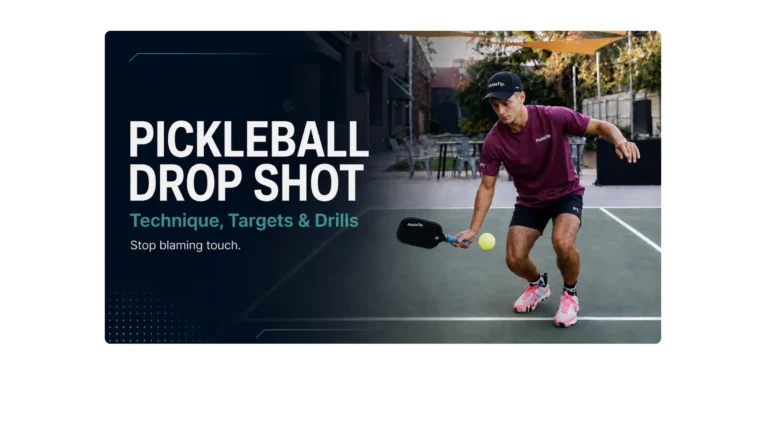
If you already know you want the hybrid, this is where we build it: the shape, contact, targets, misses, and drills. If the harder question is whether that return calls for a drop, drive, hybrid, or neutral ball, start with Pickleball Third Shot Strategy. If the soft drop itself is the problem, build that first with Pickleball Drop Shot.
The Hybrid in Three Rules
- Keep the drive look: same early posture and preparation so the opponent cannot comfortably sit on “soft” before you make contact.
- Create shape, not just less speed: contact in front and brush up and forward so the ball dips instead of becoming a floaty mini drive.
- Judge the result by the shot: the goal is a lower, later ball, a block, scoop, reach, or short next ball that gives you a better next ball.
Coach Sid’s rule: Don’t judge the hybrid only by where it lands. Judge it by the contact it forces. If they can counter comfortably, the shot did not do enough. If they are blocking low, scooping, reaching, or giving you a shorter ball, the hybrid earned you something. Read that contact before deciding how much ground you earned.
Who This Hybrid Helps
This is for the player stuck paying the dead zone tax: you hit a third, you hesitate, and the next ball shows up at your shoelaces like a bill you can’t dodge. If your “drop” floats and your “drive” gets blocked right back at your feet, you don’t need more courage. You need a shaped third shot that can earn your first move forward.
- Players who overhit drives or undercook drops
- Players whose third shot keeps arriving in the opponent’s comfortable strike zone
- Players who can create some topspin but do not yet trust a soft drop from every return
- Anyone blaming the paddle when the real leak is contact, paddle face, spacing, or ball shape
Where the Hybrid Drop Drive Fits
The hybrid drop drive is not meant to replace the traditional drop shot. It is a specialist tool for the exact moment when a clean drop feels too fragile, but a full drive feels like a donation. You can get the same deep return and choose any of the three; the difference is the problem you want the next player to solve.
| Third Shot | Ball Shape | What You Want From the Opponent | Main Miss |
|---|---|---|---|
| Drop | Softer ball with more time and arc | Contact after the bounce or from below net height | Floating it high enough to attack |
| Hybrid / Drip | Moderate pace with topspin and late dip | Low block, scoop, reach, awkward volley, or short next ball | Turning it into a readable mini drive |
| Drive | Faster and more direct | Jam, defensive block, weak counter, or ball you can attack next | Giving good hands a comfortable counter or missing long |
The important distinction is not “soft, medium, hard.” A hybrid is not just a drive with the volume turned down. It needs enough topspin shape to change the opponent’s contact window.
| Hybrid Window | What You Have | What It Means |
|---|---|---|
| Clean | Stable base, contact in front, room to brush up and forward | The hybrid is available without forcing the swing |
| Marginal | Contact getting low, late, crowded, or rushed | The ball is more likely to flatten out or turn into a rescue |
| Gone | Off balance, drifting backward, jammed, or reaching below your clean strike window | Stop trying to manufacture hybrid mechanics and choose the safer third |
When I abort it: If I’m late and my feet are not underneath me, the hybrid window is usually gone. Once you are reaching, drifting backward, or trying to manufacture topspin from a bad contact point, you are no longer hitting the shot you practiced. Choose the safer third and keep the point alive.
Why the Hybrid Drop Drive Works
The hybrid works because it can attack the defender’s timing, not just their feet. They see drive posture and start preparing for a cleaner volley block, then the topspin pulls the ball into a lower contact. Instead of countering comfortably from out in front, now they may be blocking down, scooping, reaching, or letting the ball fall farther than they planned.
The Contact You’re Trying to Force
- Pop up: they prepare for the faster ball, contact awkwardly as it dips, and send the block higher than they wanted.
- Scoop: the ball gets below their comfortable volley height and they have to lift it back over the net.
- Reach: a good foot, hip, or seam target makes them extend instead of countering from their preferred contact point.
- Bailout reset: they feel late or uncomfortable and dump a short defensive ball that lets you keep solving the point.
This is why I care more about the opponent’s contact than some magic landing spot. A ball can land near the kitchen line and still be bad if it sits up into perfect hands. Another can land a little deeper and still do its job if the topspin jams the player into a low, awkward block.
Why Topspin Keeps the Hybrid From Sailing
A full drive punishes long and punishes flat. The hybrid gives you another kind of margin because you are swinging with shape. Topspin lets you send the ball with useful forward energy while still bringing it down toward a lower contact window. But if your face is open and you push instead of brush, you didn’t build a hybrid. You built a floater.
Video breakdown: Drip shot mechanics for pickleball—how to shape a drive-drop hybrid that clears the net with pace and dips late to reduce attackable contact.
Adjusting Against Better Counters
Better players change the test. Once they stop giving you the comfortable block you expected, the answer is not automatically more speed. Change the problem first: lower the target, tighten the seam, or switch shots when the hybrid stops earning a weak next ball.
- If they have elite hands and love roll counters: lower the contact problem (feet, inside foot, hip, or a tighter seam) instead of simply adding pace.
- If they cheat middle or stack hard: send it to the lead foot of the player owning the middle, or work the seam so neither partner gets the clean forehand block they wanted.
- If they let it bounce on purpose: the ball still needs to stay low and heavy enough to be annoying after the bounce. A floaty mini drive sits up and gets rolled at your ribs.
- If they start counter-rolling it cleanly and on purpose: that is information. Tighten the target, make the contact problem harder, or go back to the drop/reset for a few balls instead of trying to win an arms race with more pace.
Try this next match: on a deep return that leaves you balanced enough to shape the ball, hybrid crosscourt toward the lead foot or into a useful seam. Then recover like you expect another ball. Read the next ball before deciding whether you earned one step, two steps, or no steps at all.
How to Hit a Hybrid Drop Drive
A hybrid drop drive keeps the early look of a drive, then uses a compact low-to-high swing and topspin shape to create a lower contact window. The goal is not a magic landing spot. The goal is a block, scoop, reach, or short shot that improves your next ball.
- Set Up Like a Drive
Use the same early posture and shoulder turn you would show on a drive. If your setup gets timid or obviously soft before contact, the disguise is gone.
- Contact in Front and Brush Up
Give yourself room to contact slightly in front of your body. Let the paddle work from below the ball up and forward through it. Keep the face controlled instead of guiding the ball with an open paddle. If you need a clear brush cue, this topspin training aid can help groove the motion: TopspinPro.
- Use a Compact Swing With Real Intent
Not a bunt, not a blast. Use a smaller swing than your full drive when extra speed would flatten the ball, but keep enough forward intent that the shot still pressures the target. Finish up and forward so the topspin has room to work.
- Target Low, Then Read the Next Ball
Feet don’t counterattack. Aim low: lead foot, inside foot, hip, or a useful seam. Recover immediately, read the next shot, and let that ball tell you how much ground you earned.
Why Forward Contact Makes the Drip Dip
Here is the tiny mechanic that changes the whole shot: contact the ball a little farther in front of your body. Not wildly out front. Not reaching like you dropped your car keys. Just enough that your paddle can brush up and forward through the back of the ball instead of pushing flat from beside your hip.
Coach Sid cue: Late contact turns the drip into a flat drive. Forward contact gives the ball shape. That is where the topspin dip starts doing the dirty work.
When contact happens too far back, players often start shoving the ball forward with an open or neutral paddle face. The shot gets deeper, flatter, and higher through the opponent’s strike zone. Move contact slightly forward and the paddle has more room to travel low to high while still moving through the ball.
- Forward contact gives the paddle room to brush: instead of only pushing through the back of the ball, you can work up and forward through it.
- It trades some straight-line punch for shape: the point is not maximum speed. The point is a ball that gets below the defender’s comfortable counter height.
- It can improve the fifth-shot setup: if the hybrid creates a scoop, short block, or defensive reset, you have a much friendlier next ball than you would after a clean counter.
The danger is chasing the contact too far forward. If you start reaching and the paddle face opens, the ball can pop up. If you yank across the ball instead of going up and forward, it can dive into the net. You want clean space in front of the body, not a desperate reach.
Try the contact-point test: hit 10 normal drives, then hit 10 more while giving yourself a slightly cleaner, more forward contact point. Watch the ball after it crosses the net. If the second group starts dipping sooner and reaching the opponent lower, you are getting closer to the drip window. If it floats, check the face and brush. If it dives into the net, make sure you are lifting through the ball instead of pulling across it.
I taught this to a guy who only knew slap drives. First rep: long. Second rep: shaped it to the lead foot, the opponent tried to block early, and the ball dipped into a scoop. Pop up. Put away. He finally felt the difference between soft and shaped.
Hybrid Drop Drive Mistakes and Fixes
A lot of ugly hybrids start with the same fear: missing long. The player gets cautious, starts guiding the ball, and the brush disappears. But not every miss is the same. The ball usually tells you what broke.
Miss diagnosis: If it floats, check the paddle face and whether the brush disappeared. If it sails long, contact may have drifted behind you or the swing got too big. If it pops up from a low, rushed position, you may have tried to force the hybrid after the clean contact window was already gone.
Swinging Flat Creates the Floater
If you push the ball with an open face instead of brushing up, it floats. And floaters are easy meals for anyone with decent hands, the “thanks for the practice ball” kind. The fix is not automatically “hit softer.” Give the ball enough upward brush that it can come down instead of carrying straight through the strike zone.
Late Contact Makes It Carry
If contact drifts behind you, the ball tends to carry. Under pressure, players often feel the swing problem without noticing the footwork problem that created it. Make the adjustment step earlier, give yourself space in front, and shrink the swing before you start adding more hand.
Too Much Swing Flattens the Shape
If you swing at the hybrid like it is your full third-shot drive, extra pace can flatten the exact shape you were trying to create. Reduce swing size before you reduce intent. The shot still needs forward energy; it just does not need every mile per hour you can manufacture.
Aiming at Comfortable Hands
Stop feeding the strike zone. Feet, inside foot, hip, and seam all make the defender solve a different body position before they can counter. A perfect-looking hybrid into a comfortable forehand window is still a bad result.
Admiring the Shot Instead of Recovering
If you hybrid and admire it, you gave them a head start. But the opposite mistake is charging forward no matter what. Recover immediately, read the opponents’ next shot, and move according to the contact you actually forced. A scoop or short block may buy you ground. A clean counter may tell you to split earlier and solve another ball from transition.
Hybrid Drop Drive Drills
You don’t learn this by vibes. You score it. You rep it. You make the disguise measurable. Expect misses. The misses are the tuition.
Progression: Start closer so you can groove the shape, then back up toward the baseline and keep the same early look while pace and difficulty rise. And don’t train off fantasy feeds. Once the motion is there, use realistic deep returns.
Hybrid Ladder Drill
Skip the random cone maze. Give yourself a visible target, but score the opponent’s contact too:
- Place a marker or towel near the NVZ line and another a little deeper on the crosscourt side you are training.
- Hit 20 hybrids off realistic feeds. Score 1 point when the ball lands in your target zone.
- Score 1 bonus point when the defender has to contact low, reach, scoop, or otherwise cannot attack the ball cleanly.
- Pass standard: repeatable shape and useful opponent contact before you start chasing more pace.
This is a better test than landing percentage by itself. A ball that clips your target but gets crushed is not the same rep as a ball that forces an ugly first contact.
Drip-to-Drop Disguise Drill
Alternate between a traditional drop and a hybrid without changing your early setup. Same stance. Same shoulder turn. Same early look. The ball changes later in the swing.
Disguise Test Drill
If your partner can call the shot early, defenders can call it too. Now your “hybrid” is just a readable ball they can prepare for like practice.
- Run 20 third shots from the baseline.
- Mix traditional drops and hybrids randomly.
- Your partner watches your body and calls drop or hybrid at contact.
- Goal: your partner should not be able to identify the shot consistently before contact.
If your partner keeps identifying it early, your setup is leaking information. Check the stance, shoulder turn, paddle set, and whether your backswing suddenly gets timid when you intend to hit the softer ball. Fix the early tell, then rerun the test.
Coach’s Take: If your opponent knows what is coming before you make contact, the disguise is gone. Now you are just giving them a readable ball to block and punish.
Hybrid Drop Drive FAQ
Keep the same early look as your drive: stance, shoulder turn, posture, and paddle set. Let the difference show up later in the swing when you create more upward brush and a more compact ball shape.
Use it when you are balanced, can contact in front, have room to create topspin shape, and see a useful low-contact target. If you are late, jammed, drifting backward, or reaching, choose the safer third instead of forcing the hybrid.
No. It solves a different problem. A traditional drop gives you a softer ball and more time. The hybrid keeps more forward pressure and uses topspin to create a lower, awkward contact. Which one fits the return depends on the ball you received and the problem you are trying to create.
Yes, but beginners should expect misses while they learn forward contact and topspin shape. If basic soft-ball control is still unreliable, build that first. The hybrid becomes much easier to understand once you can feel the difference between guiding the ball and actually shaping it.
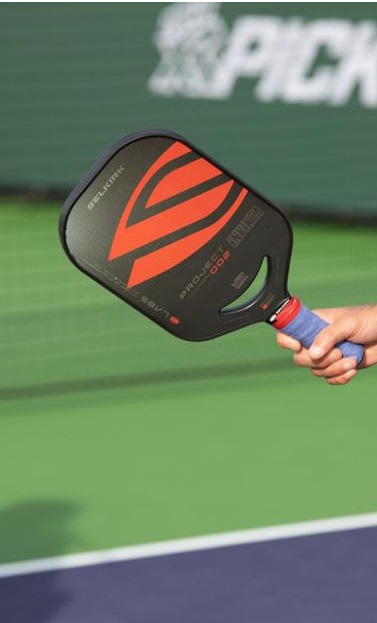
A spin-friendly paddle can make topspin easier to produce, but gear will not rescue late contact or an open paddle face. Fix spacing, contact, and ball shape before you blame the paddle.
Do not force it when you are off balance, drifting backward, jammed, reaching, or contacting below your clean strike window. Once you have to manufacture the mechanics from a bad position, choose the safer third and keep the point alive.
Here, I use “drip” as shorthand for the same hybrid family. Call it a drip or a hybrid. The useful distinction from a full drive is the ball shape: drive-like early preparation, more topspin dip, and a lower ball for the defender to solve.
Aim through the decision. The lead foot, inside foot, hip, and seam can all make the first contact uncomfortable. If one player is aggressively owning the middle, the seam or that player’s lead foot can force a less comfortable block than simply driving into their paddle.
No. A good hybrid might force a low volley, a scoop, a half volley, or a difficult ball after the bounce. The bounce is not the scorecard. If the opponent gets a comfortable counter, the shot did not accomplish much just because it landed near the kitchen line.
Play the Ball After the Hybrid
The hybrid is not the finish line. It is ball three trying to improve ball five. Hit the low-contact target, recover, and watch what comes back. If they scoop or leave you a short block, take the ground they gave you. If they counter cleanly, split sooner and solve the next ball instead of charging into trouble.
A good pattern might be hybrid to the feet or seam, earn a weaker contact, move through transition, then play a calm fifth instead of trying to end the point with the third. If they start counter-rolling the hybrid early and comfortably, listen to what they are telling you. Tighten the target, change the shape, or go back to a drop/reset until the hybrid earns its look again.
Short practice plan: First groove the hybrid crosscourt to a low-contact target. Then mix drops and hybrids while a partner watches for early tells. Finish with live feeds where you recover, read the opponent’s contact, and play the next ball without deciding in advance how far you are going to move.
Related Third-Shot Lessons
- Third Shot Strategy — decide whether the return calls for a drop, drive, hybrid, or neutral ball.
- Pickleball Drop Shot — build the foundational soft-drop mechanics this specialist shot branches from.
- Third Shot Drive — build the full drive, pressure better targets, and plan the next ball.
- Pickleball Transition Zone — stop, split-step, and decide how much ground the previous ball earned.