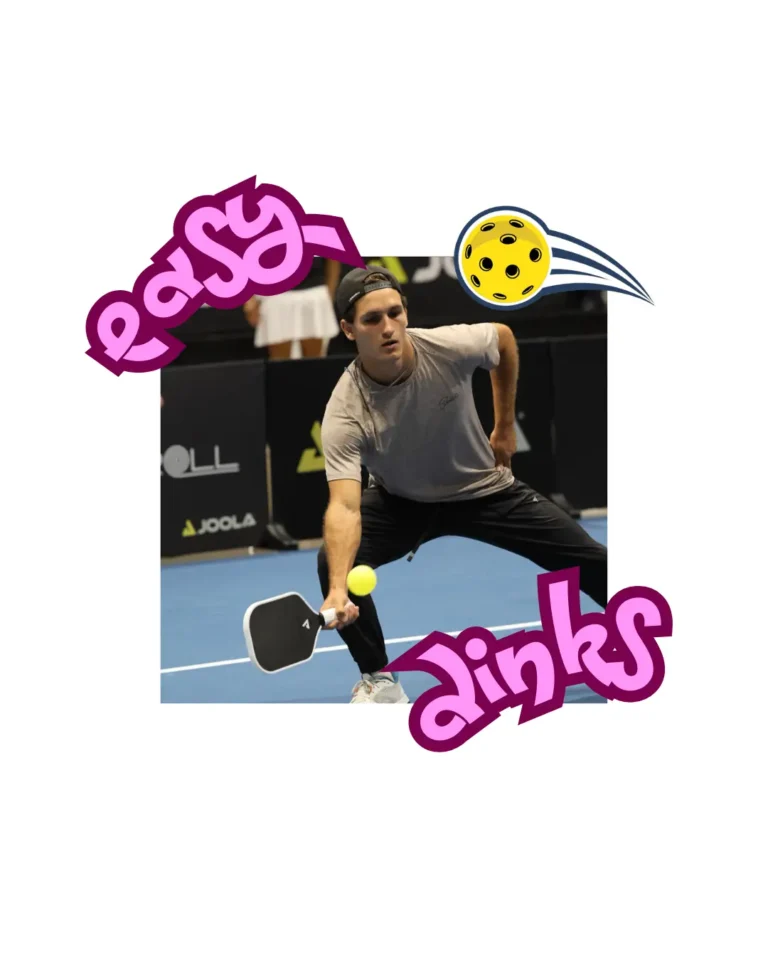
Pickleball Dinking Game: Ruthless Tactics to Win Every Point
The Pickleball Dinking Game: Master Strategy, Pressure, and Precision
Dinking game mastery isn’t passive or polite; it’s a pressure weapon. You’re not just rolling soft shots into the kitchen – you’re shaping posture, stealing time, and tightening psychological screws until the opponent has no clean answers left. I once worked with a new 4.0 player, Sarah, who had the power of a freight train but treated the kitchen like it had land mines. She rushed every dink, floated everything, and collapsed in long rallies. We spent a week on intention, not mechanics – why the dink exists. Two tournaments later, she was dictating rallies at the net because she finally understood the truth: a dink is a setup blade, not a survival tap.
Picture this: you roll a topspin dink that grazes the sideline and falls like a trap door. Your opponent lunges, scrapes the ball up from below net height, and sends a panicked floater just high enough to taste. You take one balanced step forward and fire a speed-up at their left shoulder. Rally over. The winning blow wasn’t the speed-up – it was the positional damage inflicted by that first, well-placed dink.
The dink is positional warfare. You use it to force opponents to hit upward, to strip away their power, and to control the geometry of the kitchen three inches at a time. True mastery demands low posture, a soft continental grip, disciplined paddle angles, and purposeful variety – each dink tightening the vise until the only shot your opponent has left is a mistake.
Coach Sid’s Take: If your dinks aren’t changing your opponent’s posture, you’re rallying – not strategizing.
Dink battles feel improvisational, but most points follow the same few sequences. If you want a bigger list of repeatable setups plus what ball usually comes next, use this hub: shot patterns in pickleball.
The primary goal of the dinking game is to collapse your opponent’s posture and force an unforced error.
Winning the Dinking Game isn’t about being softer or more delicate – it’s about putting your opponent in a biomechanical bind. Each dink you hit should chip away at their posture. Once their hips rise, their paddle drifts behind them, or their feet lose their sequencing, the pop-up arrives on schedule. The player who controls posture controls the rally.
Key Terms in the Dinking Game
- The Dinking Game: A deliberate, high-level rally played around the non-volley zone where soft, precise shots are used to create positional and psychological advantages that lead to attackable balls.
- NVZ (Non-Volley Zone): The seven-foot zone adjacent to the net where volleys aren’t allowed. This is the strategic heart of pickleball, where posture battles and dink patterns determine point flow.
- Topspin Roll Dink: A forward-brushing dink that causes the ball to dip sharply and bounce aggressively, forcing a defensive, upward contact from the opponent.
- Unattackable Dink: A soft, low-trajectory dink that lands in the first three feet of the kitchen, denying the opponent any downward strike and forcing them to lift the ball upward.
- Conditional Rule: A cause-and-effect principle such as: “If your dink lands short of the service line, your opponent is free to speed up the ball without consequence.” Conditional rules govern when you can pressure and when you must defend.
How do dinks create an attack opportunity?
Dinks create attack opportunities through controlled disruption: pulling opponents off the line, forcing them to move laterally, collapsing their base, or making them contact the ball below net height. When you win the posture battle, the next shot becomes predictable – and predictable shots are attackable shots. The formula is simple: mobility + margin = a forced pop-up.
The NVZ line is positional warfare, and the best dinks are surgical setups, not defensive safety nets.
Most amateur players treat the dink like a neutral shot designed only to avoid mistakes. But at higher levels, the dink is the engine of offense. The NVZ line is the most valuable real estate in pickleball, and the team that controls it dictates pace, trajectory, and pressure. Every dink you hit should serve a purpose: probe space, test movement, and create micro-breakdowns that accumulate into errors.
You don’t win a dink rally with one perfect shot. You win by forcing your opponents to hold perfect posture through six, eight, ten consecutive exchanges. This is why advanced players describe high-level dinking as “death by precision.” Wide dinks pull them off the line; middle dinks force communication; slice dinks destabilize the paddle plane; roll dinks make them hit up. The best dinks are setups – silent pressure tools your opponent doesn’t feel until it’s too late, when the dink drop threat or the NVZ angle finally cracks their structure.
PickleTip Insight: The real test of dinking skill isn’t touch – it’s posture stamina. Hold balanced, low posture through a ten-shot rally and you win leverage. Rise first, and you lose the exchange before the ball even pops up.
This is why advanced players call the dinking game the “chess match” of pickleball. Every shot carries intent. Each dink shifts geometry, steals space, and pressures your opponent’s stance. When you’re thinking two, three, or four shots ahead, you manipulate their movement – pulling them wide, drawing them forward, baiting their reach. Eventually the posture break arrives: a high ball, a drifting paddle, or a late recovery step. That’s your green light to attack.
Dinking tactics must deploy a variety of pace and spin to break rhythm and exploit an opponent’s backhand weakness.
A predictable dink is a gift to your opponent. Predictability lets them plant their feet, stabilize their paddle, and wait for you to crack first. Your job isn’t to keep the ball in play – it’s to disrupt balance and rhythm. With smart variations in pace, depth, spin, and angle, you force guesses, overreactions, and uncomfortable movements. The best dinks aren’t answers – they’re questions your opponent doesn’t want to answer.
A simple yet brutally effective pattern: Dink deep to the backhand, then push wide cross-court. This pulls the opponent off the line, breaks their shoulder alignment, and often triggers a rushed, upward defensive contact. Add a low slice to the middle, then follow with a topspin roll to the corner – and you’ve created three posture breaks in three shots. If they take two lateral steps to reach the ball, the Conditional Rule applies: “You must make them move the opposite direction on the next shot to maximize damage.”
| If You Want Them To… | Dink That Will Do It | Purposeful Consequence |
|---|---|---|
| Move sideways off the line | Cross-court angle dink with slice | Creates a down-the-line attack lane. |
| Pop the ball up | Low middle dink with underspin | Causes a lift, setting up your speed-up. |
| Rage-quit the rally | Topspin roll dink that skips forward | Forces a lunge or half-volley from weakness. |
| Fight over coverage | Soft middle dink between partners | Induces confusion or contested swings. |
| Reset from defense | Deep push dink to backhand corner | Pins them back and stalls their pressure. |
Elite dinking is controlled manipulation. Every shot you hit should accomplish something: steal ground, distort posture, disrupt timing, or set up a forced error. You are not hoping for consequences – you are engineering them. When you choose the correct dink at the correct moment, your opponent’s reply becomes automatic and predictable, and the winning opportunity reveals itself without risk.
Do professional players really try to skim the net with their dinks?
No. That’s a myth. Professionals clear the net by 6–12 inches with intentional trajectory. They prioritize consistency, early apex, and sharp descent – creating a soft, short, unattackable bounce. Skimming the tape is a low-level habit that loses more points than it wins. Pros value geometry, not gambling.
The biggest dinking misconception is believing a high dink is safe when it is actually fuel for your opponent’s speed-up.
One of the most damaging myths in pickleball is that a high, loopy dink buys you “safety.” In reality, every inch above the net gives your opponent extra time to accelerate their paddle and launch a speed-up. A high dink isn’t safe – it’s a slow pitch. The goal is to keep your dinks unattackably low: clearing the net with margin, but landing soft and short in the first three feet of the kitchen to eliminate their angles.
In a competitive 5.0 match, my partner Jen kept getting punished for “playing it safe.” Her dinks were high because she focused only on avoiding the net. The real problem was trajectory. The PickleTip Insight here is simple: judge your dink by its apex-to-bounce window. If the ball is still rising when it crosses the net, your trajectory is dangerous. Aim for a peak just before the net, followed by immediate descent. Clearing the net by 6–12 inches dramatically reduces errors and keeps your opponent from launching a counterattack.
Coach’s Take: If your dink has no purpose – no movement, no spin, no suppression -you’re not controlling the rally. You’re delaying the loss.
Another common trap is treating the third shot drop like a religion. The drop is just one tool. If your drive consistently produces weak replies, then drive. The drop exists to help you reach the NVZ and enter the dinking phase – not to be used blindly on every point. If you only play defensively, you become predictable. True mastery of the Dinking Game comes from mixing pace, spin, and directional pressure to maintain control of posture and position.
Mastering consistent dink execution requires a soft continental grip and a push-based stroke generated from the shoulder and forearm.
The foundation of a soft, unattackable dink comes down to three elements: grip pressure, wrist stability, and low, leveraged posture. To execute it properly, you must eliminate the instinct to “swing” and replace it with a controlled, compact push or lift. Use the continental grip with a pressure level of about 3/10. This relaxed grip increases feel, absorbs pace, and prevents accidental pop-ups. A tight, anxious grip kills touch and removes the sensory feedback needed to control depth and height.
Your stroke should follow a simple rule: short backswing, compact follow-through. Imagine your paddle sliding through a narrow tube beside your body. The wrist stays neutral – firm, not locked, and always aligned with the forearm. Flicks are giveaways; pushes are deceptive. On backhand roll dinks, this matters even more. The power comes from your shoulder and forearm, not your wrist.
PickleTip Insight: The most reliable predictor of a dink error is a backswing that extends past the paddle face. Compact mechanics win every time.
Footwork determines almost everything. Use a step-and-drag pattern: lead with one foot, then drag the other lightly behind. This keeps you grounded and prevents overstriding. After each shot, recover to the NVZ line under control. Excessive foot motion equals excessive error. If your dinks float high, follow the Conditional Rule: “If your dink rises more than 12 inches above the net, the wrist flick is the culprit.” Reduce wrist motion, shorten your backswing, and re-engage your posture.
What is the most effective drill for improving dink consistency under pressure?
The best drill is the Figure 8 Drill. You alternate diagonally and straight ahead, requiring constant foot adjustment and clean contact. To simulate match tension, play it to 11 where any single error loses the rally. This forces you to manage nerves, height control, and footwork simultaneously – exactly like real play.
You must transition immediately from dinking defense to offensive speed-up when your opponent hits a poor or high dink.
An elite dink strategy isn’t just about executing good shots- it’s about identifying bad ones from your opponent. The moment they fail to keep the ball low, you must shift from patient control to ruthless offense. This is the instant where the Dinking Game ends and the volley attack game begins. A high dink – anything at or above waist height – gives you free leverage to accelerate the ball into their weakest zones: shoulders, hips, or feet.
Reading your opponent’s posture is the unlock. If they are leaning, off-balance, or recovering late, you attack. If they’re stable and low, you continue dinking. As my partner Jen used to say during tough breakers: “If you don’t know why they sped it up, it’s because your soft return told them to.” Improving your win rate starts with reading the quality of their dink – not just the trajectory.
When you spot a high ball, your mechanics must change: step forward, contact the ball in front, and drive with a firm, forward push. Follow the Conditional Rule: “If the ball crosses higher than your waist, you must speed it up.” The ideal speed-up is aimed at the hip line, where returns are weakest and posture collapses fastest.
How do I neutralize heavy spin on an opponent’s dink?
Match the spin. If the ball has backspin, open your paddle face slightly and block. If it has topspin, close the face and push softly. The key is minimal forward motion – let your paddle angle, not your power, do the work. This neutralizes unpredictability and prevents the ball from jumping unexpectedly off your paddle.
To move from practicing dinks to mastering pressure, you must train patterns and measure your unforced error rate under duress.
Training beats practicing. Practicing builds familiarity. Training builds execution under stress. For pressure tolerance, start with the Maintain Position Drill: place cones 18 inches behind the NVZ line. Dink without ever stepping behind the cones. Volley when you can. This trains staying tight to the line under pressure – one of the defining skills of high-level doubles.
The Figure 8 Drill remains the gold standard for developing touch and footwork. Use three phases: Level 1 (Touch) focuses on clean, quiet mechanics. Level 2 (Movement) adds lateral steps before each shot. Level 3 (Chaos) goes full sideline-to-sideline for three minutes straight. This separates disciplined players from weekend hacks. Track outcomes, not contact points. If your error rate exceeds 10%, spend 80% of your drilling time on consistency before advancing to strategy.
Conditional Rule: If you cannot maintain a Figure 8 rally for twenty consecutive shots, the limiting factor is your footwork – -not your hand speed.
The Depth & Pattern Drill builds tactical precision. Place cones in the opponent’s kitchen – one short, one deep – and alternate targets. Add movement: step wide, return to center, and reset posture before each shot. Your goal is simple: make them move. Track how many of your dinks force movement or mistakes. If fewer than 50% do, shift your training time toward pressure application rather than touch refinement.
Dinking Game FAQ
Start with the flat or gentle slice dink. Focus on clearing the net by 6–12 inches, landing the ball in the first three feet of the kitchen, and eliminating all wrist flicks. Master height control before adding spin or angle.
High dinks almost always come from a wrist flick or a tight grip. Loosen your grip to 3/10, shorten your backswing, and use a push-based motion from your shoulder and forearm. If the ball crosses the net while still rising, your trajectory is too steep.
Attack only after you’ve earned the opening. Look for three signals: a high ball (waist or above), a late recovery step, or a posture break where their hips rise. Attack forward, not upward, and aim at the shoulder or hip to maximize error.
Cross-court is the safest dink, but overusing it becomes predictable. You must mix middle dinks, wide-angle slices, and deep backhand pressure to prevent your opponent from settling into a rhythm.
The biggest mistake is retreating from the NVZ line. Stepping back forces you to hit upward, creating attackable balls. Hold the line with low posture, compact mechanics, and controlled footwork.
Related Reading
- Resetting the Point: The Defensive Shot that Kills Momentum
- How To Hit a Pickleball Harder (Without Losing Control)
- Use the Pickleball Triangle Rule to Command the Court
- Pickleball Kitchen Rules and Common Faults Explained
- Advanced Pickleball Tactics for 4.0+ Play
Want cleaner, calmer dinks? Run the Figure 8 drill for five sessions and measure your unforced error rate. That’s how you build a Dinking Game that wins under pressure.
About the Author
Sid Parfait plays pickleball every day, coaches players across all levels, and makes the same mistakes you do – just more intentionally. He created PickleTip to help players understand not just what to do, but why it works. This is real insight from real courts, not theory from a desk.