Why Pickleball Is Getting So Cliquish
Pickleball used to feel like the most inclusive sport in America.
Now?
It’s starting to feel a lot like high school again.
And if that line makes you uncomfortable…
you’ve probably already seen it happening.
You Know the Moment
You miss one soft reset.
Nothing crazy. Just a little high.
And suddenly…
every ball finds you.
Again.
And again.
And again.
Your partner gets quiet.
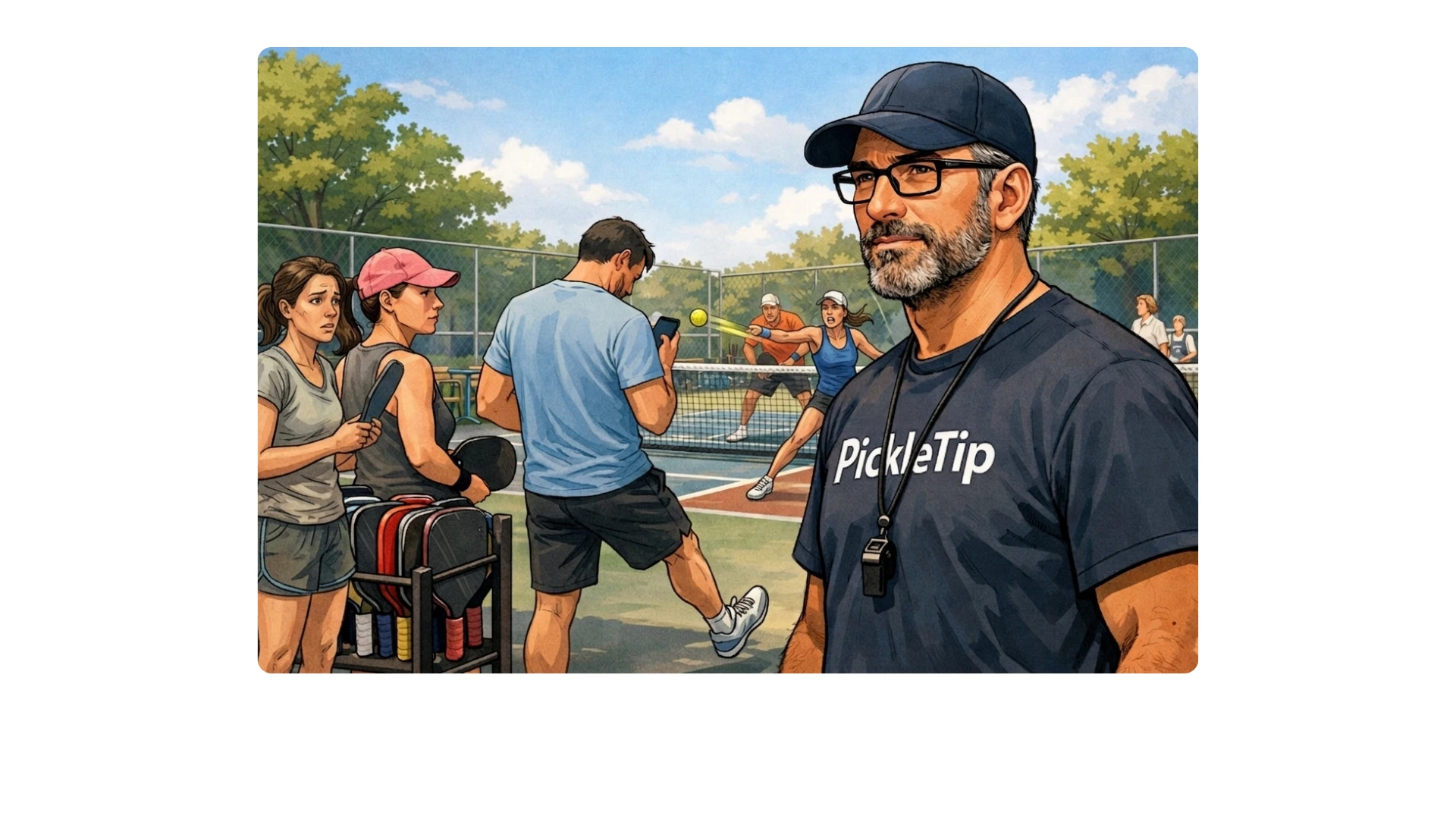
The people at the paddle rack?
They’re watching. Pretending they’re not—but they are.
And in about ninety seconds, something shifts.
This isn’t just a game anymore.
It’s a test.
And whether anyone says it out loud or not…
you already know what’s being decided:
Do you belong on this court—or not?
Why This Sport Pulls You In So Fast
Here’s the part people don’t talk about enough:
Pickleball doesn’t just grow fast because it’s fun.
It grows fast because it gives people something they’re missing.
You improve quickly.
You get invited back.
You rotate through partners.
You start recognizing faces.
Then names.
Then numbers get exchanged.
Then texts.
“Hey, you playing tomorrow?”
Now it’s not just exercise.
It’s a place.
You’re not just getting better at pickleball.
You’re getting pulled into something.
And that pull?
That’s not about the paddle.
That’s about people.
The Court Is Too Small to Hide
In tennis, you can disappear.
In pickleball?
You’re standing 14 feet away from judgment.
You hear everything.
You feel everything.
And everyone sees everything.
Missed dinks.
Late reactions.
Bad decisions.
There’s no private failure here.
Just public evidence.
The Shrunken Court Effect
You’re not losing from across a field.
You’re struggling at conversational distance.
That changes everything.
Because proximity doesn’t just make the game faster.
It makes it personal.
The Score Is Not the Real Score
The score is kept on the court.
But the value?
That gets assigned at the paddle rack.
The Paddle Rack Isn’t Neutral
You think the rack organizes games.
It doesn’t.
It filters people.
Watch it long enough and you’ll see it:
Who stacks together.
Who avoids who.
Who suddenly becomes available when a stronger player walks up.
And then there’s the move nobody talks about…
The Ghost Paddle (The Polite Assassination)
You’ve seen it.
Maybe you’ve even done it.
You walk up to the rack, paddle in hand.
You’re ready to drop in.
Then you look.
You do the math.
You check the paddles.
You recognize the names.
And suddenly?
You’re not ready to play.
You need water.
You need to tie your shoe.
You need to check your phone.
You hover.
You wait.
And the second that lineup changes?
You’re back.
Perfect timing.
No words.
No conflict.
No accountability.
Just… adjustment.
We don’t exclude people in pickleball.
We just get very busy at very specific times.
It’s the perfect crime.
Nobody was mean.
Nobody said no.
But the line got drawn anyway.
And here’s the part nobody wants to admit:
Everyone sees it.
Nobody calls it out.
Because deep down…
everybody understands it.
Or worse—
has done it.
The Game Behind the Game
Here’s what makes pickleball different from almost every other sport:
You’re not just playing.
You’re waiting.
A lot.
Sometimes 30–50% of your time is spent standing near the court.
Watching.
Talking.
Tracking who’s playing with who.
That space?
That’s where the real game happens.
The rallies are played on the court.
The hierarchy is built on the sideline.
The Giant Middle Is Where the Drama Lives
Beginners don’t care yet.
Top players don’t worry about it.
But that massive middle group?
That’s where everything gets tight.
Good enough to matter.
Not good enough to feel safe.
That’s where status anxiety lives.
You start thinking things like:
Where do I fit?
Who wants to play with me?
Am I getting better—or getting exposed?
Did they skip me on purpose?
Beginners are just happy to be there.
Advanced players already know where they belong.
But the middle?
They’re building identity…
on something that still moves.
The Birth of Status Anxiety
This is where the shift happens.
You stop just playing.
You start being seen.
And now the goal isn’t just:
“Get better.”
It becomes:
“Be seen as someone who belongs at this level.”
That’s a different game.
A more dangerous one.
Because now—
A bad game costs fifteen minutes.
A status drop?
Costs identity.
The Targeting Ritual
Let’s call it what it is.
Targeting works.
But in pickleball, it’s not just strategy.
It’s a signal.
The weakest player gets the ball.
Over and over.
And everyone sees it.
But the worst part?
It’s not the missed shots.
It’s the look.
That quick glance your partner gives the sideline after the third mistake.
That silent message:
“It’s not me.”
That’s the moment your status doesn’t just drop.
It gets announced.
Partner Choice Is Not Neutral
In doubles, nothing is neutral.
Not who you play with.
Not who you avoid.
Not who asks you.
Not who doesn’t.
When someone chooses you?
They’re not just picking a teammate.
They’re endorsing your value.
When they don’t?
You feel it.
Even if nothing is said.
Because in pickleball—
every partnership is a public vote.
The Scarcity Lie
People will tell you:
“I only have two hours.”
“I just want good games.”
“I’m trying to improve.”
And some of that is true.
But not all of it.
Because here’s the real difference:
Scarcity explains the behavior.
But status explains the emotion.
If time were unlimited…
people would still sort.
They’d still prefer stronger partners.
They’d still avoid certain games.
So what’s really happening?
You’re not just protecting your time.
You’re protecting how you’re seen.
DUPR and the Clean Excuse
Pickleball snobbery is the politest form of warfare in America.
We don’t use middle fingers.
We use:
“Skill-appropriate games.”
We don’t exclude people.
We “curate the experience.”
Nobody says:
“I think I’m better than you.”
They say:
“I’m just trying to get the right level of play.”
Same message.
Cleaner delivery.
And here’s the real shift:
You don’t even have to say it anymore.
The rating says it for you.
DUPR didn’t create the hierarchy.
It gave it a uniform.
It turns:
“I don’t want that game”
into
“The numbers don’t support this matchup.”
Now nobody feels guilty.
Because it’s not personal.
It’s “data.”
The Open Play Panopticon
There is no off day here.
You don’t just struggle.
You struggle in front of the same 20–40 people…
who will remember it.
You’re not just playing.
You’re being observed.
Every miss.
Every reaction.
Every partnership.
Logged.
Stored.
Replayed later on the sideline.
Reputation Memory (The Ghost in the Machine)
The score resets every game.
Your reputation doesn’t.
“He’s solid.”
“She’s inconsistent.”
“Don’t partner with him in tight games.”
“She gets targeted.”
That stuff sticks.
And once it sticks…
it changes everything.
You get fewer invites.
Different partners.
Different games.
More pressure.
Worse performance.
Which reinforces the label.
That’s not random.
That’s a loop.
The Third Place Pressure
This is the part most people miss.
Pickleball isn’t just a sport.
For a lot of people—
it’s their main social outlet.
Not work.
Not home.
This.
The court.
The group.
The routine.
So when something shifts here—
it hits harder.
Because it’s not just:
“I didn’t get a good game.”
It’s:
“I might not belong in this group.”
And that’s a very different feeling.
Why It Feels Like High School
We say that like it’s a bad thing.
But let’s be honest—
For a lot of people, this is the first time in years they’ve felt relevant.
Someone notices if you show up.
Someone cares how you play.
There’s energy.
There’s tension.
There’s connection.
The drama is the proof you’re still in the game.
But here’s the difference:
In high school, eventually you graduate.
In pickleball?
The seniors stay.
The freshmen keep arriving.
And everyone’s fighting for the same seat at the table.
The Mirror
Look—
don’t get it twisted.
This doesn’t make pickleball bad.
And not every selective game is fake.
Sometimes people really do just want competitive reps.
Sometimes level matters.
Sometimes structure is necessary.
That’s not the problem.
The problem is what we pretend isn’t happening.
We tell ourselves we’re protecting the quality of the game.
But what we’re really protecting…
is the way we’re seen by the people waiting behind the fence.
Because in pickleball, the addiction isn’t just winning.
It’s belonging.
And once belonging becomes valuable…
people start guarding it.
Loudly through targeting.
Quietly through the Ghost Paddle.
But the line gets drawn either way.
The Truth Nobody Wants to Say Out Loud
Pickleball doesn’t create this behavior.
It exposes it.
It compresses it.
It speeds it up.
It takes:
belonging
status
identity
fear
…and puts them inside a small court with nowhere to hide.
The problem isn’t that pickleball has a pecking order.
The problem is how quietly we pretend it doesn’t.
Pickleball grew because it felt open.
If that openness turns into quiet little gatekeeping rituals, the sport does not just get meaner.
It gets smaller.
So Let Me Ask You This
Have you ever felt more judged
standing at the paddle rack…
than you did actually playing the game?
Or be honest—
have you ever gotten a little… busy…
right when the wrong group was about to form?
Or is this all just overthinking
what’s supposed to be fun?