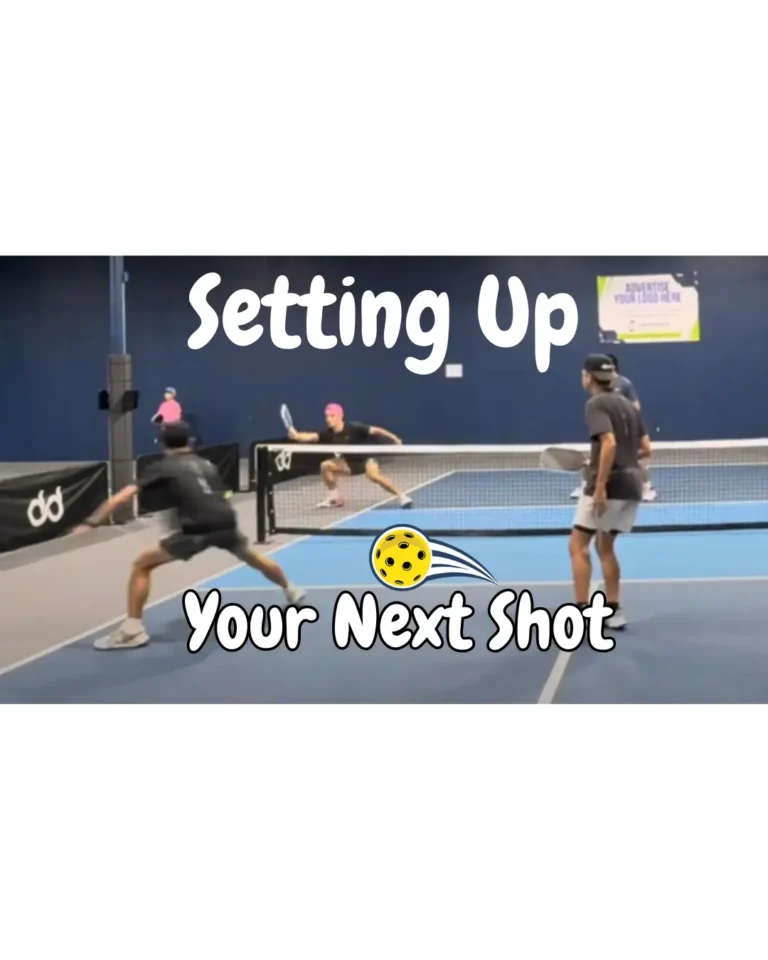
Shot Selection in Pickleball: Drive vs Drop (4 Quick Filters)
Most points aren’t lost because you “don’t have the shot.” They’re lost because you pick the wrong shot for that ball, right now. If you’ve ever hit a “medium drive” and watched it come back at your shoelaces… you already know.
Picture this: you’re in the transition zone, the ball lands a little short, and it pops up to that annoying knee-to-waist height, high enough to tempt you, low enough to punish you. Across the net, both opponents are parked at the kitchen with paddles up like they own the place. This is where most players donate points: not because they lack a shot… but because they choose the wrong shot for this ball, in this moment.
Pro Tip (Quick Rule): Drive when contact is high and you’re balanced with defenders exposed; drop/reset when contact is low or defenders are set and ready to recycle pace.
This guide makes shot selection in pickleball repeatable with four fast filters, so you stop guessing and start choosing the ball that makes the next shot easier.
This page teaches when to drive vs drop. If you want the full playbook for a specific job, grab the right tool:
- Third shot decision + when to move: Third Shot Strategy
- Drive mechanics, targets, and variations: Drive in Pickleball.
- Drop mechanics, touch cues, and consistency: Pickleball Drop Shot.
- Transition survival (mid-court rules): Pickleball Transition Zone.
- “Should I lob here?” decision: Lob or Drop in Pickleball.
- Grip pressure deep dive: Pickleball Grip Pressure.
- Safer choices under pressure: High Percentage Pickleball Shots.

Shot Selection in Pickleball: Drive vs Drop (Quick Answer)
- Drive when contact is comfortably high, your base is quiet and balanced, and the defenders are compromised, then apply controlled pace with shape instead of swinging at 100%.
- Drop/reset when contact is lower or the ball skids (underspin/slice), the opponents are set at the NVZ, and you need a ball that buys time and keeps the next shot from becoming a put-away.
Coach rule that saves points: if both opponents are set at the kitchen with paddles up, your “medium drive” is often just their warm-up block. Either drive with real purpose (target + height + timing) or choose a touch ball that keeps the next one from sitting up.
The Shot Selection Framework (4 Questions That Clean Up Your Choices)
Most players don’t lose because they lack skills. They lose because they don’t run filters. When rallies speed up, you need a decision process that still works when your feet are late and your brain is loud. Use these four questions in order, every time.
1) Ball Height at Contact: When You Can Hit Down → Pressure Gets Safer
Ball height is the cliff. Above net height, pressure becomes safer. Below net height, pressure becomes expensive, because a driven ball tends to rise, and rise is exactly where kitchen players feast (blocks, counters, speedups).
- Above net height + stable feet = green light for a controlled drive or firm pressure ball.
- At net height = decide based on defenders (set = touch/neutral; moving = pressure gains value).
- Below net height or heavy backspin = default to drop/reset unless the target is wide open.
- Knee-high floaters = the trap ball. Your safest answers are (a) a high-margin drop with arc, or (b) a firm, controlled roll that doesn’t climb into their strike zone.
2) Defender Position: When They’re Set at the NVZ → Pace Gets Recycled
Don’t pick shots in a vacuum. Pick shots based on what the opponents can do next. Two set defenders at the NVZ don’t fear pace, they recycle it. The question isn’t “Can I drive?” It’s “What counter am I inviting if I drive?”
- Opponents set at NVZ = drops and resets get more valuable because they deny clean volleys.
- Opponents in transition / reaching / drifting = drives and firm pressure balls jump up in value because they can’t set their paddle face.
- When X happens → Y results: when defenders are stable with paddles up, a medium drive often produces a controlled block back low… which forces you to hit up on the next ball.
3) Your Base: When You’re Off-Balance → Your Paddle Face Gets Loud
This is the part most players ignore, and it’s why they miss wide by four feet. If you’re reaching, leaning, or hitting while moving, your shot selection needs to get more conservative. You can still apply pressure, but you do it with shape and margin, not max pace.
- Balanced = you can choose either shot based on the defenders and contact height.
- Off-balance = favor drops/resets, or a controlled drive with plenty of net clearance (no flat hero ball).
- When X happens → Y results: when your feet are late, your paddle face gets unstable, so “going for more” usually creates more misses or pop-ups.
4) Risk Budget: When the Score Gets Tight → Margin Beats “Maybe Winner”
Risk budget means: how much can you afford a free point right now? Late in close games, after a couple of tight misses, or when you can feel momentum wobbling, your selection should protect you from the worst outcome: a miss or a pop-up that turns into a clean put-away.
- High leverage moment = choose the shot with margin (drop/reset, or high-clearance pressure) instead of the “maybe winner.”
- Lower leverage moment = you can test a tighter target or firmer ball as long as the earlier filters (height + balance + defender state) agree.
PickleTip Green-Light Ladder: you only “earn” pace when (1) contact is high, (2) your base is quiet, and (3) defenders are moving. Miss one rung? Touch, reset, or add shape.
If you want a deeper philosophy for choosing safer, repeatable options, bookmark our guide: High Percentage Pickleball Shots.
Drive vs Drop: What Each Shot Is Trying to Force on the Next Ball
Here’s the upgrade most players need: stop judging the shot by whether it “wins the point.” Judge it by whether it forces a worse next ball. A great drive doesn’t have to be a winner. A great drop doesn’t have to be perfect. Both are tools for controlling what comes after contact.
The Drive (Purpose: pressure, pace, and predictable counters)
A drive is a firmer, faster ball meant to rush decision-making, force a block, or create a pop-up. The drive isn’t just “hit hard.” The best drives are directed pressure: the right height, the right target, the right timing, so the counter you get back is readable.
- Best use: opponents late, drifting, or reaching; you’re balanced; ball is high enough to pressure without rising into their strike zone.
- Common mistake: driving into two set defenders at the NVZ and calling it “aggression.”
Coach control rule: when you choose to drive, aim for 70% to 80% power with topspin. Controlled pressure keeps the ball in play while still forcing a difficult counter (instead of donating one long).
Targets (default): if you don’t have a clean lane, aim the drive at the hip/torso (jam window), the paddle-side shoulder, or the middle seam. Those targets reduce angles and tend to produce blocks you can read and move in behind.
When you drive with purpose into the body, you often get a shorter, less-controlled block, meaning your next ball can be a controlled drop, a roll, or a put-away depending on height.
Want the full swing mechanics, variations, and drills? Drive in Pickleball.
Team payoff: a well-placed drive can freeze the opponent long enough to set up a Shake and Bake for your partner. Learn spacing and timing here: Shake and Bake Guide.
The Drop/Reset (Purpose: time, court position, and neutralizing the point)
A drop/reset is a soft, arcing ball meant to land in (or near) the kitchen so the opponents can’t attack it cleanly. It’s the “buy time” shot that helps you close space and stop feeding volleys, especially when contact is low or the defenders are already set.
- Best use: opponents are set at the NVZ; the ball is lower; you need a safer rally-builder that keeps the next ball unattackable.
- Common mistake: trying to drop while panicked, with a long swing and a death grip, then acting surprised when it floats.
A “good enough” drop is one that clears the net with comfortable height and lands in the kitchen zone or forces the opponent to contact the ball below net height. Perfection is optional. Making them hit up is the whole point.
Mechanics: For touch cues, handling spin, and drills to build consistency, start here: Pickleball Drop Shot.
Rally Context: The 3 Situations That Change Everything
Stop arguing about “drive vs drop” like it’s a religion. Sort the rally into one of these three situations, then the right choice gets loud.
Context #1: Opponents Are Set at the Kitchen → Your Medium Drive Gets Stuffed
This is where a lot of drives die. If both opponents are set at the NVZ with paddles up, your best outcomes usually come from softening the point first (drops/resets), then attacking later when you earn the green light. If they’re stable, your “average pace” tends to come back lower, faster, and meaner.
If you keep getting stuck in no man’s land after your third shot, run this playbook next: Third Shot Strategy.
For broader mid-court survival rules, read this: Pickleball Transition Zone.
Context #2: Opponents Are Moving or Reaching → Placement Beats Raw Speed
“Moving” isn’t one thing. Movement direction tells you what’s available. When an opponent is late, leaning, or stretched, they can’t set their paddle face, so pressure and placement start to matter more than raw speed.
- If they’re leaning forward / stepping in: the jam window is real, drive or firm ball at hip/torso to freeze them.
- If they’re drifting backward: drops get more valuable, make them hit up while moving away from the kitchen.
- If they’re sliding sideways: the open court exists, but body-ball is often safer, hit behind their momentum or into the torso to stop their feet.
- When the defender is reaching, even “medium pace” becomes pressure because the contact point is compromised.
Context #3: You’re Pinned Deep or Off-Balance → Survive, Improve, Then Re-Attack
When you’re deep and uncomfortable, think “survive and improve.” Your job is to buy time and reduce exposure to a put-away while you climb back into position. That usually means drops/resets, or a controlled drive with margin, not a flat blast that rises and comes back twice as fast.
Coach survival rule: if you can’t hit down, don’t hit hard. Add height, add arc, and make the opponent hit up.
Third Shot Drive vs Drop: The Specialized Playbooks
Third shot is where shot selection gets audited. Pick wrong and you feed volleys. Pick right and you earn the walk to the kitchen, without bleeding points.
- Decision tree + when to move + partner cues: Third Shot Strategy
- Drive-heavy third shot trend (specific): Third Shot Drive in Pickleball
What About the Lob?
The lob isn’t here to replace drive vs drop. It’s here for the rare moment when both opponents are crowding the NVZ and leaning forward, and you can hit high + deep on purpose. If you can’t control depth, you’re not changing the point; you’re scheduling an overhead.
- Lob when: both opponents press forward and you can land it deep near the baseline.
- Don’t lob when: you’re off-balance, the wind is unpredictable, or the opponent is comfortable overhead.
- When you lob short, you hand away a put-away and expose your partner.
For the full “lob vs drop” decision breakdown (and when it backfires), use: Lob or Drop in Pickleball.
Grip Pressure: The Hidden Switch That Changes Shot Selection
Shot selection fails when your hand doesn’t match your intent. Choose “drop” with a death grip and it pops up. Choose “drive” with a wobbly face and it sprays long.
- Drive: firmer (not clenched) so the face stays stable through contact.
- Drop/reset: lighter so you can feel the ball, add arc, and avoid the pop-up.
- Quick self-check: if the last two balls sailed long or sat up, grip pressure is a prime suspect.
For drills and a full breakdown, go here: Pickleball Grip Pressure.
Common Shot Selection Mistakes (And the Fix)
Mistake #1: Driving Because You’re Impatient
Fix: Drive because the ball and opponent positioning allow it. If both opponents are set, earn the attack with a drop/reset first.
Coach cue: if you’re not forcing a compromised counter, your “drive” is just cardio for the other team.
Mistake #2: Dropping a High Ball That’s Begging for Pressure
Fix: High balls want pressure. If the ball is up and you’re stable, a controlled drive or firm pressure ball often produces a weaker next ball than a floaty drop that sits up.
Coach cue: don’t turn a green-light ball into a “please volley me” ball.
Mistake #3: Choosing the Right Shot… With the Wrong Intent
Fix: Decide what you’re trying to achieve before you swing: pressure, time, or position. Then choose the version of the shot that matches that goal (target + margin + pace).
Coach cue: “drop” isn’t a religion; it’s a tool for getting you to the kitchen without bleeding points.
Next Steps: Turn This Into On-Court Instinct
Reading is nice. Instinct wins points. If you want this to show up in games, train the decision, not just the swing.
- 10-minute constraint drill (20 balls): call “drive” or “drop” before contact every rep. If you can’t call it early, you don’t understand the moment yet.
- Track 3 mistakes only: net errors, long errors, and pop-ups (anything that sits up to be attacked).
- One coaching goal: stop feeding set kitchen defenders. Your win condition is making the opponent hit the next ball from a worse spot.