

Pickleball Rally Scoring Rules: Understanding Points, Positions, & MLP Format
Pickleball rally scoring awards a point on every rally, no matter who served. The rally winner also serves next, so the score moves faster and match length is more predictable. Most formats use a two-number score call and an even/odd serving-side rule to identify the server.
The rally scoring rules most people actually need
Rally scoring means every rally produces a point, and the team that wins that rally serves the next one. If you can remember “point every rally” plus “rally winner serves,” you can run a clean game without constant score arguments.
Rally Scoring Quick Start Box
- Every rally scores: Each rally ends with one team gaining one point.
- Two-number score call: Call serving team score first, then receiving team score (example: “7–6”).
- Next-Serve Rule: The team that wins the rally earns the point and serves the next rally.
- Even/odd logic: In the most common rally format, your team’s score tells you which side serves (even = right, odd = left).
Rally scoring formats vary by league and event; this guide labels official USAP rules vs. common variations.
Pickleball Rally Scoring Definitions: Key Terms You Need to Know
- Rally Scoring: A scoring format where every rally produces a point, regardless of which team served, and the rally winner serves next.
- Side-out scoring: The traditional format where only the serving team can score; the receiving team can win a rally and earn the right to serve (a side out), but they do not earn a point on that rally.
- Freeze: A common variation nickname for “late-game rules” that restrict how the final points can be scored (often “must serve to win” once a threshold is reached).
- Serve-to-win: The USAP term commonly used to describe rally formats where the final point (or final points) must be won while serving.
- DreamBreaker: Major League Pickleball’s singles tiebreak format; it’s often discussed alongside rally scoring because it uses point-per-rally style scoring within a team match structure.
Traditional side-out doubles uses three-number calling; rally scoring typically uses a two-number call. See Beginner Rules for traditional scoring details.
What is a rally scoring definition in pickleball?
Rally scoring means every rally is worth one point, and the team that wins the rally serves next. Most versions use a two-number score call and an even/odd serving-side rule to identify the server quickly.
2025–2026 official status: is rally scoring “the new rule”?
USAP has provisionally approved rally scoring as an optional format for specific event types, but side-out scoring remains the standard for most sanctioned play. In practice, rally scoring shows up most often in team formats, round-robins, leagues, and time-managed events.
USAP recognizes rally scoring under a provisional/optional framework (Rule 14.A) for certain formats; side-out is still the default scoring system for most tournaments and everyday play.
If your group is debating whether rally scoring is “official,” the fast resolution is this: it can be official for that event if the organizer declares it, but it does not replace side-out as the overall standard.
Rally scoring mechanics in doubles: who gets the point and who serves next?
In doubles rally scoring, the rally winner gets the point and also gets the next serve. That’s the whole engine: win rally → earn point → serve next, repeated until the game ends.
1) The Next-Serve Rule (the rule most arguments come from)
The team that wins the rally earns the point and serves the next rally. That means there’s no “side-out with no point” like in side-out scoring; the rally always changes the score, and the server always follows the rally winner.
2) The Score Call Rule (two numbers, and the order matters)
Call the serving team’s score first, then the receiving team’s score. If your team is about to serve and the score is 8–5, you say “eight–five,” not “five–eight.”
3) The even/odd rule (the fastest way to identify the correct server)
Most rally scoring doubles formats use this simple locator: right side is the even side, left side is the odd side. Your team’s score tells you which side serves.
- If your team’s score is even (0, 2, 4, 6…), the right-side player serves.
- If your team’s score is odd (1, 3, 5, 7…), the left-side player serves.
When your team wins a rally and your score changes parity (even to odd or odd to even) → the next serve comes from the other side because the score changed.
4) When do partners switch sides?
In the common rally scoring format, your team’s score determines your mandatory starting position for every point. If your team has an even score (0, 2, 4…), the partner who started on the right side must serve/receive from the right. If the score is odd, that same partner must serve/receive from the left.
While you may move or switch sides during the rally after the serve is made, you must return to these “score-parity” starting positions for the beginning of the next point.
The Mid-Game Reset: Teams typically only change their permanent starting sides during a timeout or when swapping ends of the court (to account for sun or wind), provided the event rules allow for a “starting side” reset.
How does rally scoring work in pickleball doubles?
Every rally is a point, and the rally winner serves next. The score is called with two numbers (server’s score first), and most formats use an even/odd rule to identify which partner serves from the right or left side.
Score snapshots (fast examples that settle “who serves?”)
- Example A: Score is 6–6 and your team will serve next. Your team’s score is 6 (even) → right-side player serves.
- Example B: Score is 9–10 and your team will serve next. Your team’s score is 9 (odd) → left-side player serves.
- Example C: You just won a rally and the score became 1–0 for your team. Your team’s score is 1 (odd) → next serve comes from the left.
Rally scoring vs side-out scoring: what actually changes on the scoreboard?
Rally scoring changes when points are awarded; side-out scoring changes who is allowed to score. If you’re choosing a format for league night or a tournament block schedule, this table is the cleanest way to pick without emotion.
| Category | Side-out scoring | Rally scoring |
|---|---|---|
| Who can score? | Only the serving team can score. | Either team can score on any rally. |
| What happens when the receiving team wins a rally? | They win the rally and earn the right to serve (a side out), but no point is awarded. | They gain a point and will serve next. |
| Score call | Typically three numbers in doubles (server score–receiver score–server number). | Typically two numbers (server score–receiver score). |
| Comeback feel | Can be slower because you may need to “win the serve” before you can score. | Can be faster because every rally immediately changes the score. |
| Time predictability | More variable; long “side-out trades” can stretch games. | More predictable; points move every rally. |
| Late-game endings | Ends on a point scored while serving. | Varies by event: pure rally, win-by-two, timed, or serve-to-win/freeze variations. |
Supporters like rally scoring because it speeds court rotations and makes match blocks easier to schedule; critics argue it changes the sport’s traditional “hold serve” tension and can feel harsh because every mistake is immediately punished with a point.
Rally scoring in singles: the quick version
In singles rally scoring, every rally is still a point and the rally winner still serves next. The clean difference is that there’s no partner to identify as server; the even/odd rule is purely about which service box you serve from.
- Every rally produces one point.
- The rally winner serves the next rally.
- Even score → serve from the right (even) side; odd score → serve from the left (odd) side.
- Call the score as “server score – receiver score.”
Example: If the score is 3–4 and you are serving, your score is 3 (odd), so you serve from the left side.
Variations and game end conditions: win by 2, first to X, timed, and “freeze”
Rally scoring is a format family, not one universal rule sheet, so game endings depend on the event. The most common endings are “win by 2,” “first to X,” or “timed,” and the most common late-game twist is a serve-to-win rule sometimes nicknamed a freeze.
Win by 2 (common)
A team must reach the target score and lead by two points (example: game to 21 ends at 21–19, but not at 21–20).
First to X (event-specific)
Some recreational formats use “first to 15” or “first to 21” with no win-by-two to keep court rotations strict. This is not universal, so it must be agreed in advance.
Timed games (event-specific)
Leagues sometimes run rally scoring on a timer (example: 12 minutes) specifically because point-per-rally makes the score climb steadily and helps games finish inside a predictable scheduling window.
Freeze (variation nickname) vs Serve-to-Win (USAP term)
- Serve-to-win (USAP): In some USAP-described rally formats, the final point must be won while serving, which prevents the match from ending on a receiving team’s rally win.
- Freeze (common variation nickname): Many leagues use “freeze” to describe a similar idea, often triggered at a threshold (example: “freeze at 20 in a game to 21”), where the team needs to be serving to score the final point(s).
When a “freeze” or serve-to-win condition is active → winning a rally while receiving may stop the opponent’s scoring, but it may not add a point for you, depending on the event’s version.
Is rally scoring win by 2?
Often, yes, but it depends on the event. Many rally scoring games use win-by-two to 15 or 21, while some leagues use first-to-X or timed formats, and some add serve-to-win (USAP) or “freeze” variations at the end.
The MLP paradox: why people search “MLP scoring” and land in rally scoring confusion
People often equate “MLP scoring” with rally scoring because MLP helped popularize point-per-rally concepts in team match formats. The twist is that MLP’s rules have not been static: MLP has used rally-style scoring in specific components (notably DreamBreaker), while pivoting back toward side-out scoring for doubles formats in its 2025 structure.
If you’re trying to play “MLP-style” at your club, do not assume rally scoring automatically. The only safe move is to ask which MLP season/ruleset your organizer is copying, because that choice determines whether doubles is side-out or rally scoring.
Score-pressure strategy: how rally scoring changes decision-making without changing the sport’s core rules
Rally scoring makes the scoreboard brutally honest: every unforced error gifts a point immediately. The best “strategy” shift is not a new shot; it’s a new risk budget, especially in the final third of a game when a two-point swing feels like a body blow.
- Errors cost more: In side-out, a mistake while receiving may “only” change serve; in rally scoring, it changes the score.
- Momentum feels faster: A short run of clean rallies can create separation quickly because there are no “empty” side-outs.
- Late-game math matters: If your event uses serve-to-win or a freeze variation, the same rally result can mean “no point” vs “point,” so confirm the end condition early.
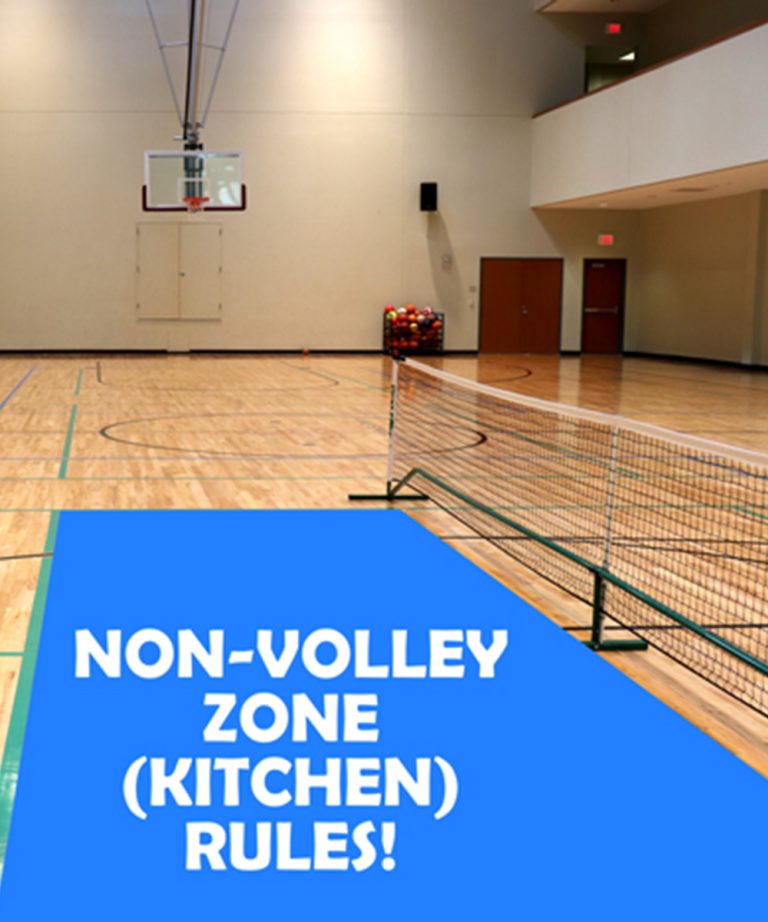
Yes, teams still fight for non-volley zone position because that’s where rallies are often decided; if you need the full kitchen explanation and momentum rule detail, read this single reference sentence: Kitchen rules and the “momentum” trap are explained here.
Rally scoring doesn’t make games friendlier, it makes mistakes louder.
Common disputes and a clean 3-step reset protocol
Most rally scoring fights come from one of three things: the group didn’t confirm the format, the score call order got reversed, or the even/odd server identification was skipped. The fix is a short reset protocol that restarts play without “re-litigating” the last five rallies.
The disputes you’ll see most
- Wrong server: Two players both think they should serve because the previous rally winner changed.
- Wrong side: The correct server is on the wrong court side because someone forgot the even/odd rule.
- Score call reversed: Someone calls the receiver’s score first and everyone builds from the wrong baseline.
- Freeze confusion: One team thinks they can score while receiving at the end; the other team says “serve-to-win.”
3-Step Reset Protocol
- Confirm format: (Before play begins) State out loud: “Pure rally” vs “serve-to-win (USAP)” vs “freeze (variation)” and the target score (15/21) and end condition (win-by-two, first-to-X, timed).
- Confirm agreed score: Use the most widely agreed point total; if there’s a dispute, pick the lowest shared number rather than guessing higher.
- Apply even/odd to identify server: Serving team’s score parity determines the serving side (even = right, odd = left), then resume with a two-number call in the correct order.
If the disagreement is actually about whether a serve was legal, settle that elsewhere and return to scoring: Use the serve legality guide for 2025–2026 serve rules.
Does pickleball use rally scoring in tournaments?
Sometimes. Rally scoring can be used in specific formats (often team play or round-robin blocks), but side-out scoring remains the standard for most sanctioned play. Always check the event’s published format before your first match.
Rally Scoring Frequently Asked Questions
These are the rally scoring questions players ask most, answered in plain language, with the USAP vs. variation label when it matters.
Rally scoring is a format where every rally is worth one point, and the team that wins the rally serves next. Most versions use a two-number score call and an even/odd rule to identify the server.
Call the serving team’s score first, then the receiving team’s score (two numbers). Example: “7–6” means the serving team has 7 and the receiving team has 6.
The rally winner serves next. Most formats then use the serving team’s score parity (even/right, odd/left) to identify which partner serves.
Freeze is a common variation nickname for an endgame rule where teams must be serving to score the final point(s). Not every league uses it, so confirm the rule before play.
No. Rally scoring is an optional/provisional format used in some events, while side-out remains the standard for most sanctioned play and everyday games.
Not exactly. MLP popularized point-per-rally concepts in its team-match structure (including DreamBreaker), but its doubles formats have used side-out scoring in its 2025 structure, which is why “MLP scoring” causes confusion.
It’s easier to track (two-number calling), but it punishes unforced errors more because every rally changes the score, so consistency matters immediately.
Turn this into a no-drama league night
Before the first serve, do one 20-second huddle: confirm the target score, confirm whether the ending is pure rally vs serve-to-win (USAP) vs a freeze variation, and agree that the server is identified by the serving team’s score parity.
The Rally Scoring Survival Strategy
Because every rally awards a point, the “penalty” for a missed third shot is twice as painful in this format. In traditional scoring, a missed third shot just loses you the serve; in rally scoring, it’s a scoreboard change for your opponent.
To succeed here, you must master the transition from defense to offense without gifting points. Mastering court position and teamwork starts with a reliable Pickleball Third Shot Strategy.


I love rally scoring. So much easier for beginners and regulars alike to keep score and less arguments about remembering who served last. A reward for someone after each serve. Love it.