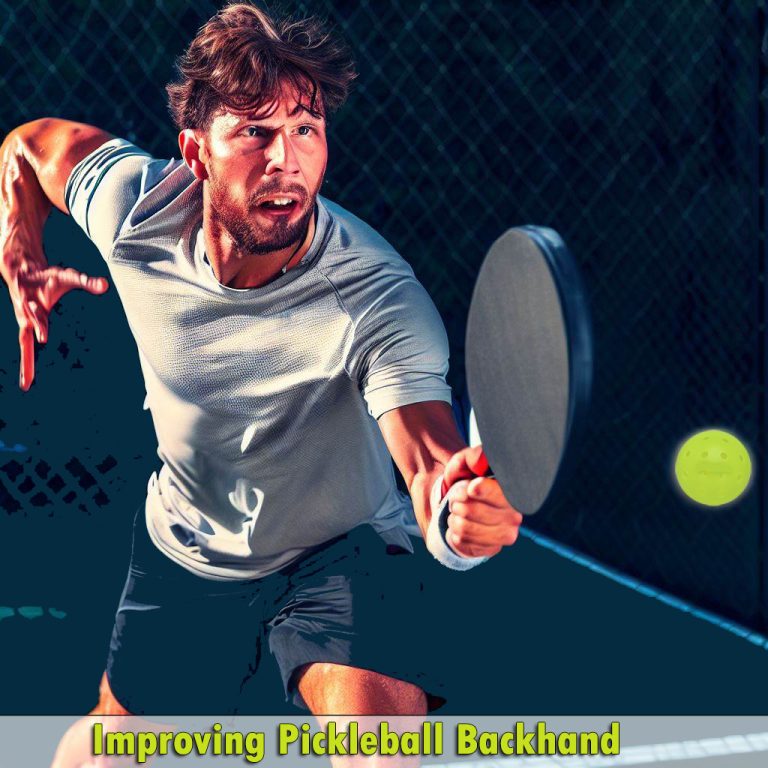
Pickleball Backhand Guide: Fix Jams, Improve Contact, Build Trust
The Backhand Guide: Your Map to Victory
As a pickleball coach, I see it all the time, even in casual rec play. Many players, especially beginners, struggle with a weak backhand. They know it is there, they try to run around shots to hit a forehand, and when they do use the backhand, the wrist takes over, the contact point is too late, and the paddle angle floats the ball up for an easy put-away. This Backhand Guide will show you how to fix the problem, drill with purpose, and build lasting confidence in your shot.
I have been there too.
Picture this: The crowd is dead quiet. My partner is already pulled out wide, and I know what is coming. A floaty dink creeps toward my left hip. I panic, pivot, and… jam. Paddle hugs my chest. Pop-up. Point lost. That was me in my first tournament, punished for avoiding my backhand. It was not a fluke. It was a pattern I created, and my opponents spotted it instantly.
Every time you dodge a backhand, you draw your opponent a treasure map, and X marks your weakness.
This Guide Fixes That
It does not fix it with hype. It fixes it by helping you recognize the miss, understand why it keeps happening, clean up the mechanics that created it, and build enough repetition that the shot starts holding up when the ball is live and the point matters. The players who finally trust their backhand usually do not discover some magic move. They stop showing up late, cramped, and panicked at contact.
That progression matters. First you learn to recognize the ugly miss. Then you learn what caused it. Then you clean up the prep, the spacing, and the contact. Finally you repeat the fix until the same backhand stops folding the moment a real rally leans on it.
You’ll learn:
- Why players get jammed on the backhand side
- The spacing mistake that ruins most backhands
- The compact swing that creates reliable contact
- Drills that build a backhand you trust under pressure
Quick Backhand Diagnostic
Before you change five things at once, use this list like a fast triage tool. Pick the miss you see most often, then attack that first fix until the contact starts looking different.
- If your backhand pops up: contact is too close to your body. First fix: create a little more room and meet it out front.
- If your backhand sprays wide: your wrist is taking over the swing. First fix: quiet the hand and let the shoulder guide the path.
- If you keep getting jammed: your shoulder turn and paddle prep are late. First fix: turn as soon as you read the ball left.
- If volleys float high: your paddle face is opening during contact. First fix: hold a firmer shape through the hit.
- If the shot feels rushed: your backswing is too long. First fix: shorten the motion and think punch, not windup.
What a Good Pickleball Backhand Actually Is
A pickleball backhand is any shot struck on your non-dominant side with the back of your paddle hand leading the stroke. A reliable backhand is not just a rescue shot. It is a repeatable mechanic built on early preparation, clean spacing, compact swing length, and contact in front of the body.
If those pieces are present, the backhand starts to feel stable. If they are missing, the shot usually turns into a jam, a flick, or a pop-up.
When it is right, the shot feels less dramatic than players expect. It feels organized. The paddle arrives on time, the ball does not crowd your chest, and your contact point still has room to breathe. Whether you use one hand or two, that organized feeling is the real foundation.
That matters on more than one shot type. The same organized backhand shows up in blocks, counters, dinks, drives, and emergency saves. The shape changes a little, but the underlying job stays the same: arrive on time, create a usable window, and send the ball without panic.
How to Tell if Your Backhand Mechanics Are Breaking Down
Most players think their backhand is weak because their arm isn’t strong enough.
That’s almost never the real problem.
The real issues usually show up in predictable patterns during rallies.
- You crowd the bounce and contact the ball beside your ribs
- You turn your body late and the paddle drifts behind you
- You flick your wrist to “save” the shot
- You pivot to run around the ball and get jammed instead
- Your backhand volleys float high instead of staying low
If two or more of those sound familiar, your mechanics aren’t broken, your spacing and timing are.
A simple self-check helps: after a few backhand contacts, ask yourself whether the ball met the paddle in front of your lead hip or whether it got all the way into your shirt seams first. Then ask whether your feet kept adjusting after the read or whether they froze and hoped the hand would improvise the rest. That answer usually tells the truth faster than your feelings do.
If you film yourself, pause right before contact. You do not need a fancy breakdown. Just check whether the chest has turned, whether the paddle is already prepared, and whether the ball is entering your strike zone or invading your body space. Recognition comes before repair.
Backhand Diagnostic: Why Your Shot Breaks Down
Before you fix the backhand, diagnose what is really happening at contact. A lot of players call the shot weak when the actual problem started a second earlier with preparation or spacing.
Here are the most common breakdowns:
- Contact beside the body: the paddle gets trapped against the ribs instead of meeting the ball out front
- Late shoulder turn: the swing starts after the ball has already entered your body space
- Collapsed elbow: the paddle path gets smothered because the arm never creates enough room
- Standing too upright: the ball climbs into the chest and takes away your strike zone
- Paddle starts too low or too late: you end up lifting, flipping, or floating the ball instead of guiding it
If that pattern sounds familiar, look for these tells in your own game: your shoulders turn after the bounce instead of before it, your contact happens beside your shirt seam instead of out in front, and your feet cross over in panic instead of sliding you into space.
Usually the breakdown goes in order. First the read is late. Then the body turn is late. Then the feet stop solving spacing. The contact gets crowded. Then the hand tries to save a shot that was already in trouble. What you see is a weak ball, but what failed first happened earlier.
If you want the first domino, start with preparation. You can’t always control the feed, but you can control how quickly you admit the ball is yours and begin organizing for it. That early admission gives the feet a job, gives the shoulders time, and keeps the hand from turning into emergency staff.
That is not bad luck. It is a readable pattern, and good players smell it fast.
Why Players Avoid the Backhand (and Why It Backfires)
The forehand feels natural. Your palm leads the paddle, your chest opens toward the target, and the swing flows.
The backhand asks for something different. You must rotate earlier, trust the paddle face, and contact the ball farther in front.
When players don’t trust those mechanics, they start running around the shot.
That creates a predictable pattern.
Comfort now becomes your ceiling later.
Opponents notice the hesitation. They feed balls to your left side, jam your chest, and force rushed swings.
Avoidance doesn’t hide the weakness, it advertises it.
It also messes with your court position. Every big run-around step steals recovery time, exposes space, and makes the next contact harder than it had to be. You are not just avoiding one shot. You are teaching the rally where to hurt you.
That cost is bigger than one ugly swing. When you vacate your lane to protect the forehand, you often recover late, reach across your body on the next ball, and leave your partner covering stress that never needed to exist. The backhand weakness starts as discomfort, but it spreads into your spacing, your timing, and your whole rally posture.
Opponents begin testing your weak backhand constantly until you prove it can hold up.
The Real Reason Players Get Jammed on the Backhand
Getting jammed usually isn’t a swing problem. It’s a spacing problem.
Here’s the chain reaction:
- You hesitate when the ball goes left
- Your feet stop adjusting
- The ball travels deeper toward your body
- The paddle angle opens
- The ball pops up
That entire sequence begins with one mistake:
Late preparation.
The earlier you turn your shoulders and set your paddle, the easier it becomes to create space for the swing.
That is where the feet come back into the story. A small split as your opponent strikes the ball, followed by a simple slide or adjustment step to your left, gives the backhand room to exist. Most jams happen because players make one read step and then stop negotiating with the ball. The backhand still needs a lane.
Beginners usually help themselves most by keeping that footwork tiny. You do not need a dramatic crossover unless you are truly sprinting. A small split, a short slide, and one more adjustment step often fixes more jams than a heroic swing ever will. The goal is not to chase perfect footwork. The goal is to stop arriving trapped.
Jamming is the invoice for every backhand you chose not to hit.
One of the best counters in these jam situations is the Backhand Counter, which turns defense into offense when the mechanics are solid.
Backhand Mechanics That Actually Fix the Problem

Your backhand doesn’t need a complicated swing.
It needs organized mechanics.
It needs the paddle ready before panic shows up.
Your backhand needs three things working together.
These three repairs answer most of the misses you already saw in the diagnostic sections. If the shot feels jammed, floated, wristy, or rushed, the fix usually lives here: prepare earlier, build a cleaner contact window, and keep the swing compact enough to survive real pace.
Think of them in order. First you prepare. Then you create the contact window. Then you send the ball with a compact shape that survives real pace. If the order gets scrambled, the whole shot starts feeling like emergency handwriting.
1. Early Shoulder Turn
As soon as you recognize the ball going left, turn your shoulders slightly away from the net. This sets the paddle behind the ball and gives your swing room to move forward.
That early turn also buys you time. Without it, the arm has to rush, the paddle arrives late, and the shot gets crowded before it ever has a chance.
A lot of weak backhands are not weak because of the arm. They are weak because the player recognizes the shot late, turns late, and then tries to save the ball with the hand. That is how the wrist gets loud and the contact gets sloppy.
A useful feel cue is this: let your chest and paddle arrive together. If the chest is still square while the hand is already improvising, you are late. When the turn happens on time, the backhand immediately feels less rushed because the body has already started helping before the ball enters panic range.
If you need a simple checkpoint, try this: by the time the ball reaches its bounce or starts climbing off the opponent’s paddle path, your turn should already be happening. Not perfect every time, but earlier than your old habit. Turn before the emergency. That alone can clean up a shocking amount of chaos.
2. Contact in Front of the Body
Contact should happen in front of your lead hip, not beside your ribs.
If the ball reaches your body first, you’re already late.
This is where a lot of players misdiagnose the backhand. They think the shot feels weak, so they try to swing harder. The real issue is usually that the ball got too close, which leaves no room for a clean path through contact.
Your first job is simple: see it early, set the paddle early, and create enough room so the ball meets your strike zone instead of crashing into your body.
Here is what clean contact should feel like: the paddle gets to the spot before panic does, your shoulders help the swing instead of your wrist rescuing it, and the ball meets the face slightly in front of your lead hip where you still have room to guide it.
If you feel stretched and reaching, you probably overcorrected. If you feel cramped and chesty, you were late. The sweet spot is neither crowded nor lunging. It feels organized.
A simple spacing check helps here too. If you can keep a little daylight between the hitting arm structure and your torso without locking the arm straight, you are usually close. If the elbow gets stapled to the body, you are crowded. But if the shoulder has to chase the ball, you reached too far.
That last distinction matters. “Create space” does not mean shove the paddle out and lean. It means move your body early enough that the contact window exists naturally. Reaching is still late. Organized spacing is different. You want the ball in front, not your posture falling apart to go find it.
3. Compact Swing Path
The best backhands in pickleball look almost like a punch. The paddle travels forward with a short path instead of a long tennis-style swing.
Compact swings survive fast rallies. Big swings don’t.
A compact path also keeps the paddle face more stable. That matters in pickleball because the ball gets on you quickly. Long swings make timing fragile. Shorter swings make timing repeatable.
Think “tap and guide,” not “swing big.” You are not trying to impress the ball. You are trying to organize it.
This is true across most backhand families. The exact shape changes a little between a block, a counter, a dink, and a firmer drive, but the foundation still stays compact. Even when you add more pace later, you are not earning that pace by taking a scenic route with the paddle.
If your swing gets too big, you usually feel one of two things: either you are late and slapping at the last instant, or you are early but the paddle face wanders and the ball leaves with mystery. Neither one is reliable. A compact path is boring in the best way. It gives you something you can repeat when the rally speeds up and your nerves start trying to freelance.
What Players Try That Usually Makes the Backhand Worse
- Swinging harder when the real issue is spacing
- Changing grips too early when the real issue is late contact
- Using the wrist for power instead of letting the body support the shot
- Running around the backhand instead of building it
- Practicing speed before clean contact
Swinging harder on a crowded backhand just makes the collision louder. Changing grips too early can become a distraction when the real problem is that the ball already got too deep. Wrist-heavy power feels active, but it usually makes the paddle face less predictable. Running around the shot delays development. Practicing speed before clean contact teaches you to repeat the same mess faster.
That is how players stay stuck for months. They attack the symptom and leave the real leak untouched.
If you need one priority, choose the earliest fix you can actually control: prep earlier, space earlier, and meet the ball cleaner. Once that holds up, then you can decide whether grip tweaks or added pace are helping or just dressing up the same old problem.
Common Backhand Mistakes and the First Fix That Usually Works
| What the Player Sees | Most Likely Cause | First Thing to Change |
|---|---|---|
| Ball pops up on the backhand volley | Contact is too close to the body | Create more space before contact and meet the ball out front |
| Backhand feels weak | Late shoulder turn and crowded swing path | Prepare earlier and set the paddle sooner |
| Ball sprays wide | Wrist takes over and paddle face gets unstable | Keep the wrist more neutral and let the shoulder guide the swing |
| You get jammed on faster balls | Feet stop moving after the initial read | Split step earlier and slide to create hitting space |
| You feel rushed even on playable balls | Backswing is too long | Use a shorter punch-style motion |
Clean contact beats fancy swings every time.
Use the table like a practice filter. Do not try to fix five things at once. Pick the symptom you see most often, match it to the likely cause, and spend one drill session chasing that first change until the contact starts looking different.
If you are not sure which symptom deserves your attention first, choose the one that shows up most often under pressure, not the one that annoys you most in warmups. Match play tells the truth. Start where the breakdown actually punishes you.
If you’re experimenting with a two-handed grip for extra stability, our Two-Handed Backhand Guide explains the full mechanics and drills.
Should You Use One Hand or Two on the Backhand?
This does not need to become a personality test. It is a fit question.
The best choice usually depends on what kind of contact you face most often, how much time you have, how high the ball sits, and which version helps you organize the paddle face without panic. The goal is not to look a certain way. The goal is to create better contact under pressure.
Ball height and incoming pace usually reveal the answer faster than opinion does. Lower, stretched, emergency contacts often reward simplicity and reach. Faster, higher, more body-centered balls often reward extra support and a more shoulder-driven pattern. What matters most is whether the version you choose helps you arrive cleaner, not whether it looks more advanced.
One hand usually fits better when you need:
- more reach on emergency balls
- quicker extension on stretched contacts
- simple blocks and compact dinks
- less body load on touch shots
One hand often feels cleaner on emergency stretch plays and softer touch exchanges because it gives you reach without asking your torso to do as much work on every contact.
If you are defending a hard body ball, poking a wide dink back into play, or handling a compact kitchen exchange with limited time, one hand often keeps things simpler. It is especially useful when the backhand’s first job is survival and placement rather than added drive.
Two hands usually fit better when you need:
- more stability on drives and counters
- better support at higher contact points
- help controlling an overactive wrist
- a more shoulder-driven swing pattern
Two hands usually shine when the ball gets chest high, when pace comes fast, or when the single hand keeps wobbling at contact. The second hand does not solve late preparation, but it can calm a noisy paddle face quickly.
If you are driving returns, countering pace, or cleaning up those awkward shoulder-high balls that keep climbing into you, two hands can make the contact feel sturdier. Just remember the warning: the second hand is support, not magic. If the prep is late, two hands simply help you get jammed with better symmetry.
Neither version is automatically better. The right choice is the one that helps you create cleaner contact more often under real pressure.
Two hands are not magic, but they can quiet a shaky paddle face fast.
Drills That Build a Reliable Backhand
You cannot think your way into a reliable backhand.
You rep your way there.
Trust built in a warmup is cheap. Trust that survives a moving ball is the good stuff.
- Wall Work: 50 backhands in a row. No forehands allowed. Focus on timing, not speed. This fixes late prep and teaches you to find the ball in front without hiding behind your stronger side. If you miss before 50, restart the count or track your best streak so the rep quality still matters. A good rep here feels calm, early, and boring. That is the point.
- Skinny Singles: Backhand-only rallies on half the court. Win ugly if you have to. This exposes hesitation fast and forces you to solve spacing and contact problems without escaping to the forehand. Play to 7 and grade yourself by how many backhands stayed organized, not how pretty they looked. If the rally feels awkward, good. Now you are working on the real thing.
- Partner Feed: Ask for repeated balls to your left hip or chest-high feeds to the backhand side. Practice blocks, counters, and simple rolls only. This teaches you to organize the paddle early and choose compact shapes under pressure instead of swinging wild. Start with 10 cooperative feeds to one location, then vary height or pace only after the contact point holds up. Success here looks like the same contact window showing up over and over, not random highlight shots.
- Video Review: Film two minutes and check your contact point. Count how many balls are contacted beside the body instead of in front. That is usually the real problem. Also look for whether your shoulders turn before the bounce and whether your feet keep adjusting after the read. The camera is useful because it catches lies your frustration tells you.
Do Your Homework
Run those drills in order if your backhand feels shaky. Wall work teaches recognition and contact. Skinny singles forces use. Partner feeds add a live ball with a defined problem. Video review tells you whether the fix is actually sticking.
That order matters because each stage asks a little more from the shot. First you prove you can meet the ball cleanly. Then you prove you will still choose the backhand when a point is happening. Then you prove you can hold shape against a real feed. And ultimately you prove the camera agrees with your feelings.
If one drill exposes a leak, stay there a little longer before moving on. Do not graduate because you are bored. Graduate because the contact got cleaner. The whole point of practice is to make the next stage less dramatic.
Combine these with short-court dinking drills and Triangle Rule training to sharpen paddle control.
To attack from the kitchen with pace, learn the Backhand Flick.
Backhand Progression Ladder
Strong backhands develop in stages.
Stage 1: Survive
First, block the ball back in play. This stage is not glamorous. It is about stopping the obvious misses: jams, panic flicks, late reaches, and pop-ups.
You are ready for the next stage when you can survive a short backhand exchange without feeling like every ball is an emergency.
Stage 2: Stabilize
Now control height and direction. Can you keep the ball low enough to stay out of trouble? Can you guide it crosscourt or back through the middle without floating it?
You are ready for the next stage when your stock backhand stops leaking easy height and starts landing where you intended more often than not.
Stage 3: Control
Once the stock contact holds up, add more shape. This is where pace, spin, and firmer counters start to make sense because the base is no longer collapsing.
You are ready for the next stage when medium-pace backhands still look organized and you can add a little shape without losing the contact point.
Stage 4: Attack
Now you earn the fun stuff: counters, aggressive rolls, topspin drives, sharper angles, and disguised changes of pace.
You are ready to live here when the attack still grows out of the same clean prep, spacing, and compact path instead of turning back into panic with ambition.
Most players jump straight to Stage 4 and skip the work.
Don’t.
Players get in trouble when they chase flashy variation before they own boring contact.
Also remember this: progression is rarely neat. Many players bounce between Survive and Stabilize for a while, then visit Control on good days before sliding backward under pressure. That is normal. The goal is not a straight line. The goal is to make your worst backhand less fragile over time.
How Confidence in the Backhand Actually Develops
The ball doesn’t care if you trust your backhand.
It’s still coming there.
Confidence grows through small mechanical wins.
- Name the weakness honestly.
- Track clean contacts instead of perfect shots.
- Use a short trigger word if it helps you reset.
- Celebrate three good reps in a row.
- Experiment with two hands if stability helps.
A simple weekly scorecard helps more than vague hope. Count clean contacts in one wall session, one partner-feed session, and one live-play segment. If those numbers rise, the backhand is getting better even before the highlights show up.
That is what real confidence is: evidence. Not mood. Not wishful thinking. And it’s not one lucky backhand winner you remember for three days. Evidence. More organized contacts. Fewer jammed collisions. More rallies where the ball comes left and your body does not start negotiating with fear.
Stop grading your backhand only by winners. Start grading it by organized contact.
Ugly reps today make you dangerous six weeks from now.
Our guide on When to Use Two Hands explains when the extra hand improves control.

Your Backhand Questions – Answered
Yes. Most players practice forehands far more than backhands. Confidence develops through repetition and consistent contact rather than perfect technique. If the shot feels shaky, that usually means the rep count and timing trust are still under construction, not that the shot is permanently broken.
Most players get jammed because they recognize the backhand late, stop moving their feet, and let the ball drift into their body. The fix is to split as your opponent hits, turn the shoulders early, and meet the ball in front of your lead hip instead of beside your ribs.
Two hands often improve stability and control, especially when returning fast drives or high balls. A strong one-handed backhand still works well if spacing and timing are correct. Switch only if the second hand helps you create cleaner contact and a more repeatable swing under pressure.
Wall rallies, skinny singles games, and partner feeds targeting the backhand side provide high-volume repetitions that build timing, control, and confidence. The fastest improvement usually comes when you use those drills to fix one thing at a time, especially spacing and contact point.
Focus on drills that reinforce correct spacing, paddle angle, and early contact. Controlled feeds, wall practice, and focused backhand-only games train your muscle memory so the shot feels natural in high-pressure rallies. Fast improvement usually looks boring at first: cleaner prep, fewer panic swings, and more repeatable contact.
Advanced Skill Expansion
Once your basic mechanics are stable, your backhand can evolve into several dangerous variations. Earn these after your prep, spacing, and compact contact hold up under pressure. Otherwise advanced options just become fancier ways to repeat the same old miss.
- Topspin Backhand Drive: Brush upward with a slightly closed paddle face. Use this when you can already meet the ball in front with balance. If contact is late, it turns into a rushed slap instead of a heavy, controlled drive.
- Two-Handed Block: Add the second hand to absorb pace and quiet the paddle face. This works best when you prepare early. If you add the second hand late, you usually get rigid and jammed instead of stable.
- Sharp Angles: Adjust paddle face and spacing to create crosscourt angles. Build this on top of clean contact first. Players who chase angle before control usually over-open the face and miss wide.
- Disguised Drop: Relax grip late and soften the contact. This only works if the setup looks believable. If your body slows down too early, the disguise disappears.
For most intermediate players, the first expansion usually comes from a sturdier block or a simple topspin drive, not from trying to manufacture cute angles too early. Build the variation that still looks like your stock backhand under pressure. If the advanced version requires a totally different rhythm, you probably have not earned it yet.
These shots add versatility once the fundamentals hold up under pressure.
Master Your Backhand
Explore deeper backhand skills:
- Pickleball Backhand Tips: for a broader look at patterns, technique, and backhand decision making
- Two-Handed Backhand: for the full two-hand mechanics, setup, and drill progression
- When to Use Two Hands: for deciding when the second hand helps more than it complicates
- Backhand Flick: for speeding up from the kitchen without losing disguise
- Backhand Counter: for handling pace and turning jammed defense into controlled offense
- Ben Johns Backhand Roll: for learning a more aggressive roll variation
- Backhand Dink: for building touch and stability on the soft side
- Backhand Volley: for cleaning up compact contact at the kitchen line
How to Fix a Weak Pickleball Backhand
Your backhand isn’t a flaw.
It’s a project.
Stop letting your opponent control the narrative. Choose one drill from this guide and perform 50 clean repetitions today. Then repeat tomorrow.
Better yet, start with shadow reps or wall work, then test the same contact point in live feeds before you leave the court.
That sequence matters because it moves the shot from understanding to proof. First you learn the shape without pressure. Then you feel the contact. Then you ask the same mechanic to survive a real ball. That is where trust starts becoming honest.
There is a real payoff waiting on the other side of that work. You stop feeling ambushed when the ball comes left. You stop over-running to protect the forehand. And You stop floating up panic balls that invite punishment. Instead, you buy yourself time, cleaner contact, and one less obvious weakness for opponents to hunt.
Confidence doesn’t appear suddenly, you build it through reliable mechanics.
Want to improve faster? Study learning from mistakes or our guide to pickleball drive mechanics.
About the Author: Coach Sid is a backhand-reform survivor, pickleball strategy nut, and co-founder of PickleTip.com. He has coached countless players to stop running from their weak side and start swinging with purpose.