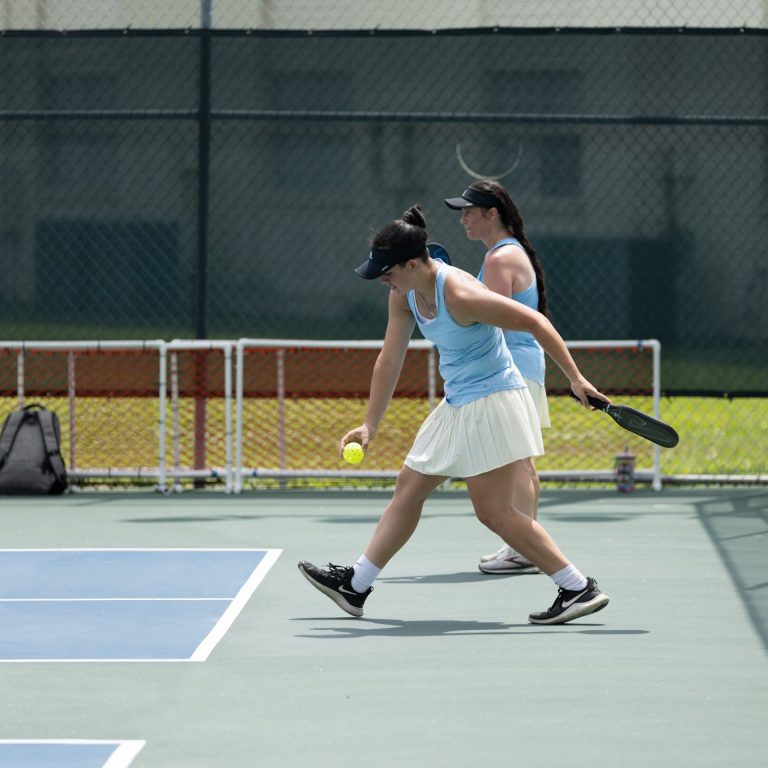
Third Shot Drive Strategy: Drive vs Drop + 5 Second Rules
If “I’m a driver” is your whole plan on ball three, you’re playing your identity… not the return in front of you. The ball doesn’t care what you like. Your opponents don’t care either.
Who this helps: Players who keep “going for it” on ball three and getting punished. If you want a clean rule set for drive vs drop vs hybrid, plus targets that force a block and a simple path to the kitchen, you’re in the right place.
Picture this: you serve, they smoke a deep return, and you feel that half-second of static in your brain. Drop? Power play? You hesitate… lift something chest-high… and the next ball is already screaming back at your shoelaces because their paddles were already out front. That hesitation is the real mistake, not “lack of power.”
Here’s the rule: the third shot drive isn’t a flex. It’s a block generator, a way to force a compact defensive contact so you can land a fifth-shot entry and take the kitchen like you meant to be there.
Pro Tip: Drive ball three only if you can stay low and hit feet/hip/seam to force a block. If it’s low + deep and they’re set, drop or roll and win it on five.
Quick Map: Third Shot Drive Rules, Targets, and the Fifth-Shot Plan
Coach’s rule: Between points, run this like a sideline call: ball → target → feet. No debating. No guessing. Know your ball-five plan before you swing on ball three.
- What the third shot drive is actually for
- The 5-second checklist (drive vs drop vs hybrid)
- Green lights vs drive traps (pick the right return)
- Targets that create blocks (feet, hip, seam)
- Seam math + inside-foot targets (when middle creates chaos)
- Heavy vs flat (the block-generator test)
- Drive mechanics that survive at real speed
- How ball three controls kitchen entry
- Drive vs drop vs hybrid decision matrix
- Mid-match scenarios and quick calls
- Slice return adjustments
- Turn the block into a fifth and move in
- Most common mistakes
- Decision-speed drills
- Skill-level guide
- One-screen cheat sheet + mastery map
- FAQs
What a Third Shot Drive Is Actually For (Hint: It’s Not Winners)
Coach’s rule: If your goal on ball three is a clean winner, you’re buying lottery tickets. The real win is control, forcing a manageable fourth so you can climb forward and take the kitchen on the fifth.
When your third forces a block → your fifth gets easy. When your third invites a counter → you’re stuck behind the baseline wearing “aggression” like lipstick.
If both defenders are quiet, balanced, elbows tucked, paddles still and out front… your chest-high pace isn’t “pressure.” It’s a donation.
PickleTip insight: Ball three is a block generator. Ball five is your entry ticket. Skip the block and chase a highlight, and you usually pay for it.
The 5-Second Checklist for Drive vs Drop vs Hybrid on the Third Shot (So You Stop Guessing)
This is your sideline scan. Five seconds. Five checks. If you fail two of these, default to the drop/roll and earn your way in on ball five.
- Height: Can you contact at neutral height (or higher) without scooping up?
- Out-front contact: Can you strike in front of your toes (not at your hip, not late)?
- Their posture: Are they moving or set (paddle up, weight forward, elbows tucked)?
- Problem target: Can you hit feet / hip / seam / inside foot (not chest) and keep it ugly?
- Step value: Will this shot buy you at least one safe step forward behind it?
Coach rule: If the only way to “drive” is to lift the ball into their strike zone, you don’t have a drive. You have a gift.
Third Shot Drive Green Lights vs Drive Traps (Pick the Right Ball)
Coach’s rule: You don’t pick the power play because your ego’s loud. You pick it because the return gives you a contact point that lets you stay low, hit a real target, and force a block, not a hope swing.
Green light balls (drive-friendly)
- Return sits up even a little (you can strike above the net or at least neutral height).
- You’re early and can contact out in front, not beside your hip, not behind you.
- Opponent is transitioning (feet moving, paddle late, stance not fully built).
- You can aim at feet or the seam without floating it.
Red light balls (drive traps)
- Return is low + deep (you’re hitting up from behind the baseline).
- Both opponents are set at the kitchen (paddles up, ready to punch).
- You’re late or off balance (contact drifts behind you).
- The ball reaches your back hip (you’ll lift it whether you mean to or not).
- It lands at your backhand hip while you’re still moving (classic pop-up maker).
- The only “target” is chest-high (that’s a feed, not a weapon).
- It’s a nasty slice return that looks hittable… until it skids ankle-high and makes you “help” it up.
Where to Aim a Third Shot Drive (Targets That Force Blocks)
Coach’s rule: Chest is their strike zone. Your best targets force awkward body mechanics and rushed paddle angles, the kind that create predictable blocks.
- Feet: forces a downward block that pops up or dies short.
- Hip: jams contact and steals angles (especially on the forehand hip).
- Seam: forces late decisions, miscommunication, or two paddles colliding.
Fast target check: if you can see their shirt logo clearly, you’re aiming too high. Keep the ball “below the logo” at the target.
Coach rule: If you can’t name the target before you swing, you’re not driving. You’re guessing.
Seam Math on a Third Shot Drive: When Seam → Chaos (and When Inside Foot → Easy Blocks)
Coach’s rule: Seam isn’t “middle.” Seam is a late-decision bill, and you’re making them pay it.
Seam works when both players feel the pressure and neither wants a backhand volley under heat. The best seam drives land where both players take a half-step and both paddles hesitate.
- Use seam when both players are tight at the NVZ and neither wants a backhand volley under heat.
- Use inside foot when one player is leaning or stepping in, you’re forcing a reach-block with a broken stance.
- Skip seam when their forehand player is camping middle with paddle up (you’re feeding their favorite punch lane).
Concrete example (righty vs righty): if the left-side player’s forehand volley is hunting middle, seam becomes a trap. Go inside foot of the right-side player instead and force a reach-block while their stance is cracked.
PickleTip insight: “Middle-ish” is how you get countered. “Inside foot” is how you make blocks show up on command.
Third Shot Drive Power vs Heavy: The Block-Generator Test (Heavy Beats Flat)
Coach’s rule: Run the test without video: what did it sound like? Heavy drives hit their paddle like a thud, they absorb. Donations sound like a pop, they punch.
Test it: did your drive force a compact block, or did it invite a clean counter? If they can punch it hard and low on demand, your height, target, or shape was wrong.
- Heavy drive: awkward contact (ankles, inside foot, hip) → block floats or dies.
- Flat drive: chest-high pace → clean counter, often “windshield-wiper” back at your feet.
Third Shot Drive Mechanics That Survive (Compact, Low, Out Front)
Coach’s rule: Ball three isn’t a home run swing. It’s a compact strike with a dirty job: stay low, hit ugly targets, and force a block you can walk in behind.
Most bad “drives” aren’t weak, they’re late. Late contact forces an open face, and open face turns your ball into a gift basket.
- Contact out front: if the ball gets to your back hip, you’ll lift it and feed a counter lane.
- Quiet face rule: if you’re opening the face just to clear the net, it’s a red light, switch to drop or controlled roll.
- Compact swing: big backswing = late = high (and high gets punished fast).
- Low window: aim “knee to hip,” not chest, chest is their hands buffet.
- Finish through the target: through seam/feet, not up into their paddle.
- Two steps, then split step: take ground, then get athletic right as they contact.
If your fifth-shot entry is shaky, build the soft-game bridge here: Pickleball Drop Shot.
When Your Third Shot Drive Creates a Block → Kitchen Entry Gets Easy (When It Creates a Counter → You Get Stuck)
Coach’s rule: The kitchen isn’t a place you sprint to. It’s a spot you earn with the fourth ball you create.
If your drive forces a block, the next ball slows down and your feet can move safely. If your drive invites a counter, the ball speeds up and you’re reacting from the baseline, or getting tagged mid-court.
Mini-matrix: Low to feet/seam → block → drop/roll your fifth and step in. Neutral ball → neutral volley → reset or drop. High/late ball → counter at your feet → stop, split, reset.
The timing that saves you: take two smart steps, then split step right as their paddle meets the ball. If the counter comes hot, don’t panic-swing, get stable, soften hands, and make it a reset.
Drive vs Drop vs Hybrid: The 5-Second Third Shot Decision Matrix
Coach’s rule: Green means you can keep it low at the target. If it’s rising into their hands, it’s not green, it’s bait.
- Green light (Drive): Balanced, contact out in front, and you can send it low to feet / seam / hip, best when someone is still moving.
- Yellow light (Hybrid): Borderline height. Same low targets, but use heavy roll (dip + shape) or medium pace designed to create a block (not a rip).
- Red light (Drop): Low + deep return and both defenders are set. Drop (or controlled roll) to earn entry instead of donating a counter.
Memorize this: If you can’t keep it below net height at your target, you don’t have a drive, you have a gift.
Five third-shot variables (the real on-court scan)
- Height: higher contact = safer drive window.
- Depth: deeper return = less margin for a drive.
- Spin: slice return changes your contact and swing path.
- Opponent readiness: moving = vulnerable, set = dangerous.
- Your balance: off-balance = high ball = counter window.
Third Shot Drive Scenarios: Mid-Match Quick Calls + Best Targets
Mid-match, the score’s tight and your lungs are loud. You don’t need philosophy, you need calls. Use these reads to pick the ball, pick the target, and pick the step.
- Opponent sprinting in: drive to feet or hip to force a block.
- Both set at the NVZ (paddle up, weight forward): drop or controlled roll; don’t feed the punch volley.
- One up, one back: drive the moving player; make the mismatch show up.
- Return floats short: drive (or roll) to seam; hunt the pop up.
- They bait the drive lane: if their paddle is already out front, don’t “test it.” Drop or roll and make them hit up.
- They’re set but leaning: hybrid roll to the inside foot; force a reach-block, not a clean punch.
- Medium height but heavy slice: it looks green until it skids. If you have to “help” it, switch to drop/roll and earn entry.
- Score pressure mistake: up 9–6 and you get greedy? That’s when you donate a counter. Run the checklist anyway.
Shake-and-bake pattern: drive, crash, then split step
When your drive forces a block, crash in behind it, but don’t run blind. Take your first two steps, then split step as the block comes off their paddle. If it floats, you attack. If it stays low, you reset and earn entry on the fifth.
Third Shot Drive vs Slice Return: Backspin Adjustments (So You Don’t Pop It Up)
Coach’s rule: Slice makes drivers “help” the ball up. That help is the pop-up. Fix it with earlier contact, a more closed face, and ugly targets.
When the return comes back with backspin and it skids ankle-high, your contact gets dragged late and your face wants to open. If you feel your paddle face opening just to clear the net, that’s your red light. Switch to drop or controlled roll and win the point on ball five.
Train the full slice-return plan here: Pickleball Slice Return.
Third Shot Drive Transition Plan: Turn the Block into a Fifth and Move In
Coach’s rule: Don’t “run forward.” Earn forward. The safe move is built on what your third created.
Here’s the pattern that wins at 3.5+:
- Third: drive low to feet/hip/seam to force a block.
- Fourth: expect a block (often crosscourt, often neutral pace).
- Fifth: match the entry ball to the block: drop if it’s low, roll if it’s sitting up, reset if it comes hot, then finish your move.
Transition zone traffic lights: when to move up after a drive
- Green: your drive stays low and they block up → take ground and split step.
- Yellow: your drive is neutral → move, but be ready to stop and reset.
- Red: you hit high or they counter hard → stop sign. Don’t sprint into a punch volley.
If you get stuck mid-court, don’t panic-swing. Train the survival tools here: How to Reset in Pickleball and Pickleball Transition Zone.
Third Shot Drive Mistakes That Get You Countered (High, Late, No Plan)
If your drive “works in rec” but gets smoked against better players, it’s usually one of these, and you’ll notice the same lie attached to all of them: “I hit it hard.”
- High targets: chest-level drives are practice reps for your opponents.
- Late contact: late = lift = counter window.
- Ball behind your body: you didn’t move your feet, so you scoop and pop it up.
- No purpose target: “hard somewhere” is not a plan.
- No movement plan: if you can’t safely take ground, your third wasn’t offense.
- Driving into the middle-hunter: if their forehand volley is camping middle with paddle up, don’t feed their favorite lane.
- Crosscourt into the forehand camper: if the left-side forehand is waiting in the middle, you just served them dinner.
Coach rule: If they don’t have to move their feet or change their paddle angle, you didn’t pressure them. You fed them.
Third Shot Drive Drills: Force the Block, Cash the Fifth, Claim the NVZ
Coach’s rule: If your drill doesn’t force a decision, it’s just cardio with a paddle. Train the pattern: block creation, fifth selection, and footwork timing.
- Drive → block → fifth (10 reps): Drive to feet. Partner blocks crosscourt. You drop/roll the fifth into the kitchen. Pass: fifth lands in NVZ or bounces within 12 inches of the line.
- Target-call reps (3 minutes): Partner feeds random looks. You must say “feet,” “hip,” “seam,” or “inside foot” before contact. Fail: you say it late or you hit chest.
- Decision-speed timer (5 seconds): From opponent contact to your swing, you get five seconds. Rule: hesitation = drop/roll.
- Split-step trigger (2 minutes): Drive, take two steps, then freeze into a split step exactly as your partner blocks. Fail: you’re still running when the block happens.
- Constraint scoring (no winners): You only score when the drive forces a block and the fifth earns entry (NVZ bounce or within 12 inches). Winners don’t count.
Third Shot Drive by Skill Level: When It Fits (and When It Hurts You)
Coach’s rule: Your “style” doesn’t matter if the other side can counter on autopilot. At 4.0+, paddles live out front and players read contact early, so height gets punished fast.
- 3.0–3.5: your best “drive” is controlled pace to feet/seam that forces blocks.
- 4.0+: add pace + shape (heavy roll), but chest-high pace becomes a free counter.
- Any level: if your third pins you behind the baseline, it didn’t buy space. It bought you problems.
Third Shot Drive Cheat Sheet: One-Screen Rules for Drive vs Drop
- Drive when you’re early, balanced, and can hit low to feet/hip/seam, especially vs movement.
- Drop / roll when the return is low and deep and both defenders are set.
- Hybrid when it’s close: controlled pace or heavy roll, same low targets, same block goal.
- After the drive: convert the block into a fifth-shot entry, then take the kitchen behind it.
Mastery Map: Third Shot Drive support guides (go level up here)
- Pickleball Drop Shot: when the drive is a trap, this is your clean bridge to the kitchen.
- Pickleball Transition Zone: learn where to stop, split step, and survive mid-court.
- How to Reset in Pickleball: the “panic-proof” skill that keeps you from donating volleys.
- Pickleball Return of Serve: because your third ball is only as good as the return you force.
- Official USA Pickleball Rules: for NVZ and serve rules straight from the source.
Third Shot Drive Q&A: Fast Answers for Drive vs Drop Decisions
Here’s the stuff players ask mid-game when the score tightens and your third ball suddenly feels like a trap.
Default to drop (or a controlled roll) when it’s low + deep and they’re set. Drive only if you can stay low and hit a problem target without lifting.
Feet, seam, and inside foot are the workhorses. Hip is money when you can jam the forehand side or catch a player moving.
Crosscourt is the safer default (more net, more court). Down the line is a knife, use it when you can hit low to feet/hip and the line player is leaning or late. If they’re set with paddle up, don’t donate that punch lane.
Expect a block. Take ground with control. Split step as the block comes off their paddle. Then choose your fifth: drop if it’s low, roll if it sits up, reset if it comes hot, and finish your move into the kitchen behind that fifth.
Usually one of these: you aimed chest-high, you were late, the ball was behind your body, the return was too low/deep, or both opponents were already set. Fix the decision first, then the swing.
Tell them the truth in one sentence: “I’ll drive the green balls to feet/seam and drop the traps so we can actually get to the line.” Then prove it by earning the kitchen on five instead of donating counters.
Hybrid means you keep the same low targets, but choose the shape that creates blocks: heavy roll when you need the ball to dip at the target, medium pace when you just need awkward contact without giving them a clean punch.