Pickleball Elbow (Tennis Elbow): Causes, Fixes & Prevention
“I could play every day… until my pickleball elbow said no.”
I love playing pickleball. One heavy week turned a dull ache into a sharp sting on every backhand. I squeezed the handle harder to cope, which made it worse. That’s how I learned the hard way that pickleball elbow shows up for any age or skill level.
Picture this: warmups feel easy, then the tempo rises. You muscle drives, snap the wrist, and the next morning your outer elbow burns when you lift a coffee mug. That’s your tendon waving a red flag. This guide is the playbook I wish I had on day one – clear signs, fast fixes, and prevention that actually fits busy lives.
- “Playing every day… until my elbow said no.”
- Quick start: what should I do this week?
- What actually hurts? (Tendon, not ligament)
- Curiosity reset: it’s not age – it’s load, form, and gear
- Six signs it’s pickleball elbow
- “Win the next 7 days” – a fast, realistic plan
- Stretching & Mobility: what helps and what hurts
- Bold habit shift: warm up, share the load, recover
- Gear audit: weight, balance, grip, and stability
- Paddle materials & build explained
- Home work: eccentrics, rotation, isometrics
- People Also Ask (short takes)
- Extended FAQ: smart answers that save court time
- Expert voices: guardrails from sports medicine
- Keep learning: technique fixes and drills
- Turn strategy into action
Quick start: what should I do this week?
Don’t wait. This is your immediate action plan to calm things down and start the healing process. Follow these steps for just one week and you’ll feel the difference.
- Reduce load now: cut play volume and intensity by ~50%; avoid painful backhands.
- Strap + overgrip: counterforce strap during play; cushioned overgrip to reduce squeeze.
- Ice after sessions: 10–15 minutes, even if pain is mild.
- Begin eccentrics: slow-lowering wrist curls daily (details below).
- Audit gear: balanced, mid-weight paddle; verify grip size fits your hand.
What actually hurts? tendon, not ligament
Pickleball elbow is the common name for lateral epicondylitis. The wrist extensor tendons that anchor on the outer elbow become irritated or develop microtears. That’s different from an elbow sprain, which involves ligaments. Repetitive gripping, wrist extension, and impact are the usual culprits.
Yes, you can get tennis elbow from playing pickleball; it’s the same tissue problem triggered by repetitive load. The same pattern hits painters, carpenters, cashiers, and mouse-heavy desk work. In sport, racket games overload the tendon through repeated impact and late, arm-dominant swings. A small flare can become stubborn if you keep stacking load without recovery.

It’s not age – it’s load, form, and gear
You might blame birthdays, but tendons usually fail because of choices you can change. Imagine a three-dial console: training load, technique, and equipment. When all three are cranked the wrong way, the elbow pays. Start turning them back – one click at a time – and pressure drops fast.
Load spikes
Jumping from two sessions a week to daily doubles multiplies stress. Repetitive gripping and wrist extension create microtears and inflammation. A counterforce strap can offload the tendon while you deload. Think: your tendon has a budget. Overspend it three days in a row, and the bill comes due.
Form that strands the forearm
Arming shots, late contact, and extra wrist snap dump force into the tendon. Let legs, hips, and torso drive pace; the arm transmits, not manufactures, power. A two-handed backhand spreads load. Mastering backhand form and clean footwork helps set contact in front where the swing is strongest and safest.
Equipment mismatch
Very head-heavy paddles, grips that are too small, and stiff faces amplify vibration and torque. A mid-weight, balanced paddle with a soft-feeling core and cushioned grip often calms symptoms quickly. The right setup makes every hit gentler on the tissue.
Six signs it’s pickleball elbow
If several of these ring true, move to the fast plan below and protect the tendon while you rebuild capacity.
1) Outer elbow pain
Pain centers on the lateral epicondyle and can radiate down the forearm, spiking on backhands or resisted wrist extension. It’s specific and familiar once you’ve felt it.
2) Grip weakness
The paddle feels slippery or heavy. Jars, doorknobs, and grocery bags flare the same pattern.
3) Morning stiffness
Elbow and forearm feel tight on waking, then ease with movement; stiffness returns after long sits.
4) Pain with certain moves
Backhands and wrist-snap serves sting. Off-court triggers include shaking hands or lifting with palm down.
5) Tender spot
Pressing the bony outer elbow recreates the pain; it may feel warm or slightly puffy in acute flares.
6) Lingers despite light rest
Unlike normal soreness, tendon pain can persist through “days off,” especially if daily habits keep loading it.
“Win the next 7 days” – a fast, realistic plan
Lower load, calm tissue, then rebuild tolerance. Use pain as your speedometer – keep it in the mild lane during and the day after. The aim is to stop the spiral and create space for healing.
Week 1: Deload and calm
- Cut volume by ~50%: fewer sessions, shorter rallies; shelve painful backhands. Give the tendon a break from the pattern that flared it.
- Strap placement: two finger-widths below the tender spot during play; use a counterforce strap (often called a pickleball elbow band) and a cushioned overgrip to reduce squeeze. Read more about the benefits of the Hesacore Grip.
- Ice after play: 10–15 minutes, up to 3×/day in the first few days. Topical diclofenac or lidocaine may help – use as directed.
- Daily mobility: gentle wrist extensor stretch, 2×20–30 seconds per side. Keep it smooth; skip deep, painful ranges.
Pain “traffic light” rules
- Green (0–2/10): proceed and progress next session.
- Yellow (3–4/10): finish the set, reduce load, reassess tomorrow.
- Red (≥5/10 or next-day spike): stop that exercise, deload 48 hours, and regress a step.
Weeks 2–3: Rebuild capacity
- Eccentric wrist curls: 3×12–15 daily; help it up with both hands, lower slowly on the sore side. This remodels tendon and restores tolerance.
- Pronation/supination: light hammer or band, 2–3×10 each direction. Train the rotational stabilizers.
- Isometrics: gentle 30–45-second holds, 3–5 reps, in a comfortable range. Pain-calming and capacity-building.
- Controlled play: add low-stress dinks and blocks; keep drives modest and smooth.
Return-to-play ladder (sample)
- Day 1: 20-minute dink session, strap on, no pain spikes.
- Day 3: 30 minutes dinks/blocks; 10 gentle drives.
- Day 5: 45 minutes mixed play; match-speed only if yesterday stayed ≤3/10.
- Day 7: Full practice. If symptoms jump, drop back one rung.
Week 4+: Intentional return
- Progress load if pain stays <3/10 during and the next day.
- Form tune-up: legs and torso make the pace; test a two-handed backhand for a few weeks.
- Phase out the strap once symptom-free under match load.
Night pain, persistent weakness, or no progress by 6–8 weeks? Book a sports PT or physician for a tailored plan. Imaging, injections, or other modalities may be considered in select cases.

Stretching & Mobility: what helps and what hurts
Stretching isn’t a magic trick, but done right it helps. Done wrong, it delays healing. Think mobility for blood flow and comfort, not deep, aggressive pulls.
Dynamic first, static later
Before play, keep it dynamic: arm circles, wrist rolls, light forearm pumps. Save longer static holds for post-play or on off days when the tissue is warm.
Extensor stretch (gold standard)
Arm straight, palm down. With the other hand, gently pull the fingers toward you until you feel a mild pull at the outer elbow. Hold 20–30 seconds, 2–3 times. No sharp pain.
Nerve glides (use sparingly)
If you notice zingy, nervy symptoms into the hand, consider gentle nerve glides with guidance. Stop if symptoms spike. Not every elbow needs them.
What to avoid
- Hard stretching on a cold tendon.
- End-range wrist extension with force.
- Prolonged holds that increase next-day pain.
Want a routine you’ll actually do? See our five-minute warm-up in the links below and add a 3-minute cool-down of light stretching and breath work.
Bold habit shift: warm up, share the load, recover
Tendon trouble is often a lifestyle pattern, not a single swing. These habits are the quiet MVPs of elbow health.
Warm up that actually warms up
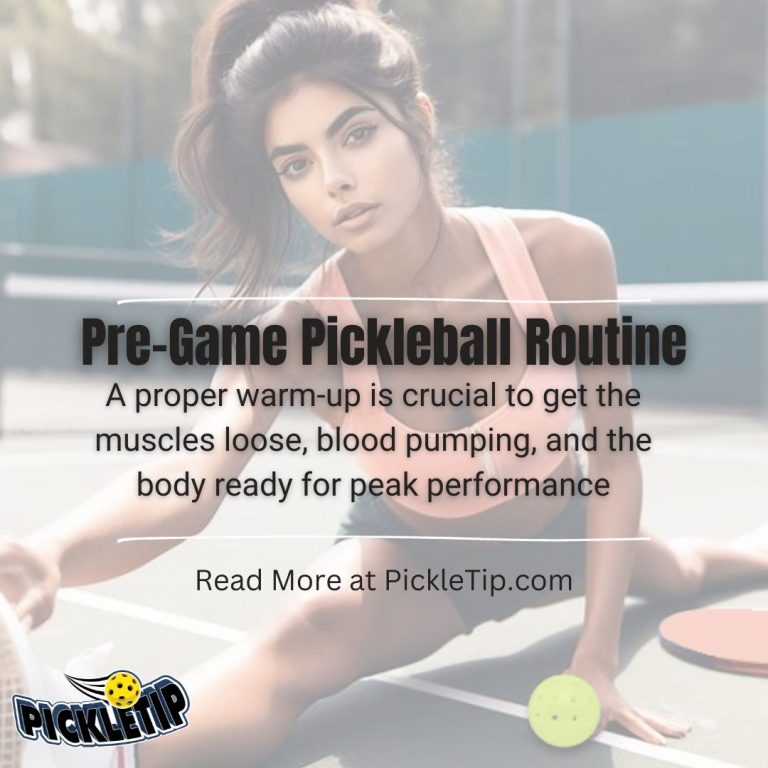
A proper warm-up primes blood flow and rehearsal of the movement. Start with a brisk walk, then dynamic upper-body moves and shadow swings emphasizing hip rotation.
- 3 minutes: easy movement (march, arm circles).
- 1 minute: wrist circles and gentle flex/extend reps.
- 1 minute: shadow swings driven by hips and torso.
Ramp like a pro
Add one session per week max. Track next-day soreness. Schedule true rest between heavy days. Your tendon needs build-and-recover cycles just like your legs do after squats.
Share the load with better form
Stop muscling the ball. Plant, rotate from the hips, and let the swing flow. A two-handed backhand can be a temporary brace and a long-term tool. Pair drills with footwork fundamentals so contact happens in front of the body.
Recovery you’ll actually do
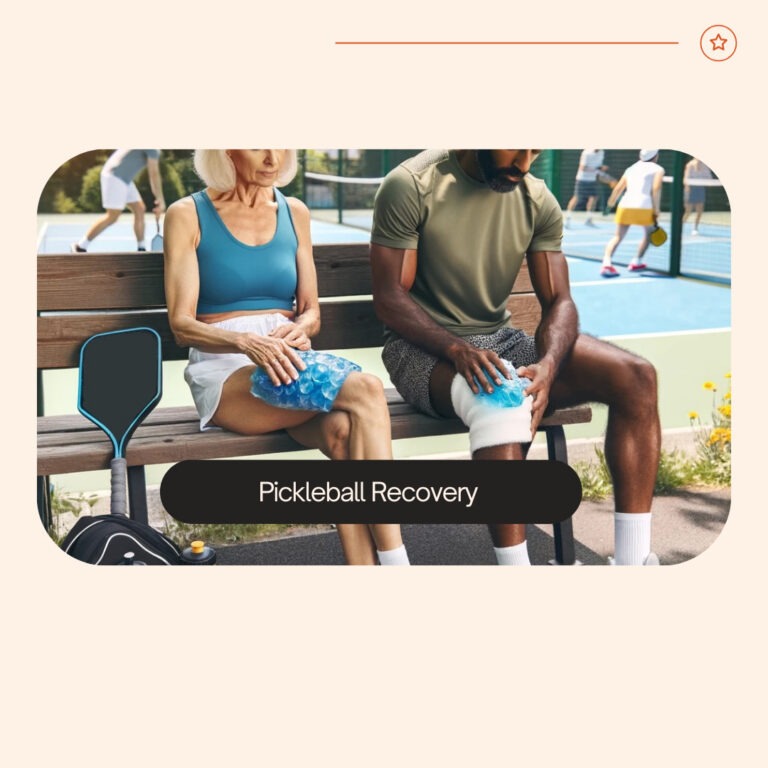
Post-play icing, light massage, and a short stretch ritual keep inflammation from simmering. Sleep is your best anti-inflammatory – treat it like practice.
Coach’s checklist: Warm-up done, strap packed, overgrip intact, water plan set, five-minute cool-down committed.
Gear audit: weight, balance, grip, and stability
Small setup changes deliver big relief. Test one tweak at a time for a full week and log your pain and control.
| Variable | Target | Why it helps | Try this |
|---|---|---|---|
| Paddle weight | ~7.6–8.0 oz | Enough mass to reduce shock without forcing a death grip | Weigh your paddle; avoid very head-heavy builds |
| Balance | Even to slightly head-light | Less torque on wrist and elbow | Add small butt-cap weight; remove heavy head tape |
| Core feel | Softer polymer feel | Lower peak vibration, calmer mishits | Demo a softer-feeling face while you heal |
| Grip size | Measured fit | Too small forces squeeze; too big strains forearm | Measure palm-crease to ring fingertip; fine-tune with overgrips |
| Handle length | Room for two hands | Shares load on backhands | Test a longer handle during rehab |
Simple spec targets for a calmer elbow. Change one thing each week and track symptoms.
Consider a cushioned, textured replacement grip to reduce squeeze. If the paddle twists on off-center hits, a few grams at 3/9 o’clock can stabilize it and reduce torque.
Paddle materials & build explained: why some feel harsh and others feel kind
Not all paddles stress the elbow equally. The core, face, thickness, and shape change how impact forces travel into your arm.
Core types
- Polymer honeycomb: usually the most arm-friendly; absorbs peak vibration well.
- Nomex: lively and firm; great pop but can feel harsher on mishits.
- Aluminum: light and soft-feeling but can dent; mixed stability on off-center hits.
Face materials
- Fiberglass: adds pop; some find it crisp, others call it “buzzy.”
- Carbon/graphite: often a more muted, controlled feel if paired with a softer core.
Thickness & shape
- Thicker (16mm+): generally more forgiving and stable on mishits.
- Thinner (13mm): quicker and punchier; may feel harsher when your timing is off.
- Elongated: reach and power; slightly higher swing weight can tax the forearm if top-heavy.
- Widebody: bigger sweet spot; often more forgiving for developing players.
Match your current phase: rehabbing players often prefer a thicker, polymer-core paddle with a balanced swing weight. Later, add pop as symptoms stay quiet.
Home work: eccentrics, rotation, isometrics
Keep effort in the “mild discomfort” lane. If pain spikes during or the next day, adjust range, load, or rest. Rehab gains come from consistency, not heroics.
Eccentric wrist curls
Forearm supported, palm down, light dumbbell in hand. Help the weight up with both hands; lower slowly with the sore side for 3–4 seconds. Do 3×12–15 daily.
Pronation/supination
Hold a hammer by the end. Rotate to palm-down, then palm-up under control. 2–3×10 each way; elbow tucked.
Isometric holds
Resist wrist extension in a comfortable range for 30–45 seconds, 3–5 reps. Useful early to calm pain and build tolerance.
Stretch with care
Arm straight, palm down, gently pull fingers toward you for 20–30 seconds, 2–3 times. Smooth, not sharp.
People Also Ask: short takes from real searches
It’s the same pathology as tennis elbow – irritation where wrist extensors anchor on the outer elbow. The triggers and fixes are nearly identical, which is why the treatment plan here works across racket sports.
Most players describe a sharp, localized ache on the outside of the elbow that flares with gripping and backhands, often paired with morning stiffness. The full symptom checklist below helps you confirm the pattern.
Some find device-based soft-tissue work helpful for comfort and blood flow. Results vary. The most effective approach remains consistent load management, form fixes, and a simple exercise routine.
Start with a one-week deload, strap during play, daily eccentrics, and a quick gear audit. If progress stalls after 6–8 weeks, bring in a sports PT for a customized plan.
Overuse injuries like tennis elbow are widely reported as players ramp play too quickly. Technique tune-ups and better scheduling cut risk dramatically.
Extended FAQ: smart answers that save court time
Yes in practice. The name just points to the sport that overloaded the tendon. Diagnosis and rehab follow the same playbook.
Yes. The repetitive gripping and wrist extension in pickleball can overload the same tendon complex seen in tennis players. The solutions – load control, technique, and targeted exercises – are shared, too.
Outside pain usually fits tennis elbow; inside pain points to golfer’s elbow. The sections above outline symptoms and the small tweaks in handling each.
Repetition plus poor load management can spark it. Rapid schedule jumps, very head-heavy paddles, and tight gripping raise the odds.
Deload, protect during play, ice afterward, and train the tendon with eccentrics and rotation. Layer in technique fixes and smarter scheduling for lasting relief.
Mild cases often calm in weeks when you follow a plan. If symptoms are entrenched or you keep re-loading the area, expect months instead of weeks.
FAQ: Paddles, Playing & Prevention
Gentle wrist extensor work and forearm rotations keep things moving without spiking pain. Stretching supports the main event – strengthening.
Eccentric wrist curls and controlled pronation/supination build capacity where you need it. Isometrics help early when pain argues with movement.
A counterforce strap can lower tendon load during play. Treat it like training wheels while you fix the real issues.
If pain stays mild and trends down, short, low-stress sessions with a strap can work. Escalating pain is your cue to pause and reset.
Post-play icing, topical anti-inflammatories, light massage, and consistent eccentrics. Small, repeatable habits add up.
Balanced mid-weight builds with a softer feel tend to be friendlier. A cushioned grip and tiny stabilizing weights at 3/9 o’clock can tame twist.
Measure middle palm crease to ring fingertip, then fine-tune with overgrips. A too-small handle invites a chokehold.
Extreme ends cause problems. A sensible mid-weight with good balance reduces shock without forcing speed swings.
Grip cushioning and edge protection usually move the needle more than tiny add-ons. Stability beats gimmicks.
It spreads load across both arms and often feels better fast. Many keep it as a permanent tool.
Three to four sessions with real rest between heavy days works for most. Add volume gradually and watch next-day soreness.
Night pain, grip weakness, or no progress after 6–8 weeks are cues to get expert eyes on it.
No. With load management and consistent rehab, most players return to full speed.
Short flares can harden into chronic tendinosis. It’s slower to heal and easier to re-aggravate – far costlier than a few weeks of smart care.
Pickleball Elbow Treatment
Home and Professional Treatments
- Rest
I know, I know. The last thing you want to do is take a break. But giving your elbow time to heal is crucial.
- Ice Therapy
Applying ice for 15–20 minutes after playing helps reduce inflammation and pain.
- Pain Relief
Over the counter medications like ibuprofen can help manage discomfort during the healing process.
- Strengthening & Stretching
Exercises that strengthen the forearm muscles and improve flexibility can speed up recovery. Simple wrist curls and resistance band exercises helped me a lot.
- Braces or Straps
A good elbow brace can take some of the strain off the injured tendon and provide relief.
- Steroid Injections
In severe cases, doctors may recommend cortisone injections to reduce inflammation.
- Surgery
This is a last resort for persistent cases, but most players recover with non surgical treatment.
Expert voices: guardrails from sports medicine
“I see many players fall in love with the sport and start playing daily. They’re not ready for that load yet, which raises injury risk.” – Dr. Elizabeth Matzkin
“Rest and avoidance are the first steps. Bracing, icing, and anti-inflammatory strategies can help. If symptoms persist, seek an evaluation. Most improve with conservative care.” – Dr. Steven Schultz, orthopedic surgeon
Keep learning: technique fixes and drills you can use today
- Grip pressure guide: reduce unnecessary squeeze and forearm fatigue.
- Elbow-friendly paddle picks: balance, weight, and feel that protect your arm.
- Five-minute warm-up: a routine you’ll actually do before games.
- Backhand technique guide: use your hips and torso, not just your forearm.
- Footwork fundamentals: set contact out front to reduce elbow load.
Your 7-day plan
- Day 1: Weigh paddle, add overgrip, set strap. Log pain (0–10) at rest and on backhand.
- Days 1–7: Eccentrics daily (3×12–15), ice post-play, reduce intensity by ~50%.
- Day 3: Add pronation/supination (2–3×10 each). Re-log pain.
- Day 5: Test a two-handed backhand in drills; note backhand pain change.
- Day 7: If pain drops ≥2 points and next-day soreness is mild, resume controlled drives. If not, keep deloading and book a PT check-in.
Coach’s challenge: Track pain score, grip feel, and next-day soreness for two weeks. If the curve trends down, you’re winning the rehab game.
About the Author: Coach Sid blends gritty court experience with practical biomechanics. He tests gear, breaks down technique, and builds step-by-step plans that help real players hurt less and play better.