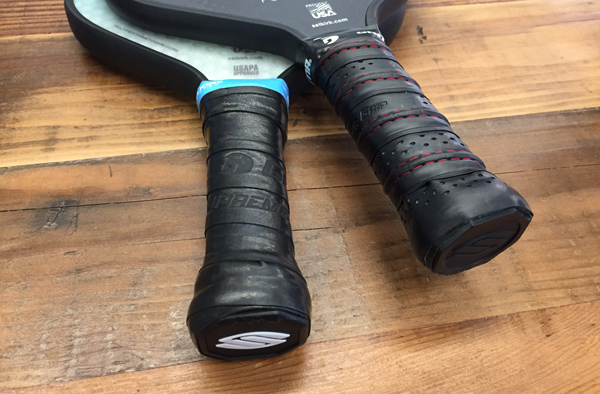
Why Foam Core Paddles Feel Different Under Pressure
Why Foam Paddles Feel So Different Under Pressure (A Feel Translator for Resets, Counters, and Hand Battles)
Last month in a clinic, I watched three different players “fall in love” with three different foam paddles in the first ten minutes. Warm ups looked clean, dinks felt plush, and everybody was nodding like they’d cracked the code. Then we turned the speed up. The same players started floating resets, getting jammed in hand battles, and spraying counters long. The paddle didn’t change. The demands did. A foam core paddle can feel magical at 60 percent pace and totally unforgiving at 90.
Foam paddle feel under pressure is driven by swing weight, twist weight, rebound curve, and launch stability more than brand names or marketing tech labels.
If you landed here after a paddle deep dive like the Honolulu J6CR performance review, this is the missing translation layer. Players bounce between models like J6CR, Loco, and “value pop” builds, then wonder why the same shot feels safe with one paddle and reckless with another. That confusion isn’t in your head. It’s physics showing up at the worst possible time.
Picture this: you’re at 9–9, your opponent rips a body speed drive, and you’re in survival mode. One foam paddle lets you stick a block and watch it land deep enough to reset the point. Another foam paddle makes the same block pop up like you’re serving them a free lunch at a homeless shelter. Same label, wildly different outcome.
How these interact under pressure: These five terms work together in live points. When one breaks down, the others amplify the mistake – which is why a paddle can feel perfect in drills and unpredictable in games.
- Foam Core Paddle: A pickleball paddle using foam as a primary core or structural element that changes rebound, vibration, and stability behavior under speed. Why this matters: it can feel calm in drills and wild in firefights.
- Swing Weight: How heavy a paddle feels during motion, shaping hand speed, timing, and how much the paddle resists quick direction changes. Why this matters: it decides whether you’re early or late in hand battles.
- Twist Weight: Off-center stability that predicts how much the paddle torques on mishits and how predictable blocks and counters feel. Why this matters: it’s the difference between a playable mishit and a pop-up.
- Dwell Time: The contact window where the ball stays on the face, influencing touch, control, and how forgiving timing errors become. Why this matters: it changes whether resets feel like a catch or a slap.
- Launch Angle Stability: How consistent the ball leaves the face when contact shifts slightly, especially on blocks, counters, and resets where you don’t have time to correct. Why this matters: it’s the difference between a reset that drops and a reset that gets smashed.
Foam Paddle Feel Translator
- Why your foam paddle feels perfect in warmups and weird in hand battles
- Why one foam paddle feels fast and another feels heavy
- Why your resets pop up or sail long
- Why hand battles expose the truth
- Why counters feel crisp or chaotic
- The 10 minute demo test that reveals foam behavior
- How to tune a foam paddle without ruining it
- Who should avoid foam right now
- Frequently Asked Questions
Why does my foam paddle feel great in warmups but unstable in games?
Warmups don’t stress launch stability. Under pressure, swing weight, twist weight, and rebound curve decide whether blocks, counters, and resets stay predictable.
Why your foam paddle feels perfect in warmups and weird in hand battles
Foam core paddle behavior is misread because players judge feel in slow reps instead of blocks, counters, and transition resets.
Most “foam paddle feel” opinions are built on cooperative rallies, then people act surprised when the same paddle behaves differently at real pace.
Here’s the piece most people never hear out loud. Foam is viscoelastic, which is a fancy way of saying it behaves like memory foam or silly putty: press it slowly and it gives, smack it fast and it fights back. At low impact speed, it acts more like a dampener. It compresses, spreads force, and smooths out vibration, so your hands interpret it as plush and controlled. At high impact speed, that same foam behaves more like a spring. The rate of compression and rebound changes, and the paddle’s rebound response becomes less forgiving of timing and angle errors. That’s the warmup lie in one sentence: you’re judging foam at dink pace, then asking it to behave at counter pace.
Rebound curve is the simple way to describe how a paddle returns energy across different swing speeds. If your current foam core paddle feels too “springy” on blocks and counters, a common solution is stepping toward a polypropylene honeycomb core with foam perimeter weighting instead of a full foam core. That hybrid construction often produces a more linear rebound, meaning small punches stay small instead of turning into surprise pop.
Quick self-check: If your blocks feel calm in drills but jump when you’re jammed at the body, you’re likely on the steep side of the rebound curve. If your counters fly long only when contact drifts off-center, you’re seeing launch instability, not “too much power.”
To visualize it, imagine two contact moments:
- Soft dink contact: foam compresses slowly, energy spreads, the ball leaves calmly, and minor face angle changes don’t punish you.
- Counter or body block contact: foam compresses fast, energy returns faster, and a tiny face instability becomes a launch change you can’t correct in time.
Here are the three problems I see every week when someone switches to a foam core paddle and expects instant dominance.
- Problem 1: The warm up lie. Dinks and friendly drops rarely stress the rebound curve, so almost everything feels controlled.
| Game Speed | What Foam Often Does | What You Feel | What It Usually Means |
|---|---|---|---|
| About 60 percent pace | Compresses slower and spreads force | Plush, calm, “easy control” | You are seeing the dampener side of the rebound curve |
| About 90 percent pace | Compresses fast and returns energy faster | Pop ups, surprise rockets, random depth | You are paying either the timing tax or the off-center penalty |
- Problem 2: The timing tax. When your hands are late, foam punishes the same “almost on time” contact your old paddle tolerated.
- Problem 3: The off-center penalty. When contact shifts toward the edge, low twist weight lets torque change the launch window mid-contact.
PickleTip insight: a foam core paddle that feels “soft” is not automatically a better reset paddle. Soft can be vibration dampening, but launch stability is a separate animal.
When pace increases → launch angle stability becomes the real separator, and your “feel” changes from plush to unpredictable fast.
Warm ups tell you if a paddle is pleasant, not if it’s trustworthy.
Once you stop judging foam by comfort, the next question becomes the one players actually care about: why does one foam paddle feel lightning fast while another feels like a sledgehammer?
Why one foam paddle feels fast and another feels heavy
Swing weight, not listed static weight, is the main reason a foam core paddle feels fast or heavy in live points.
A foam core paddle can weigh the same on a scale and still feel completely different because balance and mass placement decide how quickly you can move the face.
When players say “this paddle is fast,” they usually mean it changes direction easily at the kitchen line. That’s swing weight talking. A low swing weight foam paddle can win reaction battles, but you might lose depth on lazy blocks because there isn’t enough moving mass behind the ball.
| Feels Like | Common Cause | What You Gain | What You Pay |
|---|---|---|---|
| Fast | Lower swing weight | Hand speed, quick counters | Less effortless depth on blocks |
| Heavy | Higher swing weight | Plow through, deeper blocks | Timing tax in hand battles |
When players say “this paddle feels heavy,” they often mean it makes them late in tight exchanges. Higher swing weight can give you a heavier ball on drives and counters, but it demands earlier preparation. If you’re a “reactor” more than an “anticipator,” a high swing weight foam core paddle will expose you.
Kitchen reality check: Put two paddles on a scale that both read 8.2 ounces. In a fast hands exchange at the NVZ, one lets you redirect cleanly while the other arrives a split second late. That gap isn’t strength or confidence – it’s swing weight shrinking your reaction window just enough to turn blocks into pop-ups.
PickleTip insight: the best foam paddle for doubles is not the lightest one. It’s the one that keeps launch stable when you’re jammed, tired, and slightly late.
When swing weight rises → block depth improves, but hand speed mistakes spike if your ready position and split step are lazy.
A fast paddle saves your hands; a stable paddle saves your points.
Now that you know why a foam core paddle can feel fast or heavy, we can talk about the most painful symptom in real play: resets that float, sail, or sit up like a gift.
Why your resets pop up or sail long
Reset quality in a foam core paddle is driven by launch angle stability and rebound curve more than soft feel or thickness.
If your reset is popping up, the paddle is not betraying you, your contact window and the paddle’s launch behavior are colliding under stress.
A reset is not a drop. A reset is an emergency brake. You’re absorbing pace and trying to place the ball into a safe zone with a short swing and shaky footing. In that moment, the foam core paddle that wins is the one that keeps launch predictable when contact drifts toward the edge or you get jammed at the body.
Here’s what it feels like in your hand when a reset fails, what it usually means, and the fastest fix that works for most players.
| Reset Fail | What It Usually Means | Fix It (One Change) |
|---|---|---|
| Trampoline pop up | Jumpy rebound response plus face instability when contact drifts off-center. | Open the face slightly and soften the punch so the ball “rides” the face; if the face is wobbling, add 2–3g total split at 3 and 9 to calm torsion (see tuning section). |
| Wobble | Torsional instability: the face torques and the launch window changes mid-contact. | Quiet the wrist and aim center first; if it persists, add 2–3g total split at 3 and 9 (mid-band on both sides) to raise twist stability, then re-test your reset window. |
AJ’s Pro Tip: Stop “pushing” the reset. Shape it like a catch. Slightly more open face, softer wrist, and a tiny forward drift instead of a jab. Foam amplifies jabs because the ball leaves before you can correct angle.
This is why players say a foam core paddle “randomly pops up” when they’re under pressure. It’s rarely random. It’s usually your grip tightening, your swing shortening, and the rebound curve responding faster than your hands expect.
PickleTip insight: the best reset paddle is the one that forgives your worst contact, not the one that rewards your best contact.
When grip pressure spikes → dwell time shrinks and launch becomes more volatile, especially with a hot rebound foam build.
If your reset needs perfect timing, it’s not a reset paddle, it’s a highlight paddle.
If resets are the emergency brake, hand battles are the crash test. That’s where “fast vs heavy” stops being preference and becomes a scoreboard.
Why hand battles expose the truth
Orientation: Hand battles remove your margin. Whatever instability exists in a paddle shows up immediately.
- Hand battles reveal foam core paddle timing because swing weight and face stability decide whether your counter is late, stable, or overcooked.
- At kitchen speed, you don’t have time to negotiate with your paddle, and a foam core paddle either cooperates or turns your instincts into mistakes.
Distinction that matters: this section is about reaction, not intention. In hand battles you’re surviving and redirecting, not choosing a full shot shape. That’s why timing exposure shows up so brutally here.
Hand battles punish two things: slow starts and contact that drifts away from the center. A higher swing weight foam build can feel powerful and stable, but when you’re late your contact slides toward the edge, and that’s where the paddle’s truth shows up. Off-center contact creates torque, the face rotates a few degrees, and launch angle stability disappears. That’s when the ball “jumps weird,” and you blame foam inconsistency, even though the real culprit is twist weight plus where the ball struck the face.
Why off-center contact turns a normal punch into a pop-up or spray. Off-center hit Center hit Torque Edge contact rotates face and changes launch window
Self Diagnostic during your next game: run this in live points without changing anything else.
- On the first two exchanges, pay attention to your readiness, not your swing.
- On the third exchange, note whether off-center contact still produces a playable ball.
- On the fourth exchange, check whether your face angle stays predictable when jammed.
Here’s the contrarian truth. Many players choose a “fast” foam paddle to win hand battles, then lose more points because their contact shifts toward the edge under speed. Hand battles aren’t decided by raw hand speed alone – they’re decided by how stable the face stays when contact isn’t perfect. A slightly heavier foam core paddle with better twist weight can feel slower but win more points because off-center hits stay playable.
As AJ always gripes, “That paddle is fast until it isn’t, and then it’s just fast at losing you points.”
PickleTip insight: if your hand battle win rate depends on perfect center contact, you don’t have a fast paddle, you have a fragile system.
When pace rises and contact shifts → twist weight determines whether the ball stays in your control window or launches into chaos.
Hand speed matters, but stability is what makes speed usable.
Once you understand reaction exchanges, counters and blocks become easier to diagnose because they use the same physics with a different goal.
Do foam paddles help counters or hurt them?
Foam paddles help counters when launch stability stays consistent on off-center contact. If twist weight is low, counters feel hot and unpredictable.
Why counters feel crisp or chaotic
Counter feel in a foam core paddle depends on rebound curve and torsional stability more than surface grit or spin claims.
If your counter is flying long, the paddle is not too powerful, it’s too reactive for your current swing and contact pattern.
Distinction that matters
This section is about intent. Hand battles are reaction tests. Counters are choice and redirection. A block is absorb and survive; a counter is redirect and punish. Same contact speed, different goal, and a foam core paddle has to stay predictable in both. If your blocks are popping up or dying short, tighten the technique first with Blocking in Pickleball before you blame the paddle.
Counters are short swings with intent. You’re not absorbing like a reset, you’re redirecting pace. A foam core paddle with a jumpy rebound curve punishes small timing errors because the ball leaves fast and higher. That’s why some players feel like they can’t keep counters down even though they’re doing the same motion as before.
- Crisp and controlled usually means stable launch plus a rebound curve that stays linear on short punches.
- Chaotic and hot usually means the rebound kicks early, and off-center contact adds torque.
- Dead and late usually means you’re under swinging a higher swing weight build, so the ball drops short.
The Hip Counter Drill (Feel Translator Check):
Have a partner speed up balls directly at your right hip ten times in a row. Your job is not to win the exchange. Your job is to keep the ball low, neutral, and playable on short punches.
If the foam core paddle is stable, your misses will be small and repeatable. If it’s unstable, you’ll see random pop ups, surprise rockets, and outcomes that feel unfair even on similar contact.
What to look for:
- If the ball consistently hits the back tape on short punches, your paddle’s rebound curve is likely too steep for your current swing path.
- If counters spray left or right on similar contact, launch angle stability is breaking down under off-center load.
- If misses cluster low into the net, you may be under-swinging a higher swing weight build rather than mis-hitting.
PickleTip insight: more pop is not an upgrade if your counter window shrinks. In doubles, a smaller window is a tax you pay on every rally.
When rebound response is jumpy → counter errors increase, especially if your contact is late and your face is slightly open.
A good counter paddle doesn’t feel explosive, it feels predictable.
Once you can diagnose counters and blocks, you need a simple protocol to test a foam core paddle before you buy it or commit to it.
For a broader market map before you test anything, the 2025 paddles buyer’s guide lays out what matters versus what’s just hype.
The 10 minute demo test that reveals foam behavior
A foam core paddle test should stress blocks, counters, and off-center stability because those reveal launch consistency faster than dinks and drops.
If you only dink with a demo, you’re buying comfort, not performance, and that’s a risky way to spend paddle money.
Run this exact test in open play or warm up. Keep the same partner, same pace, same targets. You’re looking for dispersion, not vibes.
The 10-Minute Demo Test (Court-Side Reference):
| Test | Reps | What to Track |
|---|---|---|
| Body block | 10 | Depth consistency and pop-up rate |
| Hip counter | 10 | Launch height and long misses |
| Off-center dink | 10 | Torque feel and directional drift |
| Transition reset | 10 | Floaters versus safe drops |
Score each test with a simple 0–2 system. Zero means it cost you points. One means it’s usable with effort. Two means it makes your worst moments less damaging. This is the Feel Translator in action, and it keeps you honest.
- 0: random pop-ups, random rockets, or constant late contact
- 1: playable but requires perfect readiness
- 2: predictable outcomes even when you’re jammed
PickleTip insight: if a foam core paddle only earns twos when you’re fresh, it’s not stable, it’s flattering you.
When fatigue increases → swing timing degrades and unstable launch becomes obvious, so test at real rally pace, not polite pace.
Buy the paddle that protects you when you’re late, not the one that rewards you when you’re early.
Once you’ve identified what the paddle is doing, you can often tune it slightly, but foam paddles punish reckless customization.
For real-world examples of stability-first behavior, see the Six Zero Coral hands-on breakdown and compare a maneuverability-plus-forgiveness profile in the Bread & Butter Loco extended playtest.
How to tune a foam paddle without ruining it
Foam core paddle tuning works when it targets stability and balance, but it backfires when it chases power and ignores swing weight.
Most lead tape mistakes happen because players try to fix feel without identifying whether the real problem is speed, stability, or launch.
Impulse warning: If you add lead tape and your first instinct is “wow, that feels powerful,” stop. That reaction usually means you increased rebound and swing weight before fixing stability – which is how tuning quietly makes hand battles worse.
“3 and 9” means the left and right sides of the paddle face when you’re looking straight at it, roughly halfway between the throat and the top edge. Think of a clock face laid over your paddle:
- 3 o’clock: right edge, middle band of the face
- 9 o’clock: left edge, middle band of the face
Start small. A good first move is 2–3 grams total split evenly at 3 and 9 (about 1–1.5g per side). You’re trying to improve torsional stability, not turn your paddle into a wrecking ball. And manage expectations: adding lead tape always increases swing weight too, even when your goal is “only” twist weight, so hand speed may slow slightly.
| Placement | What It Usually Improves | Common Tradeoff |
|---|---|---|
| 3 and 9 (mid band) | Twist stability, off-center forgiveness | Slight hand speed tax |
| Top corners | Plow through, deeper blocks | More swing weight, later hands |
| Lower sides (closer to throat) | Stability with less swing weight | Smaller effect per gram |
Sweet spot note: lead tape usually makes off-center contact more playable by reducing twist, but it can also change where the paddle “feels best” on the face, so re-test dinks and resets after every change.
Maximum rule: If you can feel the paddle during hand battles instead of forgetting it’s there, you’ve added too much.
If your foam core paddle feels fast but unstable, you usually need twist weight help, not more pop. Add small weight at 3 and 9, then re-test the hip counter and body block. If your paddle starts behaving like a grown up under pressure, you’re on the right track. If your foam core paddle feels heavy and you’re late, don’t add more mass. Move weight down, or remove it entirely.
PickleTip insight: tuning should reduce your worst miss rate, not increase your highlight shots. Highlights don’t show up in your unforced error column, but losses do.
When you add tip weight → power rises and block depth improves, but reaction timing gets worse if your ready position isn’t disciplined.
Customization is a scalpel, not a hammer.
Tuning helps, but it doesn’t change who foam is best for. Some players should step back from foam for now, and that’s not an insult, it’s strategy.
Who should avoid foam right now
Foam core paddle hype hides a truth: if you win with reflexes and compact counters, many foam builds shrink your margin before they expand it.
This is the contrarian section, and it’s also the section that saves people money and frustration.
Be cautious with a foam core paddle if you rely on late reactions, short punches, and “save the point” defense. Foam can be excellent for depth and forgiveness, but some builds respond too fast for players who don’t set early. In my own sessions, the players who struggle most are the ones who win points by being tricky and quick, not by being heavy and committed.
I coached a 3.5 who could make any ball annoying with a short punch and a nasty angle. He switched to a foam paddle because his friends said it was free depth. For two weeks, he looked miserable. His blocks went deeper, sure, but his counters kept sailing and his dink touch got jumpy. The emotion was real. He felt like he’d lost his identity. We ran the demo protocol and the numbers were obvious: he was trading three extra deep blocks per game for five extra counter errors. That’s not progress, that’s a different kind of losing. We moved him back to a more predictable Gen 3 build, then tuned his old paddle slightly for stability. Two sessions later, he was smiling again, because the paddle stopped forcing him to play someone else’s game.
On the flip side, foam is often perfect for players who can set early and swing with intent, especially if they want a heavier ball from the baseline. That’s why certain power-forward foam builds feel like a cheat code in the right hands.
PickleTip insight: a paddle should amplify your strategy, not overwrite it. If foam changes your decision making, it’s not helping you, it’s steering you.
When your game is built on reaction saves → higher swing weight and jumpy rebound reduce your margin, even if the paddle feels amazing in warm-up.
The wrong paddle doesn’t just miss shots, it changes your choices.
If you want the broader foam landscape and archetype fit, your foam decision framework already maps buyer intent cleanly. Use that hub when you’re choosing categories, then use this page when you’re diagnosing feel in real points: foam pickleball paddles decision framework.
Are foam paddles always better for arm comfort?
Foam often reduces vibration, but comfort depends on stiffness, balance, handle build, and how stable the face is on mishits.
Frequently Asked Questions
It’s usually a steep rebound curve plus launch instability. The mistake isn’t choosing foam – it’s choosing foam without understanding how rebound behavior changes under pressure. If short punches are producing surprise pop or random rockets, you need more linear rebound or higher twist stability.
Twist weight matters more for defense because it stabilizes off-center blocks and keeps launch predictable. Swing weight mainly changes timing and depth.
Lead tape can improve stability, but it won’t neutralize a jumpy rebound curve. If resets pop up, prioritize a catch-style reset first, then tune at 3 and 9 only if torque is the issue.
No. Control under pressure comes from launch stability and rebound behavior, not thickness alone. Some thick paddles are still hot and unpredictable at counter speed.
No. Doubles rewards predictable counters and stable launch. Foam helps when it stays linear under short punches and off-center contact; otherwise it shrinks your margin.
Run the 10 minute demo test protocol for five sessions and track two numbers: your pop-up rate on body blocks and your long misses on counters. If both drop, keep the paddle. If either rises, change something or move on.
Final thoughts
- Trust the numbers: If your demo test scores zeros and ones on counters, don’t buy the paddle no matter how good the dinks feel.
- Customization is a scalpel: Use lead tape to fix stability (twist weight), not to force a slow paddle to be fast.
And if a “high-tech” foam build isn’t right for you, that’s not failure, it’s you protecting your game. This entire breakdown is meant to function as a Feel Translator – a way to decode what your hands are telling you under pressure, so your gear choices support your decisions instead of fighting them.
Our Pickleball Paddle Reviews focus on playability and everything covered in this article.