
How to Beat Bangers in Pickleball
A hard hitter can make pickleball feel faster than it really is. The ball arrives with pace, you rush the next decision, and soon you are swinging harder simply because the opponent is swinging hard.
That is usually the trap. You do not beat a banger by proving that you can hit harder. You beat repeated power by finding the ball that keeps setting it up, making the hitter contact from less comfortable positions and choosing a response your balance can support.
To beat bangers in pickleball, make them create power from deeper, lower or moving contact points. Let likely out balls go. Block when you need compact control, reset when you need to remove pressure and counter only when you are balanced enough to control the reply.
If repeated drives and speedups are the problem, the answer begins with the ball setting them up. For the broader process of recognizing whether you are neutral, under pressure or in emergency defense, start with pickleball defense. Questions about power, safety and sportsmanship in recreational play belong in Pickleball Bangers.
What Is a Banger in Pickleball?
“Banger” is an informal label for a player who relies heavily on pace, especially drives from the backcourt and speedups near the kitchen. It describes a visible tendency, not a complete scouting report.
A power-oriented player may also have excellent drops, dinks, counters and patience. The backhand may not be weak. The drives may not all sail out. Soft shots may not frustrate the player at all. Watch what the opponent actually does with the balls you provide.
The question I care about is not, “How do I stop a banger?” It is, “Which ball keeps giving this player a comfortable swing?” Fix that ball first.
I learned an early version of this on my seventh day playing pickleball. I partnered with Tuna against a team we knew as bangers, and we won 11–8 partly because enough of their hardest swings missed. I did not understand much of that at the time. I mostly knew that the ball was arriving fast and the dinking I had practiced was not showing up. What I can see now is that their pace was only part of the story. Some attacks hurt us. Some flew long. I was reacting to all of them as though they were the same ball.
Why Some Hard Hitters Feel Impossible to Slow Down
Hard hitters look a lot better when you give them the ball they want and meet the reply while you are late, moving or guessing.
Repeated pace tends to win when you:
- leave returns short enough for the hitter to drive while moving forward;
- give the opponent a high ball or clean contact in a preferred strike zone;
- move through contact and lose control of the paddle face;
- swing at incoming pace instead of using a compact response;
- volley balls that were likely traveling out;
- counter while jammed, reaching or contacting below the net; or
- send the same predictable ball into the opponent’s preferred strike zone.
This does not mean the soft game has failed. A dink or drop that sits high is an attackable ball, whether it has spin or not. A low, well-placed ball can still make a power player hit up, move or wait. The quality of the contact matters more than whether the shot is labeled soft or hard.
First, Figure Out Which Hard Ball Is Beating You
A third-shot drive, a kitchen speedup and an overhead may all be hit hard, but they do not give you the same problem. Calling all three “banging” can leave you trying the same answer against three very different attacks.
| Power pattern | Your first tactical question | Primary response |
|---|---|---|
| Drive from the backcourt | Can I handle the pace without giving the hitter an easy path forward? | Prepare early, use compact control and keep the hitter from advancing cleanly on the fifth |
| Speedup near the kitchen | Is the ball likely in, and am I balanced enough to counter? | Let it go, block, reset or counter according to the contact |
| Attack at your feet in transition | Can I stop and organize my base before contact? | Defend with margin, regain balance and move again only after earning time |
| Overhead or high put-away | How do I protect myself and create another ball? | Protect yourself, create space and make the opponent hit another ball. See the smash-defense plan |
Against a third-shot drive, your fourth ball does not have to win the rally. A compact block at the feet can keep the hitter from reaching the kitchen in balance and force a more difficult fifth.
Seven Adjustments for Playing Against Bangers
1. Find the Pattern That Is Winning Points
Use the first several rallies to collect information. Do they drive nearly every return? Speed up only from a particular location? Attack crosscourt dinks but leave the middle ball alone? Favor one target when moving forward? Continue swinging hard even from below the net?
Track the result as well as the swing. A drive that looks dangerous but repeatedly lands out is different from a drive that lands deep and creates an easy fifth shot. The label does not tell you what to change. The pattern winning the points does.
2. Make the First Attack Less Comfortable
Your serve does not need to be a winner. It needs enough depth, margin and location to keep the returner from stepping into the ball with weight moving forward. Test the body, backhand, forehand and movement before deciding which location bothers that opponent.
On return, useful depth can keep the serving team farther from the kitchen and give you more time to establish court position. A short return may invite the exact forward-moving drive you are trying to avoid. If the return itself is breaking down, work through the mechanics and target choices in my pickleball return strategy guide.
I see the same sequence from the sideline all the time: the return lands around the service line, the returner takes a couple of rushed steps forward, and the third ball reaches them while they are still moving. It feels as though the drive caused the whole problem. Often, the short return gave away the time and the player made it worse by running through the next contact.
Depth is not the entire plan. A deep return can still come back hard if it lands directly in the hitter’s preferred forehand pocket. A return into the body may produce a more awkward drive. Test depth, width and body location instead of prescribing the same target to every hard hitter.
3. Get Balanced Before the Ball Arrives
Fast shots expose late preparation. If you are still running when the opponent contacts the ball, the problem begins before your block or counter.
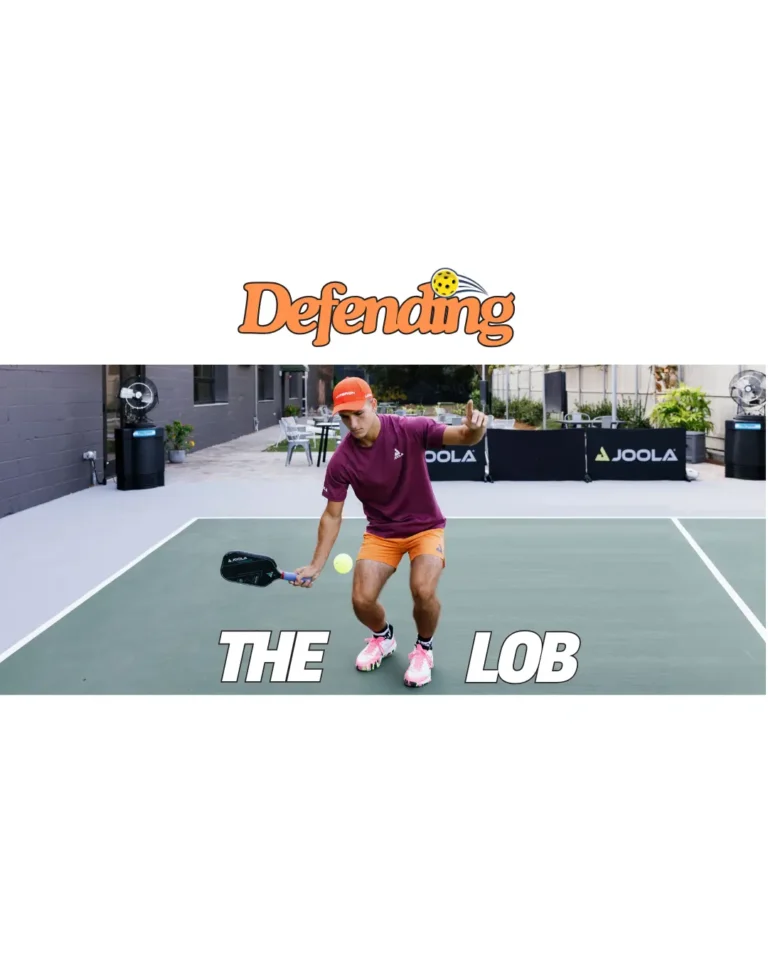
Advance only as far as the next ball allows. Stop or organize your base before contact, keep the paddle available and recover after the reply. Use the transition-zone guide when movement and stopping decisions are the recurring problem, and the ready-position guide when preparation and paddle recovery are breaking down.
4. Let Your Contact Choose the Response
If you are jammed, get compact. If contact is low, take pressure off the next ball. If you are balanced and contacting in front, a counter may be available. The incoming speed does not make the decision.
| Your situation | Likely priority | Go deeper |
|---|---|---|
| Jammed by pace but able to hold a compact paddle | Block or redirect with control | Pickleball blocking |
| Contact is low and the opponent can attack again | Remove pace and make the next ball less attackable | Resetting in pickleball |
| Balanced, prepared and contacting in front | Consider a controlled counter | Backhand counter guide |
| Late, stretched or falling away | Survive with margin and recover | Pickleball defense |
Stay available for more than one answer. The same opponent may give you three different balls in one exchange: one to block, one to reset and one you can finally attack.
If you are newer to defending pace, an aggressive counter does not need to be the first goal. Protect yourself, stabilize the paddle, learn to recognize the obvious out ball and send back something playable. When the ball comes directly at your body, create only enough space for a compact paddle. A large sidestep or backswing usually makes the rushed contact worse. Add the counter after you can stay organized long enough to choose it.
5. Stop Volunteering to Play Out Balls
A hard shot is not dangerous if it is going out. Your job is to read its flight before reflexively putting the paddle in the way.
Watch contact height, paddle path, initial trajectory and your own court position. A speedup struck from below net height may need enough lift to travel long, but no single cue guarantees the result. Read the ball rather than deciding in advance that every hard shot will miss.
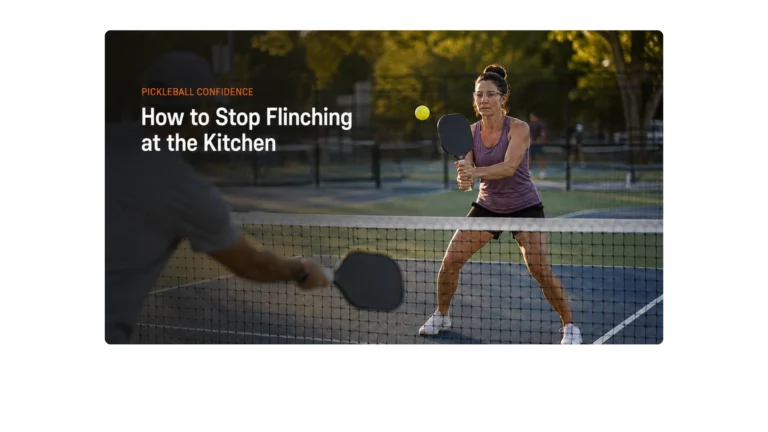
In doubles, agree on short calls such as “watch” and “bounce” so both partners do not reflexively reach for the same likely out ball. The full out-ball guide develops that read with AJ Parfait and Ethan Pipitone’s Red-Yellow-Green system. If fear or flinching removes the decision before the ball arrives, the kitchen-confidence guide provides a safer progression.
6. Change the Hitter’s Contact, Not Just the Speed
“Slow the game down” is incomplete advice. A soft ball that sits high can be easier to attack than a firm ball placed at the feet. Pay attention to the ball you make them hit, not whether your shot was technically soft or hard.
- Use depth to keep a backcourt hitter from moving through the ball as easily.
- Keep the contact low enough that a downward attack is unavailable.
- Use width or body location when it takes away comfortable extension.
- Make the hitter contact while moving when the available margin supports it.
- Recover after your shot so the opponent does not win with the next obvious target.
A purposeful dink can move the opponent or deny an attackable height, but dinking is not a magic answer to power. My dinking guide goes deeper into the mechanics and patterns of the soft game.
7. Make Both Opponents Play
If one opponent is controlling most rallies with pace, look at where your team is sending the ball. Avoiding the hard hitter every time can become just as predictable as feeding that player every comfortable third ball and speedup.
Test the partner. Change which player must move. Use the middle when it creates hesitation or an awkward contact instead of assuming one side is always weaker. Change the target without leaving your partner to defend the court alone. My doubles-defense guide goes deeper into partner coverage and recovering together.
Good tactics do not make every hard ball defendable. Sometimes the opponent creates pace from a good position and executes it well. Your job is to stop donating that position over and over, not to pretend every attack has a painless answer.
Turn What You Notice into the Next Adjustment
| What keeps happening? | Change this first |
|---|---|
| The same return keeps producing a full third-shot swing while the hitter moves forward | Change its location or depth and compare the next two drives |
| The same dink keeps getting sped up | Lower it, move it or change the player receiving it |
| You survive the first drive but lose the fifth | Recover the paddle and partner position before advancing |
| You keep volleying long speedups | Use mixed in-or-out feeds and score the decision rather than the touch |
Do not change something just to look unpredictable. Change it because the old pattern keeps giving the opponent the same ball.
How Court Position Changes the Plan
At the Baseline
You have more reaction time but more court to defend. Use enough height and depth to recover. Trying to escape every difficult ball with more speed may only send the reply back to two balanced opponents sooner.
In the Transition Zone
A drive is not permission to sprint to the kitchen. Move when the ball permits it, organize before the opponent’s contact and earn the next step with a controlled response. If the ball remains attackable, expect another attack before moving again.
At the Kitchen Line
The kitchen line improves your court position and reduces some available angles, but it does not give you more reaction time. Prepare before contact, avoid an unnecessary backswing and recover the paddle immediately. Back away only when the extra space actually improves your chance of handling an obvious attack.
Common Mistakes Against Bangers
- Trying to out-hit the hard hitter: You accept the opponent’s preferred pace without checking whether your contact supports it.
- Playing soft automatically: You slow the shot down but leave it high enough to attack.
- Assuming the backhand is weak: You target the label instead of testing the player.
- Retreating on every speedup: You surrender court position without gaining enough useful reaction time.
- Admiring the first save: The block survives, but the next ball finds an unrecovered paddle or open court.
- Guessing that every drive will be out: Discipline becomes a preset decision instead of a ball read.
- Practicing only predictable feeds: You improve a rehearsed stroke without training the choice between dodge, block, reset and counter.
Drills for Better Decisions Against Power
Do not practice one answer to every hard ball. Mix balls that should be blocked, reset, countered and left alone. If the player knows exactly which ball is coming and exactly which shot to hit, the drill is building execution. It is not yet building the decision.
Mixed In-or-Out Speedup Drill
Have a partner feed 10 speedups with varied height, pace and trajectory. Some should land in and some should travel out. Award one point for the correct play-or-leave decision and a second point when an in-ball response remains playable. Track the decision score separately from the shot result so one lucky volley does not hide a bad read.
Block, Reset or Counter Drill
Feed 12 balls while varying the defender’s balance and contact point. Send some into the body, some low and some that can be contacted cleanly in front. Award one point for choosing a sensible response and one when the result makes the next attack harder. The two scores tell you whether the problem is the decision, the execution or both.
Serve-Return-Drive Pattern Drill
Play the first five shots with the serving team encouraged to drive the third. Hit six returns to each target you want to test. Record which return produces the least effective drive and which gives the returning team the easiest fourth-ball decision. A deep return only counts as useful if the returner also gets balanced before the next contact.
Two-Opponent Target Drill
Give one opponent permission to attack aggressively while the other plays normally. Play a game to 7 and keep a second tally for successful target changes. Award that mark only when the defending team makes the other opponent play and recovers together before the next attack. Otherwise, one winner can hide the fact that the team opened the middle three times trying to avoid the banger.
Use the pickleball drills guide when you need to turn one of these exercises into a progression with predictable feeds, movement, changing choices and live points.
Questions Players Ask About Handling Hard Hitters
What is the best strategy for beating bangers in pickleball?
Find the ball that keeps giving the power player a comfortable swing. Change its depth, height, location or timing, then stay balanced enough to let out balls go and choose a block, reset or counter from the contact you receive.
What should a beginner do against a hard hitter?
Start with safety, a stable base and a compact paddle. Learn to leave the obvious out ball and send in-bounds attacks back with control. You do not need an aggressive counter until you can stay organized long enough to choose it.
Should I block or counter a hard drive?
Block when you are jammed or compact control is the priority. Counter when you are balanced, prepared and contacting far enough in front to control the reply. If you are late, stretched or contacting low, use more margin.
Does the soft game work against bangers?
Yes, when the soft ball creates a difficult contact. A low dink or controlled reset can remove downward attacking options. A soft ball that sits high is still attackable, so softness by itself is not the solution.
How do I tell whether a speedup is going out?
Use contact height, paddle path, initial trajectory and your court position as clues, then keep tracking the ball. A low contact may require lift, but no single cue guarantees that the shot will miss.
Make the Power Player Hit One More Difficult Ball
You do not need to remove power from pickleball. You need to stop giving the opponent the same comfortable opportunity to use it.
A banger usually looks most dangerous when you are rushed. Make the hitter move. Make the contact lower. Make yourself stop before the ball arrives. Then make the opponent prove that the same power still works without the same comfortable swing.