

2025 Pickleball Rules: What Has Changed
Everything You Need to Know About the 2025 Pickleball Rules
Every January, the rulebook resets, and the whole sport takes one collective breath. Some players panic, some cheer, and some shrug until a ref calls something they’ve never heard before. But whether you’re a seasoned grinder chasing every edge or a beginner trying to sort out foot faults from folklore, the 2025 Pickleball Rules deserve a full walk-through.
This year’s updates sharpen definitions, clean up controversies, and squash a few trick-shot loopholes that had people arguing at open play. From volley clarifications to serving foot faults to provisional rally scoring, USA Pickleball gave us plenty to unpack. So pull up a chair – Coach Sid has the breakdown you actually need.
For the full foundational rulebook experience, see our Complete Pickleball Rules Guide.
1. The New Definition of a Volley (Rule 9.B.1)
Let’s start with the update everyone argues about first: the volley. In 2025, a volley officially begins the moment the paddle contacts the ball in mid-air and ends when your forward momentum stops. Simple, right? Cleaner than the old wording, and finally removes a decade of “Well technically…” debates.
Here’s what matters:
- The pre-contact swing no longer counts. If your paddle scrapes the kitchen line before contact, it’s no longer a fault.
- The follow-through still matters. If your momentum carries you into the Non-Volley Zone after striking the ball, that’s a fault.
- Paddle placement before the hit is now unrestricted. No more arguments about “the swing is part of the volley.”
This clears up dozens of kitchen-line disputes and rewards players who move aggressively but under control. For players confused about what exactly the “kitchen” is and why it exists at all, here’s the deep dive: Why Is It Called the Kitchen?
2. Foot Fault Clarifications in the Non-Volley Zone
Once this update dropped, the first question I heard in every rec group was the same:
“Can I stand in the kitchen and just jump out to volley?”
And the answer is still: Absolutely not.
Rule 9.D makes it crystal clear: you must have both feet fully re-established outside the Non-Volley Zone before contacting the ball. Taking off from inside the NVZ – even if you land outside – remains a fault. No loopholes. No Jordan-from-the-free-throw-line trick volleys.
And remember: if your momentum drags you into the NVZ after a volley, it’s still a fault. This update simply removes “paddle scrape confusion,” not the entire purpose of the rule.
USA Pickleball also emphasizes sportsmanship: players must call foot faults on themselves or their partners.
3. Serving Rules Overhaul (Foot Placement + Spin Ban)
Serving saw some of the most consequential edits. If you’re a big server, pay attention.
Foot Placement (Rule 4.A.4.c)
When you strike the serve:
- No part of either foot may be in front of the baseline.
- No part of the foot may cross the sideline extension or centerline extension.
- You must stay grounded behind the serving box boundaries.
This eliminates “corner cheating” and prevents players from serving from extreme angles.
Spin Serve Enforcement (Rule 4.A.5)
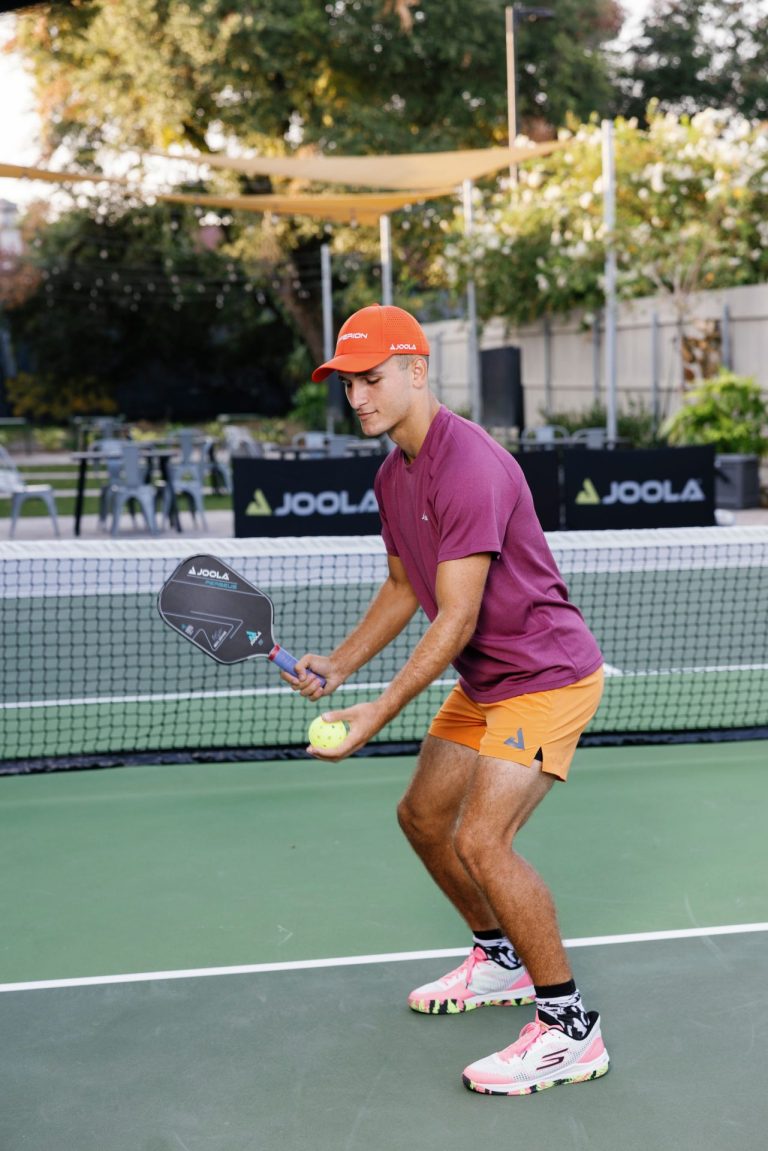
You can drop the ball from your hand or paddle, but you cannot intentionally impart spin at release.
- Rolling off the paddle is allowed.
- Flicking, twisting, brushing, or manipulating the ball to add spin is not.
- Natural wobble is fine – intentional manipulation is the issue.
Combined, these changes remove most of the gray area that created serving controversies in 2023–2024. And yes – spin serve videos will still get millions of views online, even if you can’t use them in real matches.
4. Rally Scoring Becomes a Provisional Option
Now we get to the update that created the loudest debates at pickleball clubs: provisional rally scoring. If you’re unfamiliar, rally scoring means:
Every rally results in a point, regardless of who served.
But the twist in 2025 is clever:
If you’re facing match point and your opponents are serving, and you win the rally, you earn a side out but not a point.
- This prevents “lucky wins” on defense.
- It preserves the tradition that you must score the winning point on your serve.
- It keeps strategy intact for the end game.
For a full explanation: Rally Scoring in Pickleball.
Expect some tournaments and many clubs to experiment with this format throughout 2025.
5. Round Robin & Forfeit Rules Reshaped
Round robin events have historically been a mess when teams drop out mid-event. The 2025 rules fix that:
- Withdrawn teams’ results no longer affect final standings (unless playoffs exist).
- Game forfeits are recorded as 11-0, 15-0, or 21-0 depending on format.
- Match forfeits are scored as all remaining games being lost 11-0 (or format equivalent).
Tournament directors now have clearer authority to correct administrative errors in standings and scores – an underrated but important improvement.
6. Calling Balls “In” or “Out” & Other Sportsmanship Rules
The 2025 updates tighten honesty expectations:
- You cannot “test the outcome” of a shot before calling it out.
- If you hit the return, you’ve forfeited the right to call the previous shot out.
- When partners disagree, the call defaults to the opponents.
- Spectators cannot be consulted for line calls.
Post-match penalties can now carry into future matches – another nod toward maintaining integrity in tournament environments.
7. Summary Table of Key 2025 Rule Changes
| Topic | Old Rule | New 2025 Rule |
|---|---|---|
| Volley Definition | Included swing and paddle placement | Starts at ball contact; ends when momentum stops |
| Kitchen Scrape | Scraping line pre-contact was a fault | No longer a fault |
| Rally Scoring | Allowed only in limited contexts | Provisional option for doubles with game-point exceptions |
| Service Foot Faults | Ambiguous boundary wording | Clear limits on baseline and sideline extensions |
| Round Robin Results | Withdrawals distorted standings | Result removal ensures fairness |
8. Coach Sid’s Closing Thoughts
These 2025 Pickleball Rules aren’t about reinventing the sport – they’re about cleaning up the messy corners so players can focus on strategy, not arguments. The volley definition is cleaner. Serving is fairer. Rally scoring is on the table. And tournaments finally have tools to avoid chaos.
Want to understand how these rule changes affect real match strategy? Visit our Pickleball Strategy Category.
Learn the rules. Use them to your advantage. And when in doubt, choose fairness – your game (and your partners) will thank you.
For a full explanation of all pickleball rules, see our Complete Pickleball Rules Guide.


Fresh Highlights from the 2025 USA Pickleball Rulebook
The 2025 rulebook introduces several tweaks aimed at making pickleball more transparent, equitable, and enjoyable for casual players and serious competitors alike. Here’s a concise look at the important updates and how they might affect your game:
1. Clearer Guidelines for Play
Momentum in the NVZ (Rule 3.A.21)
You must fully regain your balance after contacting the ball near the Non-Volley Zone (NVZ). If your movement isn’t under control, you risk committing a fault.
Takeaway: Make sure your motion has stopped before stepping into the NVZ after a volley.
Expanded View of Coaching (Rule 3.A.3)
Coaching now covers any type of assistance—spoken, nonverbal, or even electronic.
Takeaway: Outside help, whether it’s a friend on the sidelines or a digital gadget, isn’t allowed to guide your gameplay.
Definition of NVZ Boundaries (Rule 3.A.22)
The NVZ is a flat 7-foot zone on each side of the net. It doesn’t extend vertically into the air above the court.
Takeaway: Feel free to step into the NVZ at any time, but do not volley while touching or standing in that 7-foot zone.
2. Paddle and Equipment Updates
Surface Requirements (Rule 2.E.2)
Paddles must remain smooth, without any rough or modified textures intended to create extra spin.
Takeaway: Use your paddle in its original condition. Altering the surface to gain an advantage is off-limits.
Autographs on Paddles (Rule 2.E.5.c)
You can have signatures and personal markings on your paddle as long as they don’t change how it performs.
Takeaway: Personalize your paddle with autographs without worrying about losing tournament eligibility.
Clothing Colors (Rule 2.G.1)
Avoid wearing outfits that match the ball’s color to keep the ball visible.
Takeaway: Choose clothing with contrasting shades to help everyone track the ball more easily.
3. Serving and Scoring Changes
Refined Serving Rules (Rule 4.A.5)
You may drop the ball from your hand or paddle when serving, as long as you don’t add any extra spin through your release.
Takeaway: The serving motion is more flexible, but spinning the ball intentionally is still a no-go.
Optional Rally Scoring (Rule 4.B.3.a)
Under rally scoring, a point is awarded on every rally—unless it’s match point while the other side is serving. In that case, you must earn the last point on your own serve.
Takeaway: Matches may run quicker if your local group opts for rally scoring, though side-out scoring remains standard in many official events.
Correcting Player Positions (Rule 4.B.9)
Referees must fix server or receiver positioning errors before the score is announced, without penalizing players.
Takeaway: If you line up incorrectly by mistake, the game will pause and reset positions, avoiding unnecessary point losses.
4. Inclusivity and Accessibility
Adaptive Play (Section 1)
The rules explicitly allow adjustments for players with disabilities, ensuring fair competition for everyone.
Takeaway: Pickleball is welcoming to all, including those needing modified court setups or assistance devices.
Wheelchair Rules
Players in wheelchairs may use the NVZ with their wheels and are allowed a second bounce before returning the ball.
Takeaway: These accommodations level the playing field, encouraging broader participation.
5. Line Calls and Replays
Certainty on “Out” Calls (Rule 6.C.6)
A ball is called “out” only if you see a clear gap between the ball and the line.
Takeaway: If there’s any doubt, the ball should be considered “in.” Fairness is the priority.
Conceding Rallies (Rules 13.E.4 & 13.E.5)
Players can choose to concede a rally if they realize they couldn’t have returned a ball that’s been deemed “in” upon review.
Takeaway: This saves time by avoiding repeated points when you know the rally was lost.
6. Faults and Time-Outs
Catching the Ball (Rule 7.L)
If you catch or hold the ball with your paddle, it’s always a fault. There’s no gray area regarding intent.
Takeaway: Stick to striking the ball rather than stopping or cradling it.
More Flexible Time-Outs (Rule 10.B.2.c)
After using a medical time-out, players can still tap into their regular time-outs to finish recovering.
Takeaway: There’s less pressure to rush back onto the court following a medical issue.
In Summary
The latest guidelines aim to keep pickleball fair, fun, and open to everyone. Whether you’re a weekend warrior or a devoted tournament player, make sure you’re up to speed on these changes so you can enjoy smoother, more consistent gameplay all season long.