What Is Pickleball? Rules, Court, Scoring & Beginner Guide (2026)
What Is Pickleball? The Complete 2026 Beginner Explanation
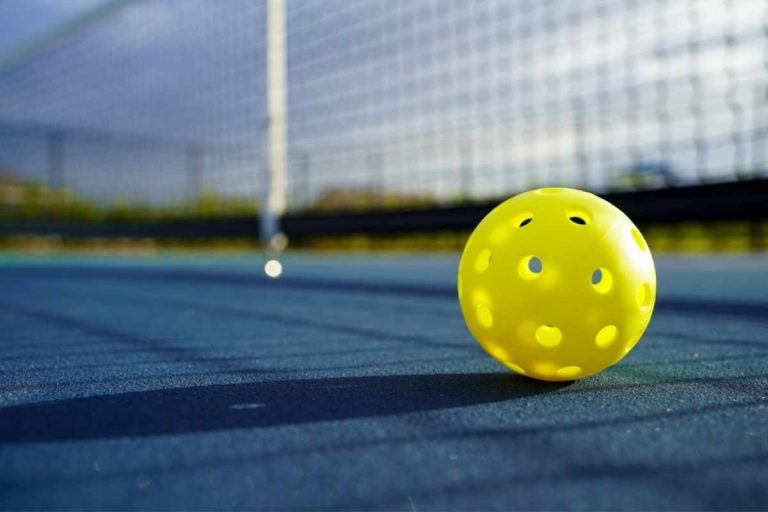
Pickleball is a paddle sport that blends tennis, ping pong, and badminton – played on a 20′ × 44′ court with lightweight paddles and a perforated plastic ball. It’s easy to learn, incredibly social, and approachable for all ages. If you’re brand new, this guide explains the game in a simple, friendly way – without the jargon.
What You’ll Learn in This Guide
- Simple Definition
- How Pickleball Is Played
- Basic Rules (Beginner-Friendly)
- How Scoring Works
- Pickleball Court Layout
- Why Pickleball Is So Popular
- Why It’s Perfect for Beginners
- What Equipment You Need
- Next Steps for New Players
- FAQ
What Is Pickleball? (Simple Definition)
Pickleball is a paddle sport played on a small court with a net, solid paddles, and a lightweight plastic ball full of holes. You can play singles or doubles, but doubles is the most popular version you’ll see at parks and clubs across America.
The easiest way to think of it: Pickleball feels like tennis and ping pong had a baby – fast rallies, simple rules, and zero intimidation.
How Pickleball Is Played
- The serve is underhand and must go cross-court.
- The ball must bounce once on each side before volleys are allowed (the two-bounce rule).
- After that, players can volley or rally from anywhere – except inside the Kitchen.
- You score points only on your serve.
- Games typically go to 11, win by 2.
Rallies are longer than tennis, movement is easier, and beginners can play real games on day one – that’s the magic of pickleball.
Basic Pickleball Rules (Beginner Friendly)
- Underhand serves only (must land diagonally).
- No volleying in the Kitchen – the 7-foot zone near the net.
- The ball must bounce twice before volleys are legal.
- Lines are in – except the Kitchen line on the serve.
- You keep serving until your team commits a fault.
For a full breakdown, read the Beginner Rules Guide.
How Pickleball Scoring Works
Doubles pickleball uses a three-number scoring system:
- Your score
- Opponent’s score
- Server number (1 or 2)
If you hear “4-2-1,” it means your team has 4, the opponents have 2, and server #1 is serving.
Recreational games go to 11, win by 2. Tournament games often go to 15 or 21.
Pickleball Court Dimensions Explained
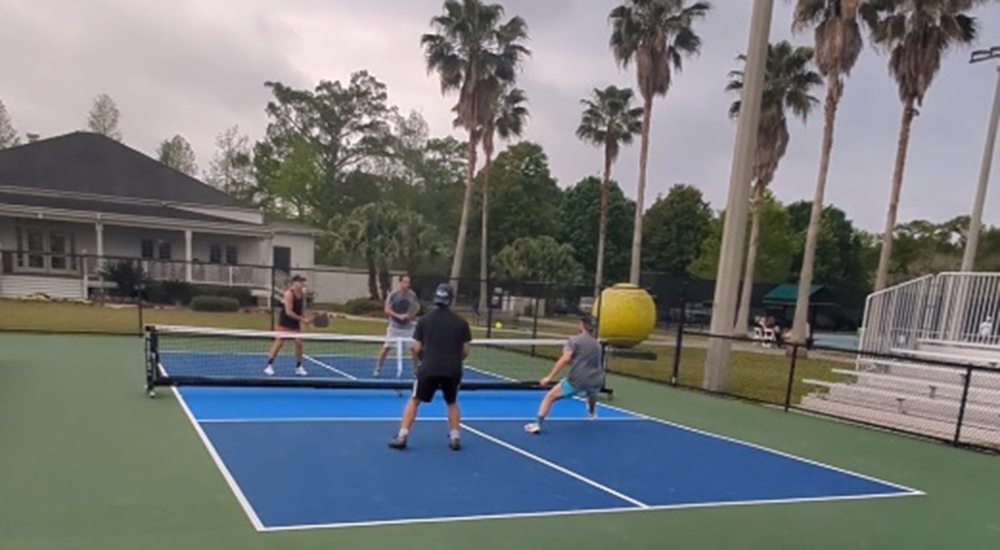
A pickleball court is 20 feet wide and 44 feet long – the same size for singles and doubles.
- The Kitchen: A 7-foot non-volley zone on each side of the net.
- Service boxes: Left and right diagonal areas behind the Kitchen.
- Baseline: Players must serve from behind this line.
The compact court makes movement easier and keeps the action fun, fast, and accessible.
Why Pickleball Is Growing So Fast
- Easy to learn – play a real game your first day
- Social and community-driven
- Low-impact but great exercise
- Affordable equipment
- Playable indoors or outdoors
Pickleball has exploded because it’s rare to find a sport that works for 12-year-olds, 40-year-olds, and 70-year-olds – all on the same court.
Why Pickleball Is Perfect for Beginners
- Small court = less running
- Light paddles = faster learning curve
- Simple rules = instant playability
- Friendly atmosphere = fun from day one
That’s why so many new players say: “I tried it once and got hooked.”
What Equipment Do You Need?
- A beginner paddle – see Beginner Paddle Guide
- Indoor or outdoor pickleballs
- Court shoes – avoid running shoes
You can start playing for under $50 if you borrow gear or buy an entry-level paddle.
Your Next Steps
Frequently Asked Questions
The most common explanation is that one of the founders’ dogs, Pickles, kept chasing the ball. Another version says early play resembled a “pickle boat,” where leftover rowers were mixed together.
Yes. Most beginners can learn the basics in 20–30 minutes and play full games immediately.
Not necessarily. Many players pick it up through open play, free beginner clinics, or just learning with friends.
Yes. It’s low-impact but excellent for cardio, mobility, and coordination—especially for adults over 40.
A paddle, a few balls, and shoes with good lateral stability are enough to begin.