Rizen Ascent 16mm Review | Plush Control & Tuning
The Rizen Ascent 16mm Elongated is a soft, tunable control pick for players who want resets, placement, and enough room to add finishing power without turning the paddle into a brick.
In a market flooded with white-label clones, it is rare for a brand’s first paddle to feel this sorted out. That is what makes the Ascent feel like a real sleeper to me. It plays more like a refined third attempt than a company’s first shot at a Gen 4 foam core paddle.
Price: $139.99. With Discount Code: $126.00.
Best for: players who value touch, resets, and a stable feel that can be tuned.
Not for: players who want a loud, lively face that creates easy power for them.
Version covered here: Rizen Ascent 16mm Elongated only.
Approval: USAP approved.
Availability changes. Check the product page for current ship dates.
I played the Rizen Ascent 16mm Elongated across multiple sessions, tested it in stock form, then moved weight from a standard 3 and 9 setup into the throat to see how far the control window could stretch without losing hand speed.
First Impressions
A lot of new paddles arrive with big promises and a weird first date energy. This one did not. The Ascent showed up from a brand I did not know well, felt sorted out right away, and kept earning trust once the points started getting ugly in transition.
Out-of-the-Box Plushness
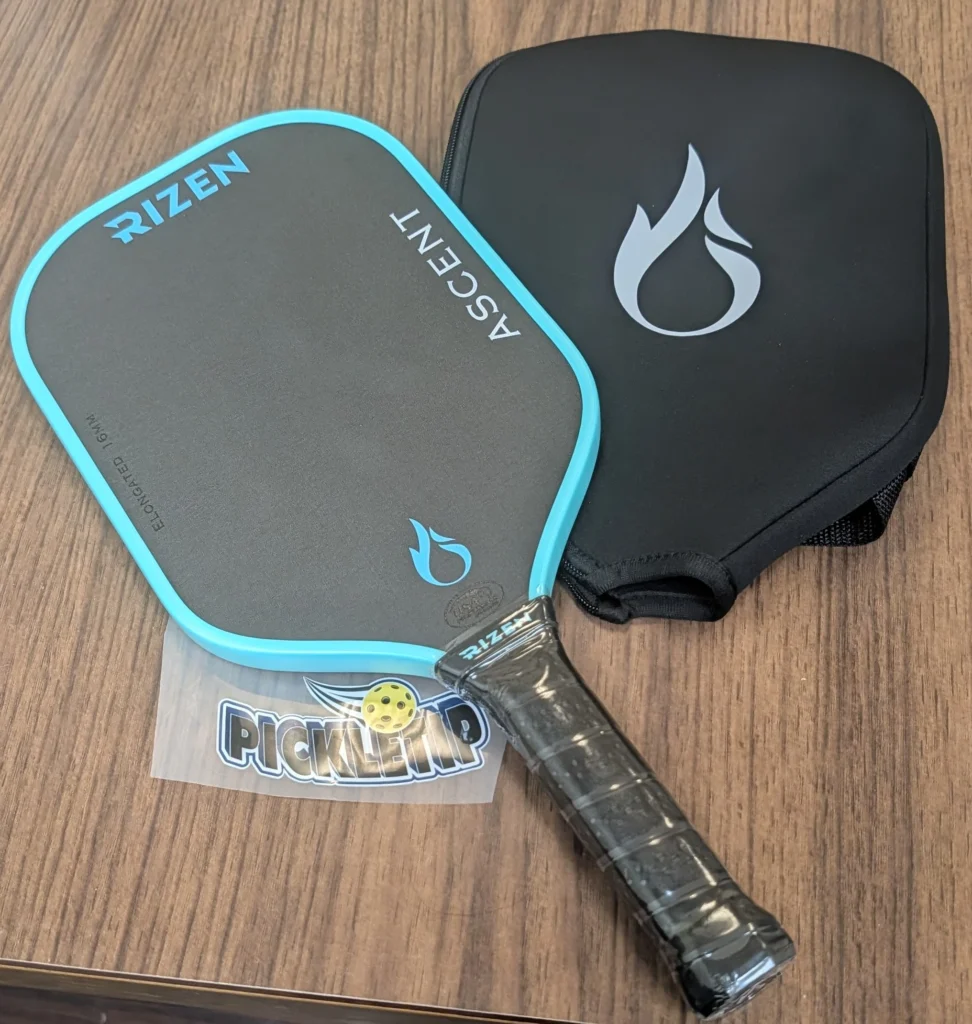
Right away, the Ascent stands out because it does not feel like a first attempt. It uses a Gen 4 Dual Foam Core (EPP + EVA), and the result is a paddle that feels incredibly soft. If you are coming from a standard honeycomb paddle, the first thing you will notice is the pocketing. The ball sits on the face long enough to make touch shots feel more deliberate.
For a 3.2 player like myself, this is a confidence builder. You can actually feel the ball on the paddle, which makes steering your third-shot drops and dinks much more intuitive.
Picture this. You are sliding backward after a hard body drive, your feet are late, your contact is not clean, and you still need the ball to fall back into the kitchen instead of floating up for a kill. That is where this paddle starts making its case.
What stands out is not fake fireworks. It is the way the face lets the ball sit, the way the frame stays calm through messy contact, and the way a little throat weighting can make it feel more dangerous without wrecking the part that made it good in the first place.
Key Terminologies
- EPP Expanded polypropylene foam used here as part of the core build.
- EVA Ethylene vinyl acetate foam used here for perimeter support and vibration reduction.
- Dwell time How long the ball seems to stay on the face before leaving.
- Twist weight A stability cue that hints at how much the head resists turning on off-center contact.
Who This Paddle Helps
This paddle fits the player who wins with shape, depth, and patience, not blind violence.
Buy if: you want a soft contact feel, a muted sound, a long handle, and a frame that helps calm down drops, resets, and counter blocks.
Skip if: you want easy putaway power to jump off the face with very little input.
Choose this version: if you like elongated reach, use a two handed backhand, or want a light platform you can tune without making it sluggish.
Does it feel dead?
No. It feels plush and connected. The ball sits on the face, but the paddle still gives enough feedback to shape shots and feel where contact happened.
- Beginner to intermediate players who need help calming down resets, drops, and dinks.
- Players protecting their arm who want a softer, less harsh contact feel.
- Two handed backhand players who will appreciate the 5.6 inch handle.
- Advanced tinkerers who want a stable platform that can be weighted without losing its identity.
- Players who like muted acoustics and a more connected feel on contact.
If you swing hard and expect the paddle to create easy power on its own, this stock setup may leave you wanting more.
Paddle at a Glance
This is the short version of the buyer decision.
| Category | What shows up in real play |
|---|---|
| Price | MSRP $139.99. With Code: $126.00. |
| Best fit | Control first players, soft game builders, and anyone who wants a tunable elongated frame. |
| Feel | Plush, dense, muted, and connected. |
| Reset window | Forgiving on hard incoming pace, especially when contact gets messy in transition. |
| Hands speed | Quick in stock form, and still quick with throat weighting. |
| Spin personality | Easy to shape and dip because the ball sits on the face long enough to feel the shot. |
| Main tradeoff | Players who crave easy putaway power may want more finish than this gives them right away. |
Specs People Actually Ask For
Here are the hard facts that matter before you click buy.
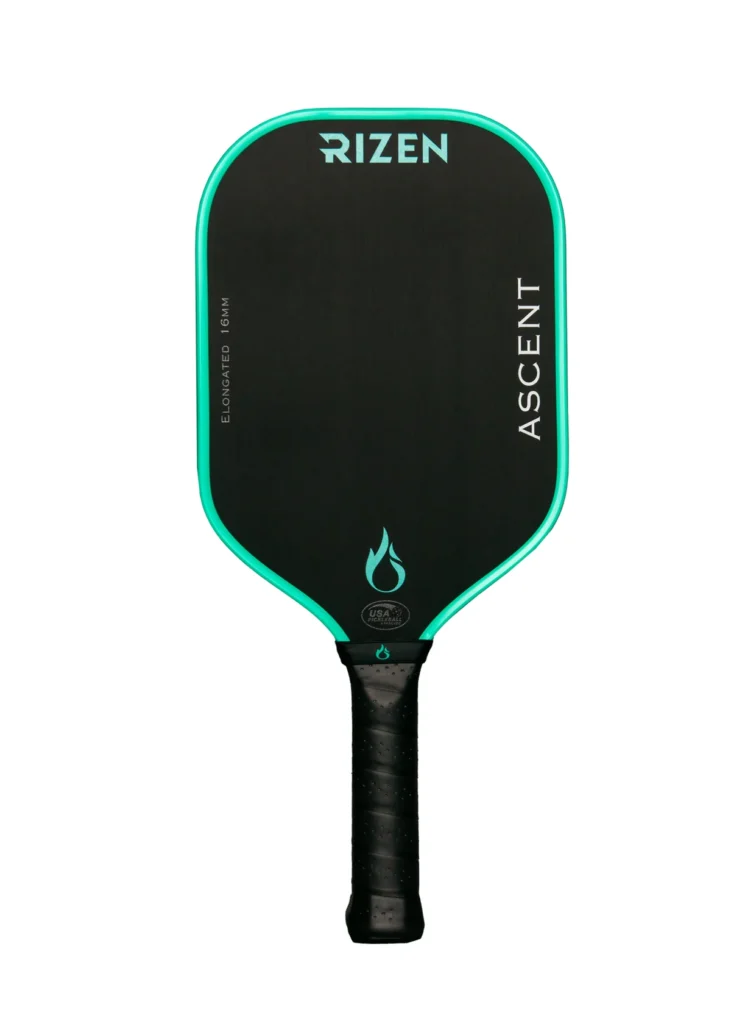
- Model: Rizen Ascent 16mm Elongated
- Face: Toray T700 raw carbon fiber
- Core: Dual foam construction with EPP + EVA
- Thickness: 16 mm
- Weight: 7.8 to 8.0 oz
- Swing weight: 115 to 118
- Twist weight: 6.2
- Length: 16.5 inches
- Width: 7.4 inches
- Handle length: 5.6 inches
- Grip circumference: 4.25 inches
- Handle shape: Octagon handle with vibration dampening wrap
- Surface: Reinforced textured surface
- Graphics: UV printed graphics
- Approval: USAP approved
- Pricing: $139.99. With code $126.00.
Specs + What Varies
The numbers are straightforward. The part that changes is how the paddle behaves once you leave it stock or start tuning it.
| Area | What is fixed | What varies in play |
|---|---|---|
| Frame shape | Elongated build, 16.5 x 7.4, 5.6 inch handle | How much leverage you feel on drives and overheads depends on your swing and whether you add weight. |
| Core feel | Dual foam build with EPP + EVA | The stock paddle feels very soft. With throat weight, the contact still feels soft, but finishing power becomes easier to access. |
| Stability | Twist weight shown at 6.2 | Off-center calmness improves even more once weight moves into the throat zone from 3 to 5 and 7 to 9. |
| Hand speed | Stock swing weight shown at 115 to 118 | The paddle stays quick enough for kitchen exchanges even after tuning, which is a big part of why this setup works. |
| Surface behavior | Textured raw carbon face | The useful part in play is not just surface bite. The ball pockets enough to make shot shaping feel natural. |
Skip to What Matters Most
If you are comparing paddles and just want the key sections, start here.
What Actually Matters on Court
This paddle earns its keep when the point gets uncomfortable and you still need the ball to behave.
Power vs Control
On third shot drops and mid court resets, the Ascent gives you a softer landing window. The ball does not jump off the face, so it is easier to take pace off and let the shot fall into a playable spot. On drives, the story changes a bit. You can still hit through the court, but the paddle is not handing out cheap offense. You have to create that with your swing.
That is why this reads as a control first frame. It does not hand you cheap offense, but it does give you a big enough runway to swing with intent and trust the ball not to launch into the parking lot. Soft does not mean sleepy.
When you speed up through your legs and finish the swing, the paddle rewards that work. When you arm the ball and expect easy power, the result is less convincing.
If you try to force putaway power from a lazy setup, this face can leave the ball sitting up instead of driving through the court.
Hands Battles
In fast hands exchanges, this paddle stays more manageable than a lot of elongated shapes. The stock build is already quick enough at the kitchen, and the throat weighting does not turn it into something sluggish. Even when your prep is a little late, the response stays compact and controllable.
This is where the paddle surprised me. Elongated paddles can sometimes feel like a tool belt swinging off your wrist. This one stayed quick enough to reload and counter without that dragging sensation.
When the incoming ball is hot and you catch it slightly off center, the frame holds its line well enough to keep the exchange alive. That gives you a little more courage to stand your ground.
If you punch too hard at shoulder level speedups, the ball can carry past your target before you realize how much your own hand added to the shot.
Soft Game Reality
This is where the Ascent feels most at home. On dinks, blocks, and low resets, the ball seems to stay on the face just long enough for you to guide it instead of just survive it. That extra pocketing helps turn scramble contact into something more deliberate.
Spin Is Not Just a Grit Story
Rizen uses a Toray T700 raw carbon face, and yes, the surface texture helps. But I do not think that is the whole story. The dual foam build gives the ball enough pocketing that roll volleys, cut serves, and dipping counters feel connected instead of slippery. Even if the surface texture changes over time, I would still expect this paddle to shape the ball well because the dwell and feedback are doing real work too.
For players building a calmer kitchen game, that matters more than flashy pace. You can feel where the ball touched the face, and that feedback makes it easier to steer angle and depth on purpose rather than by accident.
When you are pulled into transition and have to deaden a hard drive, the paddle absorbs enough of the hit to keep the reset from turning into a free sitter. That is the kind of help people actually feel in a match.
- If you miss drops long this paddle gives you a softer contact window that helps the ball leave with less jump.
- If your resets sit up the plush face helps absorb pace so the ball does not rebound as hot.
- If dinks pop up the connected feel makes touch adjustments easier to sense.
- If you get handcuffed in transition the stable head helps keep ugly contact from twisting into a worse miss.
If you get lazy with your feet and flick the ball instead of carrying it through the line, even this kind face can leak the ball a little high.
Sweet Spot, Forgiveness, Stability
The sweet spot feels more forgiving than you might expect, especially lower on the face where a lot of real-world misses happen. Stretched counters and rushed contact still come off solid enough to keep the point alive. That was true in stock form, and it got even better once weight moved into the throat.
The key here is not magic. It is that the paddle feels sorted out from the start, then gets even calmer where real players actually miss. Off-center contact does not punish you as hard as some raw feeling frames do.
When the point speeds up and you catch the ball outside your ideal strike zone, the head resists getting shoved around. That keeps your contact story from turning into chaos.
If you catch the ball too far toward the tip while reaching and falling away, the shot can still lose shape and land short.
Spin, Grit, Shot Shaping
Spin is not just a surface story here. On roll volleys, dipping counters, and cut serves, the paddle gives you enough pocketing to actually feel the ball shape off the face. That makes the spin feel usable, not cosmetic.
That matters over time. A surface can change with use, but a face that helps you feel the ball and work around it still gives you ways to shape points. In plain English, the extra dwell time of this paddle helps you carve the shot instead of just slapping it.
When you brush well on a counter roll, the arc stays controlled and the finish gets uncomfortable for the person across from you. Brush with intent, not panic.
If you over cut from a late contact point, the ball can die into the tape before the spin ever gets a chance to save you.
Break in / After Hours Update
The longer I used it, the more the Ascent stopped feeling like a surprise and started feeling like a dependable tool.
Early on, the standout trait was the plushness. After more sessions, the bigger story became how tunable the platform is without losing the soft game identity that made it appealing in the first place.
- Stock form works well for players who want a calmer reset and dink window right away.
- The muted sound and dense feel keep reinforcing that connected feedback loop over time.
- The paddle never turned into a hollow, noisy frame in my sessions.
- Once weighted in the throat, it felt more complete across the lower middle of the face and more useful in fast exchanges.
If you buy it expecting a giant personality shift after a short hit, that is the wrong read. The core identity stays soft and control minded, then tuning lets you widen the range.
Tuning Notes
This is for the player who likes the stock feel but wants a little more threat without giving away the reasons they bought the paddle.
- Start stock if your main problem is touch. The base setup already helps with drops, blocks, and dinks.
- Weight at 3 and 9 helped widen the sweet spot and add a touch of extra finish.
- The better breakthrough came from shifting weight into the throat, from 3 to 5 and 7 to 9.
- That setup improved lower mid face stability, added usable plow through, and kept the paddle quick enough for kitchen counters.
If you chase too much finishing power with weight in the wrong spots, you can turn a smooth control frame into a paddle that no longer feels like itself.
Cross Shopping Notes
These are the comparisons that came up most naturally around this paddle.
- Six Zero Coral: the Ascent sits in a similar plush lane, but it felt more maneuverable and offered a stronger price story. Pick this if you want that soft feel with a long handle and lower entry cost.
- Ronbus Quanta R4: the Ascent felt more finished out of the box, with a denser and calmer contact story. Pick this if you want less raw project energy and more immediate trust.
- Other foam core paddles in the premium lane: this one makes its case by giving you a high end feel without the usual premium bill. Pick this if value matters but you still want a tournament legal foam option.
The Father-Son Verdict
I am a 3.2 player who leans on placement, resets, and the soft game. AJ is a 4.8 who notices right away when a paddle does not give him enough finish. We do not always like the same paddles, which is part of why this one stood out.
For me, the Ascent feels forgiving, arm friendly, and steady when I am trying to settle the ball down. It protects my resets and gives me more confidence in transition.
For AJ, the appeal was different. He saw it as a solid platform with room to tune. Stock, it reads soft. But because it starts light and stays quick, he liked how easily it could be weighted into a more dangerous setup without losing its feel.
Pros and Cons
The strengths and tradeoffs are pretty clear once you stop asking the paddle to be something else.
What keeps it in the bag
- Plush, connected contact feel that helps with touch.
- Muted acoustics with no hollow ping.
- Stable enough in stock form, then noticeably better with throat weighting.
- Quick enough for fast kitchen exchanges.
- Long handle works well for leverage and two handed backhands.
- Strong value at $126 with code SIDPARFAIT.
- USAP approved.
What might push you elsewhere
- You have to generate the offense yourself.
- Players who want a lively, loud face may read the feel as too soft.
- The best version of this paddle may require tuning if you are an advanced player chasing a little more putaway power.
If your buying decision starts and ends with how hard a paddle hits on a clean ball, you may overlook the part that makes this paddle valuable in real points.
Who Should Buy / Who Should Skip + Quick Decision Snapshot
This is the part where the paddle stops being a cool object and becomes either a fit or a mismatch.
| Player type | Call |
|---|---|
| You miss resets long and want more calm on hard incoming balls | Buy |
| You are building a soft game and want clearer feel on contact | Buy |
| You use a two handed backhand and want a 5.6 inch handle | Buy |
| You like tuning paddles without making them feel slow | Buy |
| You want easy putaway power with minimal effort | Skip |
| You do not enjoy soft, muted feedback | Skip |
Bottom line: buy it if you want a control paddle you can grow into. Skip it if you want easy power right away.
Rizen Ascent FAQ
These are the questions players usually ask before they buy.
No. It reads as a control first paddle in stock form. You can unlock more finishing power by tuning it, but the core personality is still touch and stability first.
Yes, especially if you use a two handed backhand or like a little more leverage on drives and overheads. The 5.6 inch handle is one of the cleaner buyer wins here.
The opposite. The soft dual foam build and dampened handle setup make this one of the more comfortable feeling frames in its lane.
No. It is useful in stock form. Tuning just expands the range, especially if you want more bite on drives and more calm across the lower middle of the face.
For this paddle, the throat was the most interesting place to start. Moving weight from a standard side setup into the throat added usable finish and stability without making the head drag.
Yes. That is one of the best surprises here. Even after tuning, it stayed quick enough to survive rapid counters without feeling like a sledgehammer.
It can work for both, just for different reasons. Beginners and intermediates get an easier soft game window in stock form. Advanced players get a tunable blank canvas that can be sharpened without starting from a harsh base.
You want easier putaways without having to generate so much yourself. If your whole game is built around easy speed and quick putaways, you may want something that leaves the face with more native jump.
Does It Stay in the Bag?
I am notoriously picky about my personal gear. My bag only holds six paddles at a time, spots reserved for tournament-ready performance and reliable demos. The Rizen Ascent did not just pass the test. It earned a permanent slot. Whether I am playing a 3.2 control game or letting my son AJ put it through a high-intensity firefight, it is one of the most versatile platforms I am carrying right now.
Final Take + Next Step
The Rizen Ascent 16mm Elongated is the kind of paddle that sneaks into your bag by solving real problems instead of performing a stage show. It helps control players settle the ball, it gives tinkerers room to work, and it does all that without charging premium foam core money.
I like it most for the player who wants to set up the next shot, then add just enough finishing pace to keep honest opponents from leaning forward all day. That is a smarter identity than pretending every paddle should be an overpowered bazooka.
If that sounds like your game, check the Rizen Ascent 16mm Elongated product page here.