Franklin Aurelius C45 Paddle and the ALW Franklin Switch
Franklin Aurelius C45 Pickleball Paddle: The Paddle Is the Headline, and the Sponsor Switch Is the Earthquake
I coach real people, not highlight reels. Last month a strong 4.0 walked up after open play and said, “Coach, I need more pop.” I handed him a thinner paddle from my bag and fed him ten balls. By ball four he was sailing drives long, popping blocks high, and staring at the face like it betrayed him. I told him the truth: “You don’t need more pop. You need more discipline.” That moment is exactly why today’s news matters.
Picture this: you’re at the kitchen line, your opponent speeds one at your right hip, and you’re late by half a beat. With a softer, thicker paddle you might still survive. With a thin, lively face, that same half beat turns into a floaty gift-wrapped sitter. That’s not drama. That’s physics.
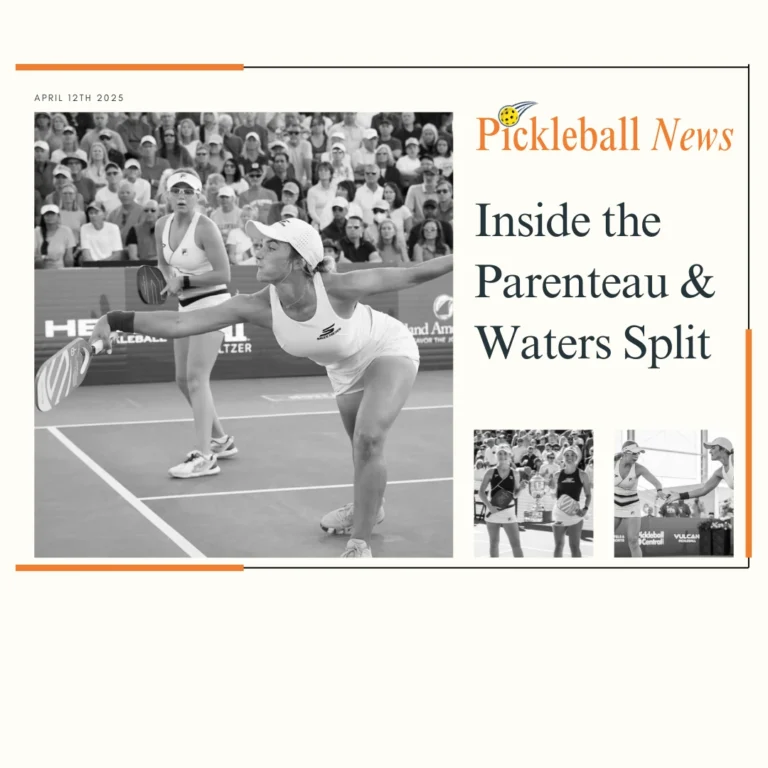
On January 8, 2026, Anna Leigh Waters didn’t just swap a logo. She signed a long-term partnership with Franklin Sports, and the first public object tied to that switch is an unreleased paddle: the Franklin Aurelius C45.

The Franklin Aurelius C45 is an unreleased 12.7mm widebody-style paddle shown with Anna Leigh Waters after her Franklin deal, and most players should not treat that as a buying recommendation.
- Franklin Aurelius C45: An unreleased Franklin C45-series paddle shown in official images with Anna Leigh Waters, described as 12.7mm and appearing widebody.
- Franklin C45 line: Franklin’s performance paddle platform positioned around C45 carbon fiber construction and pro-level iterations.
- 12.7mm thickness: A thinner paddle profile that typically increases rebound speed while shrinking forgiveness on late or off-center contact.
- USA Pickleball approval: Certification status that can determine whether a paddle can be used in USA Pickleball sanctioned play.
- UPA-A approval: Certification list tied to pro-tour governance where approval can affect event eligibility.
Track the Franklin Aurelius C45 Story
The Franklin Aurelius C45 is being searched like a retail product even though it is still unreleased, so this guide separates verified facts from fan fiction.
You can research early without being sloppy, and that is the whole point of this page.
- Why the Sponsor Switch Is the Real Story
- The Verified Facts We Actually Have
- Coach Sid Warning: 12.7mm Is Not Better
- Approval Watch: What It Means for Tournament Play
- Public Reaction: What Players Are Already Saying
- Who Should Consider It, Who Should Walk Away, and the Transition Path
- The Five-Session Hands Protocol Before You Buy Anything Hotter
- Frequently Asked Questions
What paddle is Anna Leigh Waters holding in the Franklin announcement photos?
Official coverage shows her with an unreleased Franklin C45 model called the Aurelius, described as 12.7mm and appearing widebody.
Why the Sponsor Switch Is the Real Story
Anna Leigh Waters signing with Franklin Sports is a power shift in pickleball equipment, and the Franklin Aurelius C45 is the first visible evidence of that shift.
This is not gossip and it is not a cosmetic endorsement, because the product roadmap is part of the deal.
Here is the clean timeline, because timelines tell the truth faster than adjectives:
- 2019: Waters turns pro and begins a long run of equipment continuity.
- Dec 31, 2025: Reporting widely notes her prior paddle contract reached its end date.
- Jan 8, 2026: Franklin Sports announces a long-term partnership with Waters.
- Jan 8, 2026: Coverage identifies an unreleased C45 model called “Aurelius” in the announcement imagery.
- Next immediate window: Approval status determines whether she can compete with that exact model right away.
When the most dominant player in the sport changes brands, it changes what gets built next. When what gets built next changes → what gets copied next changes. That is how an equipment “moment” becomes an equipment era.
PickleTip Insight: Sponsorship news is an early warning system for what the market will shove in your face before you have the skill to use it.
In pickleball, the biggest equipment changes happen before the first review ever gets written.
If you want to read the straight reporting behind this announcement, start with the primary coverage that identified the Aurelius and its 12.7mm thickness: The Kitchen’s report on ALW’s sponsor swap.
The Verified Facts We Actually Have
The Franklin Aurelius C45 is unreleased, so honest analysis starts with verified facts and stops before imaginary specs creep in.
If someone is “reviewing” the Aurelius today, they are either guessing, selling, or both.
| Verified Item | What Is Public | What Is Not Public Yet |
|---|---|---|
| Model name | Aurelius (unreleased C45 model in coverage) | Final retail name variants and launch packaging |
| Thickness | 12.7mm | Core composition details beyond platform branding |
| Shape | Appears widebody in imagery | Exact dimensions, swing weight, twist weight |
| Brand direction | Waters will use “new iterations” of C45 technology | Exact layup, surface texture, and production tolerances |
| Signature line intent | Waters positioned to co-design signature products | Which paddle(s) are officially her signature retail release |
That table is the line in the sand. We can discuss what a 12.7mm widebody-style paddle tends to do in modern play, but we are not pretending we know the Aurelius C45’s spin rate, balance, or sweet spot size until the public can test it.
When public specs remain limited → responsible coaching leans on mechanics, not marketing.
PickleTip Insight: Early coverage should protect players from buying hype they cannot yet verify, even when the search demand is screaming.
Coach Sid Warning: 12.7mm Is Not Better
A 12.7mm paddle like the Franklin Aurelius C45 can punish average timing, and most recreational players will play worse with it before they play better.
If you chase pro gear to fix a fundamentals problem, you are buying confidence instead of earning it.
Thin paddles feel fast because the ball gets off the face quicker. That speed is addictive. It also shrinks your margin when you are late, tense, or contacting near the edge. The Aurelius being 12.7mm is the biggest usable clue we have, and it is also the biggest warning label.
- Hands battles: faster punch response, less dwell time to stabilize
- Blocks: more pop if your paddle angle is sloppy or late
- Dinks: fine if your touch is trained, ugly if you jab
Here is the contrarian truth: the paddle most people “love” in the first ten minutes is often the paddle that quietly wrecks their consistency over the next ten sessions. When you are rushed at the kitchen and your face is lively → your unforced errors climb.
PickleTip Insight: Thin-core paddles reward preparation and punish improvisation.
If you cannot control your blocks, you do not need a hotter paddle, you need a colder ego.
Semantic variant: the Franklin Aurelius C45 pickleball paddle may be a weapon for elite pace, but it is not automatically the right paddle for you.
Want to improve outcomes instead of collecting gear? Start with repeatable decision systems that lower your error rate under stress. That is why I keep sending players toward fundamentals like shot selection strategy and defense strategy before they chase “more pop.”
Approval Watch: What It Means for Tournament Play
Franklin Aurelius C45 approval status matters because a paddle can be photographed today and still be illegal tomorrow in a sanctioned bracket.
Players confuse existence with eligibility, and those are not the same thing.
Early reporting noted the Aurelius had not yet appeared on approval lists for USA Pickleball or the UPA-A approved list at the time of announcement coverage. That is not scandalous for an unreleased product, but it does create a simple fork in the road:
- The Franklin Aurelius C45 gets approved quickly and becomes tournament-legal.
- Waters competes with an already-approved Franklin C45 model until approval lands.
When a paddle is not approved → a pro can still practice with it and promote it, but may have to compete with a different model in a specific event. That is how real equipment pipelines work.
PickleTip Insight: Approval timing is part of launch strategy, not a footnote players can ignore.
Public Reaction: What Players Are Already Saying
Community reaction to the ALW Franklin switch and the Franklin Aurelius C45 split fast into hype, skepticism, and a blunt warning that most players cannot handle 12.7mm.
That split is healthy because it keeps the sport from becoming a billboard with a handle.
In early community discussion following the announcement, three concerns kept resurfacing: thin-core forgiveness for the average player, pricing pressure from a superstar signing, and a general distrust of glossy marketing without on-court proof. If you want the raw thread, not my summary, here is the discussion that lit up quickly: r/Pickleball: ALW signs with Franklin. Thin-core anxiety Players expect more pop from 12.7mm and worry most people will spray balls long or pop blocks up under pressure. Price tension Fans immediately debated whether a marquee signing will push retail pricing higher across the Franklin C45 lineup and beyond. Proof hunger Many players want match evidence and real specs, not launch imagery, before they treat this as a “must buy.”
Most players should not copy pro paddles.
Most players improve faster with forgiveness and stability, so copying Anna Leigh Waters’ paddle choice often reduces consistency and raises error rate.
My verdict is simple: the sponsor switch is huge, and the paddle curiosity is justified, but the average buyer should slow down and get honest about their blocks, resets, and timing. If you want to play better, sharpen fundamentals first. That is why I would rather see you build your doubles positioning strategy and your kitchen dinking strategy than chase an unreleased paddle with a thin core.
Who Should Consider It, Who Should Walk Away, and the Transition Path
The Franklin Aurelius C45 will likely suit trained, aggressive early-contact players, while late swingers and floaty blockers should avoid it until their fundamentals catch up.
Buying the wrong paddle does not just waste money, it trains the wrong habits and then blames the gear.
This is the table that saves you the most regret. If you live in the left column, you can at least consider a thin, fast profile. If you live in the right column, walk away. But, If you are in the middle, you have a path.
| Better Fit | Developing Player (Transition Path) | Bad Fit |
|---|---|---|
| You win points by speeding up early | You speed up selectively after a clean dink pattern | You speed up because you feel trapped |
| Your blocks stay low under heat | Your blocks are improving but still float under surprise pace | Your blocks float when rushed |
| You contact in front and on time | You are learning earlier prep and split-step timing | You contact late and behind your hip |
| You train hands weekly | You can commit to two hands sessions per week for a month | You play once a week and “figure it out” live |
Here is the conditional rule most buyers learn the hard way: when you are rushed and late → thin-core pop turns into easy misses and popped-up blocks.
PickleTip Insight: Pros optimize for ceiling, not comfort, so “pro gear” is often the worst shortcut a developing player can take.
A paddle does not make you brave, it just makes your mistakes louder.
Chasing the Pros
As Coach AJ once said to me, “Every time a pro changes gear, half our community shows up with the same paddle and three new problems.” He was right. The next week, three players brought hot paddles, popped four returns long, and spent the night blaming equipment instead of footwork. That is the cycle. Do not join it.
I have watched this pattern repeat for years. A new paddle shows up in a pro’s hand, players buy it on Monday, and by Thursday they are either bragging about the one clean winner they hit or quietly reverting to their old setup because the new one exposes timing errors. The honest players learn something useful: gear amplifies strengths, but it cannot manufacture fundamentals. The stubborn players learn nothing and keep shopping. The Franklin Aurelius C45 is a perfect case study because it is unreleased, it is thin, and it is attached to the biggest name in the sport. That combination creates urgency, and urgency creates bad decisions unless you slow down and think like a coach.
Should a 3.5 player buy a 12.7mm pro-style paddle?
Usually no. A 3.5 player typically improves faster with a more forgiving thickness while training blocks, resets, and placement under pressure.
The Five-Session Hands Protocol Before You Buy Anything Hotter
A thin paddle only helps if your hands system is trained, so run this five-session protocol and measure your error rate before you chase more pop.
If you will not train, do not upgrade, because upgrades without training just raise the volume on your mistakes.
This is the drill plan I use when a player claims they “need” more pace. You are going to earn the right to a hotter paddle by proving you can control it.
- Session 1: Two-player kitchen line punch exchanges, 6 minutes total, focus on paddle angle and staying compact.
- Session 2: Partner speedups to the dominant hip, 30 reps each side, goal is low block back to feet, not a winner.
- Session 3: Randomized pace feed, 5 minutes, partner alternates soft dink and fast ball, your job is to recognize and choose.
- Session 4: “Two lows before you go” pattern, you must block two hard balls low before you are allowed to counter.
- Session 5: Game to 11 with a rule: every popped-up block is minus one point, track how often it happens.
Measure two things across five sessions: your popped-up blocks per session and your long misses on fast exchanges. When those numbers drop → you have earned the right to consider a thinner profile. When those numbers stay high → you do not need the Franklin Aurelius C45, you need another month of hands work.
Your paddle is not the problem until your hands are stable under heat.
Frequently Asked Questions
It has been shown in official imagery and reported as an unreleased model, but public retail availability has not been confirmed in the reporting.
No. Public coverage has described thickness and apparent shape, but detailed specs like swing weight and twist weight have not been released.
Approval depends on certification lists. Early reporting indicated it was not yet listed at the time of announcement coverage.
No. Pros choose paddles that match trained timing and aggression, not what maximizes forgiveness for everyday players.
What should I do while waiting for real specs and testing? Train hands and blocks and track your error rate. If you cannot keep blocks low under pressure, a thinner paddle will usually make that worse.
Run the five-session hands protocol above, track your popped-up blocks per game, and do not upgrade paddles until that number drops. For more information about paddles that we have tested and reviewed, continue researching in our Pickleball Paddle Reviews section.
Update 1/12/2026: Pre-orders for the Anna Leigh Waters Signature C45° begin January 16.