

Best Foam Core Pickleball Paddles: Power, Feel & Consistency Rankings
Some paddles feel exciting for five minutes and exhausting for five games. That is the trap a lot of players fall into with foam-core hype. The best foam core paddle can make your resets calmer, your counters steadier, and your mishits less punishing. The wrong one can still leave you fighting the paddle instead of trusting it.
Looking for the best foam core pickleball paddle? This guide is built to help you choose by fit, not hype. Foam-core paddles are not one-size-fits-all. Some feel calmer and more forgiving. Some play firmer and faster. Some make life easier on resets, while others make more sense for players who already know they want pace. If your current paddle feels hollow, twitchy, or less trustworthy when rallies speed up, this page will help you narrow the field without overspending on the wrong kind of help.
The best foam core pickleball paddle depends on what you need the paddle to fix. This roundup is organized by fit first: balanced all-court options, plush-control models, firmer offense-first choices, touch-first builds, and lower-cost entries. Use it to narrow the category fast, understand the tradeoffs, and avoid buying more paddle than your game can actually use.
Coach’s note: The most common foam-paddle mistake is buying the one that sounds hottest in a video when your real problem is resets, counters, or off-center stability. Foam can help, but only if you pick the right version of it.
Who This Guide Helps
This guide helps players who want a more predictable, more stable paddle response and are trying to decide whether foam is the right lane for their game.
- Players frustrated by hollow feel, shaky counters, or ugly off-center punishment
- Players who want softer feedback and a calmer response without giving up usable offense
- Shoppers trying to separate plush-control foam from firmer power-leaning foam
- Players who want a bigger, more usable sweet spot feel
- Readers who want a shortlist first, then deeper review links and explanations for finalists
- Players who care more about fit than chasing the loudest paddle on social media
How to Use This Foam Paddle Guide
This page is built for three kinds of readers: people who want a fast shortlist, people who want a category-fit view before buying, and people who still need to decide whether foam is even the right lane for their game.
- Fast decision: jump to Current Foam Core Standouts for the lowest-regret starting points.
- Spec comparison: use the Performance Reference Table to clarify tradeoffs like speed, stability, or price, not to make the decision for you.
- Playstyle fit: scan the Power • Control • Feel Tiers to match your game before you chase one specific paddle.
- Deeper understanding: read the educational sections below if you want to understand why foam behaves differently and why some models feel calm while others still hit like trouble.
- Finalists only: use the linked full reviews when you are down to two or three paddles, not ten.
If you are moving from honeycomb and you are tired of dead spots, surprise rebounds, or a paddle that feels lively one day and vague the next, this guide is here to help you self-sort quickly.
One buying reality to keep in mind: some full-foam builds ask you to manage more total paddle than your old setup did. A quiet thud and extra stability can sound great until the paddle starts feeling late in fast kitchen exchanges. If hand speed is already one of your pressure points, do not ignore total paddle demand just because the feel sounds plush.
What to Expect If You’re Switching From Another Paddle Type
- From Gen 2 thermoformed: expect more plushness and a calmer response on rushed contact, with less of the wild rebound some players fight under pressure. The tradeoff is that some foam paddles feel less crisp or less instantly poppy at first.
- From a traditional control paddle: expect more off-center stability and a broader sweet spot, but do not be surprised if the feedback feels more muted at first. Quieter is not always weaker. Sometimes it is just more settled.
- From a poppy power paddle: expect a more measured response and often a little more forgiveness. Good foam transitions can still let you attack, but they usually feel less chaotic on counters and defensive contact.
Quick tip: foam can feel a little firmer in cold weather and a little plusher in heat, so judge feel over multiple sessions, not one day.
Why Foam Core Technology Changed Pickleball
Foam core technology changed what many players expect from this category. Instead of spending every rally adjusting for odd rebounds, harsh feedback, or a face that gets vague under speed, many players started chasing something more useful: a calmer, more repeatable response.
I first noticed it during a stretch of games where my opponent’s paddle sounded like a hollow drum while mine landed with a quiet, confident thud. No mystery rebound. No ugly buzz in the hand. Just cleaner contact, steadier counters, and fewer surprise rebounds when the rally got chaotic. After a few rallies someone finally asked, “What paddle is that?” That was the moment foam stopped feeling like a gimmick and started feeling like a real equipment lane.
That shift did not happen overnight. Early foam-core attempts hinted at better feel, but some played too muted or too vague. What improved was the execution. Better density tuning, stronger structural foam, improved face integration, and smarter layup engineering turned the category from an experiment into a real buying lane.
This is the real buying problem the list is solving: a lot of players know they want the calmer side of the market, but they do not know whether they need plush control, grounded all-court stability, touch-first finesse, or a firmer, faster build that still keeps some foam benefits. That is where most bad buys happen.
The Real Problem Foam Solved
For years, players quietly compensated for their equipment.
- Edge drop-offs
- Hot spots near center contact
- Dead zones near the perimeter
- Unpredictable rebounds during fast exchanges
Most players did not call it a paddle problem. They assumed it was a technique problem.
Older honeycomb builds could feel great in the middle but suddenly lose life near the rim. Balls struck toward the edge sometimes fell off the face like they hit a dead zone. Good full-foam construction reduces that dead-edge drop-off by distributing impact energy more evenly across the paddle face. Instead of a small sweet spot surrounded by punishment, you get a much larger usable contact zone.
The biggest real-world difference is not just the center sweet spot. It is how the paddle behaves in the miss zone. Better foam builds keep off-center contact more playable instead of punishing.
- Bigger usable sweet spots
- More stable counters
- Cleaner resets
- Less vibration in the hand
- More predictable rebound behavior
Gear Geek Deep Dive: Why Foam Improves Predictability
Traditional honeycomb cores rely on repeating cell structures with open space throughout the paddle. Those gaps can introduce micro-variations in rebound depending on where the ball contacts the face.
Foam cores behave differently because the interior volume is more continuous. That makes energy transfer more uniform.
The result is not just softer feel. It is mechanical consistency.
That consistency reduces:
- edge drop-offs
- dead zones
- unexpected rebound angles
- the hot-cold feel difference between perfect center contact and everything else
For stronger players, that can mean more confidence attacking under pressure. For everyday players, it often means fewer balls that come off the face feeling like the paddle changed its mind halfway through the swing.
Foam vs Honeycomb: The Collapse vs Compression Test
One useful way to think about the difference is this:
- Honeycomb: reacts through localized collapse
- Foam: manages impact through compression
That is not a lab paper definition. It is a player-useful one.
Honeycomb can feel great until the exact contact point, pace, or angle changes enough to produce a weird result. Foam, when done well, tends to smooth that out. It compresses and recovers in a way that makes the paddle feel more trustworthy when you are late, stretched, or defending chaos instead of swinging on schedule.
That is why foam changes confidence and decision making, not just feel. Players are more willing to block, reset, counter, and leave the face quiet when they trust the response.
Foam Core Evolution: Why Newer Builds Feel Better
Early foam attempts proved the concept but not the execution. Some paddles damped too much. Others lacked structural stability.
Modern builds improved the category through better density tuning, stronger structural foams, improved face integration, and smarter layup engineering.
What changed was not just the materials list. It was the integration. Newer builds do a much better job of combining structural foam, perimeter support, and face layup design so the paddle feels more stable without feeling dull.
The result is a generation of paddles that feel stable without feeling dead.
How We Tested & Ranked These Paddles
Rankings here are based on a blend of measured data and real match play. We look at spin behavior, swing-weight implications, stability, and extended on-court use to judge how a paddle behaves when the rally gets fast and contact is no longer perfect.
Placement is not about launch order. It is about whether a paddle keeps solving real player problems after the honeymoon phase wears off. On a best-of page like this, that matters more than launch-week noise.
- Power & Pop – serve pace, drive penetration, and rebound personality
- Spin – bite and consistency when swings get faster and contact gets rushed
- Control & Predictability – drops, blocks, counters, and depth management
- Sweet Spot & Stability – forgiveness, twist resistance, and off-center behavior
- Feel – dwell, vibration damping, and comfort on repeated contact
- Value & Assurance – price, durability expectations, fit confidence, and overall buyer logic
Current Foam Core Standouts
These are the fastest low-regret starting points in the category. They are here because they cover distinct buying lanes clearly, not because every reader needs the same paddle. Think of this as the shortlist before the deeper reading.
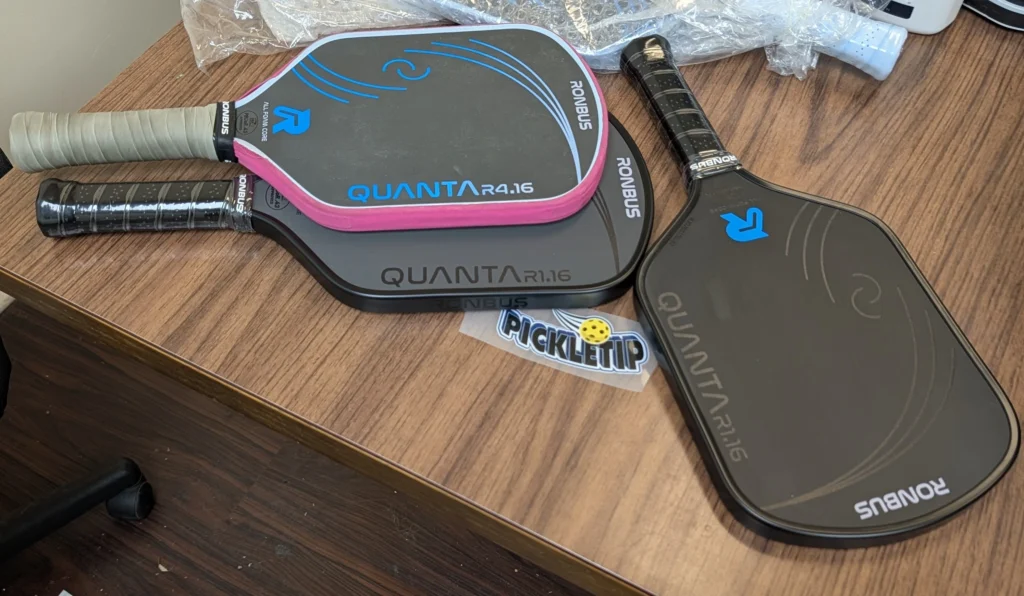
- Best overall foam performance: Ronbus Quanta – balanced all-court foam behavior for players who want stability without swinging to either extreme.
- Best fast-hands hybrid: Honolulu J2CR – quick through exchanges with usable pop and a more direct response than muted control-first builds.
- Most plush control feel: Honolulu J2NF – calm, forgiving, and especially comfortable on resets, counters, and off-center saves.
- Best plush-control alternative: Honolulu J2FC+ – smooth, quiet, and forgiving for players who win with resets, drops, and controlled depth.
- Best touch-first foam build: Selkirk 008 Maxima – soft, connected feel for players who care more about touch and comfort than raw flash.
- Best dense controlled-power foam build: Spartus P1 Hybrid – grounded power, sticky spin, and strong stability for players who want the ball to stay down instead of springing high.
- Best value foam tech: Vatic V-Sol Power – one of the easiest ways to try modern foam behavior without paying premium-brand prices.
- Best shape + counter-speed upside: 11SIX24 Vapor Power 2 – a fast hybrid with real bite and fast hands, but one that rewards disciplined face angles on blocks and resets.
Coach’s note: “best overall” is not the same thing as “best for you.” If your game breaks down on soft resets, do not buy the loudest power paddle on the page and expect it to solve a touch problem.
What Is a Foam Core Pickleball Paddle?
A foam core pickleball paddle uses structural foam as a major part of the core design instead of relying only on a hollow honeycomb grid. Buyers care because many foam builds feel calmer, less harsh, and more stable across the face when contact gets messy.
Full foam usually means the foam spans the hitting area rather than showing up only in perimeter sections or inserts. In better full-foam builds, that structure also helps support the perimeter and sidewalls, which is a big reason ugly off-center hits stop twisting the paddle face so badly. More stable perimeter support usually means better twist resistance, a more usable sweet spot, and a response that feels less twitchy when contact drifts away from center.
Foam also acts like a vibration dampener and energy regulator. Instead of letting impact feel hollow, buzzy, or randomly jumpy, it helps smooth out how the paddle absorbs and returns force. That is a big part of why good foam paddles sound quieter, feel more settled, and produce fewer mystery rebounds under pressure.
Foam is a construction lane, not a personality guarantee. Some foam paddles are plush and muted. Some are firm and punchy. Some are balanced enough to live in the middle. That is why fit matters more than hype.
Performance Reference Table
| Paddle | Power | Control | Stability | Spin | Best Fit |
|---|---|---|---|---|---|
| Ronbus Quanta | Balanced | High | Very High | High | All-court players |
| Honolulu J2CR | Moderate-High | High | High | High | Fast-hands hybrid players |
| Honolulu J2NF | Moderate | Very High | High | High | Reset-focused players |
| Honolulu J2FC+ | Moderate | Very High | High | High | Controlled-depth players |
| Selkirk 008 Maxima | Moderate | Elite | High | High | Touch specialists |
| Spartus P1 Hybrid | High | High | Very High | High | Controlled-power players |
| Vatic V-Sol Power | High | Moderate | High | High | Value offense |
| 11SIX24 Vapor Power 2 | High | Moderate | Very High | High | Fast hybrid / durability seekers |
Use this table to clarify tradeoffs, not to outsource the decision. A paddle can score well on paper and still be the wrong answer for your hand speed, timing, or soft-game needs.
Power • Control • Feel Tiers
Balanced All-Court Foam
- Ronbus Quanta
- Spartus P1 Hybrid
Fast Hybrid Foam
- Honolulu J2CR
- 11SIX24 Vapor Power 2
Plush Control Foam
- Honolulu J2NF
- Honolulu J2FC+
Touch-First Foam
- Selkirk 008 Maxima
Offense-Leaning Foam
- Vatic V-Sol Power
Editor Winners by Buying Lane
Best Overall Foam Paddle: Ronbus Quanta
Best fit: the player who wants the most balanced entry point into the foam category without starting from an extreme identity.
Why it made the list: “Best overall” only works if a paddle feels like a sensible center of the map. During chaotic open-play exchanges, the Quanta stabilized rushed counters better than most hollow builds while still feeling usable across the rest of the court.
Tradeoff: a best-overall pick is rarely the most specialized choice in any one direction.
Avoid if: you already know your game needs a much more plush control feel or a much more attack-forward response.
Read next: Ronbus Quanta review
Best Fast-Hands Hybrid: Honolulu J2CR
Best fit: players who want quick handling, usable pop, and a more direct response than muted control-first foam builds.
Why it made the list: this is the lane for players who want some foam forgiveness but do not want the category to feel sleepy.
Tradeoff: quicker, more direct builds can demand cleaner face control than plush-control options.
Avoid if: your main problem is calming down your resets or making mishits feel less chaotic.
Read next: Honolulu J2CR review
Most Plush Control Feel: Honolulu J2NF
Best fit: players who care more about calm resets, controlled counters, and a softer-feeling confidence window than raw flash.
Why it made the list: the J2NF is the clearest plush-control answer for players whose real bottleneck is not offense, but keeping the ball organized when pace rises.
Field note: reset consistency improved most here when contact got rushed and ugly.
Tradeoff: if you shop foam expecting instant free power, a control-first fit can feel less dramatic at first.
Avoid if: you mainly want the most aggressive response possible and do not care whether the feel leans plush.
Read next: Honolulu J2NF review
Best Plush-Control Alternative: Honolulu J2FC+
Best fit: players who want a quiet, forgiving, depth-friendly paddle that stays connected in the soft game.
Why it made the list: this build leans into control, comfort, and clean depth management instead of trying to win the first five minutes of demo time.
Tradeoff: players wanting a firmer punchier reply may find it too calm.
Avoid if: you want your paddle to feel lively first and forgiving second.
Best Touch-First Foam Build: Selkirk 008 Maxima
Best fit: players who want foam-category feel to show up through touch, comfort, and a more measured response instead of a louder personality.
Why it made the list: not every foam shopper is trying to buy more putaway energy. Some are trying to make the soft game feel less jumpy and more readable.
Tradeoff: a touch-first identity may not satisfy players who judge every paddle by how explosive it feels on speedups and drives.
Avoid if: your main buying goal is a more aggressive, attack-forward feel.
Best Dense Controlled-Power Foam Build: Spartus P1 Hybrid
Best fit: players who want grounded power, strong stability, and a lower-launch feeling response that still stays composed.
Why it made the list: this is a good answer for players who want the ball to stay down instead of springing high.
Tradeoff: “controlled power” is not the same thing as “free offense.”
Avoid if: you want the plushest, quietest, most reset-first feel on the page.
Read next: Spartus P1 Hybrid review
Best Value Foam Tech: Vatic V-Sol Power
Best fit: players who want a lower-cost entry into modern foam behavior without paying premium-brand prices.
Why it made the list: this is one of the easiest ways to experience the category without treating the purchase like a luxury experiment.
Tradeoff: value picks usually ask you to accept a compromise somewhere in feel refinement, specialization, or finishing polish.
Avoid if: you already know you are shopping for the most refined soft-game experience possible.
Read next: Vatic V-Sol Power review
Best Shape + Counter-Speed Upside: 11SIX24 Vapor Power 2
Best fit: players who want fast hands, real bite, and a more aggressive hybrid profile while keeping some foam-adjacent stability benefits.
Why it made the list: this is a shape-and-speed answer for players who want the category to feel quick and dangerous rather than plush and patient.
Tradeoff: it rewards disciplined face angles on blocks and resets.
Avoid if: your first priority is making the soft game feel calmer and less reactive.
Read next: 11SIX24 Vapor Power 2 review
Why Players Actually Switch to Foam and Don’t Go Back
Most players do not switch to foam because they want novelty. They switch because they are tired of compensating.
Once players feel a paddle that stays calmer on rushed blocks, absorbs pace better on resets, and keeps off-center contact more playable, it becomes hard to go back to a face that feels jumpier or more hollow under stress.
That does not mean every foam paddle is better than every honeycomb paddle. It means foam has become a legitimate answer for players whose real problem is not “I need more speed.” Their real problem is “I do not trust what happens when the rally gets messy.”
The biggest shift players report is not just feel. It is confidence. When equipment becomes predictable, decision-making improves.
- More trust in resets
- Less fear of edge contact
- Better counters under pressure
- Calmer hands at the kitchen
Foam Facts That Matter Before You Buy
- Not all foam paddles feel the same. Some are plush and muted. Some are firm and punchy. Foam is a construction lane, not a personality guarantee.
- Weight still matters. A stable paddle can still feel late if the total package is too demanding for your hand speed.
- Muted does not always mean weak. Some paddles feel quieter while still producing plenty of usable pace.
- Fit beats hype. The most talked-about release may still be wrong for your timing, touch, or reload speed.
Common Foam Paddle Buying Mistakes
The most common switching mistake is judging the paddle too quickly by sound or first-hit excitement.
A foam paddle can sound quieter and still play bigger than expected. It can also feel exciting in five warmup swings and become harder to manage once counters, resets, and rushed contact start deciding points.
That adjustment trips people up. The quiet thud does not automatically mean weak. It often just means the response is different, and you have to stop listening for the old hollow drum and start watching actual ball behavior. What sounds muted can still be the cleaner, more efficient hit.
- Judging by sound: quieter does not automatically mean underpowered.
- Buying for hype: the most talked-about paddle may still be wrong for your hand speed and control needs.
- Ignoring fit: some players need more plushness, some need more direct response, and some just need a better-balanced all-court option.
- Confusing muted feel with weak performance: vibration damping and lower pitch are not the same thing as less usable offense.
- Ignoring paddle demand: stability sounds great until the paddle starts feeling late in the fastest exchanges.
Buyer’s Calibration Checklist: Does Your Foam Paddle Actually Fit?
This is not a training section. It is a five-minute buyer reassurance check. If you just bought a foam paddle or are trying to decide whether one of these picks makes sense, use these quick tests to see whether the paddle is helping in the places that actually matter to your game.
- 1. Calibrate your dink height. For the first 10 minutes, focus on sending neutral dinks 6 to 12 inches above the net. Foam often makes contact feel calmer, so many players accidentally under-hit at first because the paddle feels less dramatic than their old one.
- 2. Check your reset depth under pressure. When you are blocking or resetting from midcourt, do not force the ball. Let the paddle absorb pace and watch where the ball lands. If your resets are dying too short, add a little more lift. If they are floating long, relax your grip and trust the face.
- 3. Test the off-center miss on purpose. Hit a few rushed counters and imperfect blocks intentionally. This is where foam earns its money. You are trying to feel whether the paddle keeps the ball playable when contact drifts toward the edge.
- 4. Compact power check. Hit from a shorter swing and see whether the pace feels usable or just flashy in warmups. Good offense should still feel controllable when your swing gets smaller under pressure.
- 5. Live-rally check. Judge the paddle after ugly exchanges, not just clean feeds.
Coach’s note: if the paddle feels muted in session one, do not panic. Muted is not always weak. Sometimes it just means the face is giving you fewer surprises, and your hands have not learned to trust that yet.
Decision Guide: Which Foam Lane Should You Start In?
Use your current paddle as the baseline. What feels powerful to one player can feel muted to another, and what feels stable to one player can feel slow to someone coming from a quicker build.
- Start with plush control foam if your biggest issue is resets floating, counters wobbling, or off-center contact feeling punishing.
- Start with balanced all-court foam if you want the category benefits without committing to either extreme.
- Start with fast-hands hybrid foam if you like quicker exchanges and want a more direct response than muted control-first builds.
- Start with touch-first foam if comfort, connection, and soft-game readability matter more than punch.
- Start with offense-leaning foam if you already know you want pace, but you still want a less chaotic response than many hot power builds.
Who Should Not Buy Foam Yet
- Players who rely on trampoline power and do not want a calmer response profile
- Players who need ultra-light swing demand above everything else
- Players who strongly prefer crisp vibration feedback and audible pop
- Players who still do not know whether their real problem is technique, timing, or equipment fit
Next Steps by Intent
- Need the deeper tech explanation? Read Why Foam Core Paddles Feel Different Under Pressure.
- Already leaning Honolulu? Compare Honolulu J2NF and Honolulu J2CR.
- Want a balanced all-court option? Start with the Ronbus Quanta review.
- Need value first? Read the Vatic V-Sol Power review.
- Want grounded controlled power? Read the Spartus P1 Hybrid review.
- Want a faster hybrid lane? Read the 11SIX24 Vapor Power 2 review.
FAQ
Not automatically. Many foam paddles prioritize stability, repeatability, and a calmer response rather than raw pop. Some still hit hard, but “foam” is not a shortcut for free power.
Usually that is the biggest appeal. Better full-foam builds tend to widen the usable contact zone and make off-center hits feel less punishing.
Spin depends more on face texture, dwell, and the overall build than core type alone. Foam can help the paddle feel more connected, but it does not guarantee more spin by itself.
Many hold their feel longer because the interior structure distributes impact energy more evenly, but durability still depends on the specific paddle, layup, and construction quality.
Most modern foam paddles are approved for tournament play, but always check the current approval status for the exact model and governing body you care about.
Because they usually damp more vibration and manage impact differently than hollow-feeling builds. Quieter does not automatically mean weaker.
Bottom Line
The best foam core pickleball paddle is the one that solves your real problem.
If you need an all-court answer, start with the Ronbus Quanta. If you want the calmer side of the lane, start with the Honolulu J2NF. If you want to understand why foam matters before you buy, this page should now give you the full map instead of just a shortlist.
The goal is not buying the loudest paddle. It is buying the paddle that lets your game feel predictable again.


Hola, volia saber el seu preu.
The prices are listed for each paddle.