
Pickleball Kitchen Rules (2026): Stop Faults, Command the NVZ
Pickleball Kitchen Rules: What You Can & Can’t Do in the NVZ
Picture this: I was coaching a new student, who had the most beautiful forehand dink. But almost every time, after her perfectly placed shot, she’d take one tiny, innocent step too far and fault. “It’s like the kitchen line is a tripwire for my brain!” she’d say. Her frustration, which I’ve seen mirrored in countless players, struck a chord. I wrote this guide because the non volley zone (NVZ), affectionately known as the “kitchen,” isn’t just a painted box on the court. It’s the silent arbiter of so many points, and misunderstandings about the pickleball kitchen rules can derail an otherwise brilliant game.
If you’ve ever felt a tremor of doubt about where your foot should be, or wondered if your paddle hovering over the line is okay, this article is for you. We’re going beyond the black and white text of the rulebook. We’re diving into the “feel” of the kitchen, understanding why these rules exist, and how to make them work for you, not against you. My personal take? Mastering the kitchen is less about memorizing rules and more about developing a primal awareness of your court position. It’s the secret sauce to consistent, fault free play.
Whether you’re new to the game or a seasoned player looking to sharpen your edge, truly grasping the pickleball kitchen rules is fundamental to elevating your game and boosting your confidence.
What Exactly is the Kitchen in Pickleball?
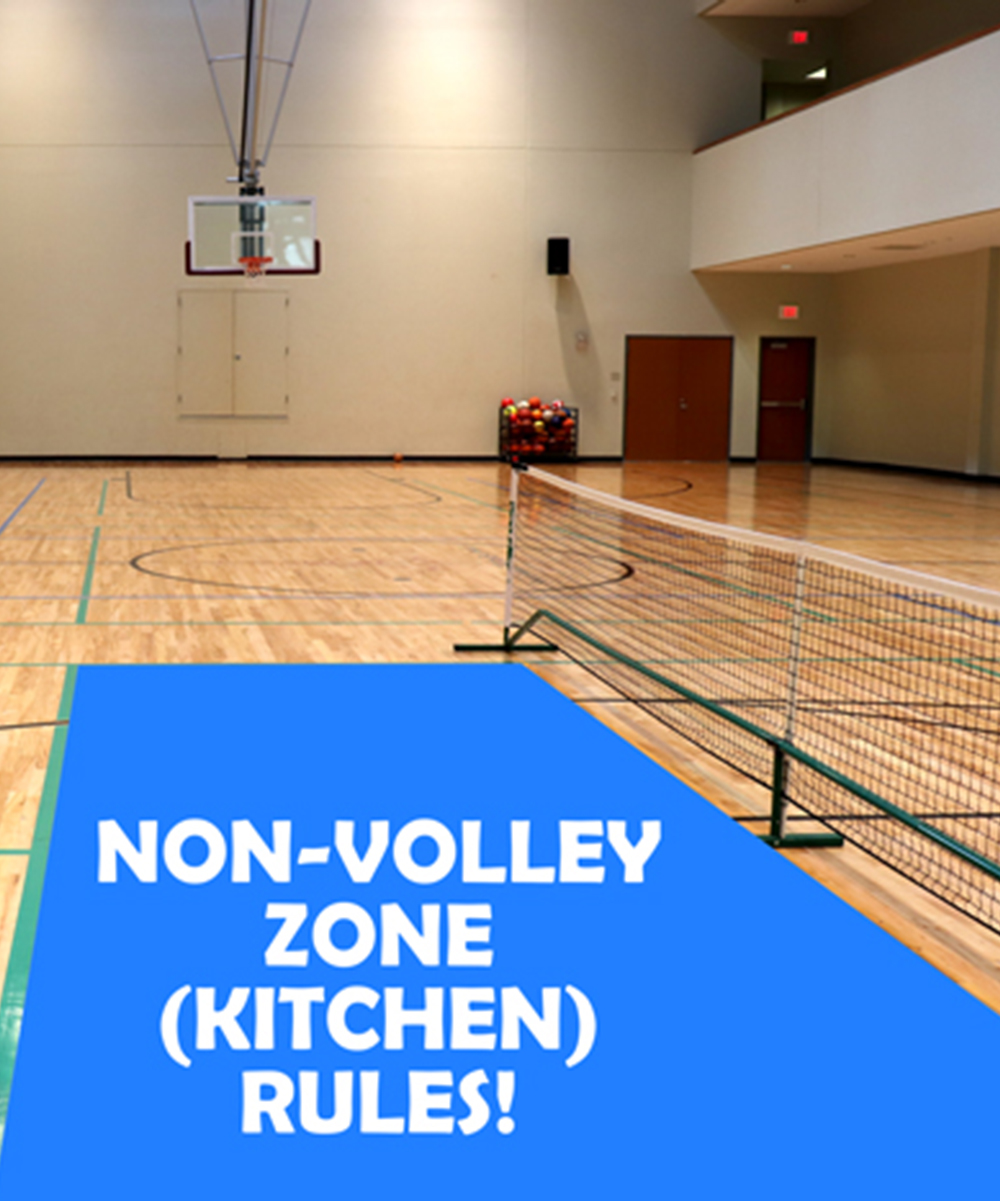
The “kitchen,” officially called the non-volley zone (NVZ), is the 7-foot deep area on both sides of the net, stretching from sideline to sideline. It’s the most critical strategic zone on the court.
Here is the fundamental truth about the NVZ:
- Player Movement: A player can enter the kitchen at any time during the game. There is no rule prohibiting you from simply standing or walking inside the NVZ.
- The Golden Rule (The Restriction): A fault occurs only if a player, or anything they are wearing or carrying, is touching the NVZ (or the line) during the act of volleying the ball (hitting the ball out of the air).
This means you could, theoretically, stand completely inside the kitchen for the entire rally, and it would only be a fault if your opponent hits a ball to you, and you hit it before it bounces.
The NVZ is the physical ground itself, not the airspace above it. So, your paddle can be soaring over the kitchen, but your feet must stay out if you’re volleying.
The real spirit of the kitchen rule? It’s designed to prevent players from camping right at the net and slamming every ball like a hungry velociraptor. It promotes strategic dinking, patience, and a more balanced game, making pickleball the chess match it’s meant to be.
Basic Pickleball Kitchen Rules: Your 2026 Handbook
While the game evolves, the core pickleball kitchen rules remain consistent. Here’s a clear breakdown of the essentials for 2026:
| Rule | Common Mistake | Example Scenario |
|---|---|---|
| No volleying while touching the kitchen or line. | Foot or body part barely on the line. | Fault if even your shoelace touches the line mid volley. |
| Your momentum after a volley cannot carry you into the kitchen. | Assuming a dead ball saves you. | You volley, ball hits the opponents side of the court, then step in – still a fault due to momentum. |
| Any object touching the kitchen counts. | Forgetting about hats, paddles, or loose clothing. | Your hat falls into the NVZ after you hit a volley – that’s a fault. |
| You can reach over the kitchen with your paddle – just don’t touch. | Hesitation or fear of reaching. | It’s perfectly legal to volley with your paddle far over the kitchen, as long as your feet stay outside. |
Mini Recap:
- The kitchen rule is about physical contact with the ground, not just your paddle’s position.
- Momentum faults are real and often catch players by surprise.
- Every single thing connected to you is considered part of you for this rule.
When Can You Actually Step Into the Kitchen?
Now that you know you can enter the kitchen anytime, let’s look at the crucial difference in footwork based on how the ball is played:
- Before the bounce? You can step in, but if you hit the ball before it bounces (a volley), you are immediately at fault. Stay out if the ball hasn’t bounced yet and you plan to play it.
- After a bounce? Welcome to the kitchen party, step on in! Once that ball hits the ground, the kitchen becomes fair game for you to enter, hit the ball, or reposition yourself.
- After a volley? This is critical. You may not step into the kitchen, even accidentally, from momentum following the shot. Your feet must remain outside the NVZ after you hit a ball out of the air until you regain balance.
I’ve seen players make incredible volley saves, only to stumble forward into the kitchen in their excitement. It’s a bitter pill to swallow, but a fault nonetheless. My advice? After a volley, think “anchor.” Plant your feet, maintain balance, and let your body settle before considering any forward movement. It’s like balancing a feather on your nose, but with more urgency.
Advanced Kitchen Rule Scenarios Most Players Miss
Beyond the common faults, here are a few less obvious situations that still result in a kitchen violation. These are the ones that separate the rule followers from the true kitchen masters:
- The Airborne Volley Launch: You can jump from a position outside the kitchen, volley a ball while airborne, and then land cleanly outside the kitchen. This is a legal shot, famously known as an “Erne.” The rule states that you cannot volley while touching the kitchen or the non-volley line. It is about where you last touched the ground before and after you hit the ball, not the space your body travels through. You can jump over the kitchen’s plane as long as you do not touch the kitchen surface with your body, clothing, or paddle before, during, or after the volley. The fault occurs the moment any part of you makes contact with the ground or the line.
- The Domino Effect: You volley a ball. Your partner, standing behind you, accidentally bumps into you, causing your foot to touch the kitchen line. Fault! Remember, anything physically connected to you, or that impacts you, can result in a fault. It’s a team effort, even in faulting.
- The Displaced Object: You make a legal volley. Your paddle, after striking the ball, brushes your hat, which then falls on the kitchen line. Fault! This goes back to “anything you are wearing or carrying.” It’s a fine line, but the line is there for a reason.
- Myth Debunked: The “Dead Ball” Momentum Loophole: Many players mistakenly believe if the ball is already “dead” after their volley, then momentum carrying them into the kitchen doesn’t matter. Truth: Even if the ball is dead, the fault is called the moment you make illegal contact with the kitchen (You must regain your balance). It doesn’t matter what happens to the ball afterward. I once lost a gold medal match because I didn’t reset after a volley, thinking the point was over. You never forget a fault like that.
PickleTip Pro Insight: Here’s what I emphasize in my coaching sessions: develop “kitchen radar.” It’s an internal gyroscope that always tells you exactly where that line is. Practice controlled stops after volleys, imagining that line is a hot lava river. Trust me, it saves points and stops those “oops” moments before they happen.
Who Can Call a Kitchen Fault?
In casual, recreational play, the spirit of pickleball encourages self policing. Any player on the court can call a kitchen fault. It’s about honesty and fair play. If you foot fault, the expectation is that you call it on yourself. In sanctioned tournament play, official referees are responsible for calling faults, and their decision is generally final. If there’s a dispute, the official USA Pickleball rules are the ultimate guide. You can always reference USA Pickleball’s official rulebook for the definitive word.
Drills for Kitchen Confidence: Putting Rules into Practice
Knowing the rules is one thing, internalizing them is another. Here are a couple of drills I use to help players build muscle memory around the pickleball kitchen rules:
1. The “Freeze Frame” Volley Drill
Goal: To eliminate momentum faults after volleys.
- Stand just outside the kitchen line.
- Have a partner feed you volleys that you can hit easily.
- After each volley, “freeze” in place for two seconds. Focus on maintaining your balance and ensuring no part of your body or paddle touches the kitchen line or enters the NVZ.
- If you sway or touch the line, reset and try again.
This drill trains your body to land safely and avoid that unconscious forward lunge.
2. The “Dink and Dash” Drill
Goal: To practice entering and exiting the kitchen legally after a bounce.
- Start at the baseline.
- Your partner dinks a ball short, forcing you to run forward into the kitchen to hit it after it bounces.
- After hitting the dink, immediately retreat out of the kitchen, ready for the next shot.
- Vary the dinks so you’re constantly practicing quick, controlled entries and exits.
This drill helps you feel comfortable and agile around the kitchen, reinforcing that stepping in is only okay post bounce.
Want more drills to boost your positioning and shot timing? Explore our guide to Pickleball Drills for Beginners.
Kitchen Rule Myths Debunked
Let’s clear up some common misconceptions that float around the pickleball courts like rogue dinks:
- Myth: “You can’t be in the kitchen at all, ever.”
Truth: You can be in the kitchen anytime, just not when you are hitting a ball out of the air (a volley). You can absolutely step in after a bounce. - Myth: “Momentum rules only apply to your feet.”
Truth: No, they apply to everything connected to you, from your hat to your paddle to your partner if they push you. - Myth: “It’s okay to volley and then land in the kitchen if the ball was already out.”
Truth: Nope. Even if the ball goes out, the fault is called the moment you make illegal contact with the kitchen. It doesn’t matter what happens to the ball afterward. This one is a real gotcha for many players. - Myth: “If your opponent commits a fault, you can step into the kitchen to volley the ball back.”
Truth: No. Even if your opponent faults, the rally is still technically live until a fault is called or the ball is dead. You must still adhere to all rules, including the kitchen rule, until the point is officially over.
FAQs: Pickleball Kitchen Rules
It’s a fault. The point goes to the other team, even if it’s your shoelace, a piece of clothing, or your paddle touching the line or inside the kitchen while you are volleying.
No. If you initiate the volley while any part of your body is touching the kitchen ground or line, it’s still a fault, even if you jump up and land cleanly outside the kitchen. Your point of origin for the volley must be outside the NVZ.
Yes, absolutely. As long as your feet and body are not touching the kitchen ground or line, you can reach your paddle over the kitchen as needed to make a legal volley. It’s all about where your feet are grounded.
You can step into the kitchen after hitting the ball regardless of whether it bounced, as long as you were not touching the NVZ or line during or immediately after a volley. The key is timing: If you are hitting a groundstroke (ball bounced), step right in! If you are hitting a volley (ball did not bounce), you must stay out until you regain your balance, or it is a fault due to momentum.
Turn Rules Into Confidence: The Kitchen is Your Friend
The kitchen rules aren’t designed to be punitive. They’re designed to make pickleball the incredibly strategic, nuanced, and fun game it is. When you truly “get” the NVZ, it transforms from a feared boundary into a strategic ally. You’ll find yourself dinking more confidently, setting up points with greater precision, and anticipating your opponent’s moves like a seasoned pro.
Want to build on this? Learn how NVZ footwork affects hands battles at the kitchen.
My final piece of advice: embrace the kitchen. Practice those dinks. Master those controlled volleys. The more comfortable you become with its boundaries, the more freely and effectively you’ll play. It’s like learning to dance with a very particular partner: once you know the steps, the rhythm becomes natural.
Now that you’re armed with a deeper understanding of the pickleball kitchen rules, go forth and conquer that court! Bookmark this guide and share it with your pickleball pals. Have a wild kitchen fault story? Share it with us, we might feature it in our next strategy breakdown! Want more strategy breakdowns like this? Subscribe to PickleTip updates and stay ahead of the game!



Very helpful guide.
“The airborne volley launch”.
We are probably not the first group of players to disagree with your conclusion about the plane of the kitchen. Unless we are lacking a total comprehension of your meaning, the plane of the kitchen is violated with many volleys where one’s body parts are across the kitchen plane but not touching the kitchen ground. Please correct your article or explain how one can hit an ERNIE. Thanks,
Thanks for catching that Paul. This was an older article that I misinterpreted the rules at the time, and have now fixed the verbiage.
You have the rule wrong.
You can go into the kitchen anytime. You just can’t volley while in there.
That is a very insightful observation, and thank you for bringing it up! You are absolutely right: a player can step into the Non-Volley Zone (NVZ) at any time during a rally. There is no rule against standing or walking in the kitchen.
My original article emphasized the rule that catches most people out, which is why I focused so heavily on it: the fault is only triggered when a player is touching the NVZ (or the line) during the act of volleying.
I’ve clarified the opening sections of the article to make this distinction much more obvious.
Your comment helped me make the guide much clearer for everyone, separating the simple act of movement from the rule about hitting the ball!
Thanks again for the sharp eye! Happy dinking!