Honolulu J6CR vs J2CR: Pick the Right CR Shape
If rallies rush you at the hip, buy the paddle that shows up on time. If you lose points stretched wide, buy the one that gives you reach.
Quick verdict: J2CR for jammed blocks, counters, and ugly saves; J6CR for reach, leverage, and finishing through lanes when you’re early.
- Skip this comparison if you already know you only want an elongated shape no matter what (you’re buying J6CR).
- Skip this comparison if you already know your whole identity is blocks/counters/resets (you’re buying J2CR).
- Don’t skip if you’re shopping because your hands feel “late” at the kitchen. You’re not shopping for specs, you’re shopping for survival when the ball comes back at your ribs, and the next contact decides whether you’re still in the rally.
How to Choose Between Them (A Fast Decision Map)
You’re in a tight game, you speed one up, and the next ball comes back hot at your right hip before your feet even finish recovering. That’s not a “spec” moment. That’s a point where you either survive… or you donate. This is a Honolulu J6CR vs J2CR decision framework built for what happens when time disappears, your elbows pinch inward, and you’re forced into a contact you didn’t plan for.
Your job is simple: figure out where you bleed points when the rally turns rude, body jam or stretched wide, then buy the geometry that makes that moment cheaper. Because when your lungs start burning and your grip goes full death-clench, you don’t “execute your plan.” You meet the ball. And that single contact decides sets more often than people want to admit.
If you lose points late at the body (jammed blocks, rushed counters), start with J2CR. If you lose points late out wide (stretched balls, passing pressure), start with J6CR.
Here’s the part most players don’t admit until they’re down 8–3: warmups reward clean setup. Real points punish you for being a half beat late. J2CR tends to win the messy, late-at-body chaos because the face gets back to square faster when you’re handcuffed and the ball is already on you. J6CR tends to win wide-ball leverage and reach because you can still grab that lane and drive through contact when you’re early enough to swing with space.
So don’t buy for your “best version.” Buy for your most common problem version, the version that gets jammed on a chest-high counter and instinctively flicks the face open. The version that reaches wide, contacts late, and lands it shallow, right in the opponent’s strike zone. Buy the paddle that fixes your most common “oh no” contact, because that’s the contact you pay for every game, especially the ones where you feel right there and still watch your block hang up just long enough to turn into a shoulder-high finish for the other team.
- Choose J2CR if your points die on jammed blocks, rushed counters, and transition resets.
- Choose J6CR if your points die on wide balls, passing lanes, and leverage-driven drives.
- Tiebreaker: pick the one that fixes your worst rushed contact (body jam vs reach).
If your most common miss under pace is a pop-up block at the hip or a sprayed counter while jammed, you want J2CR. If your most common miss is getting stretched and landing the ball shallow because you ran out of reach, you want J6CR. That’s not theory. That’s point math.
Honolulu J6CR vs J2CR: Which One Should You Buy?
Warmups reward ceiling. Games reward survivability. This page answers one question only: which paddle costs you fewer points when rallies get fast and contact gets imperfect, when your hands feel shaky and the ball is already on your beltline before you’ve even decided if you’re blocking or countering?
If you lose points late at the body → start with J2CR.
If you lose points late out wide → start with J6CR.
Jump to the section that matches how you lose points:
- Jump to J6CR: reach + leverage (best when you’re early)
- Jump to J2CR: fast hands + survival (best when you’re late/jammed)
J6CR favors early leverage and reach. J2CR favors late-contact recovery and fast hands. Choose based on where your points break under speed, not where you look clean during cooperative rallies.
Jump to the Decision Sections
Performance Metrics Defined
You don’t need a dictionary to win a rally, but you do need clean language for what’s actually costing you points. I’m defining two things below so when I say “this paddle gets expensive,” you know I’m talking about a real scoreboard tax, pop-ups, sprays, shallow landings, things you can feel in your hands and see in the other team’s body language when they realize you just handed them a swing.
- Timing Tax (rent): The cost you pay when you’re late and the paddle makes you earn perfect timing instead of covering the mistake. In match terms: it’s the difference between a block that skims and stays down versus a block that climbs into a chest-high kill zone. And when it climbs, good teams don’t “try” to punish it, they just step in and end the point.
- Forgiveness Direction: Which miss the paddle rescues more often, jammed at the body vs reaching wide. In match terms: does it save your “I got handcuffed” contacts, or does it save your “I ran out of paddle” contacts? The rescue you need most is the one that flips your common loss into a playable ball.
Honolulu J6CR vs J2CR summary
Last week I watched the same pattern happen three times with 4.0-ish players: warmups look clean, then the game speeds up and the paddle starts charging timing rent. The Honolulu J6CR makes people fall in love when they’re early and swinging free, then a real point turns rude and it demands timing they don’t always have on demand. Two courts over, the Honolulu J2CR looks almost too quick in warmups, then wins the messy points because the face shows up on time when feet don’t.
That’s the real decision: not which paddle is “better,” but which one survives pressure when your next contact is half survival, half damage control. Because the ball doesn’t care that you had the right idea. It only cares whether your face arrived square, and whether the ball you sent back stayed low enough to avoid an instant erase.
Here’s the version that matters: you attack, they counter, and now you’re not “hitting”, you’re trying not to hand them a ball they can finish with one swing. In those sequences, an elongated shape can feel like it’s a half-beat behind when your elbows pinch in and your hands get tight. A shorter, quicker shape can feel like it’s already there, waiting, like it knows what’s coming.
When the counter hits your ribs → choose the shape that lowers the penalty
Honolulu J6CR rewards leverage when you are early; Honolulu J2CR forgives late contact when rallies get fast. Most players choose based on warmups. Better players choose based on what breaks under pressure. If you want this choice to show up on the scoreboard, you choose for the moment you feel rushed, not the moment you feel impressive.
You shouldn’t ask “Which paddle hits harder?” You should ask “Which paddle keeps my worst contact from turning into an instant loss?” Because your worst contact is where points get donated: the hip block that floats, the panic counter that punches long, the stretched flick that lands shallow and gets stepped on like a cigarette.
Picture this: you are in a tight game, you speed one up, your opponent counters at your right hip, and you get exactly one beat to decide whether you are blocking, countering, or resetting. That moment is where these two paddles stop being “good” and start being either helpful or expensive. One paddle tends to arrive on time when your body is late. The other pays you back hardest when you’re early enough to swing with space, and actually drive through contact instead of just surviving it.
How do I choose between Honolulu J6CR vs J2CR?
Choose J6CR if you are usually early and want leverage; choose J2CR if you are often late and need forgiveness under speed. That sounds simple because it is, until you realize most people buy for the version of themselves they are in warmups, not the version of themselves they are at 9–9 when the ball comes back at the ribs.
- Identify your failure mode at speed: do you miss more because you are late and jammed, or because you lack reach and leverage?
- Match the paddle to your point pattern: are you winning with drive pressure or with blocks, counters, and resets?
- Pick the paddle that lowers your “timing tax” in the moment you feel rushed most often, hip jam vs stretched wide.
Rule: If your losses come from rushed blocks and counters, buy forgiveness (J2CR). If your losses come from missed reach and penetration, buy leverage (J6CR). The right paddle does not magically make you better. It just stops charging you extra for the way points actually break down in your games, especially the ones where you feel “right there” and still watch the ball sit up, or you punch a counter long because you caught it late and tried to save it with a panic swing.
Two terms I’ll use: late at the body (jammed blocks/counters when the ball arrives at your hip/chest) vs late out wide (stretched balls/passing pressure when you run out of reach). That’s the decision map.
Which Honolulu CR paddle is easier to play when rallies get fast?
The Honolulu J2CR is usually easier when rallies get fast because it reduces the timing tax in late-contact blocks, counters, and transition resets. That shows up as fewer panic pop-ups, fewer “I had it and still missed” sprays, and more ugly-but-playable contacts that keep you alive long enough to flip the point, one more ball, one more decision, one more chance to force the other side to actually earn the rally.
And the payoff isn’t a highlight. The payoff is this: your block stays down instead of climbing. Your counter doesn’t sail long because your face arrived half-open. Your reset lands soft enough that the other team has to dink again instead of smashing your gift. Those are the little steals that win sets, because you stopped paying for the same mistake every game.
Same Core, Different Job
The wrong CR choice is usually the one that feels impressive in warmups but punishes you when rallies get rushed.
Both paddles can feel great when the ball arrives on schedule, so the decision has to be made where your game actually lives: when contact is imperfect and the setup you wanted never shows up. That’s where paddle geometry stops being “preference” and starts being a bill you pay every match.
You don’t feel it on your clean third-shot drive. You feel it when you’re handcuffed at the hip and the ball is already on you. And the nasty part is this: you can read the play perfectly and still lose the point because the face didn’t get back square in time. Your opponent doesn’t have to outplay you, they just have to collect the ball that sits up.
When the rally stays polite → both feel clean; when it turns mean → one starts charging you
- Cooperative ball: you’re early, spaced, and balanced → both paddles feel clean.
- Real point: you’re late, jammed, or moving → one paddle lowers the penalty and the other raises it.
You are not choosing a better paddle. You are choosing a paddle that demands the same preparation timing you naturally produce under pressure. If your ready position collapses inward under speed (elbows pinned, hands tight to the chest), elongated paddles amplify that collapse. That’s when you feel handcuffed: the ball is on you, your hands get tight, and the face arrives a fraction late, just long enough for the ball to float instead of bite.
If your ready position stays wide and neutral, longer shapes reward it. Longer shapes buy you reach and leverage when you’re early, and they cost you reload speed when you’re late. So the question isn’t “Which one hits harder in a vacuum?” The question is “When I’m late, does my save stay boring… or does it sit up and get punished?”
When your feet are late → the timing window decides whether you survive the exchange
If a paddle requires earlier preparation than your default footwork delivers, it raises your timing tax. If it allows usable contact with shorter preparation, it lowers it. Translation: if you keep buying ceiling but you live in rushed exchanges, you’ll keep donating points on the first ugly sequence, usually with a block that sits up, a counter that punches long, or a ball you catch late with an open face that hangs just long enough for your opponent to step in and erase you.
- Pressure pattern: when the point speeds up, what breaks first: your spacing or your hands timing?
- Contact reality: when you are late, do you contact more near the edges or more high/low on the face?
- Recovery demand: after you attack, do you usually get a “finish ball,” or do you immediately have to survive the counter?
Two-question reality check before you spend money
- When points speed up, do you lose more points because you are late and jammed (blocks/counters at your body), or because you do not have enough reach and leverage (stretched passes/wide pressure)?
- After you attack, do you usually get time to reset and reload, or are you immediately forced into defense?
If your honest answers are “late/jammed” + “immediate defense,” start with J2CR.
If your honest answers are “need reach/leverage” + “attack into a finish,” start with J6CR.
When pace rises, the paddle with the lower timing tax usually wins you more points than the paddle with the higher ceiling. You feel that truth most clearly in the points you have to survive: the ones where your feet are scrambling, your hands feel tight, and the ball is already on your hip before your brain finishes the sentence.
Mechanical Intent
No spec-sheet bedtime story here. This is about one thing: which shape makes your rushed contacts less expensive. If you’ve ever felt your hands were “fast” but the ball still beat you, this is why: the face didn’t arrive square soon enough, so your “fast” became “late,” and late is where blocks sit up and counters spray. Late is also where your opponent stops being cautious and starts stepping in like they smell blood.
Here’s the decision axis in plain English: J6CR pays off when you’re early with space (reach + leverage). J2CR pays off when you’re late and jammed (reload + survivable counters/resets). If you keep buying power and then bleeding points on the first ugly exchange, you’re paying the timing tax on purpose. That doesn’t make you a bad player. It means your paddle is asking for timing your games don’t always allow, especially when the other team is good enough to take your pace and send it right back into your ribs.
If your miss under pace is a floating block or sprayed counter at the hip/chest, start with J2CR, it gets the face back on time and keeps the ball playable. If your miss is getting stretched and landing the ball shallow because you ran out of reach, start with J6CR, it buys you leverage and length when you’re early enough to swing.
J6CR: Vertical Leverage, Reach, Plow Through
The Honolulu J6CR is the space-and-leverage choice in this matchup. It rewards full swings, clean spacing, and contact that is early enough to let the leverage work for you. (Longer face = more reach and leverage, but also more rotational delay when you’re late.) If your swing shortens under pressure, or you often have to block from a closed, jammed stance, the J6CR will make that feel more expensive.
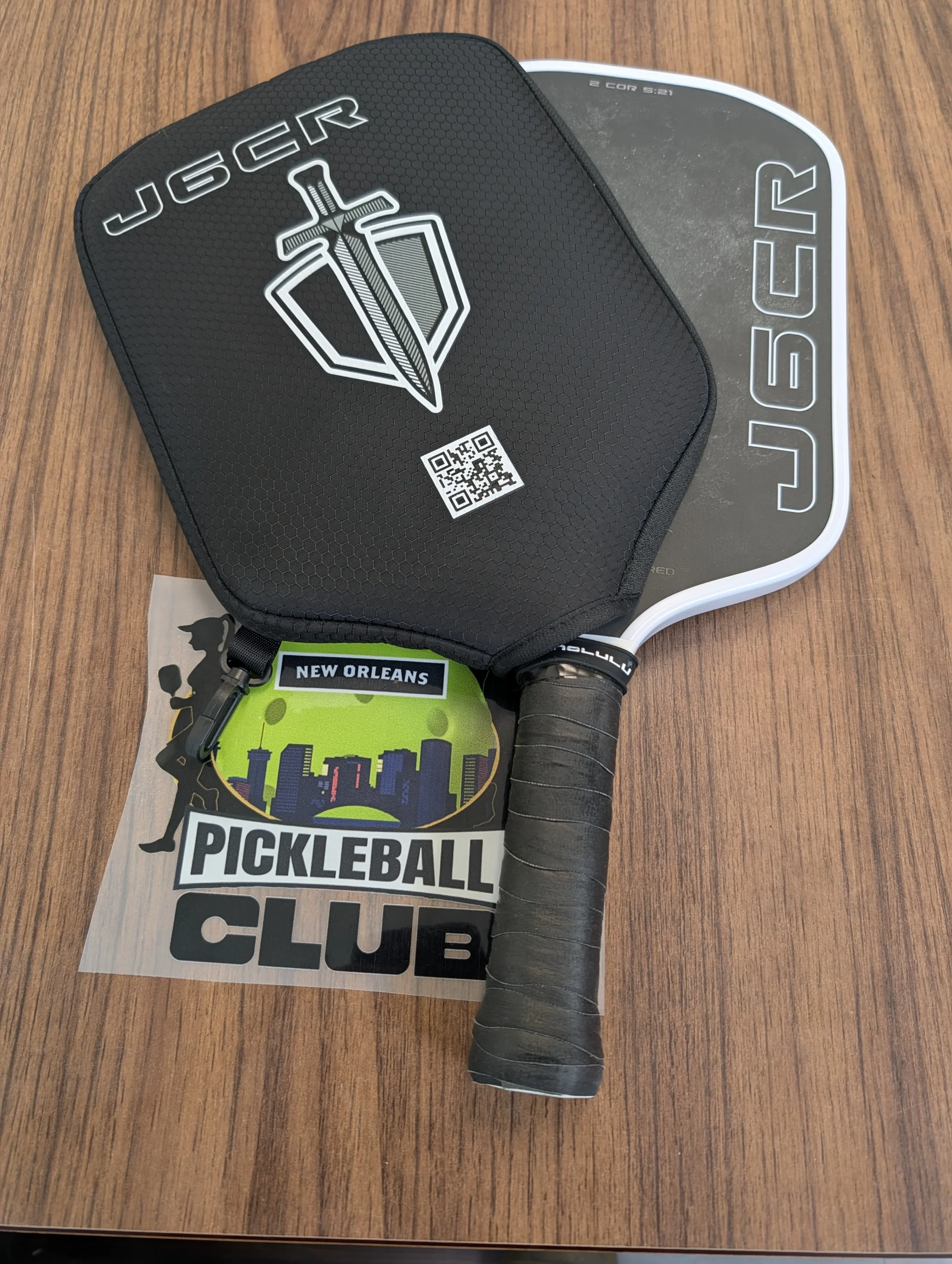
That expense shows up in three ugly places: the ball sailing long because you tried to save it with adrenaline, the ball floating because your face arrived half-open, and the ball landing shallow because you couldn’t get extension. And shallow is where good teams eat you alive. They don’t even have to hit a winner, they just step in and take the next ball early, like they were invited.
If you’re drive-heavy and you create pressure with depth and pace, this shape tends to amplify what you already do well, when you’re early. The J6CR is the paddle that rewards the player who sees the ball, sets the feet, and swings like they mean it. It’s less forgiving when you’re forced into “emergency hands” after your own attack gets countered back at you, especially when that counter lands right on the beltline where you can’t extend.
Match reality: if you’re early, the J6CR helps you drive through lanes with purpose. If you’re late, it can make you feel like your hands are doing the right thing but the paddle is still a fraction behind the ball. That fraction is where your opponent gets the easiest meal in pickleball: a ball that sits up, right in front of their shoulder, right in their strike window.
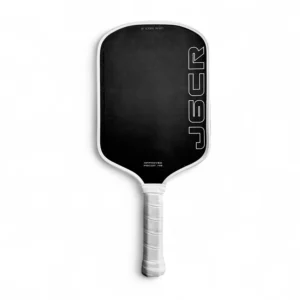
Concrete example: baseline third-shot drive (or a return you can step into) where you actually have a full swing lane. When you’re set early, the J6CR turns that swing into heavier pressure without you having to “muscle” it. The ball doesn’t just go fast, it lands heavier, and the opponent’s block comes back softer because they felt it in their hands. That softer block is where you get paid: you’re finishing more balls instead of playing “one more” from the NVZ. And if you’re swinging out of your shoes, the ball still stays down more often because the leverage is doing the work, not just your arm.
- Best swing pattern: full, committed swings that finish through the ball
- Best point shape: you load, you drive, you force a block, you get a ball you can finish
- Coach Sid cue: If you can’t get set early, don’t try to buy output. You’ll just buy pop-ups.
- Quotable line: The J6CR pays you for clean mechanics, then charges you interest when you get rushed.
Coach Sid Advice: If you swing J6CR from the baseline, earn it with your feet first. One shuffle earlier. Contact a hair more in front. Then drive through the lane like you’re trying to make their block feel heavy, not just fast.
If your game plan is “drive pressure → weak block → finish,” J6CR fits, as long as you’re early enough to use the leverage. If your reality is “attack → instant counter to the body → survive,” that’s not a J6CR moment. That’s a J2CR moment.
J2CR: Horizontal Recovery, Fast Hands, Resets
The Honolulu J2CR is the late-contact survival choice in this matchup. It’s built for the moments where you do not get to load and you do not get to be early. (Shorter geometry reduces reload distance and rotational delay, which is why it survives jammed contact better.) It favors compact strokes, fast reloads, and usable contact when the ball shows up quicker than your feet.
That’s why it tends to win hands battles, blocks, and transition resets for most competitive rec players. Not because it’s magically “better,” but because it shows up in the exact exchange where people donate points: the one where your opponent takes your pace and sends it right back at your body before you’ve recovered your balance.
In that exchange, reach doesn’t help you. Being on time helps you. The ball stays boring and low instead of hanging up, and that boring save is often the difference between “still in it” and “down a point before you blink.” “Boring” here means this: paddle out front, face quiet, ball skimming over the net and landing deep enough that they can’t just step in and erase you.
And that “boring” ball is a weapon if you understand what it buys you: it buys you the next contact. It buys you a reset. It buys you one more decision before the point ends. And against better teams, one extra decision is how you steal a rally you had no business winning.
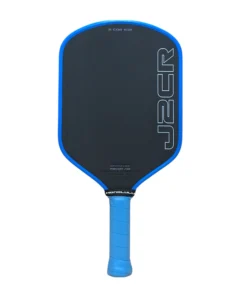
Concrete example: NVZ line speed-up comes at your right hip or chest and you get one beat. The J2CR is the “face shows up on time” paddle in that exact moment. The ball stays playable instead of floating up like a gift, and that single saved contact is often the difference between getting rolled and turning the rally back around. Put it to a boring target (middle seam or the opponent’s backhand hip), live through the exchange, and make them hit one more ball.
- Best swing pattern: compact, reactive swings that return you to ready
- Best point shape: you absorb pace, you redirect, you reset, you win the next ball
- Coach Sid cue: On jammed balls, don’t swing. Put the face there and live.
- Quotable line: The J2CR doesn’t win points by overpowering exchanges. It wins by showing up when your feet don’t.
- This matchup: leverage-first (J6CR) vs recovery-first (J2CR). Pick the one that matches how you lose points.
When you get jammed at the body → shorter recovery wins the exchange
When the ball arrives jammed at your body and you cannot take a full swing, the J2CR usually produces a more usable contact than the J6CR, even if the J6CR has a bigger payoff when you are early. This is the “hands are fast but still late” trap: the paddle’s recovery distance decides the point, not your intention. You can read it perfectly and still lose the exchange if the face arrives a fraction behind the ball.
That fraction is the difference between a firm block you can build off of and a floaty pop-up that gets erased. That’s why a paddle can feel less impressive in warmups and still win you more games: it reduces donations when the rally turns rude.
Why this wins points under pressure: if your game is built on reaction, reload, and late-contact survival, the Honolulu J2CR usually feels like it is cooperating with your reality. If you love the speed but want a slightly calmer face on blocks, see the stability tuning section below for a minimal, low-risk adjustment.
A paddle can feel slower and still win you more points.
Winning points often comes from reducing mistakes when pace rises, not maximizing output on perfect contact. That is why timing tax matters more than ceiling for most competitive rec players. The scoreboard doesn’t care that you can smoke a drive in warmups if you pop up the next jammed block when the rally turns rude and your opponent is already stepping in, paddle high, ready to punish your gift.
Adaptation Cost (Timing Tax)
Timing tax is the points you donate because the face arrives a fraction late when the rally gets rude. You feel it as pop-up blocks, sprayed counters, and “I was right there… why did that miss?” The right choice is the paddle that lowers that bill in the exchanges you actually lose, not the ones you film.
Timing Tax Checklist (save this):
• If your miss is a pop-up block at the hip/chest → lean J2CR.
• If your miss is a late edge catch in hands battles → lean J2CR.
• If your miss is being stretched and landing the ball shallow because you ran out of reach → lean J6CR.
• If your best points come when you’re early with a full swing lane → lean J6CR.
Quick test: if most of your lost points happen in the first 2–4 contacts (serve/return + one exchange), timing tax matters more than raw output for your results. Those early contacts are where people feel rushed, and rushed is where this decision pays you back. That’s where your paddle either keeps the ball low and boring, or hands your opponent a sitter they didn’t earn.
The ugly truth: you can be the better team and still donate those early points if your paddle is billing you in the exact contact you keep living in. And once a team senses that weakness, they keep going there, body speed-ups, hip targets, chest counters, until you prove you can keep the ball down and make them hit another ball instead of collecting your gift.
Reality check: “fast hands” still lose if the face arrives late
Hand speed helps, but reload distance and face recovery time decide whether your fast hands arrive on time. If your paddle needs a bigger move to square the face, you can be quick and still be late. That’s how you end up feeling right there while the ball is already sitting up for your opponent to punish. You weren’t slow. You were late. And late produces the two worst outcomes: a block that sits up, or a counter that punches long when you try to save it with adrenaline.
When your drive comes back at your body → face recovery becomes the whole match
Drive to the body → opponent counters hard cross-body → you have to block from a jammed stance → the next ball comes faster than you expected. In this exact pattern, the J6CR often asks for earlier prep and cleaner spacing, while the J2CR tends to survive with less penalty when your setup breaks down.
This is where reach and leverage stop mattering and face recovery becomes the whole match. If your block sits up here, the point ends. If your block stays down and playable, you live long enough to flip the rally. And once you live long enough, your actual skills can show up again.
- Higher tax feels like: late contact sprays, blocks sit up, counters fly long
- Lower tax feels like: you get the face there, the ball stays in play, you live to win the next one
Timing Tax Rule (save this)
Many players mislabel timing tax as inconsistency. It is usually a mismatch between your contact reality and the paddle’s required timing window. If your paddle requires earlier prep than your feet can consistently deliver, it will cost you points, even if it feels powerful on perfect contact.
This is why timing tax matters more than ceiling for most competitive rec players: you are defending more often than you think. If your paddle helps you survive the first rushed exchange, you get to play the point you actually trained for, instead of playing emergency volleyball at your own hip.
Want a skill-side fix that pairs well with the J2CR identity? Build a compact backhand counter that turns defense into offense without a big backswing. If you can keep your elbows quiet and your face stable, you stop “saving” balls and start redirecting them with intent, down the middle seam or into the backhand hip where winners don’t happen, but forced errors do.
Forgiveness Direction
Forgiveness is not one trait. It is a direction, and players arguing about sweet spot are often talking past each other. One player misses by catching edges during fast hand exchanges. Another misses by contacting high or low when stretched. They can hit the same two paddles and swear they had opposite experiences, because they did.
These paddles can both feel forgiving, but they rescue different kinds of misses, which is why two advanced players can test both and disagree. Vertical forgiveness protects stroke-plane errors; lateral forgiveness protects reaction-time errors.
Think of forgiveness like a map of your mishits. If your misses tend to happen along the length of the face because you’re reaching, driving, or contacting high to low, you will feel the J6CR’s vertical forgiveness more often. If your misses drift toward the edges because you’re reacting fast at the kitchen or defending in transition, you will feel the J2CR’s lateral forgiveness more often.
Here’s the match version: when you’re stretched and you flick a dink late, vertical forgiveness can be the difference between a ball that lands and stays low versus a ball that floats just enough for someone to step in. When you’re jammed and you stab a block off the edge, lateral forgiveness can be the difference between still alive and a free put-away. The point outcome is simple: one miss becomes a playable ball; the other becomes a sit-up or a spray. And playable is how you steal points back from better teams, by refusing to donate the easy ones.
| Your common miss when pace rises | Which forgiveness helps more |
|---|---|
| Late contact on blocks and counters that catches the edge | J2CR lateral forgiveness |
| Reach-driven contact that lands a little high or low on the face | J6CR vertical forgiveness |
| Jam at the body where you cannot extend | J2CR recovery plus lateral forgiveness |
| Wide ball where you must stretch and still hit with shape | J6CR reach plus vertical forgiveness |
Forgiveness does not make bad contact good; it makes your most common bad contact less expensive.
If your pain point is living through the transition zone, pair the J2CR logic with one simple habit: reset to a boring target (middle seam or backhand hip) and make them hit up. Your goal is not cute, your goal is “still alive and back to neutral.”
Stability Tuning (Lead Tape) Without Ruining the Point
This is optional, and it’s not a side quest. You already picked a side (J2CR for speed). This is the one micro-adjustment you use only if your blocks feel jumpy under pace, without turning the J2CR into a different paddle. If you overdo it, you’ll fix the block and quietly break the hands battle, the exact thing you bought the J2CR to win.
Lead tape boundary (read this first)
If you chose J2CR for speed but your blocks feel a touch too lively under pace, do one simple thing: add a tiny stability bump at 3 and 9 o’clock and stop early. Start with 2–4 grams total (split evenly). Your goal is calmer contact on rushed blocks. If your hands battles feel even slightly slower, you went too far, and you’ll start arriving late, stabbing instead of meeting the ball, and watching your “save” pop up anyway.
- Where: 3 and 9 o’clock
- Start: 2–4g total
- Stop when: your hands battles feel even slightly slower
If you want to go deeper later, treat this as your safe baseline: 3 and 9 o’clock, 2–4 grams total, stop the second your hands battles feel slower.
Behavioral Comparison Table
Specs do not decide this matchup. Behaviors do, and the behaviors show up most when you are rushed. When your lungs are burning and your hands feel shaky, the paddle that still produces a playable ball is the paddle that wins you more games. Playable means it stays down, it stays in, and it doesn’t hand your opponent a free swing.
If you want quick clarity without a spreadsheet, this is the table you actually need. Read it like a coach: “What shot do I live on when things get ugly, and what miss keeps costing me the same point?”
| On-court behavior | Honolulu J6CR | Honolulu J2CR |
|---|---|---|
| Primary job | Reach plus leverage plus plow-through | Hand speed plus recovery plus fast resets |
| Best swing pattern | Full committed swings | Compact reactive swings |
| Timing tax | Higher; rewards clean mechanics | Lower; easier when pace rises |
| Forgiveness direction | Deeper vertical forgiveness | Wider lateral forgiveness |
| Where it wins points | Drives, passing pressure, reach-based offense | Blocks, counters, hands battles, transition resets |
| Avoid if… | You are frequently late/jammed in hands battles and your blocks pop up under pace | You depend on reach to finish points and want max drive penetration as your primary identity |
Pick the paddle that makes your worst moments less costly, not the one that makes your best moments look better.
Is the J6CR or J2CR better for hands battles?
The J2CR is usually better for hands battles because it favors compact counters and faster reloads, which reduces the timing tax at the kitchen line. In plain terms: when the ball gets rushed into your body and you’re not ready-ready, the J2CR gets squared sooner and keeps you from punching long or hanging one up for free.
The point doesn’t end because you lacked courage. It ends because your face arrived a fraction late and your contact turned into a ball your opponent can erase. This is why the fast hands conversation is often a trap: you can be fast and still be late if the paddle asks for more recovery than your body gives you when you’re jammed.
Pro Tuning Tip (Decision Stabilizer): If you’re still torn, run this for one session: every time you get jammed at the hip/chest, say “face first” and block to a boring target (middle seam or the backhand hip) instead of trying to win the exchange in one swing. If your results improve immediately, fewer sit-ups, fewer panic sprays, more rallies you survive long enough to flip, you’re living in a J2CR world. If you keep finding yourself early with a clean swing lane and you’re annoyed that your drives aren’t finishing through the lane with depth, you’re living in a J6CR world. Let your Tuesday-night chaos pick the paddle for you.
Verdicts by Failure Pattern (How You Actually Lose Points)
Do not choose by rating. Choose by the moment your point falls apart: late at the body or late out wide. That’s the fork in the road. Everything else is noise when the rally gets fast and your next contact decides whether you stay alive in the point.
Fast diagnostic: what kind of “late” are you?
- Late at the body: jammed blocks, rushed counters, panic hands → the face arrives a fraction late
- Late out wide: stretched passes, wide-ball pressure, reaching dinks → you run out of paddle and leverage
If you lose points late at the body
- What it looks like: blocks float, counters spray, you feel rushed even when your reads are right
- Why it happens: you don’t get a full swing lane, so reload distance and face recovery decide the point
- Start with: Honolulu J2CR (lower timing tax in jammed contact)
When your best skill is surviving chaos, the J2CR usually buys you more playable contacts when your feet are late and the ball is early. This is where you stop donating free points: the hip block that used to float becomes a firmer, boring ball that stays down and forces one more shot.
And one more shot is often all you need to turn a scramble into a winning dink or a counter you actually chose. You don’t need the paddle to be prettier, you need it to stop making your worst contact look worse.
On-court sign you picked right: you start hearing the other side groan because they didn’t get the easy put-away they were expecting. They have to hit another ball. They have to dink again. They have to create the point instead of collecting your gift.
If you lose points late out wide
- What it looks like: you are there, but the ball lands shallow or sits up because you do not have enough reach or leverage
- Why it happens: you need paddle length, swing arc, and penetration to punish lanes
- Start with: Honolulu J6CR (reach and leverage that reward early prep)
When your offense is built on taking space and pressuring lanes with depth, the J6CR usually multiplies your intent, assuming you are early enough to use it. This is the “I got there first” paddle: when you’re set and the lane opens, the ball comes off like it has purpose. It drives through the block instead of dying in the kitchen, and it makes wide-ball pressure feel less like a desperate poke and more like a real shot.
The payoff is simple: more passing pressure, more weak blocks, more finishes. On-court sign you picked right: those wide balls you used to just keep in play start turning into real pressure. Your opponent’s next contact gets softer. Their block starts landing shorter. And suddenly you’re not working so hard to win points, you’re cashing the advantage you created.
Edge case that trips people up
Fast hands, limited mobility
Some players have quick reactions but do not love reaching wide in transition. Even if they can drive well, they often score more points with J2CR because it reduces the penalty on jammed, late-contact exchanges. They’re not losing because they lack power. They’re losing because they get handcuffed, pop one up, and the point ends before their strengths even show up. If that describes you, don’t buy reach as a solution to a body-jam problem.
Decision Ladder (no overthinking)
Late at the body → J2CR.
Late out wide → J6CR.
Still unsure → choose the paddle that improves your worst rushed contact.
Takeaway for buyers: The right CR paddle is the one that makes your worst rushed contact less expensive.
If you want a kitchen-side skill to pressure-test your choice, focus on blocking patterns: face quiet, target boring, and survive the first rude exchange. Then use the “Turn the decision into points” section below to lock it in over your next five sessions.
Final Decision Guidance
The clean choice is not which paddle is better. It is which paddle makes your default contact more reliable at full speed, especially on the two shots rec players leak most: rushed blocks and transition resets.
You are buying point reliability, not ego proof, and reliability shows up when you are rushed, not when you are posing. If you are still torn after reading this, pick the paddle that makes your rushed blocks and counters more playable, because that is where most rec games get decided. That’s where the ball arrives early, your hands feel tight, and the paddle either gives you a boring save, or it gives your opponent a ball they can punish.
Paddle choice does not fix technique, but the wrong geometry can amplify your weakest moment under speed.
Use this filter and do not negotiate with it: Rushed blocks and counters → buy forgiveness. Missed reach and penetration → buy leverage. If you want the decision to survive match pressure, choose the paddle that keeps the ball down and playable when you’re half a beat late.
- Pick the Honolulu J6CR if you want leverage that amplifies clean swings and rewards committed offense, and you are willing to pay a higher timing tax when rallies get chaotic.
- Pick the Honolulu J2CR if you want speed that reduces the penalty of late contact and supports blocks, counters, and transition resets when the ball arrives early and rude.
Play five sessions with your chosen paddle and track two numbers: how many rushed contacts you pop up at the kitchen, and how many transition resets you successfully land to the NVZ. If those numbers improve, you chose correctly. If they don’t, your paddle might not be bad, it might just be charging you rent in the exact moment you keep living in.
I tell players, “Do you want a paddle that rewards you when you are early, or one that forgives you when you are late?” They usually answer fast. Then I say, “Now tell me what you are most of the time when you play better competition.” That second answer is the paddle choice.
Frequently Asked Questions
The J2CR is usually better for hands battles because it supports compact counters and faster reloads, which reduces timing tax when contact is late or jammed.
Yes. A small amount of lead tape at 3 and 9 o’clock often improves stability on blocks and counters while keeping most of the hand speed.
The J6CR is usually better when you have time to load and drive through contact because the elongated leverage helps you pressure lanes with depth and pace.
Not automatically. Elongated shapes can increase leverage and reach, but power only shows up if you can get the paddle to contact on time. If pace makes you late or jammed, the “power paddle” can cost you points because the timing tax is higher.
No. If you already know your pressure pattern, this page is enough. Use the J6CR review for deeper leverage and drive context, and the J2CR review for fast-hands and reset context.
Here’s the full J6CR review with specs, measured numbers, and on-court notes.
Final Note: “J6CR vs J2CR” or “J2CR vs J6CR,” use the same filter: late at the body → J2CR; late out wide → J6CR. If you can’t demo both, run the 2-question Reality Check above and buy the paddle that lowers your timing tax in your worst rushed contact, hip jam or stretched wide.
Turn the decision into points
You just picked the paddle that matches your pressure pattern. Now lock in the two shots that decide most rec games when rallies get fast: rushed blocks and transition resets. Those are where timing tax shows up, and those are where good players stop bleeding points. Your goal isn’t to win every exchange. Your goal is to stop giving away the easy ones, the hip pop-up, the panic spray, the shallow save that gets stepped on.
Next step: If you’re choosing the “survive the chaos” lane, you want one clear action and one deeper read. First, grab the paddle here: Buy the Honolulu CR. Then go deep here: Full J2CR review.