Pickleball Paddle Grip Tape – Overgrips, Replacement Grips & Handle Wraps Explained
Pickleball Paddle Grip Tape (Overgrips, Replacement Grips, and Undergrips)
In pickleball, the word “grip” gets used two ways – and clearing this up is the key to getting the right upgrades for your paddle. Most players mean the physical wrap on the handle: grip tape, overgrip, replacement grip, or an undergrip like Hesacore. Others mean how you hold the paddle (Continental, Eastern, etc.).
This guide covers the physical grip only – everything you can wrap, replace, adjust, or customize on your paddle’s handle. If you meant grip technique (continental/eastern, pressure, hand position), start with Pickleball Grips (Technique) or our step-by-step How to Hold a Pickleball Paddle.
Want the best overgrips (ranked picks)? This page explains the layers and how to choose. For the “what should I buy?” roundup, start here: Best Pickleball Overgrips.
With that distinction out of the way, let’s break down the exact materials, thicknesses, tapes, and wraps that affect how securely your paddle sits in your hand – and how confidently you play.
Quick story. I still remember the first time grip tape actually made a difference for me. It was August in Louisiana – humidity so thick you could scoop it with a paddle. My hand kept slipping just enough to throw off my volleys. I wrapped a fresh overgrip between games, and suddenly the paddle felt glued to my hand. Same paddle, same match, completely different control. That was the day I realized grip isn’t decoration – it’s performance.
Why Your Pickleball Paddle Grip Matters
A well-wrapped handle does far more than feel nice. It controls your paddle’s stability, the tension in your arm, and how consistently you can shape the ball. When your grip gets slick, worn, or too thin, your mechanics subtly break down – overgripping, wrist strain, mishits, and late contact all creep in.
The right grip tape or overgrip gives you:
- Tack (so the paddle doesn’t slip when hands sweat)
- Comfort (shock absorption & less vibration)
- Consistency (a grip size that matches the way you naturally move)
- Longevity (your paddle plays “new” again with a $6–$12 wrap)
Many rec players don’t realize how much performance they lose from a worn grip. Your handle is the only point of contact between you and the paddle – it deserves high-quality material and proper upkeep.
Understanding the Three Types of Pickleball Grip Wraps
Every paddle handle upgrade you’ll ever make falls into one of three categories:
- Overgrip – Thin wrap added on top of your existing grip.
- Replacement Grip – The base layer installed directly on the handle.
- Undergrip – A specialty layer beneath everything else.
Each serves a different purpose, and choosing the right one depends on whether you need more thickness, more tack, more sweat control, or more shock absorption.
1. What Is an Overgrip?
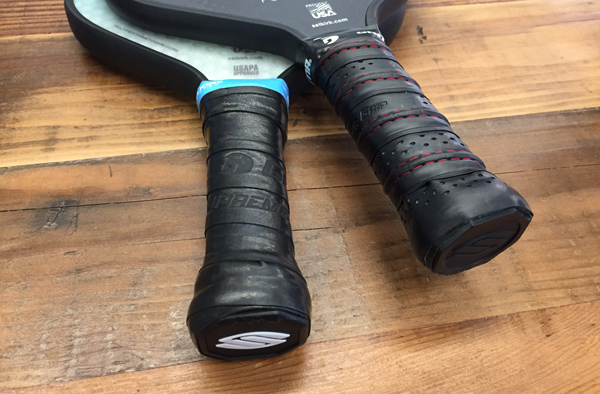
An overgrip is a thin, replaceable wrap you install over your paddle’s existing grip. It is the easiest, cheapest, and most common way to improve traction, sweat absorption, and comfort.
Overgrips are ideal for:
- Players with sweaty hands
- Players wanting a slightly thicker handle
- Frequent players who prefer a “fresh, tacky” feel
- Those wanting customizable color or feel options
Think of an overgrip as a “performance layer” – low cost, high impact, and easy to swap out every few weeks.
2. What Is a Replacement Grip?
A replacement grip is the primary layer that sits directly on the paddle handle. It’s thicker, more durable, and usually installed only when the original grip is worn out or when players want a completely different base feel.
- More cushioning than an overgrip
- More durability (lasts months or years)
- Bigger size change if you need a thicker handle
If you’ve never changed the original grip on your paddle, you’re probably still using the factory replacement grip.
3. What Is an Undergrip?
Undergrips (like Hesacore) are specialized inserts that go under your main grip. They change the shape, depth, or texture of the handle, often reducing vibration or improving ergonomics.
- Hexagonal patterns for better finger placement
- Shock absorption for elbow relief
- Extra leverage for players who grip tightly
They cost more and take longer to install, but players with arm pain often swear by them.
Grip Materials Explained
The material you choose determines how “sticky,” cushioned, or moisture-friendly your paddle feels. Here’s what each does best:
- PU (polyurethane) – Most common. Tacky, soft, good moisture control.
- Rubber-based – Durable, firm, often paired with gloves.
- Cloth / fabric blends – High sweat absorption, dry feel.
- Cushioned foam cores – For shock reduction and thicker handles.
Moisture management is the #1 reason players add an overgrip – sweaty hands cause more mishits than most realize.
Grip Thickness: Why It Changes Everything
Most pickleball grips fall between 4.0″ and 4.5″ in circumference. That tiny difference massively affects comfort, tension, and stability.
- Thicker grips = stability, less wrist movement, less strain
- Thinner grips = more wrist action, quick hand speed, more spin
If you feel your forearm tightening after long sessions, your grip might be too thin. If your paddle feels hard to adjust mid-swing, it may be too thick.
Quick Size Check: A simple way to test if your current grip size fits your hand is with the finger test. Hold your paddle naturally and look at the space between your fingertips and the base of your palm. If your index finger fits comfortably in that gap, your grip size is correct. If there’s no space (too tight) or extra space (too loose), adjust thickness with an overgrip or replacement grip.
Overgrip Examples by Feel Type (Dry, Tacky, Thin, Cushioned)
Below are a few solid examples so you can match feel type to your problem (sweat, twist, thickness, or comfort). If you want the full ranked roundup with a decision board, go here: Best Pickleball Overgrips.
UDrippin Overgrips
UDrippin Grips are a good example of a “control-first” overgrip: secure feel, steady tack, and a texture many players like for fast exchanges. For a ranked overgrip list by conditions (including heavy sweat), see Best Pickleball Overgrips.
- Best For: Sweaty hands, humid climates
- Feel: Dry tack, not gummy
- Why Players Pick It: It stays consistent over multi-hour sessions
Yonex Super Grap Overgrip
Yonex Super Grap delivers a smooth, leathery tackier feel than fabric-style grips. It offers slightly more thickness than other overgrips, making it a good option if your handle feels too small.
- Best For: Moderate sweat, players wanting extra cushion
- Feel: Soft leather-tack hybrid
- Why Players Pick It: Consistent, long-lasting tack
Pickleskins Thin Sliced Overgrip
Pickleskins Thin Sliced is perfect for players who want sweat absorption without adding bulk. Its slim profile preserves your original handle size while improving grip under pressure.
- Best For: Players who dislike thick handles
- Feel: Minimalistic, breathable
- Why Players Pick It: Dry feel with almost zero added thickness
Undergrips: The Hidden Upgrade Most Players Don’t Know About
Undergrips permanently reshape the way your hand interfaces with the handle. They go under your main grip and dramatically affect comfort, leverage, and vibration control.
Hesacore Undergrip
Hesacore remains the gold standard. Its hexagonal pattern reduces tension in the hand and forearm, making it a top choice for players managing tennis elbow or chronic wrist strain.
- Remove the factory grip
- Soak Hesacore briefly in warm water
- Dry it fully
- Install snugly onto the bare handle
- Apply your preferred overgrip on top
Many players report instant relief because Hesacore distributes pressure across more surface area.
How to Wrap or Replace Your Pickleball Grip (Step-by-Step)
The Yoast How-To block below walks you through removing, cleaning, wrapping, and securing a fresh grip – exactly the structure search engines want for step-based skill queries.
How to wrap or replace your pickleball paddle grip using either an overgrip or replacement grip.
- Remove the Old Grip
Peel the old grip slowly from the bottom up. Use a utility knife only if needed, and avoid cutting into the paddle handle beneath.
- Clean the Handle
Wipe the bare handle with a damp cloth and remove leftover adhesive. Let dry fully before installing a new grip.
- Start Wrapping
Begin at the butt cap, holding the tape at a slight angle. Overlap each layer by 1/8–1/4 inch to create smooth coverage.
- Secure the Grip
Cut excess tape near the top and apply the finishing tape to secure everything in place. Smooth out any wrinkles or bubbles.
Grip Maintenance: How to Keep Your Handle Performing Like New
- Store your paddle in a cool, dry place
- Wipe after each match to prevent salt buildup
- Rotate overgrips every 1–3 weeks (depending on sweat)
- Replace base grip when it feels slick or compressed
Grip Style vs. Grip Tape: The Quick Clarification
Grip style (Continental, Eastern, etc.) is how your hand sits on the paddle. Grip tape (overgrip, replacement, wrap) is the physical material covering the handle.
For hand-position instruction, see How to Hold a Pickleball Paddle. For ranked handle-wrap picks by feel type (dry vs tacky vs cushioned), see Best Pickleball Overgrips.
Quick Comparison Table
| Type | Main Benefit | Best For |
|---|---|---|
| Overgrip | Added tack, sweat control | Players who refresh often |
| Replacement Grip | New base layer, comfort | Worn handles or size changes |
| Undergrip | Shock absorption, shape change | Elbow pain or ergonomic upgrades |
Key Takeaways
- “Grip” has two meanings – this guide covers the physical wrap only.
- Overgrips offer cheap, frequent upgrades for tack and sweat control.
- Replacement grips restore worn handles and add comfort.
- Undergrips like Hesacore transform ergonomics and reduce vibration.
- Grip material and thickness directly affect comfort and control.
- Fresh grip tape prevents slips, mishits, and unnecessary tension.
Final Thoughts: Your Paddle’s Grip Is Your First Upgrade
The entire relationship between your body and the paddle runs through the grip. A $7–$15 overgrip can instantly improve security, comfort, and shot consistency – especially in heat or humidity. A replacement grip or undergrip can extend your paddle’s lifespan and reduce strain.
There is no single best grip tape for everyone. Players in humid conditions often prefer dry-feel options like UDrippin or Pickleskins. Players wanting more cushion or tack often choose Yonex Super Grap or a thicker replacement grip. Choose based on sweat, thickness preference, and how often you rewrap.
An overgrip is a thin wrap added over your existing grip for tack and sweat absorption. A replacement grip is a thicker, more durable base layer installed directly on the handle. Overgrips are changed frequently; replacement grips last much longer.
Most players replace their overgrip every 1–3 weeks, depending on sweat and frequency of play. If your handle feels slick, shiny, or slippery, it’s time to replace it.
Yes. Many players use 2–3 overgrips to build up thickness and customize feel. This is an easy alternative to installing a thicker replacement grip.
Thicker replacement grips or ergonomic undergrips like Hesacore reduce tension in the wrist and forearm. They distribute pressure more evenly, which can help with tennis elbow or chronic forearm strain.
No. Grip tape refers to the physical wrap on your handle (overgrip, replacement grip, or undergrip). Grip style refers to how you position your hand on the handle – such as Continental or Eastern.
If you’re unsure where to start, try adding one overgrip first. Track how your paddle feels, how much tension you use, and whether your mishits decrease. Small upgrades often create surprisingly big gains.
Experiment. Adjust. Rewrap. Your paddle should feel like an extension of your hand – and the right grip tape makes that happen.