

Honolulu J2CR Review (16mm): Fast, Forgiving, Pop Without Chaos
Quick verdict: The Honolulu J2CR is a fast, forgiving hybrid that adds pop and counter speed to the J2NF feel without the launch volatility of max-power builds.
Key takeaways: The Honolulu J2CR is a hands-first hybrid with usable pop, a forgiving sweet spot, and more feedback than NF/FC+. It’s not a max-power launcher, and it rewards disciplined paddle angles at the kitchen.
Quick Summary: The Honolulu J2CR is a 16mm hybrid built for fast counters, forgiving blocks, and usable pop without the erratic launch of max-power foam paddles.
Need the CR shape decision map? If you’re choosing your CR shape, start here: CR Decision Map (two CR shapes). This page stays focused on the J2CR review, how it plays, who it fits, and how to tune it.
Pre-order note: Expected release date: March 20, 2026 (subject to change). If timing matters, check Honolulu’s product page for the most up-to-date ship date.
Last week I was watching a player at Miley with a new paddle do the most common “foam paddle mistake” on earth: he’d win the first speed-up, then lose the counter exchange because his paddle launched a ball six inches higher than his brain expected. That late-counter pop-up wasn’t just a skill issue: it was inconsistent foam rebound changing the exit angle just enough to break his timing window.
I handed him the Honolulu J2CR and said, “Same swing… but don’t chase the ball. Hold your angle and let it work.” Two rallies later he goes, “Okay, that one feels like it wants to help me… but it’s still fast.”
Quick Context (Honolulu family):
- J2CR: Hand speed + Forgiveness (Hybrid)
- J6CR: Reach + Leverage (Elongated)
- NF / FC+: Muted Control + Softest Dwell
Bottom line: J2CR is the fast-hands, usable-pop option in the Honolulu foam family, more feedback than NF/FC+ and built to stay stable when exchanges speed up.
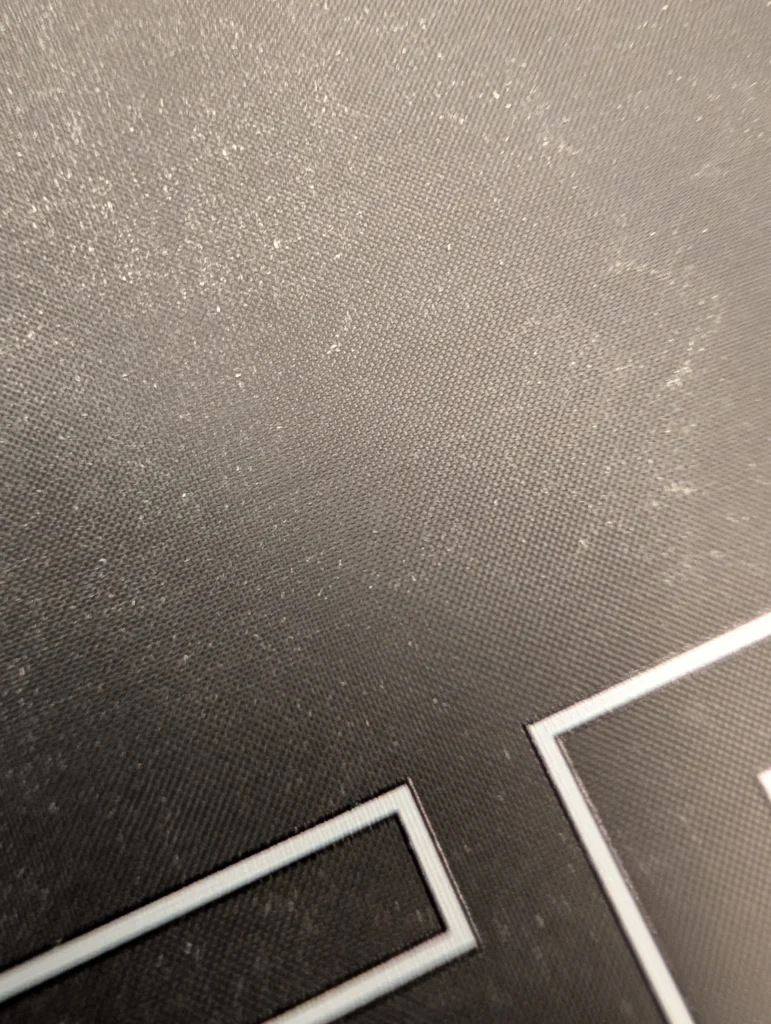
Durability Check (Updated Weekly): Last checked: Feb 22, 2026 • Total play: 10 hours • Surface/grit: holding • Spin: holding • Core/edge: no issues • Recommendation: unchanged.
If You’re Coming From an Elongated Paddle: What Changes First
If you’re coming from the elongated J6CR, the adjustment to the J2CR isn’t about losing power, it’s about how quickly the paddle gets back to ready position after contact.
The J6CR’s elongated shape leans into reach and leverage. That pays off on drives and passing shots, but it also introduces a slightly higher timing tax in fast exchanges. When hands battles speed up, the longer frame asks for cleaner timing and more disciplined paddle angles.
The J2CR shifts that balance toward hand speed and recovery. The hybrid shape shortens the swing arc and widens the horizontal forgiveness window, which shows up most clearly on blocks, counters, and late resets. For many players, the paddle simply feels easier to trust under pressure, especially at the kitchen.
Pro Tip (Stability Tuning):
If your J2CR feels extra quick or light compared to the J6CR, a small amount of lead tape at 3 and 9 o’clock can add block stability and slightly slow face reaction without giving up the paddle’s speed advantage.
Same Core Reactor platform. Different priorities. If your game is built on fast exchanges, the J2CR is the natural fit. If you live on reach and leverage, the elongated CR option will feel more familiar.
If you haven’t picked your CR shape yet, start with the CR Decision Map. My Honolulu J6CR review breaks down the reach-and-leverage side of the CR platform (and why the elongated version carries a slightly bigger timing tax in hands battles).
Strategically, the J2CR is the hands-first upgrade for players who outgrew the muted NF feel but refuse to trade sweet-spot stability for raw power. By prioritizing hand speed over elongated reach, it provides the most responsive face in the Honolulu hybrid family.
One quick caution: If you’re looking for the softest, most muted “pillow” paddle in the Honolulu family, this isn’t it: and that’s intentional.
Who This Helps
- J2NF players who want more pop and a more responsive feel without losing block depth on late contact.
- FC+ owners whose drops are solid but whose counters feel “dead” or lack put-away pace.
- Hybrid-shape players who want quick handling without losing off-center stability.
- Players leaving max-power paddles who realized the “timing tax” of inconsistent launch was hurting their win rate.
What Actually Matters On Court
Honolulu J2CR at a Glance
The Honolulu J2CR is a 16mm hybrid performance paddle built around the Core Reactor (CR) construction. It provides higher tactile feedback than the NF series, allowing the paddle to reach defensive depth with less forward travel while maintaining competitive stability.

Coach Sid’s Opinion: “The J2CR is what the NF feels like after it drank an espresso.” In practice, this means the paddle reaches defensive depth with less forward travel, which tightens timing under pressure.
| Category | What shows up in real play |
|---|---|
| Power tier | A clear step above NF/FC+ in “easy offense,” but not a max-power launcher. |
| Face response | Shorter dwell window than NF; the ball exits sooner on punches. |
| Sweet spot | Significantly more forgiving on off-center contact than standard NF models. |
Core Reactor Tech: The Mechanical Reality
Mechanically, the CR construction creates a stiffer internal grid that returns energy earlier in the impact window. By minimizing the time the ball stays on the face, the J2CR provides faster exit velocity on compact swings. Compared to NF foam, the CR grid resists lateral deformation, which stabilizes the rebound angle even when contact drifts off center.
This allows players to win hand-speed exchanges without the high-launch volatility common in softer foam builds, especially on compact punch volleys, mid-court resets, and off-the-bounce flicks. The “Control Joint” provides a denser response, giving you fewer of those “vibratory” dead spots seen in hollow-power paddles.
J2CR Specs & What Varies
What I can say confidently: Honolulu foam builds can vary by unit, and that variance affects launch feel and touch. If you have your paddle’s swing weight, you can tune it more predictably. I break down exactly how and why in this guide on adding weight to a pickleball paddle.
Power vs Control: How the Ball Leaves the Face
The J2CR lands in a performance tier built for “easy offense” rather than full “max power.” In hands battles, the J2CR rewards a short, firm counter. Because the ball exits the face earlier, you don’t need to “push” the paddle through the contact zone to generate depth: effectively making your defense feel more compact and less dependent on last-second paddle acceleration.
What this means for your game: You don’t have to “muscle” offense. The paddle gives you enough rebound to win hands battles without swinging bigger, and that keeps your margin intact under pressure.
Spin, Grit & Shot Shaping
The J2CR gives you predictable, usable spin rather than exaggerated, gimmicky snap. In real play, that shows up as confident roll volleys, off-the-bounce flicks, and controlled drive shaping without feeling like the face is “grabbing” so hard it changes your launch.
Translation: if your game depends on ultra-heavy, lag-based spin generation (the kind that feels like the paddle is slingshotting the ball), the J2CR may feel more honest than magical. But if you want spin that stays connected under pressure (especially in hands exchanges) this profile is a feature, not a limitation.
Sweet Spot, Forgiveness & Stability
The most consistent praise for the J2CR is simple: it stays forgiving. In practice, that forgiveness shows up when you’re late on blocks, preventing those shots from turning into instant pop-ups. Statistically, this shows up as fewer unforced errors: especially pop-ups on late kitchen blocks.
Coach’s Tip: This paddle rewards “quiet” hands. Because the CR rebound generates exit speed on its own, “pushing” your resets or over-swinging volleys will send the ball long. Focus on holding your angle and letting the core’s energy return do the heavy lifting.
Shape + Handle Options: Regular vs Long Handle
| Version | How it plays | Best for |
|---|---|---|
| J2CR (regular) | More planted and stable. | Maximum stability seekers. |
| J2CR Long Handle | More room for hands; more whip. | Two-handed backhands; flick/roll addicts. |
That rearward balance shift reduces wrist load during rapid exchanges, which is why two-handed players feel faster without losing control.
Pros and Cons (Real Play)
- Pros: Fast in hands, forgiving sweet spot, easy depth on compact counters, predictable spin.
- Cons: More reactive than NF/FC+ on lazy angles, not a max-power “free points” paddle, lighter units may want perimeter weight.
Where the J2CR Sits in the Current Paddle Landscape
- If you’re coming from a muted control foam paddle: expect faster exit and more feedback.
- If you’re coming from a max-pop launcher: expect a bigger forgiveness window and fewer “surprise” pop ups.
- If you’re choosing between CR shapes: use the CR Decision Map and then return here for the J2CR-specific feel + tuning.
Honolulu J2CR 10 Hour Field Update: What Changed After the “New Paddle” Phase
Note: This is a J2CR review. I reference the elongated J6CR only to isolate how the Core Reactor platform behaves across shapes: not to review the J6CR here.
When I wrote the first version of this review, I had about two hours on the J2CR. Since then, I’ve put roughly 10 total hours of real games and pressure reps into it, and I’ve also used the elongated CR shape briefly as a reference point for how platform + shape change timing.
The quick verdict still holds. The J2CR is still the “lively upgrade” for NF players who want more offense and faster counters without signing up for the launch chaos you get from some max pop foam cannons. What changed is that the edges of the paddle’s personality got clearer: both the upside and the “don’t get lazy with your hands” warning.
One sentence that finally clicked: The CR paddles are Honolulu’s NF feel-profile… but turned up (more power, more pop, a crisper, more reactive face) while keeping the big sweet spot and stability the brand has been known for in their foam builds.
The Two Most Important Things to Know (After 10 Hours)
- This is not a “new category” paddle. It plays like an evolution of Honolulu’s foam family (NF/FC+), not a total reinvention.
- The CR upgrade is real if you want more offense and a cleaner response, but it’s not mandatory if you already love your NF feel (or if you’re already happily living on the edge with a Loco/Boomstik-style build).
Power vs Pop: Where It Really Lands
After longer play (and seeing multiple units break in), the CR power profile keeps showing up in the same neighborhood:
- Above NF/FC+ in “easy depth” and serve/drive pressure.
- Below Boomstik in pure fireworks.
- Often described between Loco and Boomstik (with variance depending on the individual paddle, break-in, and whether you add perimeter weight).
From the baseline, the repeatable feeling is: “I didn’t swing that hard… but the ball still got there.” That’s the good kind of power: the kind that shows up as depth without forcing you to over-accelerate late.
Coach Sid’s Reality Check: “If the NF is a pillow, CR is a trampoline.”
Translation: it pockets and rebounds. Great for counters and put-aways, but it will punish sleepy paddle angles in dink-speed firefights.
Touch: Better Than You’d Expect… After You Stop Steering
Here’s the part that became clearer with time: the J2CR can play softer than it sounds, but it asks for cleaner inputs than NF/FC+.
- Drops and resets are doable (often easier than the pop suggests) once you stop “guiding” the ball and simply hold your shape.
- Where it bites: stretched dinks, rushed dinks, and defensive placement under speed. If your face gets lazy, the CR rebound can add lift and turn a safe ball into a floaty donation.
- NF vs CR difference: NF/FC+ hides more. CR talks back more. That feedback is useful, but it doesn’t babysit.
Practical cue that helped: If your first dink session feels “jumpy,” don’t rebuild your whole game. Soften the hands and close the face slightly during fast exchanges. The paddle is simply returning more energy than you’re used to.
Spin & Grit: High Potential, Not a Magic Trick
The surface is still classic Honolulu peel-ply gritty. In match play, that means roll volleys, topspin drives, and heavy serves are easy to shape without feeling like the face is doing something unpredictable to your launch.
Gear-nerd note: one reviewer measurement I’ve seen cited lands around 2,390 RPM. I treat that as a directional indicator (not a promise for every unit), but it matches what I felt: top-class spin capability with a face that still behaves under pressure.
Why “Molded” Matters (Plain English Version)
I kept my early “predictable rebound” point, but after more hours, the construction story feels more important than ever.
- The CR’s defining feature (as discussed in CT-scan breakdowns) is a molded internal geometry that creates channel-like structures near the face layers while keeping the core’s center more intact.
- Why that matters: sliced or heavily opened foam can trend mushy over time. The molded approach aims for a cleaner, poppier response without turning the whole core into a sponge.
- On-court result: the paddle has stayed consistent through extended play, the rebound angle still feels like “Day 1,” which is exactly what you want if you win points inside a tight timing window.
Quick Tuning Notes (Lead Tape Strategy)
If you get a particularly light-swinging unit (this happens more often than people expect), the CR’s pop can feel a little over-responsive on touch shots, not unstable, just fast. A small tweak can turn that speed into control:
- For very low swing weight elongateds (J2CR examples 112–115): add a little perimeter weight at 3 and 9 o’clock.
- This usually tightens stability and slows the face reaction just enough to reduce dink pop-ups without killing what makes the paddle special.
Coaches tip: If you’re popping up dinks, don’t blame your hands first. Check your swing weight reality. A little perimeter weight can convert “raw pop” into “controlled depth.”
Revised “Who It’s For” (Now That I’ve Lived With It)
Upgrade if…
- You loved the NF sweet spot and forgiveness but feel like you’re working too hard to put balls away at the kitchen.
- You want more serve/drive pressure without moving into the volatile launch zone.
- You like responsive, crisp paddles, but you hate the “hollow-stiff tin roof” feel of the most extreme foam cannons.
Stick with NF/FC+ (or skip CR) if…
- You win games through a dead-touch kitchen where the paddle absorbs everything and never surprises you.
- You already fight pop-ups with high-pop builds and you don’t want to adjust your face discipline.
- You’re hunting for “alien tech” that feels radically different from the EP foam universe: this is more refined evolution than revolution.
Bottom Line (Updated)
After 10 hours, the J2CR still feels like the cleanest “hands-first upgrade” inside Honolulu’s lineup: more offense, more pop, a crisper response, while keeping the forgiving sweet spot identity that made the NF/FC+ series so playable. The trade is simple and fair: the paddle gives you more… and it expects you to stay awake with your angles.
Honolulu J2CR Review FAQ
The Honolulu J2CR is best described as an “easy offense” paddle, not a max-power launcher. It provides noticeably more pop and depth than the J2NF or FC+ while stopping short of the launch volatility found in extreme power paddles like the Boomstik. In practical terms, the J2CR rewards compact swings with depth and counter speed without forcing players to swing bigger or accept erratic rebound angles.
The J2CR is a more energetic, more responsive version of the J2NF. Compared to the NF, the J2CR adds pop, counter speed, and a crisper face response while maintaining a similar sweet spot size and overall forgiveness. Players switching from the J2NF typically notice the difference most in hands battles and punch volleys rather than baseline drives.
Yes, the J2CR is forgiving, but it rewards disciplined hands. The paddle’s large sweet spot helps prevent mishits on late blocks, but its livelier rebound means lazy paddle angles can result in pop-ups during fast dink exchanges. Players who hold their angle and soften their hands generally find the J2CR stable and predictable at the kitchen.
The J2CR does not require lead tape, but light perimeter weighting can improve touch for some players. If your specific paddle has a very low swing weight, a small amount of weight at 3 and 9 o’clock can increase stability and slightly slow face reaction. This often reduces dink pop-ups without killing the paddle’s defining pop and counter speed.
The J2CR trades a small amount of raw power for significantly better control and forgiveness. While the Boomstik can produce slightly higher peak power, the J2CR delivers offense that is easier to time, especially in fast exchanges. In blind testing, most players notice the difference in feel and predictability before noticing the marginal power gap.
As of this update, Honolulu lists the expected release date as March 20, 2026 (subject to change).
Who Should (And Should Not) Buy the J2CR
Buy this if…
- You love the J2 shape but want “free” power in hands battles.
- You want a tactile face with immediate feedback.
- You’re moving away from high-swingweight paddles to gain speed.
Skip this if…
- You rely on ultra-muted dwell time to disguise your drops.
- You prefer the “pillow” feel of the J2NF or FC+ series.
- You rely on exaggerated paddle lag to generate spin.
Upgrade Your Game
If you want the faster, hands-first hybrid version of the Core Reactor platform, the J2CR is currently available for pre-order. If you’ve outgrown ultra-muted control paddles but don’t want to relearn your counter timing, the J2CR is the cleanest transition point in the Honolulu lineup. The paddle is currently available for pre-order. Pre-order the Honolulu J2CR and use code PICKLETIP for the best available price. Note: Honolulu uses a shared product page for the CR line, be sure “J2CR” is selected when the page loads.




do you know how the J2CR compares with the J2Ti+, which I love, but breaks down too quickly, ie, delaminates
Yes, but it will play a little different. The J2CR vs J2Ti+ difference comes down to construction: the Ti+ has longer dwell and a softer, more “pillowy” feel, while the J2CR returns energy earlier, so it feels crisper and faster in hands exchanges. You give up a bit of that plush touch, but you gain a more predictable response and a build that’s less prone to the breakdown issues you’re describing.
Ok…thank you