
CRBN Pivot Glasses Review: My Firsthand Court Experience
Firsthand CRBN Pivot Glasses Review
Coach Sid’s Take: The CRBN Pivot Glasses are best for players who want one lightweight pair of protective sports glasses that can adapt to indoor, overcast, and sunny conditions.
I tested the CRBN Pivot Glasses during indoor and outdoor pickleball to see how they handled changing light, ball tracking, comfort, sweat, and court-line visibility. The interchangeable lenses worked well, and the glasses felt light enough that I rarely thought about them during play.
Their biggest advantage is the combination of interchangeable lenses and a convertible frame. Their main drawback, in my experience, is that the full lower frame can interfere with downward court-line visibility. I strongly preferred the edgeless configuration because the bottom of the full frame entered my field of view when I looked down toward the kitchen line.
Best For
Players who move between indoor and outdoor courts, want multiple lens options, and prefer an open lower field of vision.
Not Ideal For
Players who want ordinary prescription glasses without using an insert, or anyone especially sensitive to seeing the bottom edge of a sports frame.
Disclosure: This article contains affiliate links. When you use code PICKLETIP, you can save 10% on eligible purchases, and PickleTip may earn a commission at no additional cost to you. My opinions, observations, and criticisms are based on my own court experience.
How I Tested the CRBN Pivot Glasses
I wore the glasses during multiple days of pickleball, including play on indoor pickleball courts at the Hilton and outdoors at Pontiff Playground in New Orleans. I used the available lens options in different lighting and tried the glasses with both the full lower frame and the edgeless setup.
I focused on the things that matter during an actual game: comfort, lens clarity, ball contrast, peripheral vision, frame stability, ease of changing lenses, and whether any part of the frame distracted me when checking the court or kitchen line.
Testing Limitation
This was a practical playing review, not a laboratory impact test. I did not independently test the lenses for impact resistance, so formal safety and material specifications in this article are attributed to CRBN.
What Comes With the CRBN Pivot Glasses?
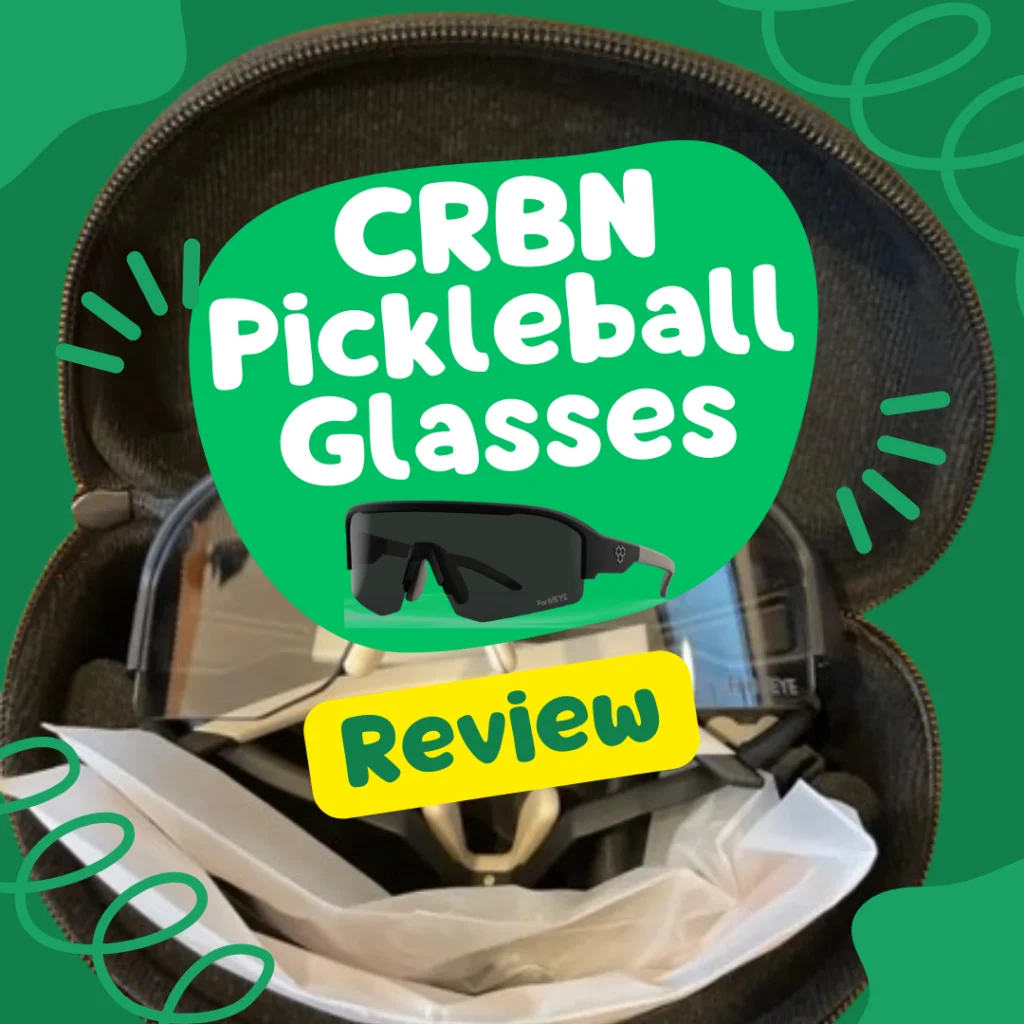
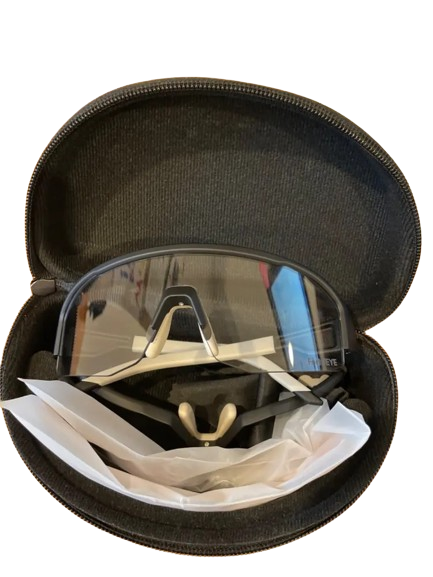
The Pivot is more of a modular eyewear system than a single fixed pair of glasses. CRBN currently lists the following items with the glasses:
- A photochromic lens that changes from clearer to darker as UV exposure increases.
- An orange mirrored lens intended for bright sunlight and enhanced ball contrast.
- An amber lens intended to improve contrast in lower-light conditions.
- A modular frame that can be worn as a full-frame or edgeless design.
- A protective carrying case.
- Adjustable nosepiece components and a cleaning cloth.
- A prescription lens insert that can be fitted separately.
Package contents can change, so confirm the current lens and accessory list on the manufacturer’s product page before ordering.
Comfort and Fit During Pickleball
My first impression on court was how little I noticed the glasses once play began. They felt lightweight, and I did not experience uncomfortable pressure around my temples or nose during the sessions covered by this review.
The adjustable nosepiece helped me position the lens where I wanted it, while the arms kept the frame secure during normal movement. The glasses handled quick head turns and active points without becoming a constant distraction.
That matters in pickleball because protective eyewear cannot help much if it is so uncomfortable, unstable, or visually distracting that a player stops wearing it.
CRBN Pivot Lens Performance
The interchangeable lenses are the main reason the Pivot can work across multiple playing environments. Rather than treating one lens as the best choice for every situation, I found that each option served a different purpose.
| Lens | Best Use | What I Noticed |
|---|---|---|
| Photochromic | Outdoor play with changing sun and shade | The lens adjusted as lighting changed and allowed me to keep using the same glasses as conditions varied. |
| Amber | Overcast or lower-light conditions | The warmer tint improved contrast and helped the ball stand out against a flatter background. |
| Orange mirrored | Bright outdoor conditions | CRBN positions this lens as its bright-sun, contrast-enhancing option. I would choose it when sunlight is stronger than the conditions that call for the amber lens. |
My Lens Takeaway
I would choose the photochromic lens when outdoor light is likely to change during a session. On an overcast day, the amber lens gave me more useful contrast. The lenses solve different visibility problems rather than one simply being better than the others.
The photochromic lens does not need to become extremely dark to be useful. Its practical benefit is that I did not have to stop and immediately change lenses every time the court moved between brighter and darker conditions.
Full Frame vs. Edgeless: The Difference I Noticed
The ability to convert the Pivot from a full-frame design to an edgeless design sounds like a styling choice, but it affected my view of the court.
With the full frame installed, the bottom rim entered my sightline when I glanced down toward the kitchen line. It did not prevent me from playing, but once I noticed it, I found it distracting. That is particularly relevant in pickleball because players frequently need to maintain awareness of the non-volley-zone line while preparing to volley.
Removing the bottom frame opened my lower field of view and became my preferred setup. The conversion was easier than I expected: I removed the lower frame, repositioned the nosepiece, and continued using the same lens in the edgeless configuration.
Coach Sid’s Recommendation
Try both configurations, but pay close attention to the lower rim while looking toward the kitchen line. Players who rarely notice frame edges may prefer the more finished look of the full frame. Players who want the clearest possible downward view may favor the edgeless setup.
Protection and CRBN’s FortifEYE Technology
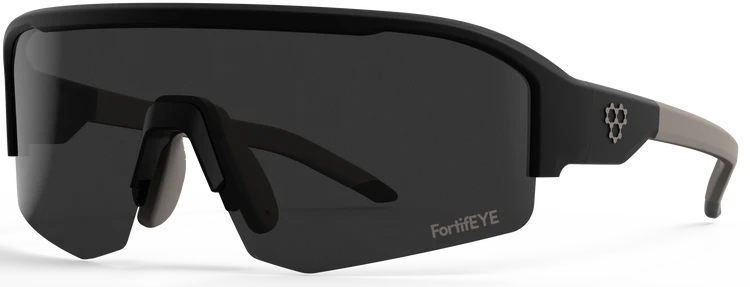
CRBN markets the Pivot lenses under its FortifEYE™ technology name and states that the eyewear meets ANSI Z87.1 and ANSI Z80.3 standards. The company also identifies the lenses as polycarbonate.
Those specifications provide more useful context than simply calling the glasses “shatter-proof.” However, I did not independently conduct an impact test or verify the certification in a laboratory. My court testing evaluated practical visibility, comfort, fit, and normal-use durability—not the maximum force the lenses can withstand.
Players purchasing eyewear primarily for impact protection should review CRBN’s current technical documentation and decide whether the listed standards meet their needs.
Clarity, Ball Tracking, and Peripheral Vision
I did not notice distracting optical distortion through the main viewing area during play. I was able to track the ball through normal exchanges without feeling that the lens was bending its path or changing my perception of its position.
The amber lens was especially useful when the available light felt flat and the ball needed more separation from the background. The open lower edge also helped when shifting my eyes between the approaching ball and the court in front of me.
No sports lens can improve poor anticipation or replace watching the ball, but good eyewear should avoid introducing a new visual problem. During my testing, the lens clarity did not interfere with my reactions or normal ball tracking.
Everyday Use, Sweat, and Durability
Over several days of use, the glasses handled sweat, fingerprints, routine lens changes, and a few accidental drops without creating a problem. The lenses remained clear after cleaning, and the frame components continued to fit together properly.
The carrying case is important because interchangeable lenses are only useful when they can be transported without rubbing against other gear. I would not throw the spare lenses loose into a pickleball bag.
Swapping lenses was particularly useful when moving between indoor pickleball at the Hilton and brighter outdoor play at Pontiff Playground. Instead of treating indoor and outdoor eyewear as separate purchases, the Pivot allowed me to adapt the same frame.
Durability context: This review reflects several days of use rather than years of ownership. I consider these early durability observations, not proof of how the frame, coatings, or nosepiece will perform after multiple seasons.
Prescription Insert: Useful but Poorly Explained
The included prescription insert makes the Pivot potentially useful for players who need vision correction. However, the instructions supplied with the glasses did not clearly explain the full process of having prescription lenses fitted to the insert.
I did not personally have prescription lenses installed, so I cannot judge how the insert affects clarity, weight, or comfort during a game. Players considering this feature should confirm the fitting process and cost with both CRBN and their optical provider.
CRBN Pivot Glasses Pros and Cons
What I Like
- Useful lens choices: The included options cover changing outdoor light, bright sun, and lower-light or overcast conditions.
- Lightweight comfort: I could concentrate on the game instead of constantly adjusting the glasses.
- Clear main viewing area: I did not notice distracting distortion while tracking the ball.
- Convertible design: Changing from full frame to edgeless made a meaningful difference to my lower field of view.
- Indoor and outdoor versatility: One frame can be adapted to several playing environments.
- Protective storage: The case gives the extra lenses and modular components a proper place in a pickleball bag.
What Could Be Better
- The full lower frame entered my sightline: I noticed it most when looking down toward the kitchen line, which is why I preferred the edgeless configuration.
- The prescription insert needs clearer instructions: The package did not adequately explain what a prescription player should do next.
- Multiple components require organization: Players need to keep track of spare lenses, frame pieces, and nosepiece components.
- My durability test was limited: Several days of successful use cannot establish how the glasses will hold up after years of play.
Who Should Consider the CRBN Pivot Glasses?
The Pivot makes the most sense for a player who regularly encounters more than one lighting condition. That could include someone who plays indoors during the week, outdoors on weekends, or on courts that shift between sun and shade.
They are also a good match for players who want pickleball-specific sports eyewear but have not decided whether they prefer a full frame or an open lower edge.
A player who only needs a basic clear lens for one indoor facility may not use all of the Pivot’s modular features. Likewise, someone who needs prescription correction should investigate the insert process before treating it as a complete prescription solution.
CRBN Pivot Glasses FAQ
Yes. I used them on indoor courts without noticing distracting distortion. Lens choice will depend on the brightness and type of lighting in the facility. The photochromic lens remains relatively clear without strong UV exposure, while the amber lens may help when additional contrast is useful.
Yes. Outdoor versatility is one of their strongest features. The photochromic lens can accommodate changing light, while the orange mirrored lens is intended for brighter sun and the amber lens can help in flatter, lower-light conditions.
The full frame did not block my general view of the ball, but I could see the lower rim when I looked down toward the kitchen line. Switching to the edgeless configuration removed that distraction and became my preferred setup.
CRBN includes a prescription insert that can be fitted with corrective lenses. I did not have the insert fitted during this review, and the included instructions did not clearly explain the process. Confirm the requirements with an optical provider before purchasing specifically for prescription use.
CRBN states that the Pivot meets ANSI Z87.1 and ANSI Z80.3 standards. I did not independently laboratory-test or certify the glasses, so players should consult CRBN’s current documentation for the exact scope of those claims.
I preferred the amber lens on an overcast day because it increased contrast and made the ball easier to separate from a flat-looking background.
My Verdict: Are CRBN Pivot Glasses Worth It?
Bottom Line
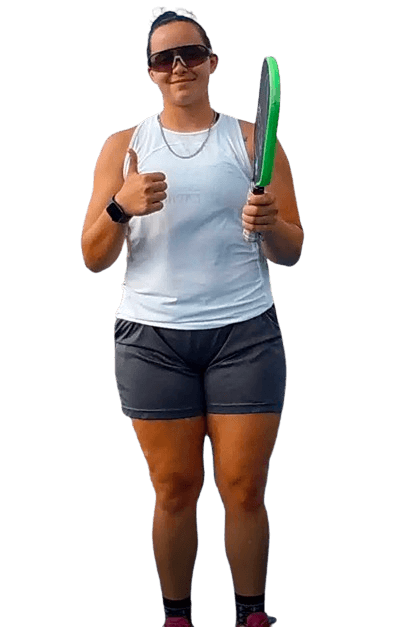
The CRBN Pivot worked best for me as lightweight, edgeless pickleball eyewear with lens options for different environments.
Its strongest feature is its versatility. Its main weakness is that the lower rim of the full frame can enter the sightline when checking the kitchen line.
I would recommend the Pivot most strongly to players who regularly move between indoor and outdoor courts and will actually use the interchangeable lenses. The frame was comfortable, the main viewing area remained clear, and converting it to the edgeless setup solved my biggest complaint.
I would be more cautious about recommending it solely for the prescription insert because I did not test fitted prescription lenses, and the supplied instructions could have been clearer.
Players who are new to pickleball should not overlook eye protection, but they should choose eyewear they will wear consistently. For me, the Pivot’s light weight, clear view, and adaptable lens system made it comfortable enough to keep on throughout play.
Visit the CRBN official website to check the current specifications, package contents, and price. Code PICKLETIP provides 10% off eligible purchases.