
How to Stop Popups in Pickleball (Mechanical Fixes That Actually Work)
You know the feeling. The ball sits up just a little too high, your opponent’s eyes get big, and one swing later your “safe” shot turns into a speed-up feast. That is the real problem with popups in pickleball. They do not just look ugly. They hand control of the rally to the other side.
Most players do not pop the ball up because they are careless. They pop it up because something breaks down a split second before contact. The grip gets tight. The wrist gets twitchy. The paddle face opens. The feet never quite get set. The body rises when it should stay organized. The contact point drifts too close to the body instead of staying out front. Then the ball climbs, hangs, and basically sends an invitation to the other team.
When I see this in rec games, DUPR sessions, or clinics, the player usually thinks the problem is touch. A lot of the time it is not touch at all. It is spacing, balance, grip pressure, or a paddle face that changed shape right before contact.
Start with the leak. The ball is usually telling you where to look.
Quick Answer: How Do You Stop Popping the Ball Up in Pickleball?
To stop popping the ball up in pickleball, find the mechanical leak first. Most popups come from one of five places: a tight grip, an open paddle face, late contact, body movement during contact, or extra swing on a ball that needed absorption instead of help.
Coach Sid’s first fix: relax the grip, get the ball farther out front, hold the paddle face quiet, and stop accelerating at contact. Same ugly result. Different leak. Different fix.
Popup Diagnosis Checklist
| The ball did this | Check here first | First repair |
|---|---|---|
| Dink floated high | Wrist flick, big backswing, or body rise | Quiet wrist, shoulder-led motion, hold your height |
| Block popped up | Paddle face too open or punchy contact | Set the face early and absorb the pace |
| Reset sat up | Forward shove or panic hand action | Catch and stick instead of pushing |
| Ball jumped off paddle | Grip too tight | Use a 3 to 5 grip pressure |
| Ball popped from your feet | Short-hop panic or jammed contact | Step back, create space, let the bounce calm down |
🎧 Prefer listening? Hear a summary of Coach AJ’s take on why players pop the ball up:
Why the Ball Keeps Sitting Up
A popup is not just any ball that travels high. Some balls arc safely and land short. Those are not great, but they are not always attackable. A true popup is a ball that sits up high enough, long enough, or deep enough for your opponent to attack comfortably.
So when you diagnose the miss, do not just ask, “Did it go high?” Ask, “Did I give them something they could attack?” A lot of players are not really losing to height. They are losing to comfort. If your opponent can camp under the ball, load their shoulders, and swing from a friendly contact point, the rally is already tilted against you.
Definition: What Is a Popup in Pickleball?
A popup in pickleball is a ball that gives your opponent an easy offensive contact. The key is not just height. The key is whether the ball sits in a comfortable attack window.
The Popup Is the Symptom, Not the Mistake
I like thinking about popups as energy leaks. The ball usually got extra help from somewhere. Sometimes that energy comes from your paddle. Sometimes it comes from your body. Sometimes it comes from incoming pace that you failed to absorb. Either way, the ball is telling on you.
Three leaks show up over and over. First, the player adds too much swing on a shot that needs very little. Second, the player contacts the ball from a bad timing window, especially on the short hop or while still moving. Third, the player lets body motion rise into contact, which quietly feeds lift into the paddle face.
Before you fix anything, ask one blunt question: Where did the extra energy come from? A wristy dink and a panicked block can both float, but they float for different reasons. Good coaching starts there. Diagnose the leak first. Then fix the leak instead of throwing random “soft hands” advice at every miss.
What I See Most Often in Clinics
The most common popup mistake I see is not a player being too aggressive. It is a player trying to be careful with bad mechanics. They slow down, get nervous, squeeze the paddle, and then make a tiny rescue move with the wrist. The intention is safe. The result is a ball sitting shoulder-high for somebody who was already looking for it.
I saw this clearly with one student at an Elmwood Pickleball intermediate clinic. She kept starting with too much backswing, then making contact late and swinging up at the ball to rescue it. We fixed it by starting the motion in front of her body, keeping the paddle path shorter, and meeting the ball earlier. The popup was not a touch problem. It was a preparation problem.
The second one is contact too close to the body. Once the ball crowds your hip, ribs, or chest, the paddle path gets cramped and jumpy. You stop moving through a clean window out in front and start improvising from a bad spot. That is when the face opens, the wrist gets noisy, and the ball leaves on a lofted emergency path instead of a controlled one.
The third one is body rise. Players swear they used soft hands, but their legs and chest lifted through contact. The paddle did not have to do much wrong. The body snuck the lift in for them.
Coach Sid’s Shortcut
If I only get one correction with a player, I usually start with contact farther out front. A lot of “touch” problems clean up when the paddle is not jammed into the body.
When Panic Sneaks Into Your Hands
Fear can absolutely lead to popups, but not because confidence is some motivational slogan. Fear changes your mechanics. Players who are worried about getting sped up often rush contact, flinch the wrist, stab at the ball, lean away from it, or let the ball crash too deep into the body.
Real confidence here is not hype. It is knowing your shape will hold.
- Trust your shape at contact.
- Get set early enough to keep the paddle stable.
- Refuse the little panic move where you try to “win safety” with a flick, yank, or emergency hand trick.
A useful cue is simple: see the ball, set the paddle, hold your shape. That gives your brain something physical to do. Instead of thinking, “Do not mess this up,” you are thinking about the base, the face, and the contact.
Your Feet Might Be Causing the Popup
Good balance is key. Keep your weight slightly forward and your heels light so you can stay organized through contact. When your weight shifts backward, the paddle face often follows and points upward. That tiny angle change is enough to turn a neutral ball into a popup.
Think of it this way: if your chest is lifting, your contact usually lifts too. If your legs are stable and your nose stays over your toes, it is much easier to keep the paddle quiet.
Another clue shows up when you overreach. If your lower body feels light, airborne, or like one foot is barely attached to the floor, your balance probably left before your paddle did. That is not a hand problem anymore. That is a base problem dressed up like a touch problem.
One-Minute Self Test
After your next popup, do not spiral. Ask yourself three quick things:
- Was my weight drifting backward or sideways?
- Did my paddle face open before contact?
- Did I add a jab, flick, or shove right as the ball arrived?
Soft Hands Without a Floppy Paddle
Soft hands get misunderstood all the time. A soft hand means reduced grip pressure. It does not mean a loose, wandering paddle head. The wrist should be quiet and stable, not flicky and dramatic.
A tight grip can make the ball rebound instead of absorb. It can also lock the wrist and leave the paddle face exposed. That is why a lighter grip, usually around 3 to 5 on a scale of 1 to 10, gives most players better control on dinks, blocks, and resets.
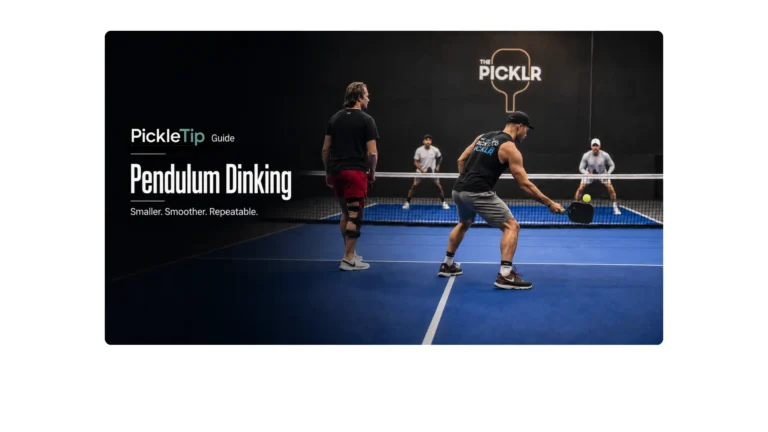
On dinks and many soft contacts, the motion should be shoulder-led, not wrist-led. Think compact, connected, and organized. The paddle, hand, and forearm should move like one unit instead of a loose collection of last-second fixes.
Soft Is Not the Goal. Quiet Is.
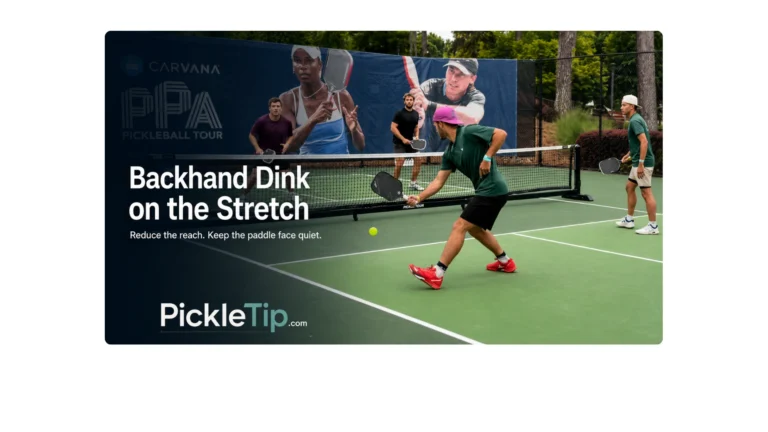
A wrist flick is sneaky because it feels like help. On a dink, it can feel like you are adding touch. On a block, it can feel like you are trying to save yourself. In reality, that little burst usually adds angle change and surprise lift right at the worst moment.
If you want a better feel cue, think this: the paddle and forearm should feel connected, like one organized piece moving together. You are not snapping the ball. You are presenting the paddle, absorbing what arrives, and guiding it where it needs to go.
Let the Ball Sit for a Split Second
A good feel cue is: catch the ball on the paddle, then guide it. That does not mean hold the ball forever. It means absorb first, direct second. The sabotage is the opposite move, where the player gets nervous and punches forward.
You are not literally carrying the ball, but you do want the contact to feel less like a slap and more like a brief receive. Players who constantly pop dinks up often make the ball leave the paddle too abruptly. Players with better control make it feel like the ball sat there for a blink before heading out.
Let the Ball Supply the Speed
On fast balls, the pace is already coming at you. The paddle does not need help making action. It needs discipline.
Players get into trouble because they see pace, feel urgency, and add more motion with the hand or wrist. Instead of freezing the paddle shape and absorbing the incoming speed, they jab or flick and watch the ball rise. The ball is already bringing enough violence to the exchange. You do not need to donate more.
Set the Face Before the Ball Arrives
On fast balls, think compact. Keep the wrist stable. Avoid large swings. If the ball is really humming, the correction may feel almost too simple: set the paddle, hold the face, and let the ball work.
The paddle face matters here. Too open and the ball jumps. Too closed and you dump it into the net. The sweet spot is usually neutral to slightly forward, with the face organized before contact instead of corrected during contact.
Fast balls are much easier to manage when contact happens out in front. Once the ball gets jammed into your torso, the margin disappears fast. Now your hands are making emergency decisions instead of organized ones.
No Acceleration at Contact
This is one correction that cleans up a surprising number of popups. On many soft shots and defensive contacts, the problem is not that your swing exists. The problem is that your swing suddenly speeds up right at contact.
Try this rule: your paddle speed should not jump when the ball arrives. Let the motion stay steady. Let the ball meet a shape that is already built. If your hand feels like it is lunging, slapping, or stabbing at the last instant, that is usually the leak.
Catch and Stick on Resets
Resets are where a lot of players sabotage themselves. They feel pressure, see speed, and think they need to push the ball somewhere. Usually they do not. On many reset balls, especially when the other side supplied the pace, your job is to catch and stick.
Present the paddle out in front, keep the face calm, and resist the urge to shove forward. The best resets often look almost boring. Quiet paddle. Quiet wrist. Ball dies back into the kitchen. Rally saved.
Common Popup Myths
| The myth | The better truth |
|---|---|
| “I just need softer hands.” | You need quieter hands, cleaner spacing, and a paddle face that does not change late. |
| “Every high ball is a popup.” | A popup is dangerous because it is attackable, not just because it has height. |
| “I need to help the reset get there.” | Most reset popups happen because the player helped too much. |
| “My paddle is the problem.” | Equipment can change feel, but most popups start with grip, spacing, timing, or paddle-face control. |
Stop Reaching for Bad Contact
Reaching feels like effort, but it usually kills precision. If your elbow straightens, your posture starts chasing the ball, and your base disappears, you are asking your hand to clean up a mess your feet created.
The better pattern is simple: recognize early, move your feet, and arrive at contact with enough room for the paddle to stay stable. If you wait too long, every correction has to happen in a rush, and rushed corrections are rarely clean.
Freeze Before You Fire
One of the most useful habits at the kitchen is early preparation. By the time the ball is crossing the net, you should already be solving the big questions. Forehand or backhand? Volley or bounce? Hold the line or take a step back?
Watch strong dinkers and blockers closely and you will notice something that looks almost strange: right before contact, they look still. Not frozen in a stiff way. Frozen in an organized way.
- Their feet are under them.
- Their paddle is already in place.
- Their body is not still making the decision while the ball is arriving.
Get there. Set the shape. Then make the contact. Players who are still drifting as they hit often do not realize how much that last bit of movement ruins their paddle angle.
Avoid the Short-Hop Trap
The short hop is not evil. It is just risky. Right after the bounce, the ball still carries more upward energy, and your timing window is tighter. If you are defending, dropping, or trying to dink from a jammed spot, taking that ball too early often means you are fighting the bounce instead of receiving it.
Sometimes the smarter move is to step back, give the bounce a little room, and play a more controlled shot instead of forcing hero contact from a terrible position.
A helpful way to think about it is this: drops and soft dinks usually get friendlier after the apex, while drives are often cleaner just before the apex rather than immediately off the short hop. Good players do not just react faster. They choose cleaner timing windows.
When Not to Hit the Ball
Sometimes the smartest fix is not another better swing. Sometimes the fix is refusing a bad contact. If the ball is above your shoulder, crowding your body, or screaming past in a way that forces a chicken-wing rescue, there are times when letting it go is the better decision.
A lot of ugly popups begin with a player trying to “save” something that never needed saving. If the contact window is trash, the angle is emergency-only, and your body is late, the highest-IQ move may be to bail out and let the ball miss.
Use the Step Back Dink
It is acceptable to step back off the non-volley zone line temporarily for a step back dink. If the ball is digging into your feet and you do not have the space to hold shape at the kitchen line, backing off for one contact can prevent a popup and save the rally.
Step back to create space, let the ball drop into a playable window, and send the dink with a compact motion. Then recover forward quickly after executing the shot. Players who refuse to yield six inches of court often end up giving away the whole rally.
Why Dinks, Blocks, and Resets Pop Up for Different Reasons
Here is where players get stuck. They hear one correction and try to use it on every ball. That usually does not work because a dink popup, a block popup, and a reset popup are often different problems wearing the same ugly result.
Dink vs Block vs Reset Popups
| Shot | The usual leak | First repair |
|---|---|---|
| Dink | Too much wrist, body rise, or late contact | Quiet wrist, shoulder-led motion, contact out front |
| Block | Punching at pace or opening the paddle face | Set the face early and absorb the ball |
| Reset | Panic shove or too much forward motion | Catch and stick; take heat out of the ball |
Dink Popups
Dink popups usually have a sneaky feel. The player thinks they are being careful, but the hand adds a little rescue move at the bottom of the ball. The fix is not babying the dink. It is getting organized early enough that the wrist does not have to invent something late.
Block Popups
Block popups feel different. The ball already has speed, so the mistake is usually adding more action to a shot that needed less. If the paddle face opens or the body rocks backward, the ball climbs before you even realize you helped it.
Reset Popups
Reset popups are panic dressed up as touch. The player wants the ball to land softly, so they push it there. That little shove is usually what makes it sit up. A good reset feels boring on purpose: receive the pace, keep the face calm, and let the ball die.
The miss may look similar from the other side of the net. From your side, the leak is different, and the fix should be different too. Same ugly result. Different leak. Different fix.
Drills to Stop Popping the Ball Up
Knowing the fix is one thing. Feeling it during a rally is another. Building it into your hands is the next step. These drills are designed to take the most common popup mistakes and turn them into something you can actually feel, repeat, and pressure test.
Best Drill If You Only Have 10 Minutes
Start with the Catch and Stick Reset Drill. It teaches the biggest popup lesson fast: the ball often needs you to remove energy, not add more. If you can learn to receive pace without punching, your resets, blocks, and soft counters usually clean up together.
Drill 1: Catch and Stick Reset Drill
Target: Build a reset that receives pressure without turning into a punch.
Rep Structure: 3 sets of 10 feeds to your forehand side, 10 feeds to your backhand side, and 10 feeds at your body. Rest briefly between sets, then repeat.
Partner Feed Pattern: Have your partner stand near the kitchen and feed medium-firm balls toward your transition zone. The feeds should come with enough pace that you feel pressure, but not so much that the drill turns into survival mode right away.
How It Works: Before using the paddle, let a few feeds hit your hand cleanly with your palm open so you can feel what “receive and stick” means. Then switch to the paddle and recreate that same sensation. Catch the ball out in front. Keep the paddle quiet. Do not lunge forward.
Diagnostic Cue: If the ball keeps floating deep or high, you are probably adding forward motion or tightening the grip at contact.
Constraint: No punch follow-through allowed. If your paddle finishes well out in front, the rep does not count.
Progression Rule: Once you can land 7 out of 10 softly into the kitchen, increase feed pace or reduce your time between feeds so you have to organize faster without losing shape.
Pressure Test: Finish each set with 5 live resets where the feeder can vary body, forehand, and backhand location. Your goal is to keep at least 3 of 5 unattackable. If they sit up, go back to the quieter hand feel before continuing.
Drill 2: Catch and Release Block Drill
Target: Improve paddle angle stability and stop popping up blocks on fast balls.
Rep Structure: 3 rounds of 12 contacts each. Alternate body shots, right hip shots, and backhand-side shots.
Partner Feed Pattern: One player at the kitchen line feeds quick volleys or controlled speed-ups. The blocker works mainly from the backhand side because that is where many real-game blocks show up.
How It Works: In the first phase, catch the ball on the paddle face and briefly control it. In the second phase, block it back with a tiny organized release. The goal is to feel the difference between receiving pace and jabbing at pace.
Diagnostic Cue: If the paddle face keeps opening toward the sky, or your chest keeps rocking back, that is the leak.
Constraint: Keep your weight forward and your paddle motion short. Backward drift or a big punch voids the rep.
Progression Rule: Once contact gets cleaner, allow the feeder to disguise direction more often so you must organize the paddle under more realistic pressure.
Pressure Test: Play out 8 live hand-battle contacts after each round, but the blocker only scores a successful rep if the block stays low enough that the feeder cannot attack the next ball cleanly.
Drill 3: Freeze Before Contact Dink Drill
Target: Build early preparation and reduce popup dinks caused by late movement.
Rep Structure: Rally crosscourt for 25 balls. Count only contacts where both players are visibly set before contact. Complete 3 successful rounds on each side.
Partner Feed Pattern: Cooperative crosscourt dinks with occasional balls pushed a little wider or deeper so the moving player has to recover and get set again before hitting.
How It Works: The rule is simple: arrive, pause your body shape, then dink. You are training yourself to stop drifting through contact.
Diagnostic Cue: If the ball floats when you are still stepping, reaching, or turning at contact, you found the problem.
Constraint: Hit, then move. Do not move and hit at the same time unless the ball truly forces an emergency play.
Progression Rule: Add one live speed-up per rally after the tenth ball so you must maintain organized dinking without getting careless once the rally gets uncomfortable.
Pressure Test: After each successful round, play one live crosscourt rally to 7 where every popup counts as minus one, even if you eventually win the point. That keeps the drill honest.
Drill 4: Short-Hop Awareness Drill
Target: Learn the difference between rushed short-hop contact and calmer contact taken closer to or after the bounce peak.
Rep Structure: 2 sets of 10 rushed short-hop contacts followed by 2 sets of 10 delayed contacts. Compare ball quality.
Partner Feed Pattern: Feed low balls toward the feet from midcourt or just inside the kitchen so the receiving player has to choose a timing window.
How It Works: Intentionally take a few too early so you can feel the chaos. Then let the ball rise or fall into a calmer window and notice how much easier it is to keep the paddle shape organized. On softer defensive shots, wait until the bounce settles near or after the apex. On firmer drive contacts, work on meeting the ball a little earlier without stabbing at it right off the short hop.
Diagnostic Cue: Early cramped contact usually feels rushed, noisy, and hard to control. Cleaner timing feels quieter.
Constraint: No hero reaches. If you are jammed, step back or create space instead of forcing a bad contact.
Progression Rule: Mix live feeds where you must decide quickly whether to take the ball early, let it peak, or step back and play the safer contact.
Pressure Test: Have the feeder call out “early,” “peak,” or “space” just before the bounce. You must choose the assigned timing window without losing posture or face control.
Drill 5: Straight-Line Dink Path Drill
Target: Eliminate wristy lift and train a cleaner path through the ball on dinks.
Rep Structure: 3 rounds of 20 cooperative crosscourt dinks. For the first 10, call out “through” before contact. For the next 10, stay silent and reproduce the same shape without the verbal cue.
Partner Feed Pattern: Cooperative feeds from the kitchen line to one side only so you can lock in the contact shape before making the drill more random.
How It Works: Picture a straight line from your paddle face to the intended target. Keep the wrist quiet and move through that line without a last-second flip. If it helps, imagine there are two balls on the paddle and you have to move through both.
Diagnostic Cue: If the ball floats or your paddle path pops upward right after contact, you probably added flick or acceleration instead of staying organized.
Constraint: No exaggerated backswing and no upward slap. If the paddle starts low and whips high, restart the rep.
Progression Rule: After you can maintain 15 clean dinks in a row, allow your partner to vary depth and width slightly so you have to preserve the same path while moving.
Pressure Test: Finish with 10 live dinks where your partner can speed up any ball that floats. Your job is not just to keep the rally going. Your job is to prove the path stays organized when there is something to lose.
Drill 6: No-Acceleration Contact Drill
Target: Remove the last-second jab that creates surprise lift on dinks, blocks, and soft counters.
Rep Structure: 3 sets of 15 contacts from three positions: kitchen dinks, body blocks, and transition resets.
Partner Feed Pattern: Feed one ball every two to three seconds with enough pace that you feel the urge to rush. Vary between softer feeds and firmer feeds so you learn to keep the same discipline under different speeds.
How It Works: Start the paddle moving at a calm speed and keep that speed calm through contact. You are teaching your hand to stop inventing a new swing at the exact worst moment.
Diagnostic Cue: If the rep feels like a slap, stab, or mini-punch right as the ball arrives, the drill is exposing the exact leak you need to fix.
Constraint: No burst through contact. If your partner can hear a sharp change in tempo or see an aggressive jab, the rep does not count.
Progression Rule: Reduce the time between feeds or add directional disguise once you can hold the same tempo under pressure.
Pressure Test: Play 9 mixed contacts in random order: 3 dinks, 3 blocks, 3 resets. Your goal is to keep the same calm tempo on every one, even though the situation changes.
Common Popup Mistakes
Most popup fixes fail because players treat every floating ball like the same mistake. The ball may look similar to your opponent, but the cause can be completely different on your side of the net. Use these common mistakes to narrow the problem before you start changing everything at once.
| The habit | What it does to the ball | What to feel instead |
|---|---|---|
| Squeezing the grip | Makes the ball rebound instead of absorb | Relax to a 3 to 5 grip pressure |
| Flicking the wrist | Changes the paddle face late | Move from the shoulder with a quiet wrist |
| Rising through contact | Adds upward body energy | Stay low and hold your shape for a beat |
| Taking the ball too close | Crowds the paddle path | Make contact out front |
| Punching resets | Adds pace to a ball that needed absorption | Catch and stick |
Frequently Asked Questions About Popups in Pickleball
Why do I keep popping up my dinks?
You are probably adding extra energy with your wrist, backswing, body rise, or late contact. Start by quieting the wrist, keeping the motion shoulder-led, and making contact farther out front. A dink should feel compact and controlled, not like a last-second rescue lift.
Most reset popups happen because the player tries to place the ball softly with a push. From the transition zone, that usually backfires. Think of the reset as receiving the ball first, not sending it first. If your paddle moves forward too much, the ball usually climbs.
Yes, a tight grip can cause popups because it makes the paddle rebound the ball instead of absorbing it. A firm grip also tends to lock the wrist and expose the paddle face. A grip pressure around 3 to 5 is usually better for dinks, blocks, and resets.
No. Low is nice, but low is not the whole job. The goal is to avoid giving your opponent an attackable ball. Some balls can arc safely if they land short or force an awkward contact. A true popup is dangerous because it gives the other team a comfortable swing window.
A paddle can make popups feel worse if it has a hot face, a shape you do not control well, or a grip setup that makes your hand squeeze too much. But the paddle is rarely the whole problem. Most popup fixes still come back to spacing, grip pressure, paddle-face control, timing, and whether you are adding energy the ball did not need.
Most of the time, the fastest fix is doing less. Relax the grip, set the paddle face early, get the ball out front, and stop accelerating at contact. If the ball is already coming with pace, your job is usually to receive it, not add more.
Popups in Pickleball
Avoiding popups in pickleball starts with finding the leak. Relax the grip. Stay balanced. Keep the paddle face organized. Cut the extra swing. Make decisions earlier. Give yourself space when the ball jams your feet. Catch the ball farther out front where your paddle can still behave.
Keep this bigger truth in mind too: a popup is usually an energy problem before it is an accuracy problem. Too much swing, too much rise, too much panic, too much last-second hand action, too much contact made from a crowded window, or too much incoming pace that never got absorbed. Find the leak and the ball starts coming off your paddle with a lot less chaos.
If you clean up those pieces, you do more than stop handing out attack balls.
- You start making contact that feels repeatable.
- You stop guessing.
- You stop surviving every fast exchange like it is a house fire.
The game slows down because your mechanics stop betraying you.
Bottom Line
Popups are not a personality flaw. They are usually a mechanical leak. Find the leak, fix the leak, and the rally starts feeling a whole lot more like yours again.
That is when the kitchen gets less chaotic, your partner stops bracing for impact, and your soft game finally starts looking like something you can trust under pressure.