How to Hold a Pickleball Paddle (Continental Grip Step-By-Step for Clean Contact & Control)
Master the Correct Pickleball Paddle Grip for Better Control and Power
Learning how to hold a pickleball paddle correctly is one of the fastest ways to upgrade your control, spin, and consistency on the court. Whether you’re brand new to pickleball or tired of spraying balls long, cleaning up your grip is the lever that makes every other skill easier.
How to Hold a Pickleball Paddle Correctly (Quick Beginner Guide)
Learn the fastest way to hold a pickleball paddle for better control, power, and consistency. This quick guide shows you how to master the Continental Grip, the most versatile and beginner-friendly hold in pickleball.
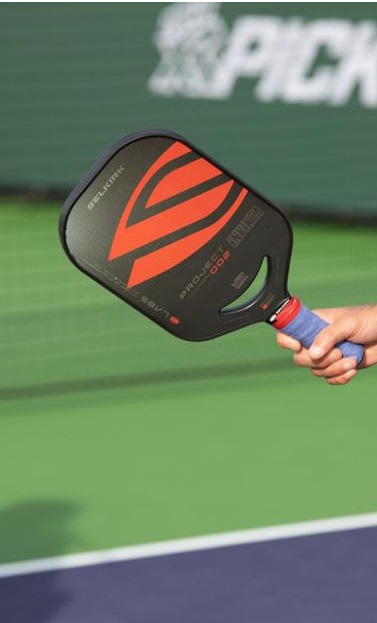
- Grip the paddle like you’re shaking hands with it.
This naturally places your hand in the Continental Grip, the most versatile for beginners and doubles players.

- Align your index knuckle and heel pad
Place your index knuckle and the heel pad of your palm on the top angled bevel (Bevel 2) of the paddle handle.
- Maintain a firm but relaxed grip
Keep your grip pressure around 5 out of 10 – firm enough for control, relaxed enough for quick wrist action and spin generation.


This simple “handshake grip” gives you a solid foundation for forehands, backhands, volleys, and serves − without constant grip switching.
When I first started coaching, most players who came to me for “more power” didn’t actually have a swing problem. They had a hold problem. Their paddle was twisted in their hand, squeezed like a hammer, or floating in their fingers. One tiny adjustment in how they held the paddle suddenly made their contact sound cleaner and their misses drop by half.
How to hold a pickleball paddle is not a trivial beginner topic – it’s the foundation your whole game stands on.
Picture this: you’re in a tight rally at the kitchen. The ball jumps at your chest, you barely move your arm, and it still leaves your paddle soft and controlled, dropping into the kitchen instead of flying long. That calm, centered contact happens because your pickleball paddle grip is doing its job before your swing even starts.
Hold the paddle correctly, and everything else you learn later – spin, drives, drops, blocks – feels easier instead of fragile.
How beginners hold a pickleball paddle: Use a relaxed Continental “handshake” grip with a neutral paddle face and fingers wrapped securely but not squeezed tight. This lets you handle forehands, backhands, and volleys without mid-rally grip changes.
How should a beginner hold a pickleball paddle?
A beginner should use a relaxed Continental handshake grip, placing the index knuckle and heel pad on the top angled bevel and keeping tension around 4–5 out of 10 for comfort and clean contact.
- Continental Grip
- A neutral “handshake” grip that works for forehands, backhands, volleys, dinks, and blocks without constant switching.
- Grip Pressure
- How tightly you squeeze the handle, usually scaled from 1–10, affecting control, touch, and arm health.
- Ready Position
- Your stance and paddle position before the ball is hit, setting up reaction time and stability.
- Bevel
- The flat or angled surface on a paddle handle that helps guide consistent finger placement.
- Handshake Grip
- A simple cue for how to hold the paddle by “shaking hands” with the handle to find Continental.
How to Hold a Pickleball Paddle: Section Map
These are the most common questions players ask about how to hold a pickleball paddle, along with quick links to each section below.
Jump directly to the part that matches what you’re struggling with, then circle back to fundamentals if anything still feels inconsistent.
- Why how you hold the paddle changes everything
- Step-by-step: Continental handshake grip
- How tight should you hold your paddle?
- Paddle orientation and ready position
- Forehand vs. backhand: do you need a different hold?
- Where on the handle should your hand sit?
- Common grip mistakes and quick fixes
- Simple drills to lock in your paddle hold
- Frequently Asked Questions
Why How You Hold the Paddle Changes Everything
Your pickleball paddle grip decides your control, comfort, and confidence long before your swing shows up on video.
Most players chase mechanical fixes or buy new paddles when the real issue is the way they hold the handle. Once the hold is honest, “mysterious” errors often disappear without changing your swing.
Your grip is the foundation of your technique. When it’s solid, small imperfections in timing, footwork, and swing path still produce playable shots. When it’s off, everything feels unpredictable – no matter how good your mechanics are.
- Face control: Your grip influences paddle angle at impact, which affects height and depth before “touch” even matters.
- Reaction speed: A neutral hold like Continental helps you cover both wings quickly without big grip changes.
- Arm health: A relaxed, aligned grip reduces strain over time and keeps you out of “tennis elbow” territory.
When your grip is too extreme or too tight, your shots fly long and your arm fatigues quickly. A simple handshake hold with better tension brings your miss-pattern back into a small, predictable window.
Better contact starts with a more honest grip. Most players don’t need a brand-new stroke – they need their current stroke to finally have a stable platform to work from.
Once your hold becomes consistent, you stop trying to “steer” the ball mid-swing and start trusting your instincts. That calmness unlocks better timing, better touch, and cleaner contact almost immediately.
Step-by-Step: Continental Handshake Grip
The Continental handshake grip is the simplest, most versatile way to hold a pickleball paddle. It handles forehands, backhands, dinks, blocks, and quick exchanges without forcing constant changes.
Think of this hold as your operating system. Once it’s automatic, you can layer in topspin, spin serves, slices, and advanced resets without rebuilding your base.
Here’s how to hold a pickleball paddle in Continental:
- Shake hands with the handle.
Hold the paddle upright in front of you like a stop sign. Reach out and “shake hands” with the handle. Your fingers wrap naturally – no tension, no force. - Align index knuckle and heel pad.
Place your index knuckle and the heel pad of your palm on the top angled bevel (Bevel 2). This alignment neutralizes the paddle face so it’s not overly open or closed. - Wrap your fingers naturally.
Your fingers should wrap comfortably without squeezing. If your thumb is pinned flat or your palm is smothering the handle, you’re gripping too tight.
When this handshake grip feels conversational, your contact starts sounding clean – more “tock,” less “clank.” That sound tells you your paddle face is finally working with you, not against you.
This neutral hold makes your forehand and backhand equally accessible, removing panic switches mid-rally. It also sets the stage for kitchen-line control skills like knuckles-down face control and more advanced work from the grip pressure guide.
If your grip can’t pass the handshake test, it won’t survive real pace at the kitchen.
Once this hold is automatic, you’re ready to dial in the right amount of tension – the difference between crisp shots and wild misses.
How Tight Should You Hold Your Paddle?
The best way to hold a pickleball paddle is relaxed enough for feel and firm enough for stability – never locked tight.
Most players aren’t gripping “too weak.” They’re gripping too hard. Excess tension ruins touch shots and makes fastballs feel uncontrollable.
Use this simple scale:
- 1/10: Paddle is almost slipping.
- 5/10: Secure but relaxed – perfect for most shots.
- 8–9/10: Only at impact during big swings.
When the ball is soft and slow, your grip should match it. Using 7–8 tension on dinks or resets sends the ball bouncing too high.
Here’s a quick reference:
| Shot Type | Suggested Grip Pressure | Primary Goal |
|---|---|---|
| Dinks & soft resets | 3–4/10 | Touch and height control |
| Blocks & counters at the kitchen | 4–6/10 | Stability with absorption |
| Serves & drives | 6–7/10 (8/10 at impact) | Depth and pace without strain |
Your hold should change more across shots than your swing does. When your tension is dialed in, your average swing starts producing much more consistent contact.
As you learn to feel these tension levels, it becomes easier to unlock the more advanced rules from the full grip pressure guide later.
Can gripping too tightly cause injuries?
Yes. Over-gripping strains the forearm and elbow. A lighter, more responsive hold protects your arm and improves feel at the same time.
Paddle Orientation and Ready Position
How you hold a pickleball paddle includes both your hand position and where the paddle lives in space before the ball arrives.
You can have a great grip and still struggle if your paddle starts too low, too close to your body, or too open. Ready position matters just as much as finger placement.
Here’s the simple ready-position framework that pairs with the Continental grip:
- Paddle height: Keep the center of the paddle around net height. Not down by your belly or thigh.
- Elbow position: Keep your hitting elbow slightly forward from your ribs, not glued to your side.
- Face angle: Neutral – not skyward, not pointing down. The face should “look” toward the ball.
When your paddle starts low and tight to your body, every fast ball feels like a panic moment. Keep it up and out, and rallies suddenly feel slower and more manageable.
This ready position pairs perfectly with the kitchen-line cues from Never Show Them Your Knuckles, but you don’t need that article to start benefiting now. Simply holding the paddle in a forward-ready posture transforms your reaction time.
The ball doesn’t care how good your mechanics are if your paddle starts two feet too low.
Once your ready position feels consistent, it becomes much easier to talk about how a single neutral hold can serve both forehands and backhands.
Forehand vs Backhand: Do You Need a Different Hold?
Most players can use one Continental hold for both forehands and backhands, especially early on.
The biggest mistake recreational players make is trying to live in multiple extreme grips before their neutral hold is even stable. That creates inconsistency and makes fast exchanges feel impossible.
Think of your holds as a smooth spectrum rather than rigid categories:
- Neutral Continental: Best for returns, blocks, dinks, resets, and most volleys.
- Slight turn for forehands: A tiny shift toward Eastern on slower, higher balls adds natural topspin.
- Slight turn for backhands: A small rotation firms up the backhand and stabilizes the face on contact.
When the ball is fast and close to your body, stay in Continental. When the ball is slower and above net height, you have time for a small adjustment toward a more forehand-friendly hold.
You don’t need to master grip switching now. Build stability first. If you ever want to go deeper, the advanced concepts live in your grip-switching pillar on pickleball grips and hand positioning.
Should beginners switch grips mid-rally?
Not yet. Start with one dependable Continental hold. Add micro-adjustments only later, once that base is automatic.
Once you trust that one good hold can cover most situations, your footwork improves and your timing calms down. You stop rushing and start reading the ball earlier.
Where on the Handle Should Your Hand Sit?
Where your hand sits on the handle – low near the butt cap or slightly choked up – changes how heavy the paddle feels and how quickly you can react.
This isn’t about right vs. wrong. It’s about choosing the hand position that matches your skill level and reaction speed.
Use this simple guide:
- Low on the handle (pinky on the cap): Max power and leverage, slightly slower in hand battles.
- One finger-width up: Best all-around option – power plus quicker reactions.
- Two finger-widths up: Fastest feel at the kitchen, less free depth on full swings.
If your paddle feels heavy or late at the kitchen, slide your hand up one notch. Don’t jump extremes. Small changes reveal a lot.
I once worked with a 3.5 player who kept getting jammed during hands battles. She thought she needed a new, lighter paddle. Instead, we moved her hand up half an inch and relaxed her tension to 5/10. Within minutes, her blocks stopped popping high and began dropping cleanly into the kitchen. No new paddle. No technique overhaul. Just a better way to hold what she already owned.
If you want a deeper dive into this, your full breakdown lives in Choking Up in Pickleball. Here, you just need to know that hand position is part of the foundation of how to hold a pickleball paddle.
Before you blame your paddle’s weight, check where your hand is sitting.
Common Grip Mistakes and Quick Fixes
Most “mystery” misses come from how you hold the paddle, not how you swing it.
Fixing these predictable habits gives you a bigger improvement than most drills or “swing fixes.”
- Hammer death grip.
Thumb locked, knuckles white, tension sky-high.
Fix: Reset to a handshake grip and drop tension to 4–5/10 on soft shots. - Floating fingers.
Paddle held too loosely in the fingertips, twisting on contact.
Fix: Wrap your fingers securely without squeezing. Confident, not tentative. - Extreme forehand grip for everything.
Great for forehands, terrible for dinks, blocks, and backhands.
Fix: Use Continental as your default; adjust only when needed. - Paddle face staring upward.
Leads to pop-ups and high misses.
Fix: Keep a neutral face and use the cues from Never Show Them Your Knuckles to stay honest at the kitchen.
You don’t need more flashy shots. You need fewer unforced errors from a more reliable way of holding the paddle.
With these issues cleaned up, you’re finally ready for the drills that help your grip survive real ball pressure.
Simple Drills to Lock In Your Paddle Hold
How to hold a pickleball paddle only becomes automatic once you’ve repeated it enough times under low-pressure conditions.
You don’t need special equipment. You just need slow, honest reps that let the feel of the grip settle into your muscle memory.
Drill 1: Mirror & Handshake Check
Goal: Build a reliable Continental handshake grip before you ever hit a ball.
- Stand in front of a mirror with your paddle.
- Shake hands with the handle and check alignment: index knuckle and heel pad on the top bevel, fingers wrapped, thumb relaxed.
- Repeat 10–20 times. Close your eyes every few reps, grip the paddle, then open your eyes to verify you’re still in Continental.
Once you can repeat the grip ten times in a row without looking, you’re ready to trust it on court.
Drill 2: Wall Touch Series
Goal: Connect how you hold the paddle to how the ball leaves the face.
- Stand 8–10 feet from a wall with a paddle and ball.
- Use your Continental grip and 3–4/10 tension to tap gentle shots at a small spot on the wall.
- If the ball keeps floating high, check your paddle angle and tension before adjusting your swing.
Many players hear the first clean “tock” of their life in this drill and realize their potential was never about power – it was about feel.
Drill 3: Kitchen Partner Blocks
Goal: Hold the paddle in a way that stays stable under real pace at the kitchen line.
- Stand at the kitchen line in Continental grip with the paddle around net height.
- Have a partner feed firm balls toward your torso and shoulder area.
- Block the ball back using 4–6/10 tension, keeping the face stable and compact.
- If the handle twists, adjust your finger wrap or tension – not your stroke.
Here’s the quick memory framework for all three drills:
- Hold: Handshake Continental with proper knuckle and heel-pad alignment.
- Angle: Neutral paddle face in ready position.
- Tension: 3–4/10 for soft, 5–6/10 for firm, brief spike only on drives or overheads.
One of my regulars once asked, “Why does my backhand keep wobbling?” The answer wasn’t a new stroke. His fingers were barely engaging the handle. Once he wrapped them with more purpose and settled around 5/10 tension, his blocks immediately felt solid. The difference was audible and instant.
As these drills become natural, you’re ready to branch into more advanced work like serve mechanics (see pickleball serve tips) or grip switching – without losing your foundation.
Frequently Asked Questions
Use a relaxed Continental “handshake” grip with your index knuckle and heel pad on the top angled bevel. Keep tension around 4–5/10 so you can hit forehands, backhands, and volleys without changing grips constantly.
You need a slightly firmer grip on serves and drives, but the real source of power is body rotation and timing, not grip force. Gripping too hard usually decreases both power and control.
Not at first. One good Continental grip can cover most shots. As your game grows, you can add small adjustments toward Eastern when you have time on slower balls.
Start with your pinky near the butt cap. If the paddle feels slow or heavy in fast exchanges, slide your hand up one finger-width to speed it up.
Wrap your fingers more securely, keep tension around 5–6/10 on firm shots, and hold the paddle slightly in front of your body instead of letting it hang by your hip.
For the next five sessions, begin every warm-up with 20 handshake-grip reps, 40 gentle wall taps, and a short kitchen block drill. Track how many balls you miss long or off the edge of the paddle. If that number drops – even slightly – you’ve proven that improving how you hold a pickleball paddle improves everything the paddle does afterward.